Key takeaways
- Float therapy, massage and sauna all help you relax, but through different routes: less sensory input, hands-on muscle work, and heat.
- Massage suits specific tight spots; sauna suits healthy people who enjoy heat; floating suits deep rest for body and mind, especially when stress or sleep is the issue.
- They combine well. At Ōmni Space, infrared sauna and cold plunge can be added to a float for +200,000 VND each.
Quick answer: There is no single best option. If one muscle group is sore or knotted, massage works on it directly. If you are healthy and like heat, sauna is a simple relaxation habit. If you are stressed, sleeping badly or want full-body recovery after training, a float gives you 60–120 minutes of weightless, quiet rest. Many people use more than one.
How each one works
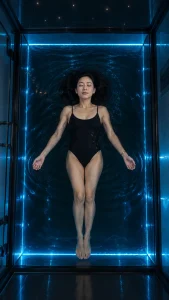
- Float therapy: you lie on your back in about 25 cm of water with roughly 500 kg of dissolved Epsom salt, at skin temperature (34–35 °C), in a dark, quiet room. You float effortlessly, gravity stops loading muscles, joints and spine, and light, sound and touch drop to a minimum. See what float therapy is.
- Massage: a therapist applies manual pressure to muscles and soft tissue. It is local: you can ask for focus on shoulders, lower back or calves.
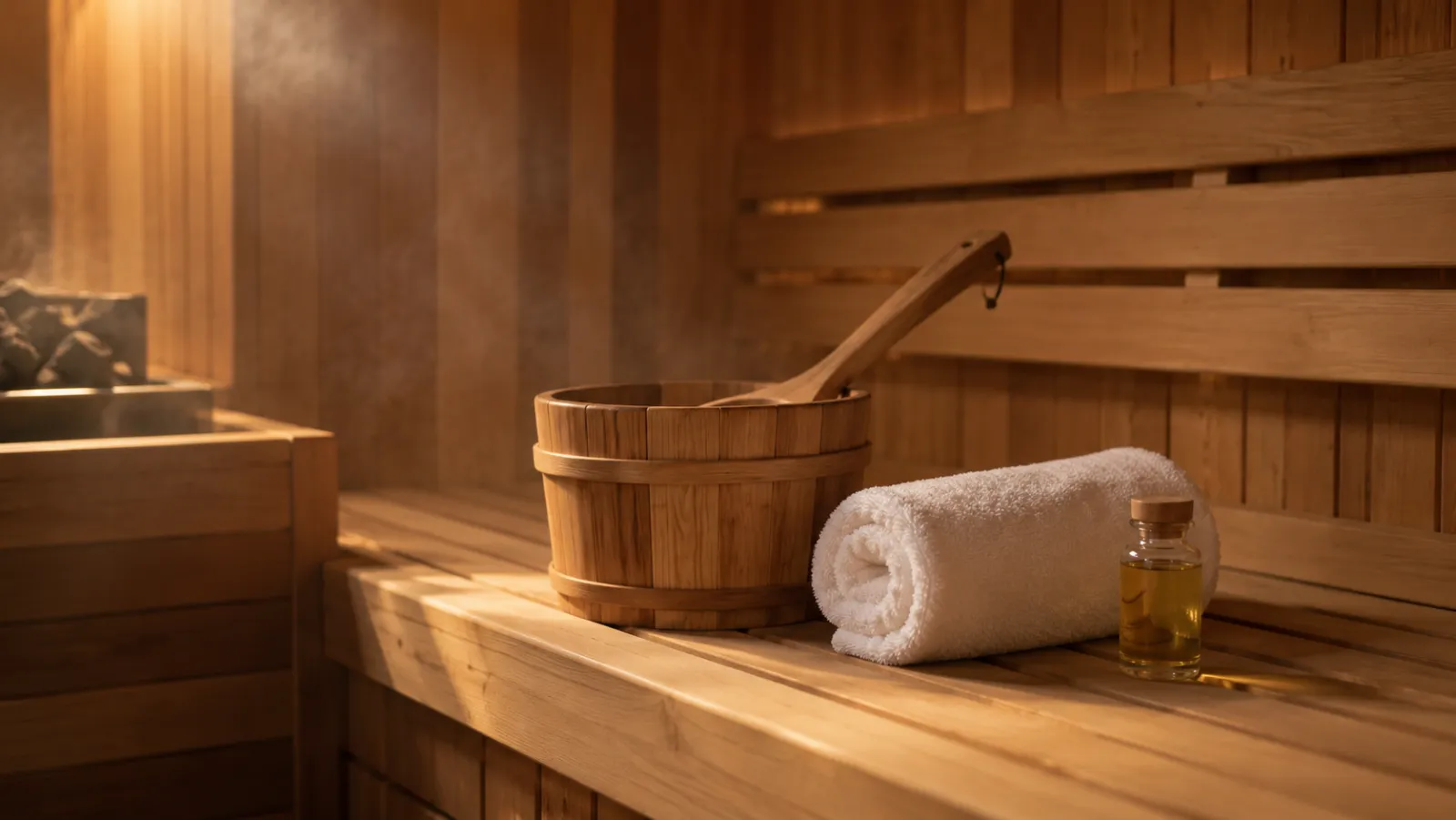
- Sauna: heat raises your heart rate, widens blood vessels near the skin and makes you sweat, a bit like light exercise. Traditional saunas heat the air; infrared saunas warm the body more directly at lower air temperatures.
- Cold plunge: a few minutes in cold water triggers blood-vessel constriction and a strong wake-up effect. It is often used after training or alternated with sauna.
What the research says
The evidence for all three is real but modest, so read it with some caution:
- Massage: reviews suggest massage after exercise can reduce perceived delayed-onset muscle soreness (DOMS) in the short term. Effects on recovering strength are less clear.
- Sauna: a study following more than 2,000 middle-aged Finnish men (Laukkanen et al., 2015, JAMA Internal Medicine) found that frequent sauna users had lower rates of cardiovascular death. It was observational, used traditional sauna, and cannot prove cause and effect.
- Float therapy: Kjellgren & Westman (2014) found healthy adults reported less stress, better sleep and more optimism after a series of floats. Driller & Argus (2016) found athletes reported better perceived recovery after floating. Feinstein et al. (2018) found a single float temporarily reduced anxiety in anxious participants. More in float therapy for athlete recovery.
- Cold plunge: may reduce soreness after exercise, but some research suggests regular cold immersion straight after strength training may blunt muscle gains.
Side-by-side comparison
| Float | Massage | Sauna | Cold plunge | |
|---|---|---|---|---|
| Main mechanism | Weightlessness, reduced sensory input | Manual pressure on muscle and soft tissue | Heat, sweating, higher heart rate | Cold, vessel constriction |
| Typical session | 60–120 min | 60–90 min | 10–20 min per round | A few minutes |
| Best for | Whole body and mind | Specific muscle groups | Whole body, circulation | Alertness, post-training soreness |
| Someone touches you | No, private room | Yes | No | No |
| Take care if | Open wounds, skin infections, epilepsy | Acute injury, blood clots | Heart conditions, pregnancy, dehydration | Heart conditions, high blood pressure |
Which one suits you?
- Choose massage if you have clear knots or tight spots and enjoy hands-on care.
- Choose sauna if you are healthy, like heat and want a short habit you can repeat often.
- Choose floating if you are stressed, struggle to switch off, sleep lightly, or prefer not to be touched. Floating also takes load off the back and joints. Read how floating reduces stress.
Safety notes
- Sauna: drink enough water and avoid alcohol. If you have a heart condition, low blood pressure or are pregnant, ask your doctor first.
- Cold plunge: the cold-shock response sharply raises heart rate and blood pressure; people with heart conditions should check with a doctor.
- Massage: avoid deep pressure on fresh, swollen injuries; anyone at risk of deep-vein blood clots needs medical advice first.
- Float: skip it with open wounds, contagious skin conditions or uncontrolled epilepsy, and avoid shaving or waxing just before, as the salt stings.
Session length and cost in Ho Chi Minh City
Massage is everywhere in Saigon, from neighbourhood shops to hotel spas, so prices vary widely by venue and technique. Saunas are common in gyms and spas and are sometimes included in a membership.
Floating at Ōmni Space (16C Quoc Huong, Thao Dien) in 2026: single room 60/90/120 min = 1,500,000 / 2,000,000 / 2,500,000 VND; couple room 2,200,000 / 2,700,000 / 3,200,000 VND. The intro package of 3 × 90-minute floats is 3,000,000 VND (normally 6,000,000), valid 3 months, with free sauna. See the full pricing.
Combining them: sauna, cold plunge, then float
These options are not either/or. A sequence many people enjoy is infrared sauna to warm up, a short cold plunge to wake the body, then a float to let everything settle. You can also book massage on other days and use floating as a deeper rest day in between.
At Ōmni Space, a 45-minute infrared/red-light sauna, a 30-minute cold plunge and a 30-minute Brainwaves Neuro Align session cost 450,000 VND each on their own, or +200,000 VND each with a float. Details are on the Ōmni Space services page. For a first visit, a simple 90-minute float is a good place to start.
Note: This page is for general information. Float therapy supports wellbeing but does not replace diagnosis or treatment by a doctor. If you have a medical condition, ask your doctor before floating.
Try it at Ōmni Space. Float Vietnam’s float rooms are at 16C Quoc Huong, Thao Dien, Ho Chi Minh City (Saigon), open daily 9:00–21:00. Book a float or read the float therapy FAQ.
Frequently asked questions
Is float therapy or massage better for stress?
It depends on what you need. Massage works directly on tight muscles, while floating reduces sensory input and gravity for the whole body, which suits deep mental rest. Many people alternate the two.
Should I use the sauna before a float?
You can. A sauna first helps the body warm up and loosen, but drink water and shower before entering the float room. At Ōmni Space, an infrared sauna add-on is +200,000 VND with a float.
Who should avoid sauna or cold plunge?
People with heart conditions, unstable blood pressure, or who are pregnant should ask a doctor before using a sauna or cold plunge.