Updated: 10 Oct 2026 · By Float Vietnam
Key takeaways
- Float therapy (floatation-REST) means lying in a dark, quiet tank of warm Epsom-salt water so your body and mind can rest deeply.
- Small studies report that floating may help reduce anxiety, stress and stress-related muscle pain and improve sleep; it supports health but does not replace medical care.
- Float Vietnam brought float therapy to Vietnam in 2017; today you can float at Ōmni Space in Thao Dien, Ho Chi Minh City, from 1,500,000 VND for 60 minutes.
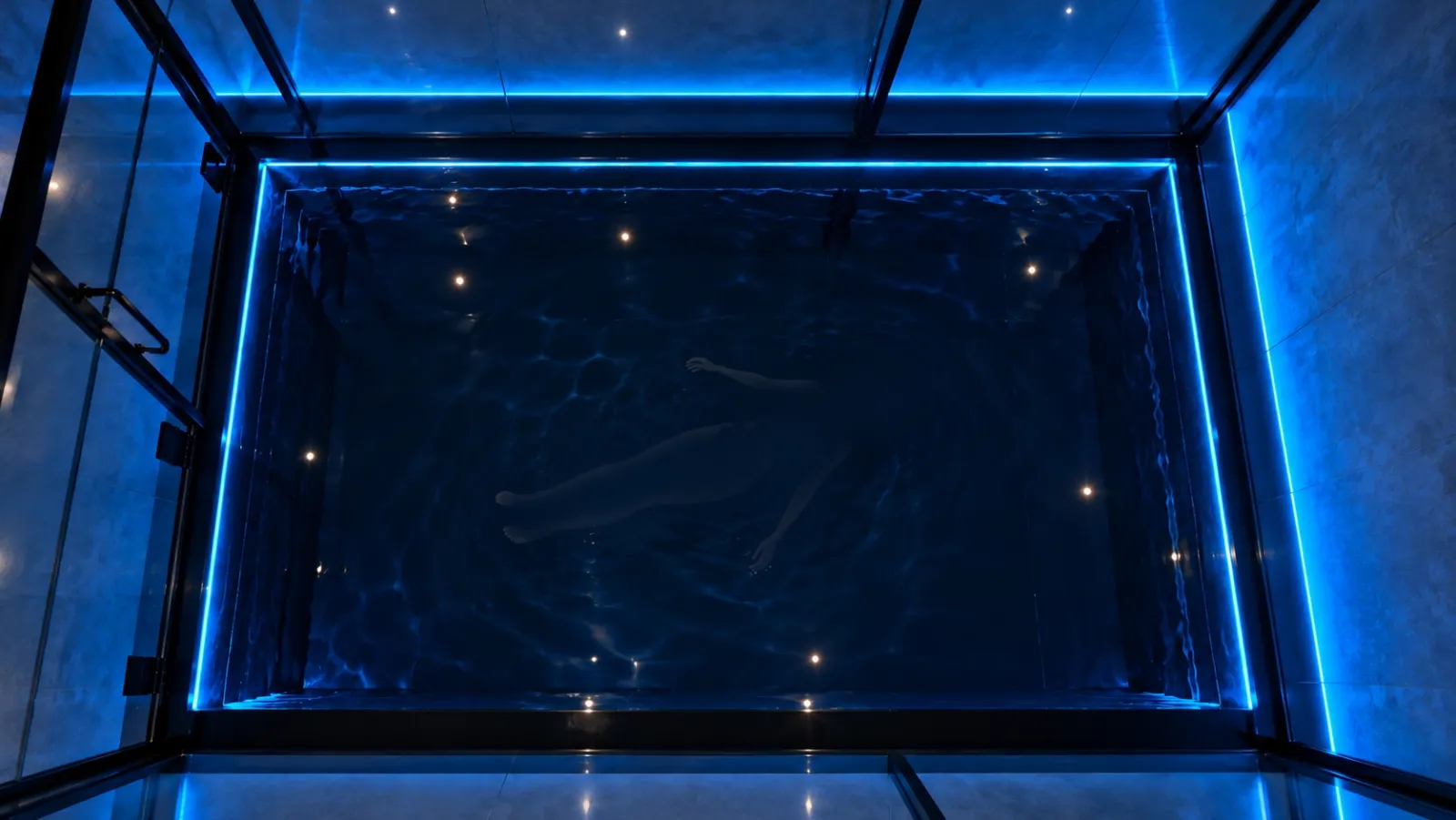
Float therapy (floatation-REST) is a relaxation method in which you lie on your back in about 25 cm of water containing roughly 500 kg of dissolved Epsom salt, warmed to skin temperature, inside a dark, soundproofed tank or room. With light, sound and the pull of gravity almost gone, your body and nervous system can rest deeply.
| Fact | Value |
|---|---|
| Water depth | About 25 cm |
| Salt | About 500 kg of Epsom salt (magnesium sulfate) |
| Water temperature | About 33–34 °C, close to skin surface temperature |
| Session length | 60–120 minutes (90 minutes recommended for beginners) |
| First isolation tank | John C. Lilly, 1954, US National Institute of Mental Health (NIMH) |
| Scientific name | REST: Restricted Environmental Stimulation Therapy, developed by Peter Suedfeld and Roderick Borrie (1970s–80s) |
| In Vietnam | Float Vietnam, since 2017; now at Ōmni Space, Thao Dien, Ho Chi Minh City |
How does a float tank work?
A float tank works by removing almost all of the signals your brain normally has to process. The water is only about 25 cm deep, but it holds roughly 500 kg of dissolved Epsom salt, which makes it far denser than seawater, so you float effortlessly on your back without swimming or balancing. The water is kept at about 33–34 °C, close to the temperature of your skin, so after a few minutes it becomes hard to tell where your body ends and the water begins. The room or tank is dark and quiet, which removes light and sound. With no gravity to fight, muscles and the spine can let go; with almost no outside input, the nervous system tends to shift away from fight-or-flight towards a calmer rest-and-digest state. That is why it is often called a sensory deprivation tank or flotation tank, even though the senses are reduced rather than switched off.
Three things that make floating different
- Weightlessness: dense salt water supports your whole body. Learn more about the benefits of Epsom salt.
- Reduced stimulation: no light, no noise, no phone notifications.
- Neutral temperature: water at skin temperature sends almost no hot or cold signals.
Many floaters describe a dreamy state between waking and sleep. Some researchers link it to slower brainwave activity; read more about theta waves and float therapy.
What are the benefits of float therapy? What the research says
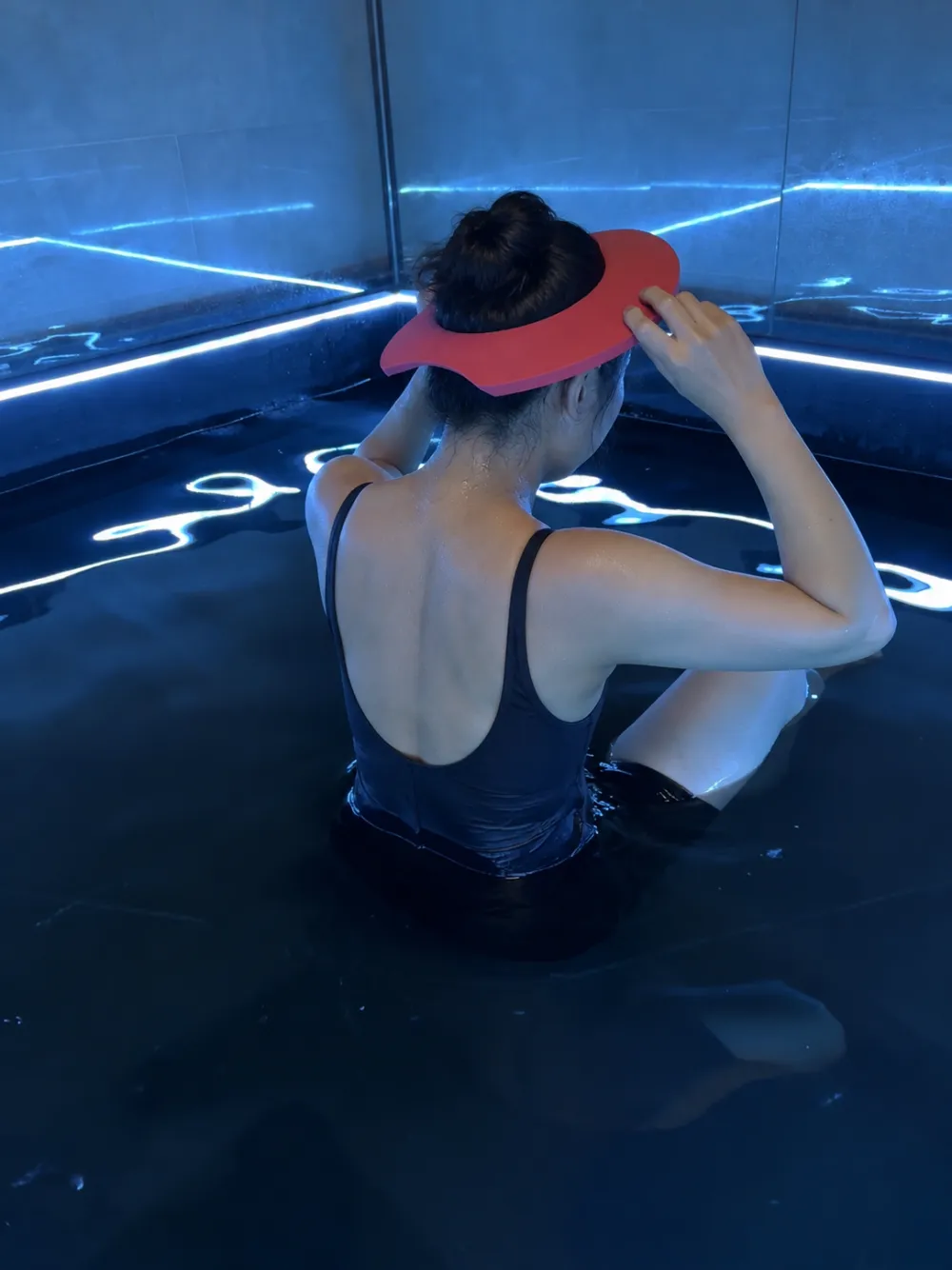
Float therapy has mainly been studied as a way to reduce stress and support relaxation. Studies, most of them small, report that after one or more floats people feel less anxious and less stressed, are in a better mood, have less muscle pain and sleep better. A meta-analysis by van Dierendonck and te Nijenhuis (2005, Psychology & Health) pooled 27 studies and found positive effects of floatation-REST on physiology, wellbeing and performance. Still, the science is young: samples are often small, many studies lack strong control groups, and results vary from person to person. The accurate way to put it is that floating may help you relax deeply and can support mental and physical wellbeing. It is not a medicine, and it does not replace medical or psychological care if you have a health condition. Think of it as one helpful tool alongside sleep, exercise and professional support.
Key studies
- Anxiety: Feinstein et al. (2018, PLOS ONE) had 50 people with anxiety and stress-related disorders float once for about an hour; participants reported a marked drop in anxiety and better mood right after the session.
- Healthy adults, stress and sleep: a randomised controlled trial by Kjellgren and Westman (2014, BMC Complementary and Alternative Medicine) found that people who floated 12 times over 7 weeks reported less stress and anxiety and better sleep quality than a wait-list group.
- Stress-related pain: Bood et al. (2006, International Journal of Stress Management) reported less pain, less stress and better sleep in patients with stress-related ailments after a series of floats.
- Chronic muscle-tension pain: Kjellgren et al. (2001, Pain Research and Management) reported lower pain and stress in the float group compared with controls.
- Athletes: Driller and Argus (2016, Performance Enhancement & Health) found elite athletes reported better perceived recovery and less muscle soreness after a float.
See the full overview of scientific studies on floatation therapy, or explore specific topics:
- How floating reduces stress at work and at home.
- Why people with anxiety are trying float tanks.
- Floatation therapy for pain in the back, neck and shoulders.
- Floating for athletic performance and recovery.
- Floating during pregnancy, with your doctor’s approval.
- Every topic in one place: the benefits of floatation therapy hub.
Is float therapy safe? Who should not float
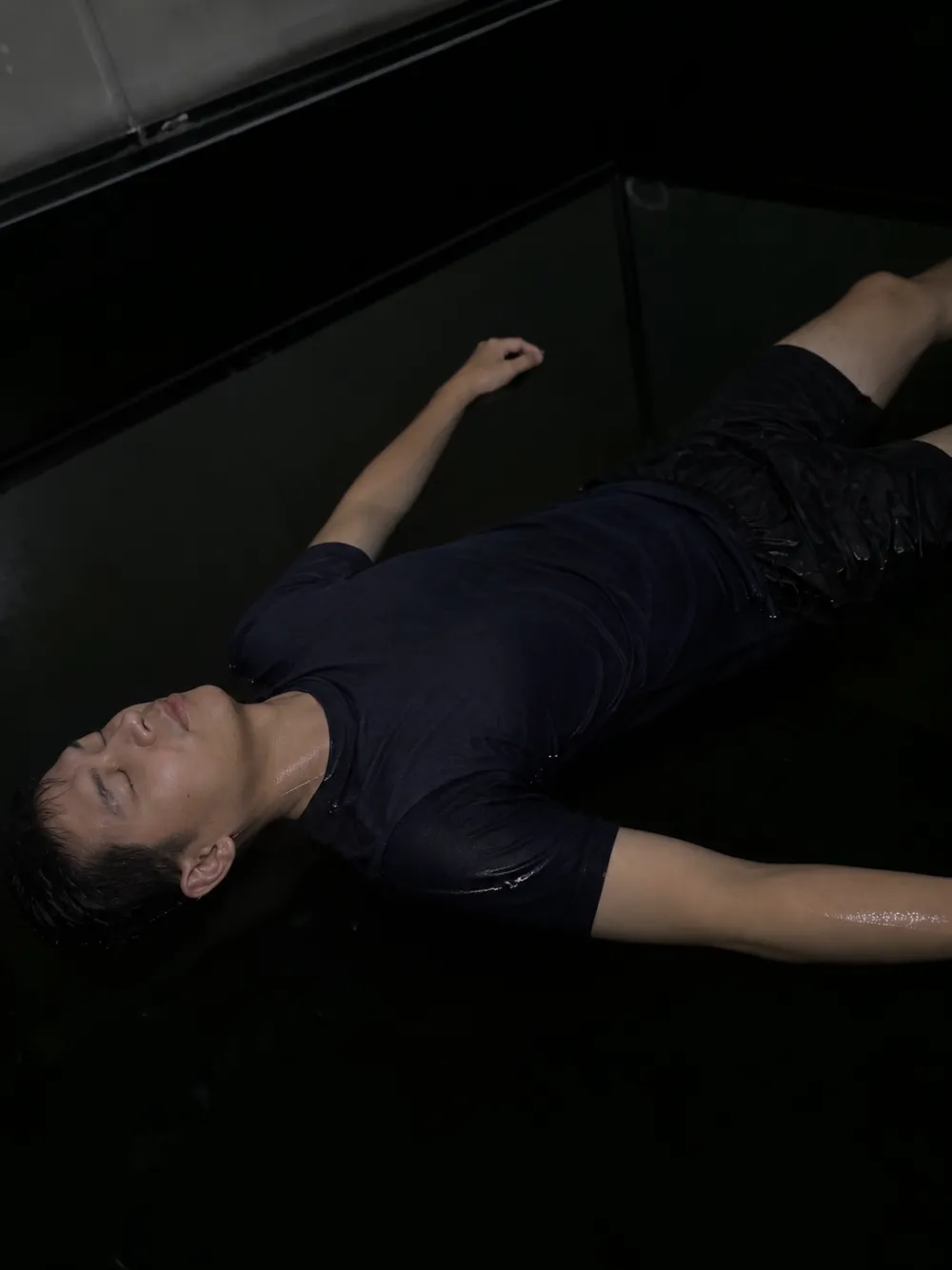
For healthy adults, float therapy is considered low-risk. The water is only about 25 cm deep and the dense salt solution keeps you on the surface even if you fall asleep; the most common discomfort is salt water in the eyes or stinging on a small cut. You are always in control: you can turn on the light, open the door or step out at any time, so many people who feel slightly claustrophobic float comfortably by starting with the light on. The water is filtered and sanitised between sessions, and you shower before getting in. That said, some people should not float, or should ask a doctor first, especially those with chronic medical conditions, those who are pregnant, and anyone taking medication that affects alertness. If you are unsure, speak to your doctor and tell the staff before your session so they can help you plan a comfortable first float.
Postpone your float or ask your doctor first if you have
- Epilepsy that is not controlled by medication.
- Open wounds, a new tattoo (usually wait a few weeks) or an infectious skin condition.
- Kidney disease, a heart condition or significantly low blood pressure.
- Alcohol or recreational drugs in your system, or an illness with fever or diarrhoea.
- Pregnancy: floating is often fine with your doctor’s approval; choose shorter sessions and listen to your body.
- Serious mental health conditions: floating should only complement professional care.
Worried about dozing off? It is common and harmless; see what happens if you fall asleep in the float tank.
What happens during a float session?
A float session usually lasts 60 to 120 minutes, and Float Vietnam recommends 90 minutes for beginners. You arrive about 15 minutes early, get a short introduction to the room, and go into your own private room with its own shower. You shower, put in earplugs and step into the water, usually without a swimsuit because the room is completely private. Lying back, the water lifts you; you can rest your arms by your sides or above your head, whichever feels easiest. For the first 10 to 20 minutes the mind is often busy and the body still holds a little tension; after that breathing slows and many people drift into a pleasant half-awake, half-asleep state. At the end, soft music or a slowly brightening light tells you time is up. You shower again to rinse off the salt and relax in the lounge for a few minutes before heading back into the city.
Want to see a real session from start to finish? This short walkthrough, filmed at our Saigon centre, shows the shower, earplugs, stepping into the Epsom salt water and settling in to float.
Tips for your first float
- Do not shave or wax right before floating; salt water can sting freshly shaved skin.
- Eat lightly 1–2 hours before and skip coffee so your mind settles more easily.
- Do not try to “meditate properly”; just breathe slowly and let thoughts drift.
- Do not judge it on one session: many people notice more from their second or third float.
For more practical advice, read how to float: tips from a meditator. Over time, Float Vietnam suggests 2–3 floats a month for the first 2–3 months, then 1–2 a month; see how often you should float.
How is floating different from meditation, a bath or a swimming pool?
Floating shares the goal of meditation: calming the mind and noticing thoughts without being carried away by them. The difference is that the environment does the hardest part for you. When you sit to meditate you still hold a posture, hear traffic, feel heat or cold and fight a stiff back; in a float tank those signals almost disappear, so even people who have never meditated can reach a still, quiet state. Compared with an Epsom salt bath at home, a float tank holds far more salt, enough for your whole body to float, the water is held at skin temperature, and the room is dark and soundproofed. A swimming pool or the sea is the opposite: cooler water, effort to stay afloat, and constant sound and light. So although all of them involve lying in water, the depth of rest in a float tank is very different.
- Versus seated meditation: no posture to hold and far fewer distractions, which makes the tank a useful “training wheel” for beginners. See floatation therapy and meditation.
- Versus massage and sauna: massage works directly on muscles and sauna uses heat, while floating focuses on nervous-system rest; read the comparison float vs massage vs sauna.
- Versus painkillers or CBD: floating is a drug-free option that may help with muscle tension and stress; see float therapy vs CBD vs painkillers.
Where did float therapy come from? From John C. Lilly in 1954 to Vietnam in 2017
Float therapy began in a laboratory. In 1954 the neuroscientist John C. Lilly, working at the US National Institute of Mental Health (NIMH), built the first isolation tank to answer a simple question: what does the brain do when almost all outside stimulation is removed? Those early tanks were demanding; volunteers were submerged upright and wore a breathing mask. In the 1970s, lie-down tanks filled with dense Epsom-salt water appeared and floating slowly became a relaxation service open to the public. In parallel, psychologists Peter Suedfeld and Roderick Borrie developed the idea of REST (Restricted Environmental Stimulation Therapy) through the 1970s and 1980s, bringing floating into systematic clinical research and giving it a more neutral name than “sensory deprivation”. In 2017 Float Vietnam opened Float Hanoi, bringing float therapy to Vietnam, and today its float sessions run at Ōmni Space in Ho Chi Minh City.
- 1954: John C. Lilly builds the first isolation tank at the NIMH.
- 1970s: lie-down Epsom-salt tanks appear and floating spreads beyond the lab.
- 1970s–80s: Suedfeld and Borrie study REST, including floatation-REST and chamber-REST.
- 2010s: research groups such as Justin Feinstein’s in the US and Anette Kjellgren’s in Sweden publish new studies.
- 2017: Float Vietnam opens Float Hanoi, bringing floating to Vietnam.
Why so many names? Read from sensory deprivation to REST: the many names of floatation therapy.
Where can you try float therapy in Vietnam, and how much does it cost?
Today the easiest place to try float therapy in Vietnam is Ōmni Space, 16C Quoc Huong, Thao Dien, Thu Duc City, Ho Chi Minh City, open daily from 9:00 to 21:00. This is where Float Vietnam runs its float sessions while Float Hanoi is temporarily closed. Ōmni Space has two private float rooms: a single room with a rectangular pool for one person and a couple room with a square pool for two. Each pool holds about 25 cm of water and around 500 kg of Epsom salt, kept at 33–34 °C, and every room has a private shower, towels and earplugs, plus a lounge to rest in afterwards. In 2026 a single-room float costs 1,500,000 VND for 60 minutes, 2,000,000 VND for 90 minutes and 2,500,000 VND for 120 minutes. Most first-timers choose the Intro package of three 90-minute floats for 3,000,000 VND.
- Single room: 60 min 1,500,000 VND · 90 min 2,000,000 VND · 120 min 2,500,000 VND.
- Couple room (2 people): 60 min 2,200,000 VND · 90 min 2,700,000 VND · 120 min 3,200,000 VND.
- Intro: 3 × 90 min, 3,000,000 VND (originally 6,000,000 VND), valid 3 months, with a free sauna.
- Renew: 5 × 90 min, 4,500,000 VND (3 months). Sustain: 9 × 90 min, 8,000,000 VND (6 months).
For directions by Metro Line 1 or Grab and first-visit steps, read float therapy in Saigon: floating at Ōmni Space, or see full float therapy prices including add-ons such as infrared sauna and cold plunge.
Unfamiliar terms? See our float therapy glossary: 40+ terms from REST and Epsom salt to theta waves, in plain English.
How does floating compare with yoga, sauna or ice baths? Ōmni Space rates each one in its evidence scale for popular wellness practices, based on the research available.
Note: This page is for general information. Float therapy supports wellbeing but does not replace diagnosis or treatment by a doctor. If you have a medical condition, ask your doctor before floating.
For the full evidence review with 34 verified references, read our free Float Therapy Whitepaper 2026 (PDF available).
Float tanks come in several designs: Samadhi-style tanks, pods, cabins and open float rooms. Compare them in types of float tanks, and see how float therapy differs from dry float.
Curious about the science behind the term? See what is sensory deprivation and brainwaves explained.
Try it at Ōmni Space. Float Vietnam’s float rooms are at 16C Quoc Huong, Thao Dien, Ho Chi Minh City (Saigon), open daily 9:00–21:00. Book a float or read the float therapy FAQ.
Frequently asked questions
Is a sensory deprivation tank the same as float therapy?
Yes. Float therapy, floatation-REST, a flotation tank and a sensory deprivation tank all describe the same practice: floating in warm Epsom-salt water in a dark, quiet space.
Do I need to be able to swim?
No. The water is only about 25 cm deep and holds about 500 kg of Epsom salt, so your body floats on its own without swimming or effort.
Can I float if I am claustrophobic?
Usually, yes. You can keep the light on, leave the door open or get out at any time, and many people who feel uneasy in small spaces float comfortably this way.
How long should my first float be?
Float Vietnam recommends 90 minutes for beginners, because the first 15–30 minutes are usually spent getting used to floating before you truly relax.
How often should I float?
For lasting benefits, try 2–3 floats a month for the first 2–3 months, then 1–2 a month to maintain them.
Can float therapy replace medication or therapy?
No. Studies suggest floating may help reduce stress and anxiety, but it is a complementary practice; keep following your doctor’s or therapist’s advice.