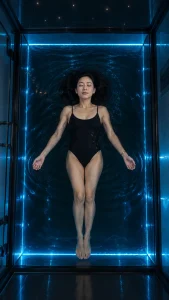
Updated: 10 Oct 2026 · By Float Vietnam
Key takeaways
- Every type of float tank, from Samadhi-style boxes to pods, cabins and open float rooms, works the same way: dense Epsom salt water at skin temperature, darkness and quiet.
- No published study shows one shell shape gives better results; a landmark 2018 study used an open pool in a dark, soundproof room.
- Judge a centre on water, filtration, air, darkness, silence and comfort, not on whether the tank has a lid.
Quick answer: There are five main types of float tanks: the classic Samadhi-style box, the moulded float pod, the walk-in cabin, the open float pool inside a private room, and the home float tent. All rely on dense Epsom salt water at skin temperature, darkness and silence. The shell is a design choice; the water and the room are what matter.
What makes a float a float?
A float is defined by what happens to your senses, not by the box around you. The North American Float Tank Standard, version 3, published by the Floatation Tank Association (FTA) in 2025, describes a float tank as a tub of Epsom salt solution with a specific gravity of 1.23–1.30 that provides a light- and sound-reduced environment at about 33.3–35.6 °C. It lists “float room”, “pod”, “spa” and “chamber” as other names for the same thing. In plain terms, three ingredients do the work. The water is so dense that you float without effort, with your ears just under the surface. Its temperature is close to that of your skin, so the line between body and water fades. And the space is dark and quiet, so your brain receives far less input than usual. Whether a fibreglass shell or a well-built room creates those conditions is an engineering question, not the definition of floating.
Researchers call the method floatation-REST (Restricted Environmental Stimulation Therapy); our guide to the many names of floatation therapy explains why. Water depth is almost always 25–30 cm, says version 2 of the standard. A swimming pool, a salt bath or a warm mattress cannot combine effortless buoyancy, skin-temperature water and strong sensory reduction.
How have float tank designs changed since 1954?
Float tank design has moved steadily from tight, sealed containers towards more space. The first isolation tank was built in 1954 by neuroscientist John C. Lilly at the US National Institute of Mental Health. According to a 2015 essay on floating history in Aeon, it resembled a large upright coffin, and the floater hung in the water wearing a rubber breathing mask. The big change came in the 1970s. After attending one of Lilly’s workshops in 1972, computer programmer Glenn Perry designed the first affordable horizontal tanks for home use, sold as Samadhi tanks, in which a saturated Epsom salt solution let people lie on their backs with no mask. Commercial float centres followed later that decade; sources disagree on whether the first opened in 1975 or 1979. Since then, each new generation of design has tried to keep the isolation while giving the floater more room.
- 1954: Lilly’s upright tank at the NIMH, with a breathing mask.
- 1972 onwards: Glenn Perry’s horizontal Samadhi tanks, then the first commercial centres in the late 1970s.
- 1980s: a boom helped by the 1980 film Altered States, then a long decline from the mid-1980s. Researchers Peter Suedfeld and Roderick Borrie renamed the method REST.
- Early 1990s: walk-in float rooms (cabins) with standing height appear in the UK.
- 2009: the i-sopod, which its maker says was the first float tank to be called a “pod”.
- 2010s: open float pools in purpose-built rooms, including the custom pool at the Laureate Institute for Brain Research (LIBR) in Tulsa, USA, used in clinical studies.
The LIBR researchers note that many people found early tanks too confining, and credit the revival of floating partly to more spacious tanks and pools.
What are the main types of float tanks?
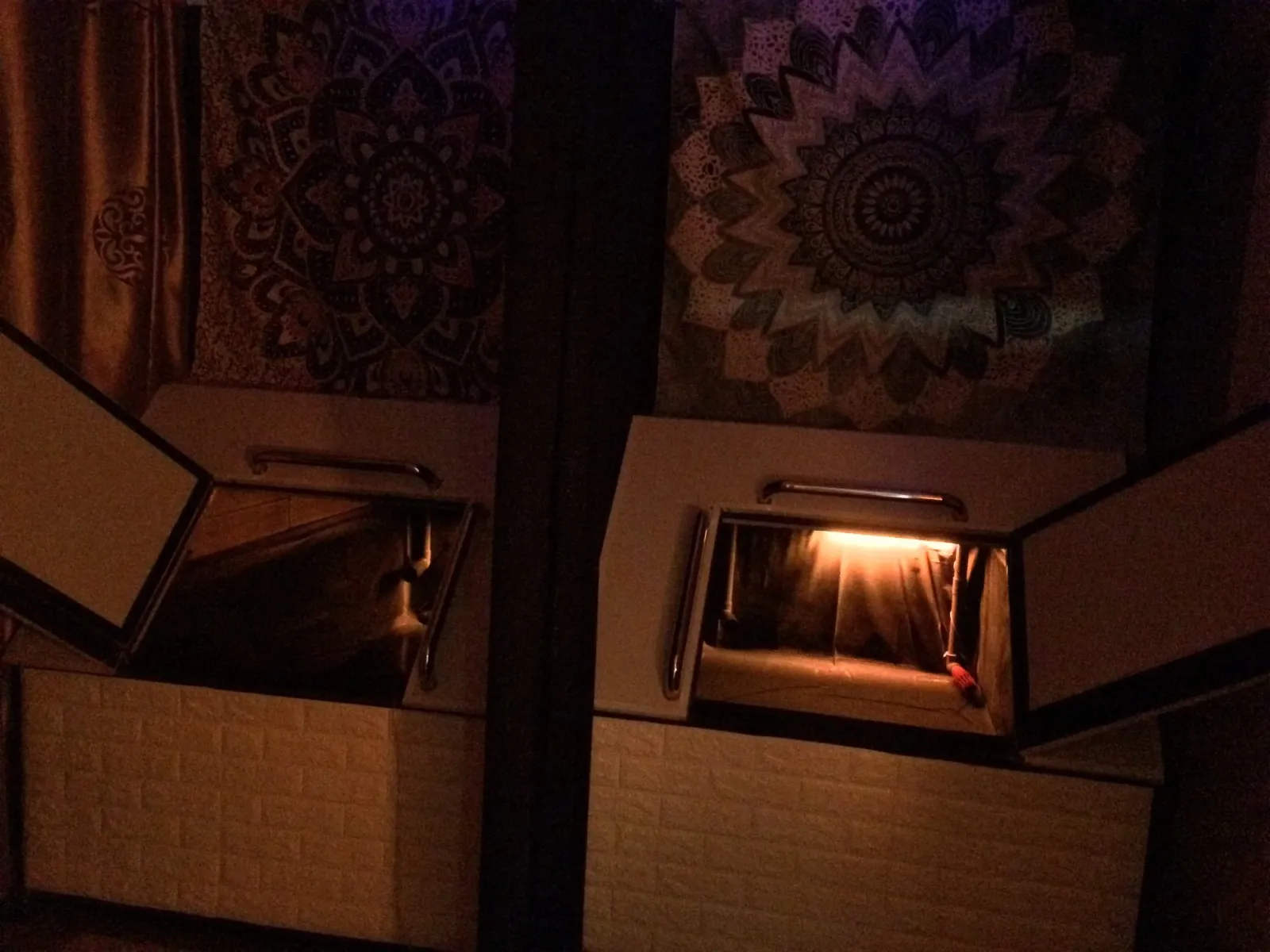
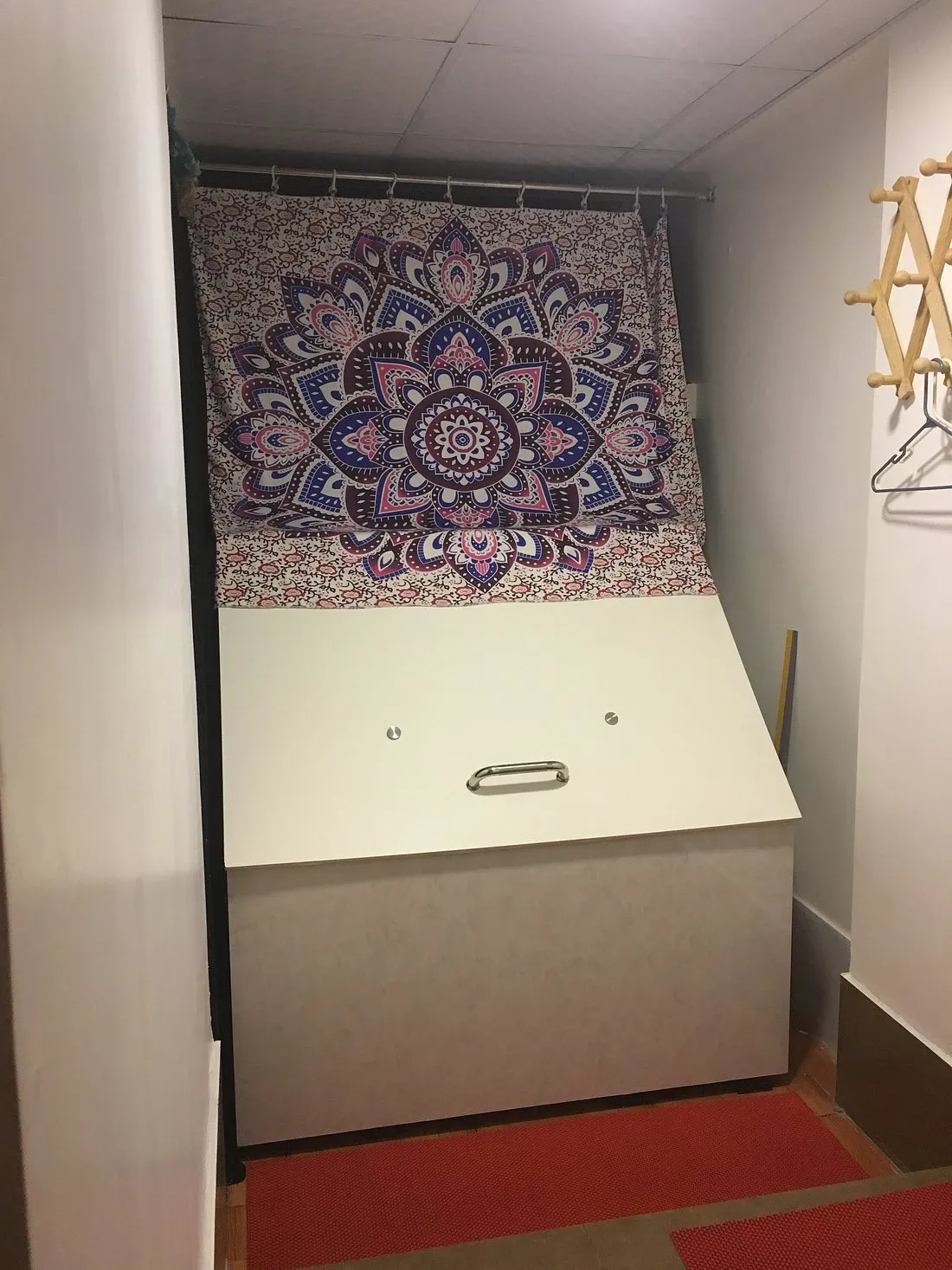
Sensory deprivation tanks come in five broad types. The Samadhi-style tank is a rectangular enclosed box, about 1.2 × 2.4 m, with a hinged door. The float pod is a moulded fibreglass shell with a lifting lid, usually rounder than the early boxes. The walk-in cabin is a full-height enclosure with a door, so you step in standing up. The open float pool has no enclosure at all: the private room around it is built to be dark, quiet and warm. The float tent is a lightweight frame with a fabric cover, mostly for home use. Note that “float room” is used loosely. The FTA standard uses it for the room around a tank, with its shower and changing area, while in marketing it can mean a walk-in cabin or an open pool room. When you compare centres, ask what is actually inside the room.
Samadhi-style tank
The original commercial design. Samadhi’s current home tank measures 4 × 8 ft (about 1.22 × 2.44 m) and is sold as soundproof and lightproof with “no air vents into the room”. The research tanks at Karlstad University in Sweden were similar boxes, with 95 cm of headroom in a 2001 study and 130 cm in a 2016 trial, where floaters controlled ventilation and light from inside. Strengths: the shell isolates well. Limits: low headroom, and some people find the box confining.
Float pod
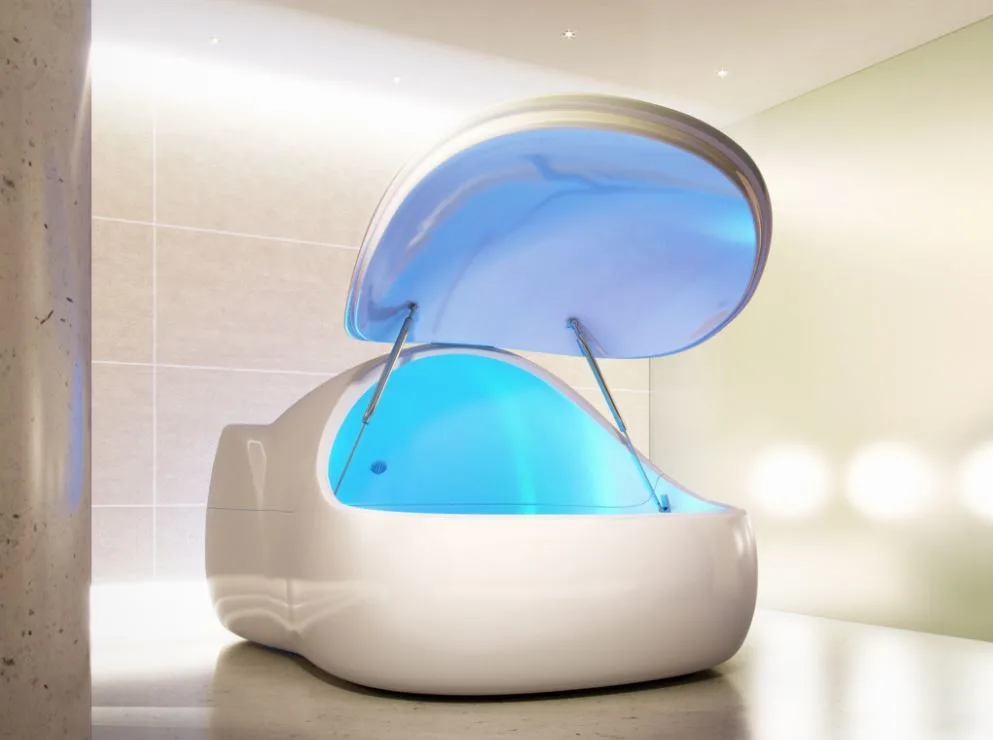
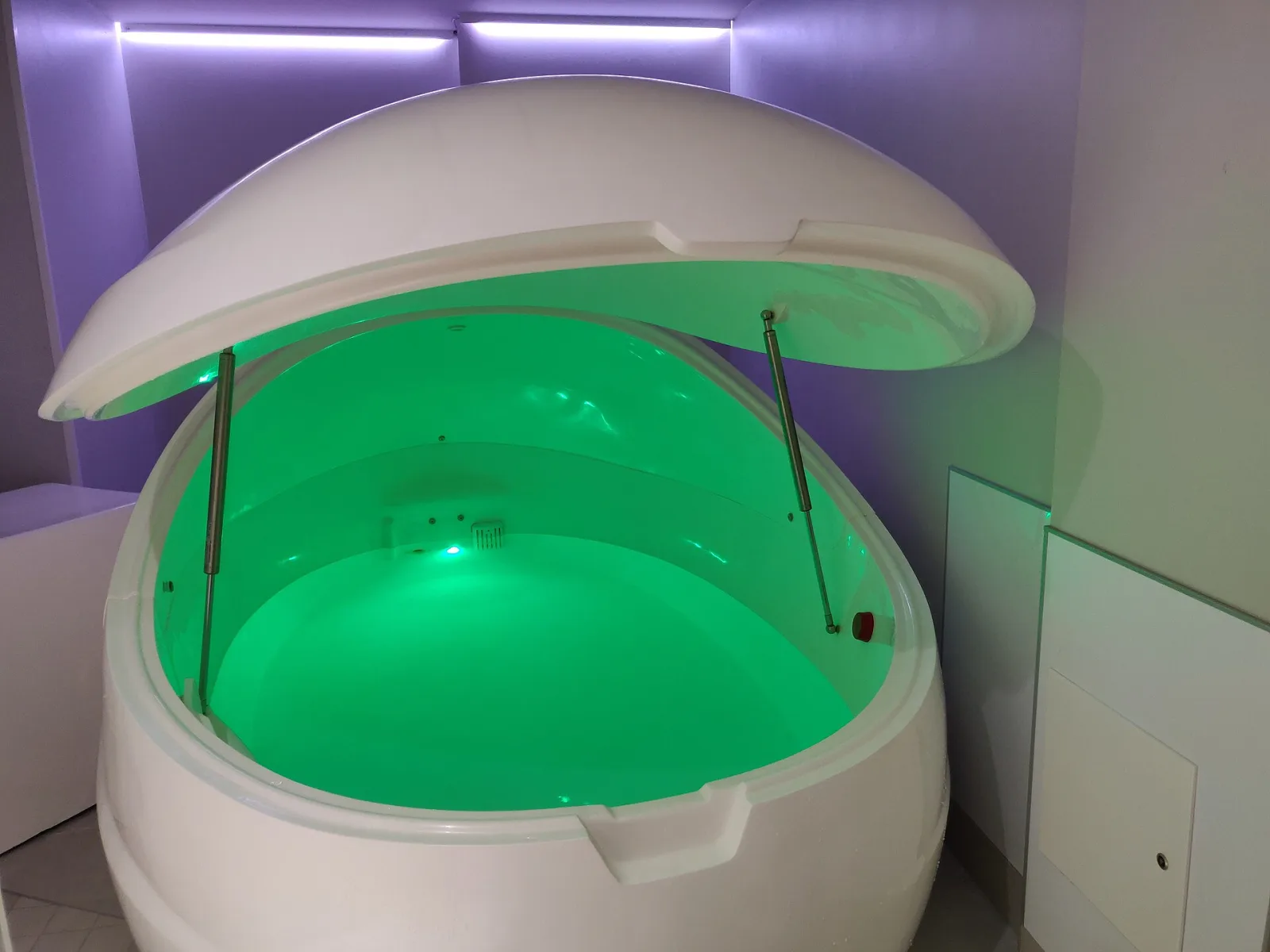
Pods are the newest enclosed design. The i-sopod, first made in 2009, is about 2.6 × 1.7 × 1.3 m outside and uses 525 kg of Epsom salt; its maker asks for mechanical ventilation in the room. Floataway’s Tranquility pod is 252 × 160 cm, 161 cm high closed, and can be used with its door fully open. Strengths: the shell blocks light and sound on its own, and some people love the cocoon feeling. Limits: a small air space above the water, ventilation that ranges from passive to mechanical, and some floaters prefer the lid ajar.
Walk-in cabin
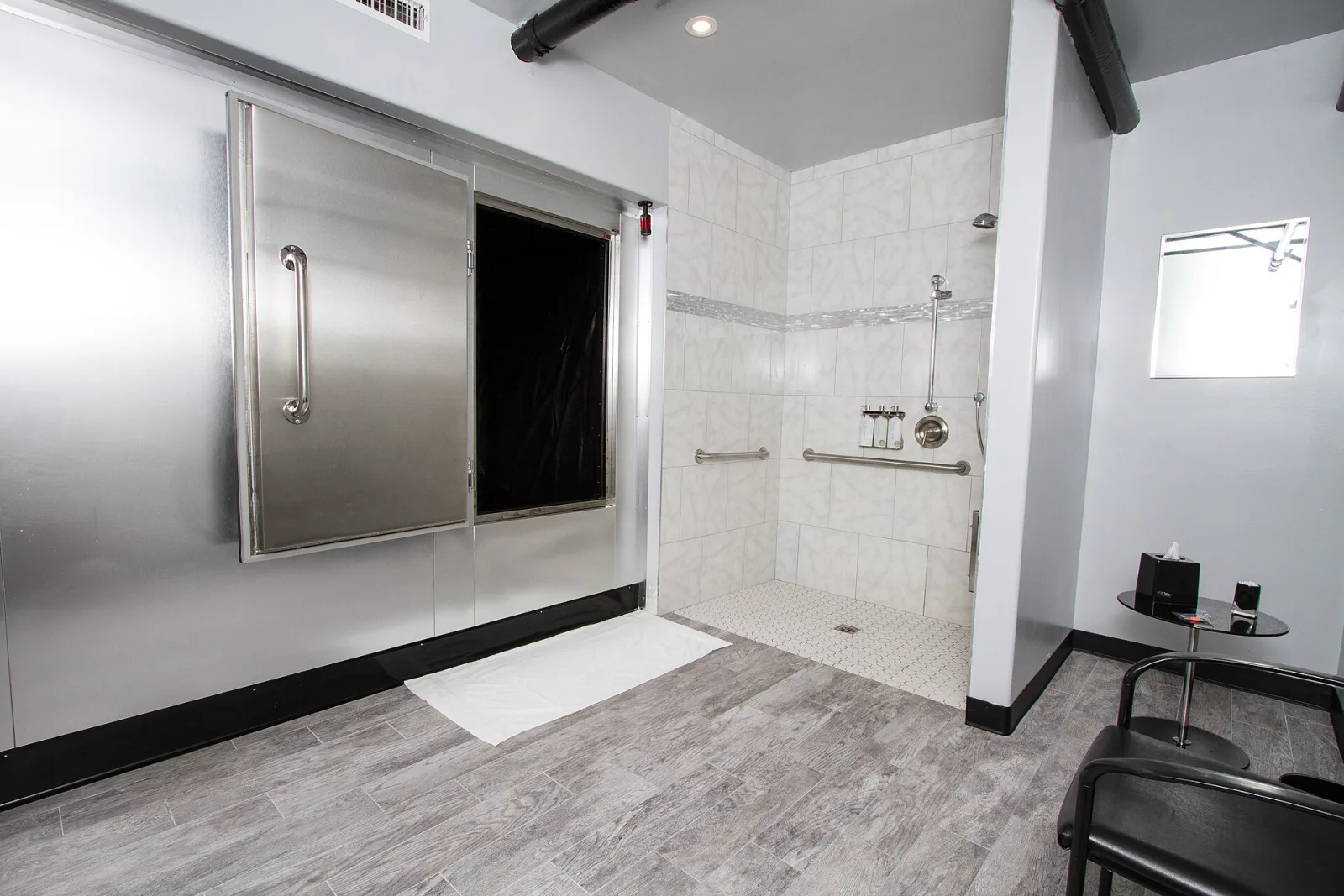
A cabin is a room inside a room: an insulated enclosure tall enough to stand in. The Ocean Float Rooms single cabin is 244 × 145 cm with 200 cm internal height, and its double is 244 × 204.5 cm; the maker says the door does not lock and can be left ajar. Strengths: standing headroom, easier entry, more air. Limits: it is still an enclosure, and quality depends on insulation and ventilation.
Open float pool (float room)
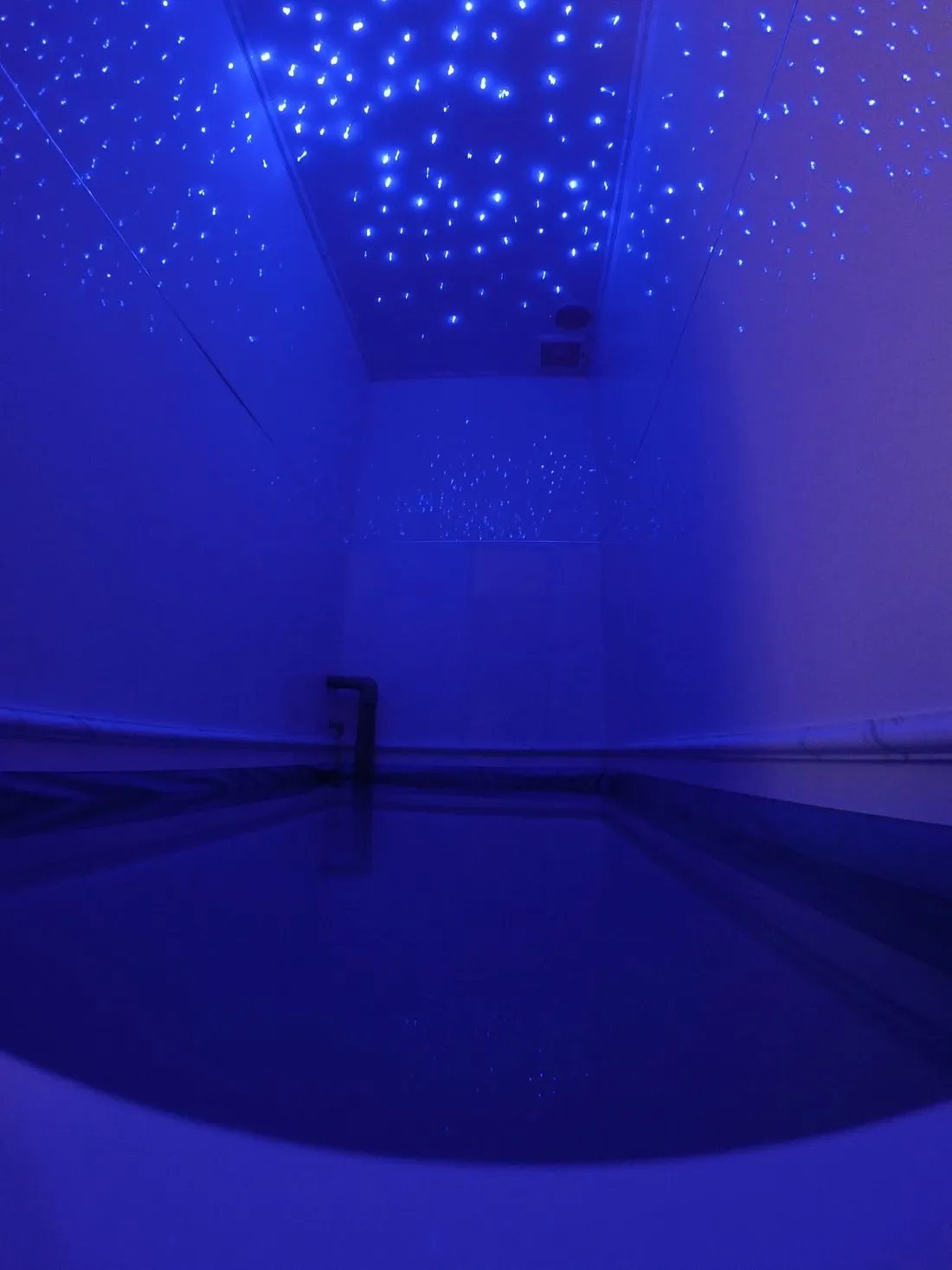
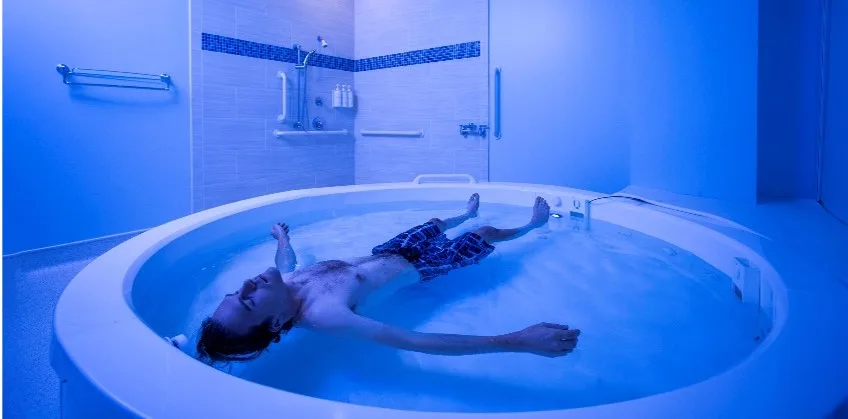
An open pool has no lid, shell or cabin; the room provides darkness, quiet and warm air. The best-documented example is at LIBR: a round pool 2.44 m across with 28 cm of water, in a soundproof, lightproof, temperature-controlled room with multi-layer insulated walls, a light-sealing door gasket and 48 rubber springs under the pool to stop vibration. Strengths: no enclosure, full headroom, easy entry, the most air. Limits: the room must be built for the job; an open pool in an ordinary room will not be dark or quiet enough.
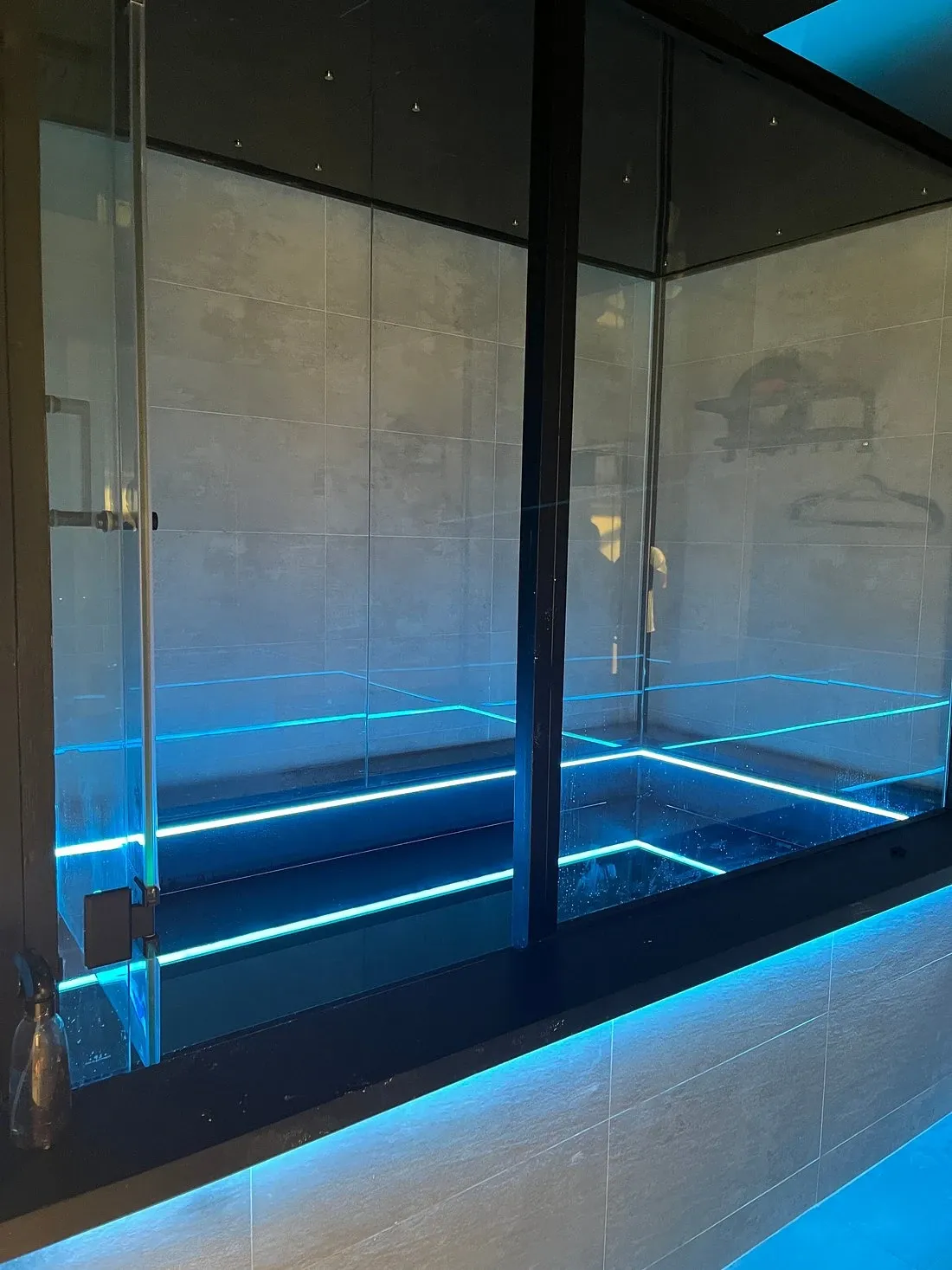
Float tent
The 2014 Zen Float Tent is a pyramid steel frame with a waterproof canvas cover over an 8 × 4 ft base, holding 760 litres of water and 363 kg of salt: a lower-cost home option rather than a centre design.
| Samadhi-style tank | Float pod | Walk-in cabin | Open pool in a private room | Float tent | |
|---|---|---|---|---|---|
| Enclosure | Rectangular box, hinged door | Moulded shell, lifting lid or door | Full-height insulated cabin with a door | None; the room is the enclosure | Fabric cover on a frame |
| Interior height | About 95–130 cm (Karlstad research tanks) | Low; some models let tall people sit up | About 200 cm, standing height | Full room height | About 1.6 m at the apex |
| Light & sound control | From the shell | From the shell (insulated walls, foam core in some models) | Cabin insulation plus the room | Entirely from the room build: walls, door seals, vibration isolation | Limited; depends on the home room |
| Air & ventilation | Small air volume; some designs have no vents into the room | Small air volume; passive to mechanical systems | Larger air volume; maker gives ventilation guidance | Largest air volume; needs dedicated room ventilation | Not stated |
| Claustrophobia | Enclosure is the most common trigger | Lid can often be left open | Lower; some doors cannot lock | Lowest; no enclosure | Moderate |
| Couples | Single only | Needs an extra-wide model | Double cabins, e.g. 244 × 204.5 cm | Large round or square pools | Single |
| Entry, exit & mobility | Step over the rim, crouch under the door | Step over the rim, duck under the lid | Walk in standing up | Step in from standing height | Crawl in |
| Hygiene access | Surfaces under the lid harder to reach | Surfaces under the lid harder to reach | Walk-in access | Fully open, easy to see and wipe | Fabric needs care |
| Real specs | Samadhi home tank 1.22 × 2.44 m; Karlstad tank 270 × 150 × 130 cm, 30 cm water | i-sopod 2.6 × 1.7 × 1.3 m, 525 kg salt; Tranquility 252 × 160 cm, 750 kg water and salt | Ocean single 244 × 145 cm, 200 cm high | LIBR pool 2.44 m round, 28 cm water, over 800 kg salt; Ōmni Space single pool 1.2 × 2.4 m, 25 cm water | Zen Float Tent 8 × 4 ft, 760 L, 363 kg salt |
Sizes are published maker or research figures; entry and hygiene rows are general observations.
Which types of float tank has research used?
Float research has used almost every design, and no published study has compared shell types head to head. A 2025 systematic review of 63 studies by Lashgari and colleagues even lists variation in tank type as a limit on how far its findings can be generalised. The Swedish work at Karlstad University used enclosed tanks. The widely cited 2018 anxiety study by Feinstein and colleagues at LIBR used an open pool in a purpose-built room; the team removed the enclosure found on most tanks specifically to reduce claustrophobia, and anxious participants reported a large short-term drop in anxiety after one float. In a 2024 trial, Garland and colleagues let participants choose an open or an enclosed pool. A 2021 chronic pain trial by Loose and colleagues used a pod. The evidence covers all types, and none of it shows that one shape works better.
| Study | Environment | Key detail |
|---|---|---|
| Kjellgren et al. 2001 | Enclosed tank, Sweden | 262 × 167 × 95 cm; 20–30 cm water; 34.4 °C |
| Jonsson & Kjellgren 2016 | Enclosed tanks, Karlstad | Insulated against sound and light; earplugs; floaters controlled ventilation and light |
| Feinstein et al. 2018 | Open round pool in a dark, soundproof room (LIBR) | Enclosure removed to reduce claustrophobia; 48 of 50 anxious participants floated the full hour |
| Loose et al. 2021 | Pod (Floataway Tranquility) | 13 participants asked to float with the lid open; all but one opened it less than 5 cm |
| Garland et al. 2024 | Open or enclosed round pool, participant’s choice | 2.44 m wide, 28 cm deep, lightproof and soundproof rooms; floating was well tolerated |
| Lashgari et al. 2025 | Review of 63 studies | Variation in tank type listed as a limitation |
Two cautions. The Loose trial found no long-term chronic pain benefit over placebo, so float research is promising but still limited. The LIBR authors also argue that enclosed tanks may heighten anxiety in some people and often ventilate poorly near the water; that is their expert view, not a measurement, and we found no published CO₂ or humidity data from inside pods. See also our summary of scientific studies on floatation therapy.
How do you judge a float centre, whatever the tank type?
Because the shell is not what makes a float work, the useful questions are about water, air and the room, and a good centre should be happy to answer them. Start with the water: its specific gravity should sit in the FTA range of 1.23–1.30, and its temperature around 33.3–35.6 °C, close to skin temperature. Then ask about cleaning. The FTA standard requires the water to pass through the filter at least three times between floaters, with four encouraged, and names UV light, ozone or both as the sanitation system, with hydrogen peroxide allowed as an extra oxidiser up to 100 ppm. Next, check comfort: how fresh air reaches the float space, whether it goes completely dark, how quiet it is, and whether you control the light and door yourself. The standard says floaters may choose their own light, sound, door position, temperature and time.
- Specific gravity of 1.23–1.30, measured regularly with a hydrometer.
- Water and air close to skin temperature, about 33.3–35.6 °C.
- Filtration of at least three full turnovers between floaters.
- Sanitation based on UV and/or ozone; the standard does not recommend chlorine or bromine.
- A clear answer on how fresh air reaches the float space.
- Full darkness, with a light you control.
- Real quiet, with no pump noise during your float.
- A private shower, earplugs and a neck pillow.
- A short orientation, including how to find the exit in the dark.
If tight spaces make you nervous, ask whether you can leave the door or lid open, or choose an open room. Our guide to float therapy and claustrophobia has practical tips, and is float therapy safe? explains who should check with a doctor before floating.
Which float tanks has Float Vietnam used?
Float Vietnam has worked with three generations of float environments, and each step taught us something about what guests need. When we opened Float Hanoi in 2017, there was no float tank anywhere in Vietnam, so we built our own Samadhi-style tanks: enclosed rectangular boxes in private rooms. Float Hanoi is now temporarily closed. For Float Saigon we built an enclosed walk-in float cabin, modelled on the Ocean Float Room design, which gave guests standing height. Over time we saw that the enclosure itself was what made some guests uneasy, so we moved to glass-enclosed open pools, specifically to reduce claustrophobic feelings. Today our float rooms are at Ōmni Space in Thảo Điền, Ho Chi Minh City: a single room with a rectangular pool and a couple room with a square pool, each behind soundproof glass doors that keep out light completely when closed.
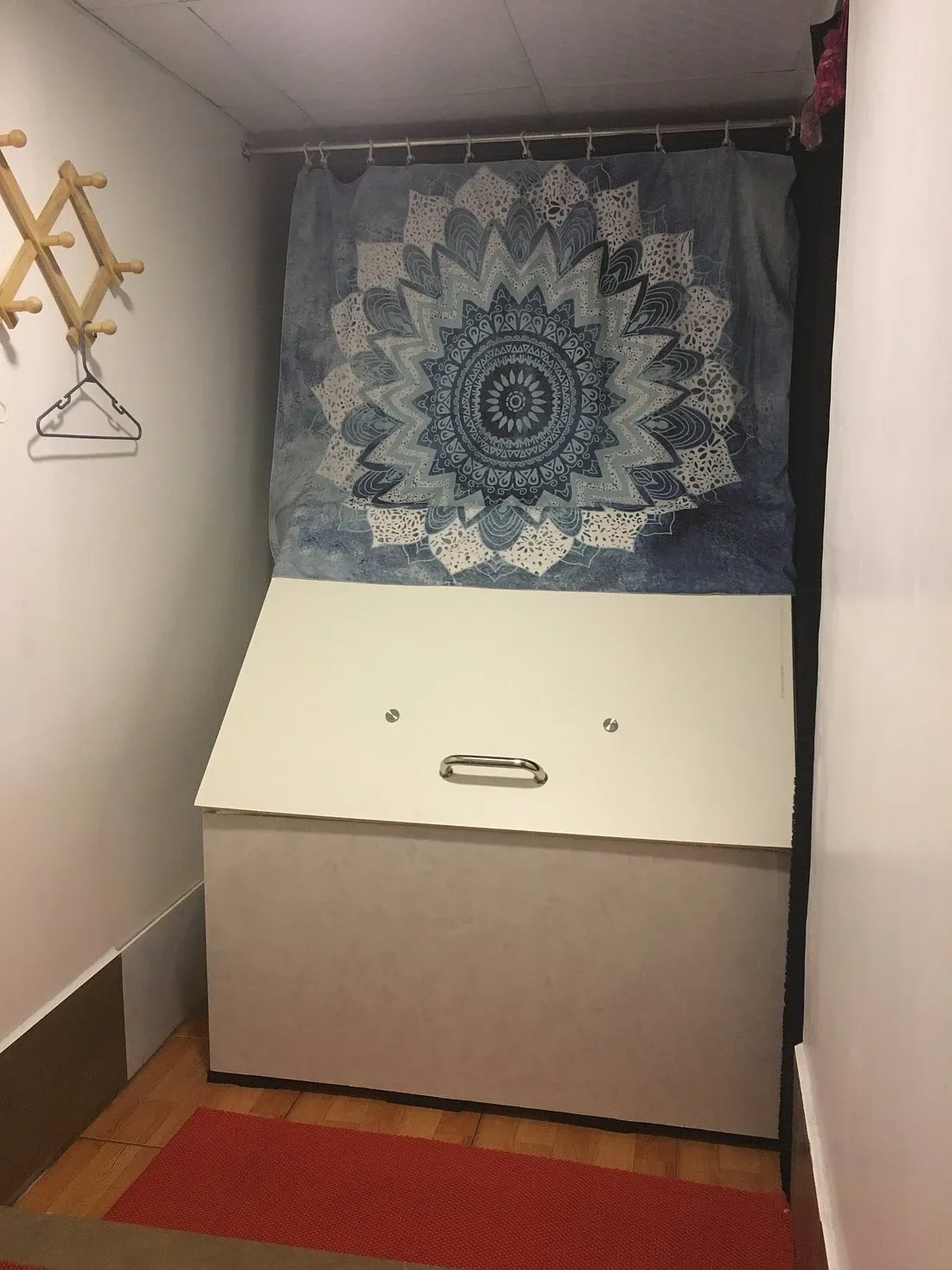
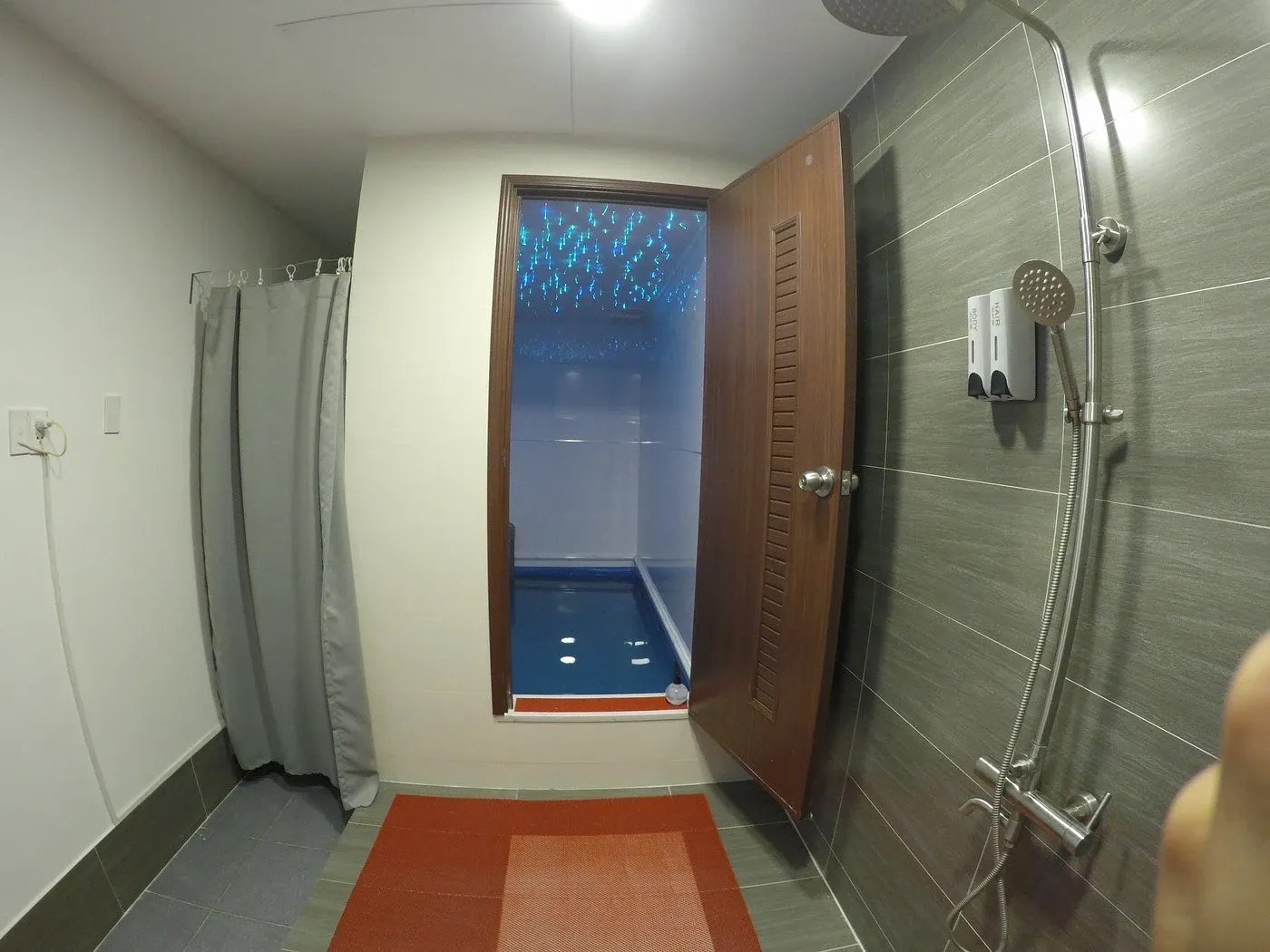
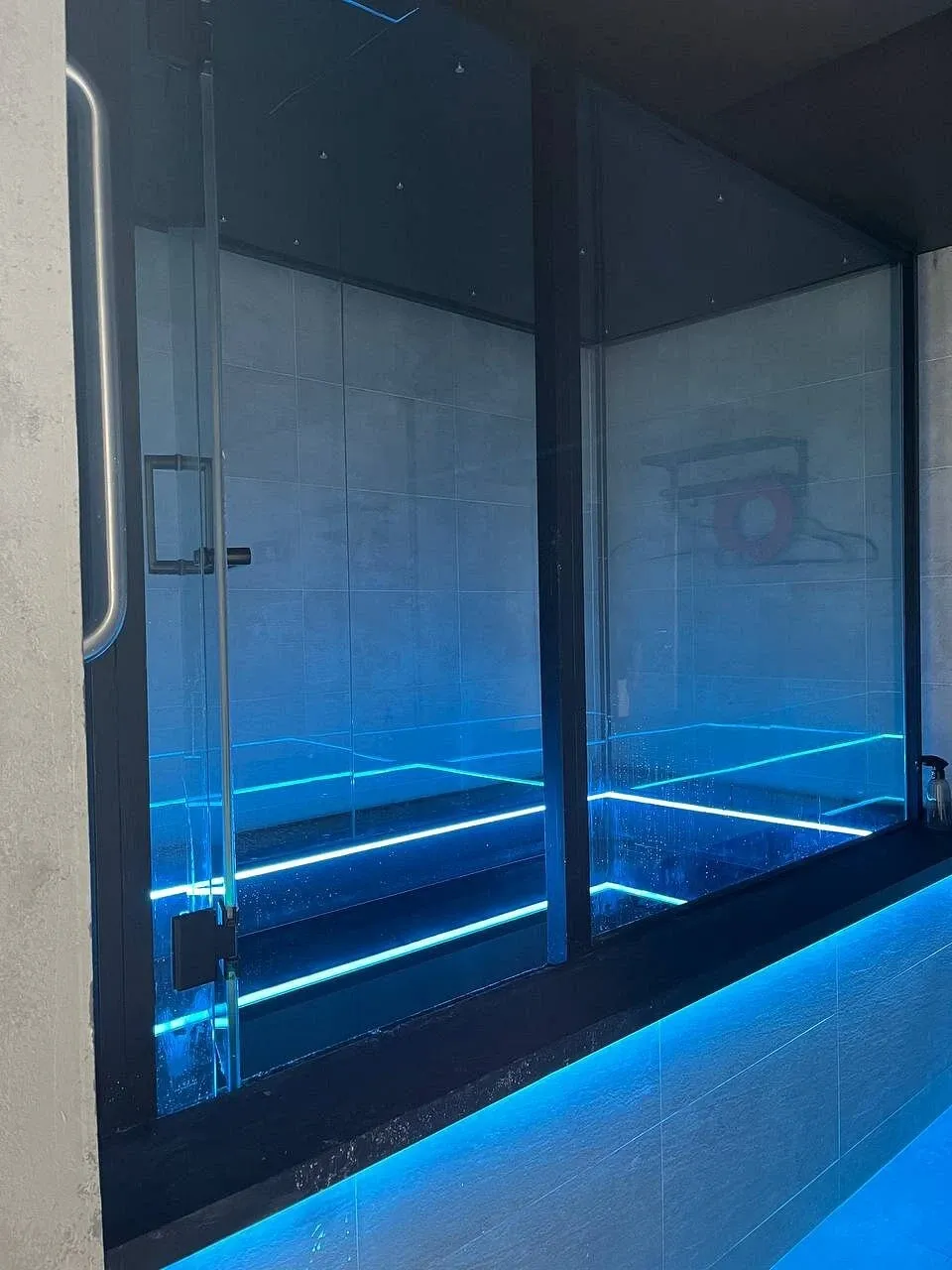
The single pool is 1.2 × 2.4 m with about 25 cm of water (around 720 litres); each pool holds about 500 kg of Epsom salt, we measure specific gravity regularly, and the water stays at about 34–35 °C. A dedicated ventilation system serves the rooms, guests can adjust the lights, and a Halo neck pillow is available. After every float a 16.8 m³/h filter pump (about 270 L/min) runs for 15 minutes, roughly 5.6 full turnovers against the FTA minimum of three, plus 10 minutes every two hours, day and night. Sanitation combines UV, hydrogen peroxide, ozone and a spa enzyme. With the doors closed, the owner’s own sound meter reads near 0 dB, close to its lower limit: an informal reading, not a lab test. The full story is in Float Vietnam’s three generations of float tanks.
What are the common myths about float tank types?
Most myths about float tanks confuse the container with the conditions inside it. The one we hear most often is that only a pod is a “real” float, and it has no published evidence behind it. The FTA standard puts rooms, pods and cabins under the same definition, the well-known LIBR anxiety studies used an open pool, and the word “pod” only entered the industry in 2009, decades after the first tanks. Pods do have genuine strengths: a shell blocks light and sound by itself, and some people really enjoy the cocoon. But a well-built open room can reach the same darkness and quiet through its walls, door seals and ventilation. The test is always the same: dense water at skin temperature, darkness, silence, fresh air, clean water and a floater who feels comfortable enough to let go.
- “Only a pod is a real float.” The standard defines a float by water, temperature and a light- and sound-reduced space, not shell shape. Read float pod vs float room.
- “You must close the lid.” The standard leaves door position to the floater; in the 2021 pod trial some kept the lid slightly open. No study shows lid position changes results.
- “Open rooms aren’t sensory deprivation.” They are when built for it: the LIBR room is completely dark once the door is sealed and its small LED is off.
- “Pods are more hygienic.” No comparative data exists; the standard applies the same rules to every type.
- “Dry float is float therapy.” Dry-float beds keep you dry on a water-filled mattress, often without darkness or silence. See dry float vs float therapy.
- “A floating sound bath is float therapy.” A sound bath adds sound; float therapy takes stimulation away. See floating sound bath vs float therapy.
Try it at Ōmni Space. Float Vietnam’s float rooms are at 16C Quoc Huong, Thao Dien, Ho Chi Minh City (Saigon), open daily 9:00–21:00. Book a float or read the float therapy FAQ.
Frequently asked questions
What is the difference between a float pod and a float tank?
A pod is one type of float tank: a moulded shell with a lifting lid, first sold under that name in 2009. “Float tank” is the general term covering rooms, pods and cabins.
Is an open float room as effective as a pod?
No study has compared them directly. The well-known 2018 LIBR anxiety study used an open pool in a dark, soundproof room.
Which type of float tank is best if I am claustrophobic?
An open float pool in a private room, or a walk-in cabin whose door you can leave ajar, is usually the easiest. The LIBR team removed the enclosure from its research pool specifically to reduce claustrophobia.
Can two people float together?
Yes, in a pool or double cabin designed for two. At Ōmni Space in Saigon, the couple room has a square pool for two people.
How deep is the water in a float tank?
Usually 25–30 cm, with a specific gravity of 1.23–1.30 so you float without effort. Ōmni Space uses about 25 cm of water and about 500 kg of Epsom salt per pool.