Updated: 10 Oct 2026 · By Float Vietnam
Key takeaways
- A dry float is a bed with warm water under a waterproof membrane: you lie on it dry, usually fully clothed.
- We found no peer-reviewed trials of dry float beds; the “dry” condition in research (a dark, quiet room) did less than floating in water.
- The real difference is buoyancy in dense, skin-temperature Epsom water plus sensory reduction, not magnesium.
Quick answer: A dry float is a bed with warm water under a waterproof membrane, so you lie on it without getting wet. It can be pleasant, but it is not float therapy: there is no dense Epsom salt water holding you up, the room is often not fully dark or silent, and there is almost no research on it.
What is a dry float and how does a session work?
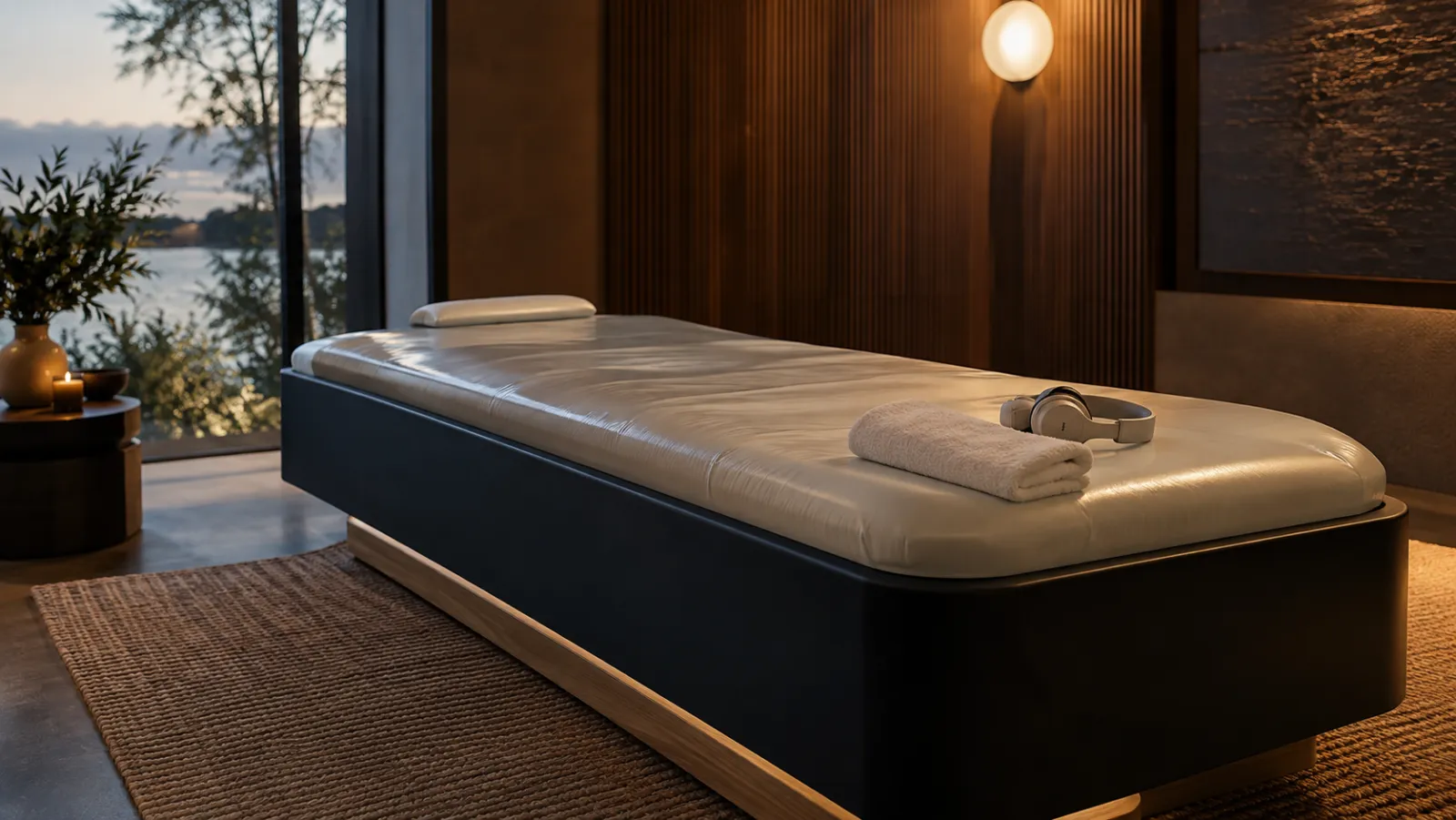
A dry float is a special bed. Under a waterproof membrane or mattress sits a reservoir of water, and that water supports your body. You stay dry and usually keep your clothes on, so there is no need to shower before or after. Some versions are heated liquid-filled mattresses. One dry flotation bed launched in 2026 holds about 500 litres of water, offers a warm mode of 36–45 °C or a cool mode of 4–6 °C, and runs 30-minute warm sessions with headphones. Some products add vibroacoustic sound or jet massage, which means more stimulation, not less. That is why dry floats usually sit on spa menus as a relaxation service. They share the feeling of lying on water with float therapy, but the way they work and what they aim for are quite different, as the sections below explain.
- You lie down on the bed, usually clothed.
- Water under the membrane supports your back and legs.
- The temperature may be warmer or cooler than your skin, depending on the mode.
- Many sessions include music, headphones or vibration and last around 30 minutes.
Is there any research on dry float?
We have not found any peer-reviewed trial of dry float beds. Searching for “dry flotation” mostly turns up studies of floating in water (floatation-REST) and of chamber-REST. This is a naming trap: in REST research, the “dry” condition means lying in a dark, quiet room, not lying on a water bed. In a direct comparison, Kjellgren and colleagues (2004) found that floating in water produced a significantly stronger altered state of consciousness than lying in the dark room. Another study at the Laureate Institute for Brain Research (Al Zoubi et al., 2021) found that floating raised serenity and lowered anxiety more than lying in a zero-gravity chair under the same quiet conditions. In other words, when the dense salt water is taken away, the measured effect usually gets weaker, not stronger.
The largest systematic review so far (Lashgari et al., 2025) covered 63 studies, all of them floating in salt water. Those results cannot be transferred to dry float beds. For an overview, see scientific studies on floatation therapy.
How does dry float differ from float therapy?
Float therapy (floatation-REST) is defined quite precisely in the Floatation Tank Association standard: a tub of saturated Epsom salt solution with a specific gravity of 1.23–1.30, water at about 33.3–35.6 °C, in a light- and sound-reduced environment. The water is so dense that you float without effort, and your ears sit underwater, so outside sound almost disappears. Because the water matches your skin temperature, after a while it becomes hard to tell where your body ends and the water begins. A dry float keeps the feeling of being supported but loses almost everything else: no immersion in dense solution, ears out of the water, a temperature that is often above or below skin temperature, and a spa room that is rarely fully dark or silent. The table below sums up the main differences.
| Feature | Dry float | Float therapy |
|---|---|---|
| How you are supported | Water-filled mattress or membrane; you stay dry | Floating directly in Epsom water, specific gravity 1.23–1.30 |
| Temperature | Often warmer (36–45 °C) or cooler than skin | Close to skin temperature, about 33.3–35.6 °C |
| Sound | Often music, headphones, sometimes vibration | Kept to a minimum; ears in the water, earplugs offered |
| Light | Depends on the spa room | Fully dark, or controlled by you |
| Typical length | About 30 minutes | 60–90 minutes |
| Research | No trials found | Dozens of studies, small but promising |
Is magnesium the main difference?
Many people assume the key benefit of float therapy is magnesium absorbed from Epsom salt, so a dry float without salt water must miss the most important part. The evidence does not support this. A review by Gröber and colleagues (2017) concluded that the promotion of transdermal magnesium is scientifically unsupported. Hair follicles and sweat glands, the main routes through which substances might cross the skin, make up only about 0.1–1% of its surface. The often-quoted Epsom bath study was never published in a peer-reviewed journal, and a study of two hours of immersion at 35 °C found no change in blood plasma magnesium. So the real difference between a dry float and float therapy is buoyancy in dense, skin-temperature water combined with sensory reduction. Epsom salt matters because it makes the water dense enough to float in.
Read more: Epsom salt baths and what they can do.
When can a dry float still be a good choice?
A dry float is not “fake floating”; it is simply a different service. A warm, soft bed with gentle music for 30 minutes can be a very pleasant break in a busy day, especially as part of a spa visit. It also suits people who cannot or prefer not to get in the water for now: someone with an open cut or a new tattoo that has not healed, someone who does not want to wash their hair and shower again, or someone short on time. What matters is having the right expectations. If you want light, easy relaxation, a dry float can deliver it. If you want the weightless, dark and deeply quiet experience described in float research, that is a different thing. A similar comparison of spa options is in float vs massage vs sauna.
How can you recognise genuine float therapy?
Names in the market are messy: “float”, “floating” and “sensory deprivation” can describe quite different services. The surest way to check is to ask about the core elements, not the shape of the tank. A real float therapy session needs Epsom salt water dense enough to float in easily, water close to skin temperature, a dark and quiet space, and filtration and sanitation between guests. A closed tank, a cabin and an open float room can all meet that bar if they get these basics right; see the types of float tanks and float pod vs float room. Before you book, a few simple questions to the centre will tell you most of what you need to know about what you are actually paying for, whatever the tank looks like.
- How much Epsom salt is in the pool, and is specific gravity measured regularly?
- Is the water around 34–35 °C, and is the room dark and soundproof with the door closed?
- How is the water filtered and sanitised (UV, ozone) between guests?
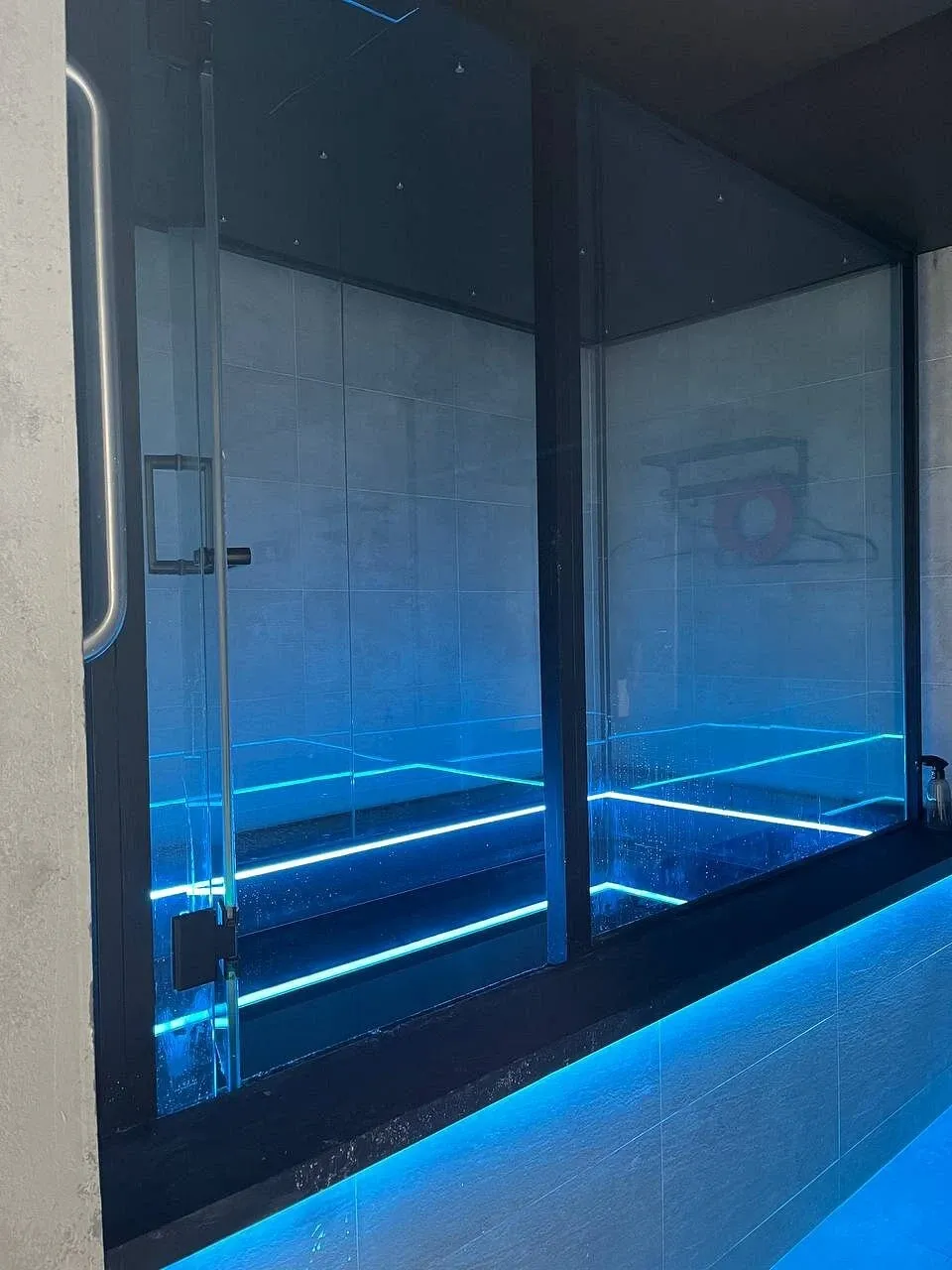
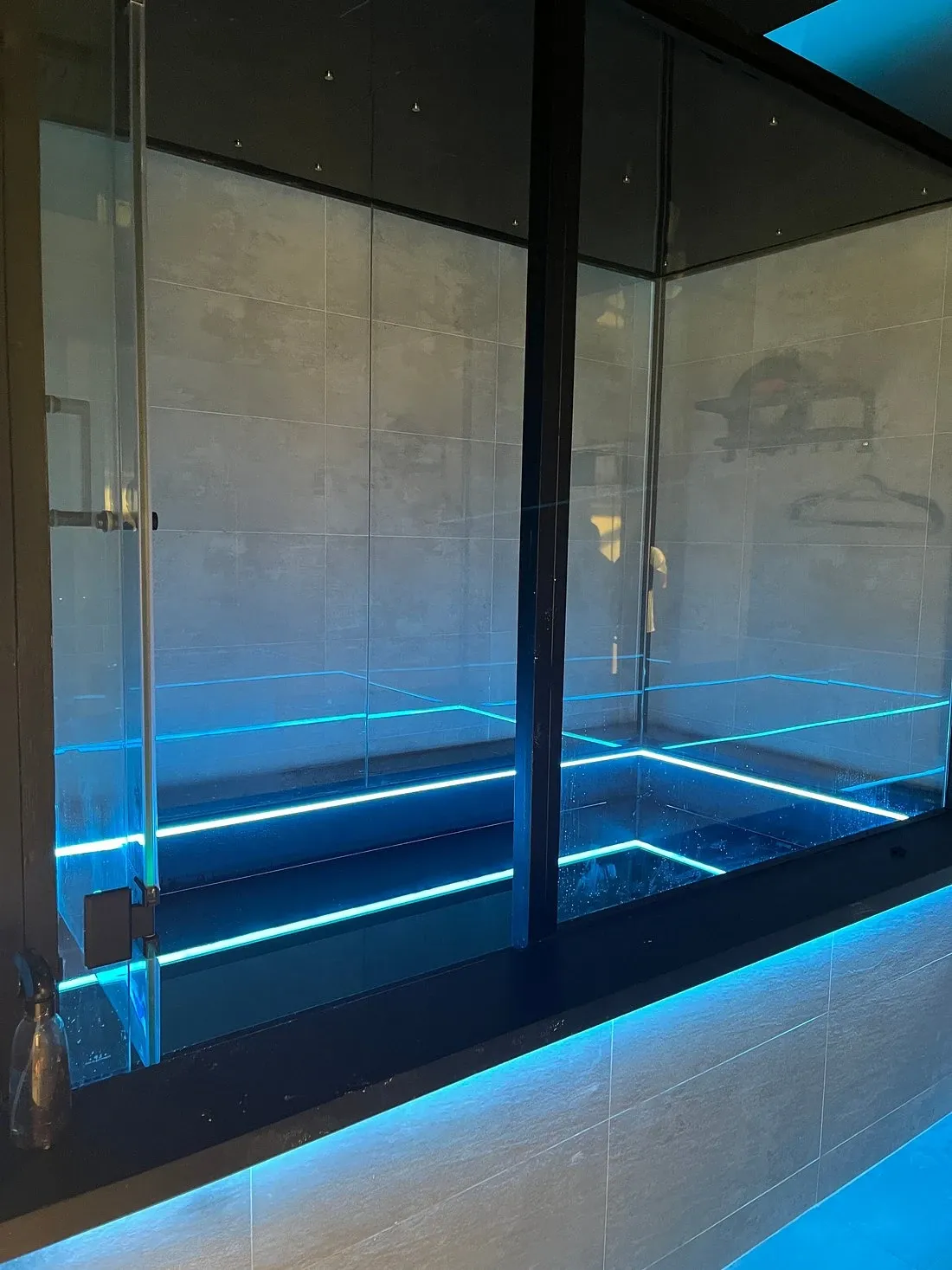
Try it at Ōmni Space. Float Vietnam’s float rooms are at 16C Quoc Huong, Thao Dien, Ho Chi Minh City (Saigon), open daily 9:00–21:00. Book a float or read the float therapy FAQ.
Frequently asked questions
Is a dry float the same as float therapy?
No. A dry float means lying on a water bed while staying dry, while float therapy means floating directly in dense Epsom salt water at skin temperature in a dark, quiet space.
Does a dry float have the same effects as floating in water?
There is no evidence for that. We found no trials of dry float beds, and in research the “dry” condition produced weaker effects than floating in water.
Do you absorb magnesium when you float?
Evidence for magnesium absorption through the skin is weak (Gröber et al., 2017). The benefits of float therapy are thought to come from buoyancy and reduced sensory input.
Who might prefer a dry float?
People who should stay out of water for now, such as those with an open wound or a new tattoo, or anyone who wants a short relaxing break without showering afterwards.