Key takeaways
- Floating removes light, sound, touch and gravity, giving the nervous system a rare chance to switch out of “alert” mode.
- A 2005 meta-analysis of floatation-REST studies reported lower stress hormones, lower blood pressure and better wellbeing after floating.
- Benefits build with a series of floats, and in one Swedish study improvements were still present about four months later.
Quick answer: Floating reduces stress by taking away almost every source of stimulation at once: no light, no sound, no pressure on the body and no phone. In that calm, safe space the body’s stress response settles, and studies of floatation-REST report lower cortisol and blood pressure, less anxiety and better sleep. Effects are usually strongest after a series of sessions.
Why stress needs a real break
Short bursts of stress help us react and focus. The problem is stress that never switches off: deadlines, traffic, notifications and worry keep the body in a low-level “fight or flight” state. Over time this is linked to poor sleep, muscle tension, headaches, low mood and a higher risk of long-term health problems.
Most of us rarely get a true pause. Even on holiday or in a quiet room, the brain keeps scanning for sounds, light and messages. A float room is built to remove all of that for an hour or more.
How floating calms body and mind
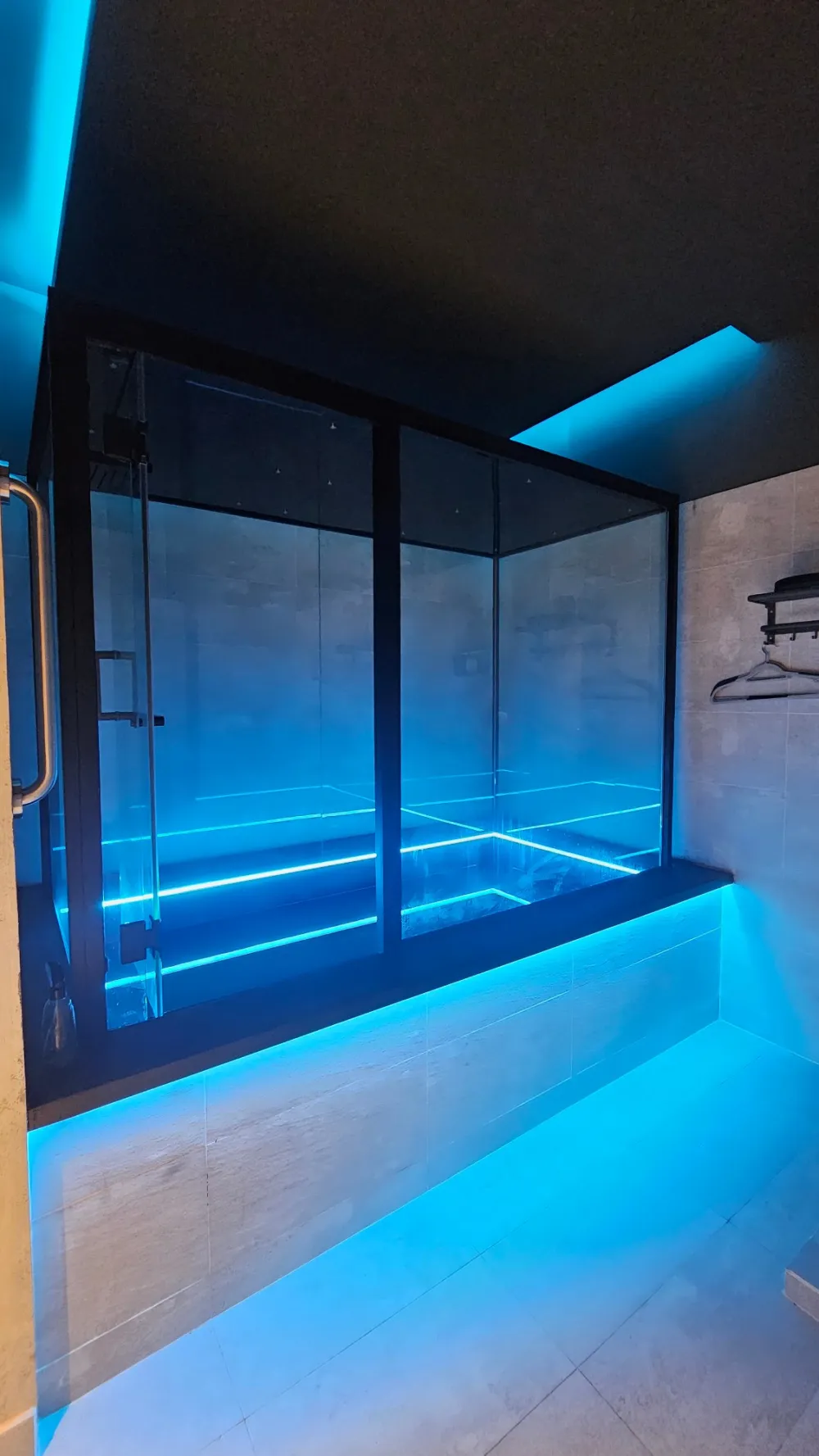
- No distractions: the float room is dark and quiet, and your phone stays outside. Many floaters describe it as the one place where nobody can reach them.
- No gravity load: in about 25 cm of water with roughly 500 kg of dissolved Epsom salt, you float effortlessly. Muscles that normally hold you up can finally let go.
- Skin-temperature water: at around 33–34 °C, the boundary between body and water fades, which helps the mind settle into deep rest.
- A sense of safety: interview studies with regular floaters describe the tank as a calm, protected space, which makes it easier to let go of tension. See why silence is good for your brain.
What the research says
Floatation-REST (Restricted Environmental Stimulation Technique) has been studied since the 1980s. A meta-analysis by van Dierendonck and te Nijenhuis (2005) pooled the results of earlier studies and found that floating was linked to lower cortisol and blood pressure and better self-reported wellbeing.

In a randomised trial with healthy adults, Kjellgren and Westman (2014) found that a series of floats reduced stress, anxiety and depression and improved sleep and optimism compared with a control group. Bood and colleagues (2006) studied people with stress-related ailments over a 12-session program and reported that many improvements were still present at a follow-up about four months later. Feinstein and colleagues (2018) found that a single float reduced anxiety and improved mood in people with anxiety and stress-related disorders.
Most studies are small, but the direction of the results is consistent. You can browse more in our overview of scientific studies on floating.
How to float for stress relief
- Choose a longer session: 90 minutes is ideal for beginners, because the first part of a float is often spent settling in.
- Float as a series: 2–3 floats a month for 2–3 months, then 1–2 a month once you have about 10 floats behind you. See how often you should float.
- Protect the afterglow: avoid rushing back to email; take a slow walk or a quiet coffee after your float.
- Combine with other habits: sleep, movement and, if stress feels overwhelming, support from a doctor or counsellor.
Note: This page is for general information. Float therapy supports wellbeing but does not replace diagnosis or treatment by a doctor. If you have a medical condition, ask your doctor before floating.
Try it at Ōmni Space. Float Vietnam’s float rooms are at 16C Quoc Huong, Thao Dien, Ho Chi Minh City (Saigon), open daily 9:00–21:00. Not sure which session to choose? Take the 1-minute Float Plan. Ready? Book a float.
Frequently asked questions
How does floating reduce stress?
Floating removes light, sound, touch and gravity at the same time, so the nervous system can leave its alert state. Studies of floatation-REST report lower cortisol and blood pressure, less anxiety and better sleep after floating.
How long do the stress-relief effects of floating last?
Most people feel calmer for the rest of the day after a float. In a Swedish study of a 12-session program, many improvements were still present about four months later, which is why a regular series is recommended.
Where can I try floating in Vietnam?
Float Vietnam’s float rooms are at Ōmni Space, 16C Quoc Huong, Thao Dien, Ho Chi Minh City, open daily 9:00–21:00. Float Hanoi is temporarily closed.