Key takeaways
- Studies of floatation-REST (the research name for sensory deprivation tanks) most consistently report less stress and anxiety and a better mood after floating.
- Smaller studies also report better sleep quality, less stress-related muscle pain, faster perceived recovery in athletes and a boost in creative thinking; many other claims rest on anecdote.
- Floating is a complement to medical and psychological care, not a replacement. Most people notice the deepest effects after three or more sessions.
Quick answer: Sensory deprivation tank benefits are the effects people report after lying in a dark, quiet pool of skin-temperature Epsom salt water. Research on floatation-REST most often reports reduced stress and anxiety, better mood and sleep, less muscle tension and pain, and easier access to a calm, meditative or creative state.
What are the benefits of a sensory deprivation tank?
A sensory deprivation tank, also called an isolation tank or float tank, removes most of what normally keeps your nervous system on alert. You lie in about 25 cm of water holding roughly 500 kg of dissolved Epsom salt, so you float without effort. The water sits at about 33–34 °C, close to skin temperature, and the room is dark and quiet. With gravity, light, sound and touch turned down, the body tends to move into a relaxation response. The neuroscientist John C. Lilly built the first isolation tank in 1954 at the US National Institute of Mental Health; decades later, researchers renamed the method floatation-REST (Restricted Environmental Stimulation Technique). The float therapy benefits most often reported fall into two groups: mental (calm, mood, sleep, focus, creativity) and physical (muscle relaxation, pain relief, recovery). The sections below look at each one and at how strong the evidence really is. New to floating? Read what float therapy is first.
What does the research say about stress and anxiety?
Stress and anxiety are the best-studied isolation tank benefits. In a 2018 study published in PLOS ONE, Feinstein and colleagues found that a single float session reduced anxiety and improved mood in people with anxiety-related conditions, with the strongest effects in those who were most anxious to begin with. A randomised controlled pilot trial by Kjellgren and Westman (2014) in healthy adults reported lower stress, anxiety and depressive symptoms, plus more optimism, after a series of floats compared with a waiting-list group. Jonsson and Kjellgren (2016) studied people with generalised anxiety disorder and reported fewer symptoms after a course of floats. Earlier, a meta-analysis by van Dierendonck and te Nijenhuis (2005) pooled floatation-REST studies and found effects on physiological and self-reported measures of wellbeing. These studies are small, and floating cannot replace therapy or medication. For anxiety, depression or PTSD, it works best as a complement to care from a doctor or psychologist.

Read more in how floating reduces stress, why people with anxiety try float tanks and floating and PTSD.
Can floating help with sleep?
Many people book a float because they sleep badly, and the research gives cautious support. In the Kjellgren and Westman (2014) trial, participants who floated reported better sleep quality alongside lower stress. The likely reason is simple: insomnia is often driven by an overactive stress response, and floating gives the nervous system an hour or more with almost nothing to react to. Many floaters drift into the drowsy, between-sleep-and-wake state during a session, and some fall fully asleep, which is harmless because the salt water keeps you afloat. Office workers who spend their days in front of screens often say the evening after a float brings the deepest sleep they have had in weeks. If insomnia lasts more than a few weeks, see a doctor; floating can support good sleep habits but does not replace medical advice.
Curious about drifting off in the tank? See what happens if you fall asleep in the float tank.
Can floating help with pain and muscle recovery?
Pain relief and recovery are among the most practical sensory deprivation tank benefits. Swedish researchers led by Kjellgren (2001) and Bood (2006) studied people with long-term, stress-related muscle pain in the neck, shoulders and back and reported reduced pain intensity, lower stress and better mood after a course of floats. The buoyancy takes pressure off the spine and joints, while the warm water and the absence of noise make it easier for tense muscles to let go. For sport, Driller and Argus (2016) found that elite athletes reported better perceived recovery and less muscle soreness after a float than after passive rest. Athletes also use the quiet to rehearse movements in their mind. These are small studies, so see them as promising rather than proven. Floating supports, and does not replace, a physiotherapist or doctor, especially for injuries, arthritis or conditions like fibromyalgia. Pain that is new, severe or unexplained should always be checked by a doctor.
See floatation therapy for pain, floating for athletic performance and fibromyalgia and floating.
Does floating boost creativity, focus and meditation?
Some of the oldest float research looked at the mind rather than the body. Forgays and Forgays (1992) and Norlander and colleagues (1998) reported that floatation-REST was linked to more original thinking on creativity tasks. Vartanian and Suedfeld (2011) found that jazz students who floated were rated as playing with more technical skill in later improvisation, a small but interesting result. Meditators value the tank for another reason: with no posture to hold and no sounds to block out, it is easier to reach the stillness that normally takes years of practice to find. Many floaters describe a calm, dream-like state close to sleep, which some people use to practise lucid dreaming. Evidence for focus and learning is thinner, and claims about ADHD rest mostly on personal reports. Still, for students, designers, writers and anyone whose work depends on clear thinking, an hour without input can be a useful reset that helps ideas settle.
Explore creativity, learning and memory, floating and meditation and theta waves and float therapy.
How strong is the evidence for each benefit?
Float research is real but still young, so it helps to sort claims by how well they are supported. The table below summarises what published studies report for each benefit and gives an honest rating of the evidence. “Several small RCTs” means a handful of randomised controlled trials, usually with modest numbers of participants. “Pilot studies” means early, small or uncontrolled studies that point in a direction but need confirmation. “Anecdotal” means the benefit is mainly reported by floaters and centres rather than measured in studies. Across the research, the strongest and most consistent findings concern stress, anxiety and mood, followed by stress-related pain. Claims you may see elsewhere, such as boosting the immune system, removing toxins or making an illness disappear, are not supported by good evidence, and we do not make them. Our goal is to help you decide whether floating is worth trying, with realistic expectations, and to know when you should talk to a doctor as well.
| Benefit | What studies report | Strength of evidence |
|---|---|---|
| Stress | Lower self-reported stress and signs of relaxation after a series of floats (Kjellgren & Westman 2014; van Dierendonck & te Nijenhuis 2005) | Several small RCTs plus a meta-analysis |
| Anxiety and mood | Less anxiety and better mood after one session (Feinstein et al. 2018); fewer symptoms in generalised anxiety (Jonsson & Kjellgren 2016) | Several small RCTs and controlled studies |
| Sleep quality | Better self-reported sleep alongside lower stress (Kjellgren & Westman 2014) | Pilot studies; sleep was a secondary measure |
| Stress-related muscle pain | Less pain intensity, stress and low mood (Kjellgren 2001; Bood et al. 2006) | Several small controlled studies |
| Athletic recovery | Better perceived recovery and less soreness than passive rest (Driller & Argus 2016) | Pilot studies |
| Creativity | More original ideas on creativity tasks (Forgays & Forgays 1992; Norlander 1998); improvisation (Vartanian & Suedfeld 2011) | Pilot studies |
| Habits such as smoking | REST combined with other support helped some people cut down (Suedfeld, 1980s) | Older pilot studies |
| ADHD, asthma, weight loss, skin, immunity | Personal reports from floaters; no solid studies | Anecdotal |
How many floats before you notice benefits?
Most people feel relaxed after their very first float, but the first session is also when you get used to the sensation: the silence, the darkness and the strange feeling of floating. Many floaters say the deeper benefits arrive from the second or third session, once the body trusts the water and the mind stops checking what is going on. The studies above mostly used a course of sessions rather than a single float, often spread over several weeks. Float Vietnam recommends 90 minutes for a first float, because the first part of a session is usually spent settling in. For lasting results, a practical rhythm is two to three floats a month for two to three months, then one to two a month after about ten floats. Think of it like exercise or meditation: regular sessions tend to matter more than one long one. Our float frequency guide explains how to plan your floats.
Who should not float?
Floating is low-risk for most healthy adults, but it is not for everyone. Do not float after drinking alcohol or taking recreational drugs, with uncontrolled epilepsy, with open wounds or a new tattoo, or with a contagious skin condition. If you have a heart or kidney condition, very low blood pressure, or any long-term illness, ask your doctor first. Pregnant women often find floating very comfortable because the water carries the weight of the bump, but they should always check with their doctor before booking, and many centres advise against a first float in the first trimester. If you take medication for anxiety, depression or another mental health condition, keep taking it as prescribed and talk to your doctor before making any change. Floating sits alongside your care, never in place of it. Small cuts may sting in the salt, so mention them to staff. For the full checklist, read is float therapy safe?, and if the dark worries you, see floating with claustrophobia.
Where can you try floating in Ho Chi Minh City?
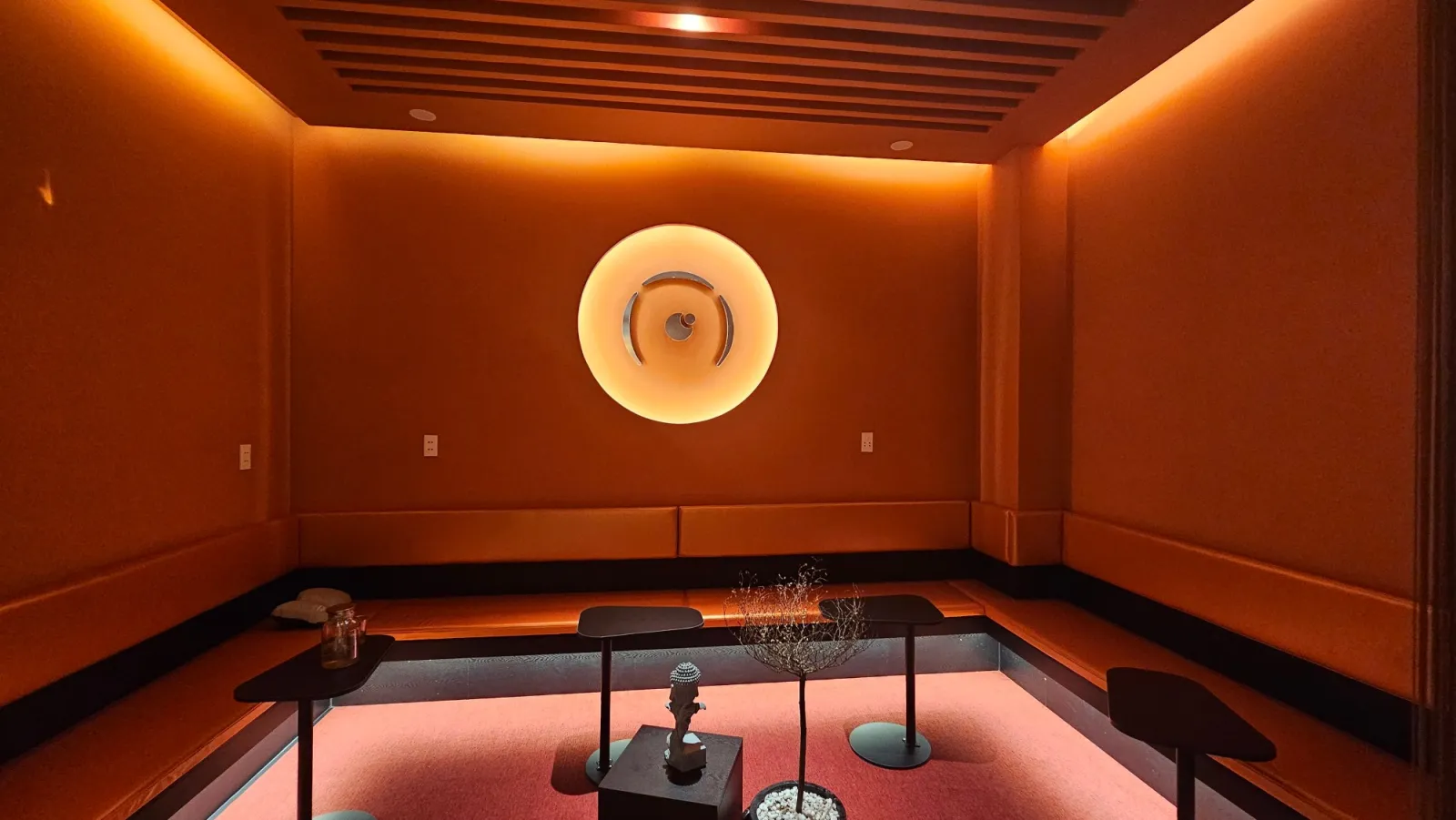
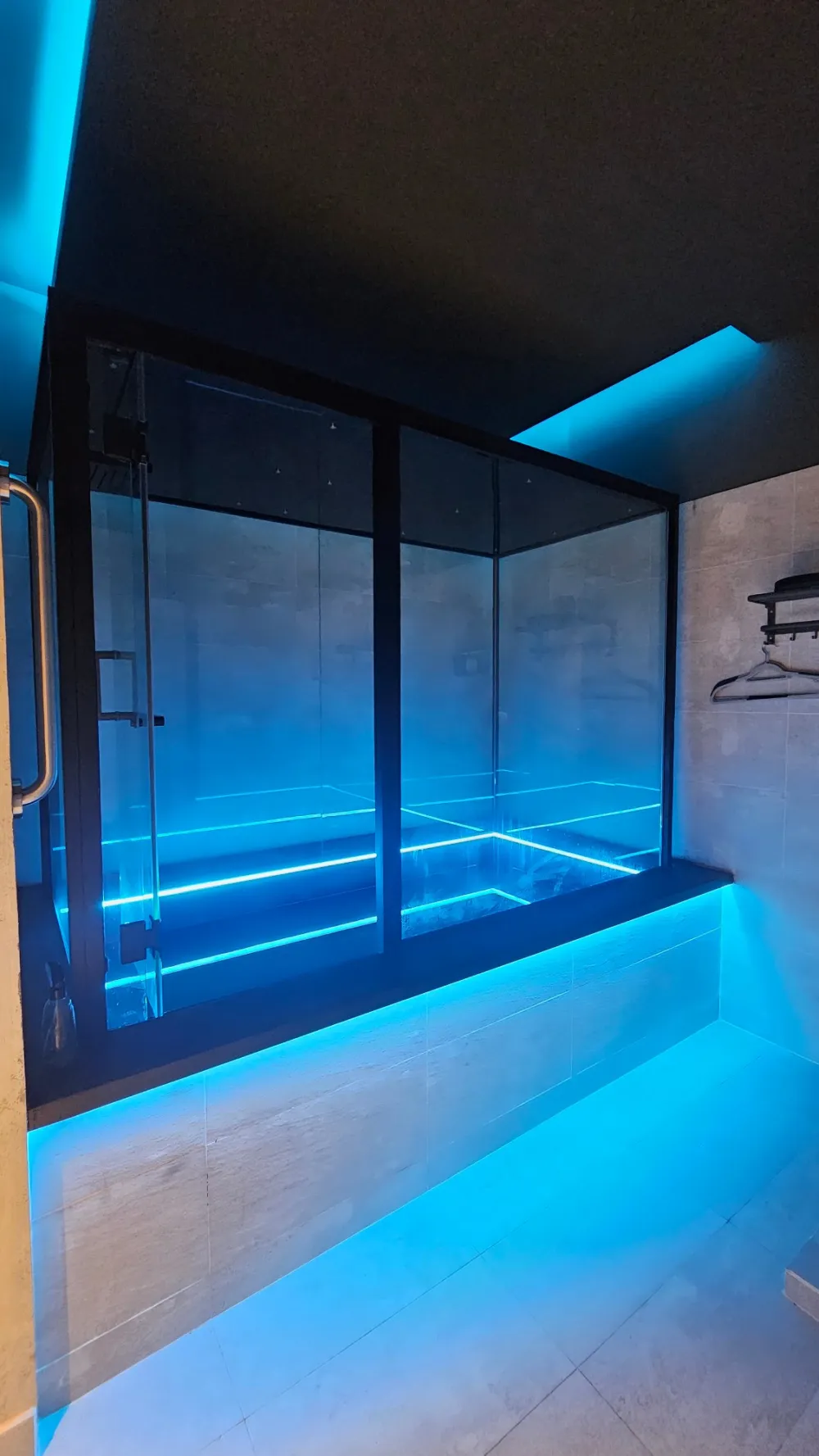
Our float rooms are at Ōmni Space, 16C Quoc Huong, Thao Dien, Thu Duc City, Ho Chi Minh City, open every day from 9:00 to 21:00 and close to the Thao Dien station on Metro Line 1. There are two private float rooms: a single room with a rectangular pool and a couple room with a square pool for two. Each room has its own shower, with towels and earplugs provided, and there is a lounge where you can rest afterwards. Expats often use it as a quiet escape from the heat and noise of Saigon, and couples can float side by side. A 90-minute single float costs 2,000,000 VND, and an intro package of three 90-minute floats costs 3,000,000 VND, valid for three months. You can also add an infrared sauna or cold plunge to a float for 200,000 VND. Prices change from time to time, so check the pricing page or our guide to float therapy in Saigon before booking.
All our float therapy benefit guides
Each benefit has its own in-depth guide. Use the list below to go straight to the topic that matters to you; every article follows the same rule as this page, reporting what studies and floaters describe without promising medical results.
- Floating and stress — what relaxation studies report
- Floating for PTSD — alongside professional trauma care
- Floatation therapy for pain — Swedish studies on muscle pain
- Fibromyalgia and floating — zero-gravity rest for widespread pain
- Float therapy for arthritis — buoyancy for stiff joints
- Floating for athletic performance — recovery and visualisation
- Creativity, learning and memory — REST and original thinking
- Floatation therapy and meditation — deepening your practice
- Floating and lucid dreaming — the dream-like float state
- Floating during pregnancy — with your doctor’s approval
- Floating for ADHD/ADD — limited evidence so far
- Floating and asthma — anecdotal reports only
- Weight loss and addiction — older REST research on habits
- Floating for employee wellness — a reset for office workers
- What is float therapy? — start here if you are new
Note: This page is for general information. Float therapy supports wellbeing but does not replace diagnosis or treatment by a doctor. If you have a medical condition, ask your doctor before floating.
Study-by-study details are in the Float Therapy Whitepaper 2026: an evidence review.
Specific guides: float therapy for back pain and brainwaves explained.
Try it at Ōmni Space. Float Vietnam’s float rooms are at 16C Quoc Huong, Thao Dien, Ho Chi Minh City (Saigon), open daily 9:00–21:00. Book a float or read the float therapy FAQ.
Frequently asked questions
What are the main benefits of a sensory deprivation tank?
Studies most often report reduced stress and anxiety, better mood, better sleep quality and less stress-related muscle pain. Floaters also describe deep relaxation, a meditative state and clearer thinking.
Are isolation tank benefits backed by science?
Partly. Several small randomised trials and a meta-analysis support effects on stress, anxiety and mood, and pilot studies point to benefits for pain, recovery and creativity. Many other claims are anecdotal.
How long do the effects of a float last?
Most people feel calm for the rest of the day and sleep well that night. Studies that used a course of floats reported effects lasting weeks to months, which is why regular sessions are recommended.
Can floating replace therapy or medication for anxiety or depression?
No. Floating may help you relax and feel better, but it complements professional care rather than replacing it. Keep following your doctor’s or psychologist’s advice.
How is floating different from a massage or sauna?
A massage works on muscles through touch and a sauna through heat, while floating removes almost all input so the body and mind can rest at once. Many people combine them.