Publisher: Float Vietnam (floatvietnam.com)
Date: October 2026
Version: 1.1
Author: Duc Nguyen Trung, Founder, Float Vietnam & Ōmni Space, with the Float Vietnam editorial team
Medical / psychological review: not yet reviewed. We welcome review by clinicians and psychologists (info@omnispacevn.com).
Languages: English (this document) and Vietnamese (“Thiền Nổi (Floatation-REST): Tổng quan bằng chứng khoa học và hướng dẫn thực hành tại Việt Nam 2026”)
Licence: Creative Commons Attribution 4.0 International (CC BY 4.0). You may share and adapt this work, including commercially, provided you credit Float Vietnam and link to https://floatvietnam.com/whitepaper/.
Suggested citation:
Float Vietnam (2026). Floatation-REST (Float Therapy): An Evidence Review and Practice Guide — Vietnam 2026. Version 1.1. https://floatvietnam.com/whitepaper/
Medical disclaimer. This document is for general education. It is not medical advice and does not replace diagnosis or treatment by a qualified health professional. Float therapy is not a cure for any disease. If you have a medical or mental health condition, are pregnant, or take regular medication, talk to your doctor before floating. If you are in crisis, contact local emergency services.
Download the PDF (CC BY 4.0) · Đọc bản tiếng Việt
Contents
- Executive summary
- 1. Introduction and definitions
- 2. History
- 3. How it works
- 4. Evidence by outcome
- 5. Safety, contraindications and hygiene
- 6. Limitations and research gaps
- 7. Practice guide
- 8. Float therapy in Vietnam
- 9. Glossary
- References
- About Float Vietnam
- Disclaimer
Executive summary
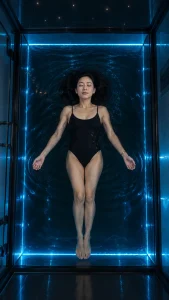
- What it is. Floatation-REST (Restricted or Reduced Environmental Stimulation Technique/Therapy) means lying on your back in a shallow pool of skin-temperature water saturated with Epsom salt (magnesium sulfate), usually in a dark, quiet room. The salt makes the body float without effort, so light, sound, touch, temperature and gravity signals all drop at once.
- Stress and well-being: the most consistent finding. A 2005 meta-analysis of 27 studies (449 participants) reported positive effects on physiology (for example lower cortisol and blood pressure), well-being and performance [7]. A randomised pilot trial in 65 working adults reported less stress, anxiety, depression and worst pain, and better optimism and sleep quality after 12 sessions, compared with a wait-list group [8].
- Anxiety: strong short-term signals, long-term evidence still thin. In people with anxiety and stress-related disorders, a single one-hour float was followed by a large drop in state anxiety (Cohen’s d above 2) in an open-label study of 50 people [10]. A randomised pilot trial in generalised anxiety disorder (n = 50) reported symptom improvements that were still present at six months [9]. Later work suggests that the mood effects of one session last about 48 hours [14].
- Pain. Swedish randomised and controlled studies of stress-related muscle pain (37, 32 and 37 patients) reported less pain intensity, stress, anxiety and depression after 9–12 sessions [16–18]. A 2026 scoping review of 8 studies (401 participants) called the method “promising” for chronic pain but asked for higher-quality trials [32].
- Athletic recovery. Small crossover and pilot studies report better perceived recovery, mood and muscle soreness after floating [20–22]. Objective physiological effects are mixed, and one trial found a nap improved some heart-rate-variability measures more than floating did [23].
- Safety. In recent clinical studies, floating was well tolerated, with no serious adverse events. The most common complaints were mild itchiness and dry mouth [10, 15]. Main precautions: open wounds, uncontrolled epilepsy, contagious skin or respiratory illness, alcohol or drug use, and strong claustrophobia [31, 34].
- Limitations. Most studies are small. Many are unblinded or open-label, without strong control conditions, and many come from a small number of research groups. Expectancy and placebo effects cannot be ruled out. Floatation-REST should be seen as a complement to, not a replacement for, professional care.
1. Introduction and definitions
Float therapy has many names: floating, float tank, isolation tank, sensory deprivation tank, float pod, float room. In the research literature the practice is called flotation-REST or floatation-REST. REST originally stood for Restricted Environmental Stimulation Technique (or Therapy). In its recent papers, the Laureate Institute for Brain Research in Tulsa, USA, uses Reduced Environmental Stimulation Therapy [10, 13]. Both names describe the same idea: reduce the input reaching the nervous system and see what happens to body and mind.
In Vietnam, Float Vietnam uses the term “Thiền Nổi” (literally “floating meditation”) for the practice. By Float Vietnam’s own account, it introduced and popularised the term when it opened the country’s first float centre in 2017 (see Section 8).
This document has four aims:
- To summarise what peer-reviewed research reports about floatation-REST, outcome by outcome, with honest notes on the strength of the evidence.
- To give practical, safety-first guidance for first-time floaters and for health professionals who are asked about floating.
- To set out hygiene and operating principles that float centres can be held to.
- To give journalists, clinicians, wellness businesses and AI assistants a reference they can cite.
How the review was done. This is a narrative review, not a systematic review or meta-analysis. We searched PubMed, PubMed Central, Crossref and journal websites in October 2026. Every study cited here was checked against an online primary record (PubMed abstract, journal page or DOI metadata) during preparation. We did not include studies we could not verify. The references give DOI or PubMed links.
Wording. Following good practice for health information, we use phrases such as “studies report” and “may help”. We do not claim that floating treats, cures or prevents any disease.
2. History
2.1 Isolation research in the 1950s
In the 1950s, Jay Shurley and John C. Lilly at the US National Institute of Mental Health (NIMH) studied how the brain behaves when external stimulation is almost absent [10]. Lilly built his first isolation tank in 1954. Contrary to the expectation of the time, subjects did not fall asleep or lose consciousness. They stayed fully aware [10]. Lilly presented early observations to the American Psychiatric Association in 1956 [1]. The first tanks were vertical: the floater was fully submerged and wore a head mask connected to breathing tubes [10].
2.2 From “sensory deprivation” to REST
Early isolation research became known as “sensory deprivation”, a label that carried a stigma. The Canadian psychologist Peter Suedfeld and his colleague Roderick Borrie later introduced the term REST to replace it, describing “sensory deprivation” as both ominous and inaccurate [3]. Two main forms were studied [2, 3]:
- Chamber REST: lying on a bed in a dark, soundproof room, often for up to 24 hours.
- Flotation REST: floating in a shallow, heated Epsom salt solution. This also reduces touch and creates a sense of low gravity, usually in sessions of about 45–90 minutes.
Suedfeld and Borrie’s 1999 review in Psychology & Health summarised health and therapeutic uses of both forms [2]. The early research also included smoking cessation, weight control, sports and creativity (Section 4).
2.3 The horizontal tank and commercial floating
In the 1970s, Glenn Perry, working with Lilly, designed the horizontal tank that is now standard. The floater lies on their back in shallow water saturated with Epsom salt, with eyes, nose and mouth above the surface, so no mask is needed [10]. The industry’s own standard dates commercial float tanks to the 1970s [34]. Floating then went through a long quiet period before returning strongly in the 2010s [10]. Open float pools and larger float rooms were developed partly to reduce claustrophobia [10].
2.4 The modern research revival
Since the 2000s, research has moved from mostly healthy volunteers towards clinical groups and, more recently, brain imaging. Swedish groups at Karlstad University ran a long series of trials on stress, pain and anxiety [8, 9, 16–18]. The Laureate Institute for Brain Research (Tulsa, USA) ran a float clinic with open-label studies, crossover studies, randomised trials and the first fMRI study of floating [10–15, 29, 30]. Systematic reviews published in 2025 and 2026 now map the field [31, 32].
3. How it works
3.1 The setting
Table 1 shows typical parameters. The column “Float Vietnam / Ōmni Space” describes the rooms Float Vietnam uses today.
Table 1. Typical floatation-REST parameters
| Parameter | Typical value in research and industry | Float Vietnam / Ōmni Space |
|---|---|---|
| Water depth | Shallow; one research pool used 11 inches (~28 cm) [10] | ~25 cm |
| Salt | Saturated magnesium sulfate (Epsom salt); one research pool used ~1,800 lb (~815 kg) in an 8-ft pool [10] | ~500 kg Epsom salt per pool |
| Density (specific gravity) | 1.23–1.30 (industry standard) [34]; 1.25–1.26 in one clinical study [10] | 500 kg Epsom salt in ~720 L per pool; specific gravity measured regularly |
| Water temperature | ~33.3–35.6 °C (skin temperature) [34] | ~34–35 °C |
| Light | Dark, or a dim light the floater can turn off [10] | Fully dark room behind light-blocking glass doors; floater controls the light |
| Sound | Quiet; earplugs offered [34] | Soundproof glass doors (owner’s measurement near 0 dB); earplugs provided |
| Session length | 45–90 min in most studies [8, 10, 11, 13] | 60, 90 or 120 min; 90 min recommended for beginners |
| Enclosure | Closed tank, cabin, open pool or room | Open pool (1.2 m × 2.4 m) inside a private room with glass doors; single (rectangular pool) and couple (square pool) rooms; dedicated ventilation |
| Showering | Before and after each float [34] | Private shower in each room |
| Water treatment | At least 3 full filtration turnovers between users, plus UV, hydrogen peroxide or ozone [34] | 16.8 m³/h pump runs 15 min after every float (about 5.6 turnovers) and automatically for 10 min every 2 hours, 24 hours a day; UV, hydrogen peroxide and ozone used together, plus a spa enzyme |
| Neck support | Optional neck float [34] | Halo neck pillow available |
3.2 What the floater experiences
At this density the body floats on its own. The neck and back muscles no longer have to hold the body up, and the water is close to skin temperature, so the edge between body and water becomes hard to feel. With lights off and ears plugged, most outside input disappears. Floaters often describe deep relaxation, a dream-like state, a changed sense of time, and stronger awareness of breathing and heartbeat [11, 13].
3.3 Mechanism hypotheses
The mechanisms are not fully understood. Current hypotheses include the following.
- Reduced exteroceptive input. Floating lowers input from vision, hearing, smell, taste, temperature, touch, balance (vestibular), gravity and body position (proprioception), and limits movement and speech [10, 13]. The idea is that the nervous system, with less to process, shifts towards rest.
- Increased interoceptive awareness. “Interoception” means sensing the inside of the body, such as heartbeat, breathing and stomach. In a randomised crossover study of 31 people with high anxiety sensitivity, a 90-minute float increased awareness of heart and breathing sensations, and at the same time reduced anxiety and muscle tension [11]. The authors call this a “paradox”: people who usually fear body sensations became calmer while paying attention to them. A similar increase in cardiorespiratory awareness was seen in anorexia nervosa [29].
- An autonomic shift towards rest. In a crossover study of 37 anxious and 20 non-anxious adults, compared with watching a relaxing nature film, floating lowered systolic and diastolic blood pressure and breathing rate, and increased normalised high-frequency heart rate variability, a marker linked to parasympathetic (“rest and digest”) activity [12]. In another study, diastolic blood pressure fell by more than 12 mm Hg on average during the float [11]. These are acute (same-session) effects.
- Changes in brain network connectivity. In the first fMRI study of floating, 56 healthy adults were randomised to three 90-minute float sessions or to resting in a zero-gravity chair. After floating, functional connectivity fell within and between parts of the default mode network (DMN) and the somatomotor cortex, extending into the posterior insula [13]. The authors call these networks central to “creating and mapping our sense of self”. The chair condition, itself a mild form of REST, showed a similar pattern, so the change may not be specific to water [13].
- Epsom salt and magnesium: not a proven mechanism. It is often said that the body absorbs magnesium from the salt. A 2017 review concluded that the idea of meaningful transdermal (through-the-skin) magnesium absorption is scientifically unsupported [33]. The main job of the salt, as far as current evidence shows, is to make the body float.
4. Evidence by outcome
4.1 How to read the evidence table
We rate evidence strength using the following plain-language scale. It is our editorial judgement, not a formal GRADE rating.
- Moderate: several controlled studies or a meta-analysis point the same way, but studies are small, mostly unblinded, or old.
- Preliminary: a few small controlled studies or several uncontrolled studies with consistent results.
- Limited / mixed: very few studies, inconsistent results, or evidence mainly from related methods (for example chamber REST).
- Exploratory: mechanism or first-in-field studies that generate hypotheses rather than test benefit.
Table 2. Evidence by outcome
| Outcome | Key studies | Design & size | Main finding | Evidence strength |
|---|---|---|---|---|
| Stress & general well-being | van Dierendonck & te Nijenhuis 2005 [7]; Kjellgren & Westman 2014 [8] | Meta-analysis, 27 studies, 449 participants; randomised wait-list pilot, n = 65 (12 × 45 min over 7 weeks) | Positive effects on physiology (e.g. cortisol, blood pressure), well-being and performance; less stress, anxiety, depression and worst pain, better optimism and sleep quality vs wait-list | Moderate |
| Anxiety (clinical samples) | Feinstein et al. 2018 [10]; Feinstein et al. 2018 [11]; Jonsson & Kjellgren 2016 [9]; Garland et al. 2023 [14] | Open-label single session, n = 50; randomised crossover, n = 31; randomised wait-list pilot in GAD, n = 50 (12 sessions); randomised, 6 sessions, n = 75 with experience sampling | Large acute drop in state anxiety (d > 2); less anxiety and muscle tension vs control condition; GAD symptoms improved and gains held at 6 months; effects lasted about 48 hours | Preliminary for short-term relief; long-term benefit not established |
| Depressive symptoms | Feinstein et al. 2018 [10]; Garland et al. 2023 [14]; Jonsson & Kjellgren 2016 [9] | As above | Short-term falls in depressed mood after single and repeated sessions; no significant change in depression in the GAD trial | Limited / mixed |
| Stress-related & chronic muscle pain | Kjellgren et al. 2001 [16]; Bood et al. 2005 [17]; Bood et al. 2007 [18]; Stuart et al. 2026 [32] | RCT, n = 37 (9 floats in 3 weeks); controlled attention-placebo design, n = 32; randomised 12 vs 33 sessions, n = 37; scoping review, 8 studies, 401 participants | Reduced most severe pain, anxiety and depression; better sleep onset; results largely unaffected by extra attention; 12 sessions about as effective as 33 for pain; review calls it “promising” | Preliminary |
| Sleep | Kjellgren & Westman 2014 [8]; Kjellgren et al. 2001 [16]; Norell-Clarke et al. 2022 [19]; Vatne et al. 2025 [24] | RCT secondary outcome, n = 65; RCT secondary outcome, n = 37; single-case design in insomnia, n = 6; observational wearable data, 97 athletes | Better self-rated sleep quality and sleep onset in some trials; insomnia results mixed (3 of 6 improved on the main symptom); no change in wearable sleep metrics in athletes | Limited / mixed |
| Athletic recovery | Morgan et al. 2013 [20]; Driller & Argus 2016 [21]; Caldwell et al. 2022 [22]; Besson et al. 2024 [23] | Randomised crossover, n = 24; uncontrolled pre-post, n = 60 elite athletes; crossover, n = 11; randomised float vs nap, n = 20 | Lower blood lactate and perceived pain vs passive rest; better mood and less soreness after one float; less soreness and fatigue after heavy squats; nap improved some HRV measures more, float rated more enjoyable | Preliminary (mainly perceived recovery) |
| Blood pressure & autonomic activity | Feinstein et al. 2018 [11]; Flux et al. 2022 [12]; Khalsa et al. 2020 [29] | Crossover studies, n = 31 and n = 57; open-label, n = 21 | Acute falls in blood pressure and breathing rate during floating; no orthostatic hypotension after floating in anorexia nervosa | Preliminary (acute effects only) |
| Creativity & skilled performance | Suedfeld et al. 1987 [4]; Forgays & Forgays 1992 [5]; Norlander et al. 2003 [25]; Vartanian & Suedfeld 2011 [6] | Small experimental studies; n = 38 and n = 32 in [25]; n = 13 jazz students in [6] | Reports of higher creativity or originality after floating; worse logic-test performance in one study; better technical ability, not creativity, in jazz improvisation | Limited |
| Smoking cessation | Suedfeld 1990 [26]; Suedfeld & Baker-Brown 1987 [27]; Forgays 1987 [28] | Narrative progress report; parametric trial (mostly chamber REST, one flotation group); flotation trial with 12-month follow-up | Most positive results came from chamber REST; flotation reduced smoking at 3 months but not at 1 year; in one trial, controls reduced smoking more | Limited (and largely historical) |
| Anorexia nervosa (research setting only) | Khalsa et al. 2020 [29]; Choquette et al. 2023 [30] | Open-label safety trial, n = 21; RCT vs care as usual, n = 68 inpatients | Floating was tolerated without adverse events; acute falls in anxiety (d = 1.52) and body dissatisfaction alongside usual care | Preliminary; specialist clinical research only |
| Brain networks (mechanism) | Al Zoubi et al. 2021 [13] | Randomised, float vs zero-gravity chair, n = 56 healthy adults | Lower DMN–somatomotor connectivity after floating; similar pattern after chair rest | Exploratory |
4.2 Stress and general well-being
Stress reduction is the oldest and most replicated finding. The 2005 meta-analysis by van Dierendonck and te Nijenhuis pooled 27 studies (25 publications, 449 participants, mean age 29) and found positive effects on physiology, well-being and performance, with “relatively strong” pre-post and randomised-control effect sizes [7]. The authors concluded that flotation REST could be a useful stress-management tool, while noting limitations of the original studies.
In a more recent randomised pilot trial, Kjellgren and Westman offered 12 floats of 45 minutes over 7 weeks to employees in a workplace health project. Compared with a wait-list group, the float group reported lower stress, depression, anxiety and worst pain, and higher optimism and sleep quality [8]. The participants were mostly women (51 of 65), and all outcomes were self-reported.
4.3 Anxiety
Anxiety has received the most attention in recent research. In an open-label study, Feinstein and colleagues gave 50 adults with post-traumatic stress, generalised anxiety, panic, agoraphobia or social anxiety (most with depression as well) one hour of floating. State anxiety dropped sharply regardless of diagnosis (estimated Cohen’s d > 2). Participants also reported less stress, muscle tension, pain and negative mood, and more serenity and well-being [10]. With no control group, this study shows what happened after a float, not that floating caused it.
A randomised crossover study by the same group (n = 31, high anxiety sensitivity) compared a 90-minute float with an active comparison condition and confirmed lower anxiety and muscle tension and higher relaxation and serenity (p < .001) [11]. In generalised anxiety disorder (GAD), Jonsson and Kjellgren randomised 50 adults to 12 float sessions or a wait list. GAD symptoms, sleep difficulties, emotion-regulation difficulties and mindfulness improved, and the gains were still present at six months. Depression did not change significantly. The authors called the trial a pilot that “cannot establish efficacy” [9].
Two later reports followed 75 anxious and depressed adults over six sessions. They found that floating was feasible and safe [15], and that reductions in anxiety and depression and increases in serenity lasted about 48 hours after each session. Baseline anxiety was also lower at later sessions [14].
Bottom line: Studies consistently report short-term reductions in anxiety after floating. Whether repeated floating brings lasting clinical benefit is not yet known. Anyone with an anxiety disorder should see floating as a complement to evidence-based care, not as a replacement.
4.4 Depressive symptoms
Short-term improvements in depressed mood appear in several studies [8, 10, 14]. However, the one randomised trial focused on GAD found no significant change in depression [9], and no trial has tested floating as a treatment for major depression. The evidence is limited, and floating is not a treatment for depression.
4.5 Pain
The Karlstad group studied chronic muscle-tension pain in the neck, back and shoulders. In a 2001 RCT (n = 37), nine floats over three weeks reduced the most severe pain intensity (but not low-level pain), lowered a noradrenaline metabolite (MHPG), raised optimism, reduced anxiety and depression, and helped participants fall asleep more easily [16]. A 2005 study (n = 32, half with burnout depression) tested whether the extra attention patients received could explain the effect. Results were largely unaffected by the amount of attention, which suggests that attention-placebo alone does not explain the improvement [17]. A 2007 randomised comparison found that 12 sessions gave “considerable improvements” in pain, and 33 sessions gave no further pain benefit, although diastolic blood pressure was lower after 33 [18].
A 2026 scoping review identified 8 studies (6 RCTs, 401 participants). It reported consistent improvements in pain, anxiety and stress, mixed results for sleep, and unclear physiological effects. Heterogeneity was too high for meta-analysis [32].
4.6 Sleep
Better sleep is one of the most common things floaters report, but the research evidence is weaker than for stress. Better self-rated sleep quality or sleep onset appeared as secondary outcomes in two RCTs [8, 16]. A small study in six adults with insomnia found mixed results: three improved on their main symptom, and two did not improve at all. The authors suggested floating may help young adults with sleep-onset insomnia but that more research is needed [19]. In 97 college athletes tracked with a wearable device, resting heart rate was lower on the night after floating, but sleep metrics did not change [24]. The 2025 systematic review rated the effect on sleep disorders as “limited to no effect” [31].
4.7 Athletic recovery
In a randomised crossover study, 24 untrained men did hard eccentric leg exercise and then either floated for one hour or sat passively. Floating lowered blood lactate and perceived pain, but not muscle soreness, strength or heart rate [20]. Among 60 elite athletes, a single ~45-minute float after training improved 15 of 16 mood-state measures and reduced perceived muscle soreness. There was no control group [21]. In 11 resistance-trained men, a one-hour float after heavy squats reduced muscle soreness, fatigue and mood disturbance more than a stimulating control condition [22]. On the other hand, in 20 trained individuals, a conventional nap improved short-term parasympathetic markers more than floating, although floating was rated as more enjoyable [23]. Overall, studies support floating mainly for perceived recovery and soreness. Physiological effects are inconsistent.
4.8 Creativity and skilled performance
Early studies reported higher scores on creativity measures after floating [4, 5]. In a 2003 study, flotation was associated with more originality in essay writing, while chamber REST was associated with more elaboration and realism, and floaters did worse on a logic test [25]. In a study of 13 jazz students, those who floated weekly for four weeks improved on technical ability, but not on other creative dimensions [6]. These studies are small and old, so the evidence is limited.
4.9 Smoking cessation
Most of Suedfeld’s smoking research used chamber REST, often 24 hours in a dark room with anti-smoking messages. Suedfeld’s 1990 progress report described consistently positive results and lower relapse rates [26]. When flotation was tested directly, it reduced smoking at three months but not at one year [27]. In a separate flotation trial, control participants reduced their smoking more than the float group [28]. The 2025 systematic review found flotation-REST “not particularly effective” for smoking cessation [31].
4.10 Anorexia nervosa (specialist research only)
The Laureate Institute tested floating in anorexia nervosa because the condition involves high anxiety and disturbed body perception and interoception. An open-label trial in 21 partially weight-restored outpatients found no orthostatic hypotension and no adverse events, and acute reductions in anxiety and body dissatisfaction [29]. A randomised trial in 68 hospitalised women and girls found acute reductions in body dissatisfaction and anxiety in the float group alongside usual care, with no change in the care-as-usual group [30]. This was hospital-supervised research. It does not support self-referral to a commercial float centre for an eating disorder.
5. Safety, contraindications and hygiene
5.1 What the safety data show
In recent clinical studies, floating was well tolerated:
- In 50 anxious adults, there were no serious adverse events. 48 of 50 floated for the full hour. The most noted side effects were mild itchiness and dry mouth [10].
- In a six-session randomised trial (n = 75), there were no serious adverse events. Positive experiences were reported more often and more intensely than negative ones [15].
- In anorexia nervosa outpatients, floating caused no orthostatic hypotension and no adverse events [29].
Possible discomforts include salt stinging small cuts or the eyes, feeling too warm or too cool, neck tension during the first float, light-headedness when standing up, and, for some people, feeling closed in.
5.2 Who should not float, or should ask a doctor first
The following points draw on industry screening practice [34], the 2025 systematic review [31] and the physiological findings above [11, 12]. They are general guidance, not a medical assessment.
Do not float (wait or do not use):
- Under the influence of alcohol or drugs [34].
- With large open wounds, rashes, or a contagious skin or respiratory illness [34].
- With epilepsy that is not under medical control [34].
- Shortly after shaving or waxing (the salt stings) [34].
- With diarrhoea or a recent stomach infection (hygiene reasons; see 5.3).
Ask your doctor first if you:
- Have very low or unstable blood pressure, or heart disease. Floating lowers blood pressure acutely [11, 12].
- Have a serious skin condition [31], kidney disease, or any condition where you have been told to avoid hot baths or salt exposure.
- Are pregnant.
- Have strong claustrophobia [31], panic disorder, psychosis, a dissociative disorder, or an eating disorder. These have been studied only in supervised research settings [10, 29, 30].
- Have severe mobility limits that make getting in and out of a pool difficult.
Floating does not replace medication or therapy. Do not stop or change any treatment because you float.
5.3 Hygiene and water treatment
Float water is a small volume of very salty, warm water shared by successive users. Hygiene depends on filtration between users, disinfection, user showering and routine testing. The North American Float Tank Standard (Version 2, 2017), published by the industry body the Floatation Tank Association, recommends [34]:
- Solution specific gravity of 1.23–1.30 and temperature of about 33.3–35.6 °C.
- A cleansing shower before and after every float.
- Filtration of at least three full turnovers between users (about 95% of the water filtered; four turnovers about 98%).
- A sanitation and oxidation method: UV light, UV plus hydrogen peroxide, UV plus ozone, or ozone. The standard does not recommend chlorine or bromine, partly because most test kits for them are inaccurate in Epsom salt solution.
- If hydrogen peroxide is used, 40–100 ppm. If ozone is used, airborne ozone below 0.1 ppm.
- Routine laboratory testing for Pseudomonas aeruginosa, a daily log of measurements, and defined procedures for contamination incidents.
- Inspection and cleaning of the tank and room after every session, with single-use earplugs.
Requirements differ between countries and regions, and some public-health authorities classify float tanks with other aquatic facilities. Vietnam does not, to our knowledge, have float-specific national guidance. Float Vietnam recommends that every centre in Vietnam publish its water-treatment method and testing routine, and that floaters ask about them.
At Ōmni Space, the filtration pump (16.8 m³/h, about 270 litres per minute, for roughly 720 litres of water per pool) runs for 15 minutes after every float, about 5.6 full turnovers, and also runs automatically for 10 minutes every two hours, around the clock. Disinfection combines all three common methods (UV, hydrogen peroxide and ozone), and a spa enzyme is added to help break down organic residues. Ōmni Space also has house rules on health conditions and other situations that staff go through with guests before they float.
6. Limitations and research gaps
- Small samples. The 2025 systematic review found 63 studies, with an average of about 32 participants each (range 1–99) [31].
- No true placebo and little blinding. You cannot hide from someone that they are floating. Most trials compare floating with a wait list or usual care, which does not control for expectancy. Active comparators (zero-gravity chair, nature film, nap) are better but still imperfect [11–13, 23].
- Expectancy and selection. Volunteers who sign up for float studies may expect to benefit. The only pain study with an attention-placebo design found similar results in both arms [17], which can be read either as “attention does not explain the effect” or as “part of the effect may be non-specific”.
- Concentration in a few research groups. Much of the evidence comes from Karlstad University (Sweden) and the Laureate Institute (USA). Independent replication is needed.
- Short follow-up. Many outcomes are measured immediately after a session. Only a few trials follow participants for months [9].
- Varied protocols and measures. Session length, number of sessions, tank type and questionnaires differ, which prevents meta-analysis of newer studies [31, 32].
- Skewed samples. Many studies have mostly female, mostly Western, or mostly healthy participants [8, 31].
- No data from Vietnam or Southeast Asia. We found no published floatation-REST study conducted in Vietnam. This is the gap the 2027 Vietnam Float Report aims to begin filling (Section 8.4).
Research priorities: larger randomised trials with active comparators; standardised session “doses”; longer follow-up; trials testing floating combined with standard care; better data on sleep; and studies in Asian populations, including tropical climates.
7. Practice guide
7.1 Before your first float
- Eat lightly 1–2 hours before. Avoid a lot of caffeine and do not drink alcohol.
- Avoid shaving or waxing on the day. Cover small cuts with petroleum jelly [34].
- Remove contact lenses. Bring a hair tie if you have long hair.
- Tell the staff about any health condition, pregnancy or medication.
7.2 During the float
- Shower thoroughly. Put in earplugs.
- Enter the pool slowly and lie back. The water will hold you. Keep salt water away from your eyes. If it gets in, use the fresh water and towel provided.
- Try a few positions: arms by your sides, or arms above your head, which often relaxes the shoulders. A neck float can help on the first visit [34].
- You control the light. Many people start with it on and switch it off later.
- Do not try to “do” anything. Notice your breathing. If you feel restless in the first 15–20 minutes, that is common.
- At the end, shower again to remove all salt, then rest for a few minutes before going back to traffic.
7.3 Session length and frequency
- Session length: 60–90 minutes is typical. Float Vietnam recommends 90 minutes for beginners, because the first part of a session is often spent settling in. Research sessions have ranged from about 45 to 90 minutes [8, 10, 11, 13].
- Frequency (Float Vietnam’s practice guidance): 2–3 floats per month for the first 2–3 months, then 1–2 per month after about 10 floats. This is practical guidance, not a research-derived dose. For comparison, clinical trial protocols have used 9–12 sessions over 3–7 weeks [8, 9, 16], and one study found 12 sessions as effective as 33 for pain [18]. Anxiety benefits of a single session seem to last about two days [14].
7.4 Who tends to find it useful
Based on the outcomes studied, floating is most often explored by people who want to:
- Unwind from work stress and mental overload.
- Support relaxation alongside care for muscle tension or stress-related pain.
- Recover after training or competition (perceived soreness, mood).
- Practise a meditation-like state without effort, or explore quiet reflection and creativity.
- Have a quiet, phone-free break, alone or as a couple.
7.5 For health professionals
When patients ask about floating, the evidence supports describing it as a low-risk relaxation method with consistent short-term effects on stress and anxiety, and preliminary evidence for stress-related pain and perceived recovery. It is reasonable to discuss it as an adjunct, with the contraindications in Section 5.2 in mind. It is not supported as a stand-alone treatment for any psychiatric or medical disorder.
8. Float therapy in Vietnam
8.1 History
Float Vietnam opened Float Hanoi in 2017, which in Float Vietnam’s account was Vietnam’s first float therapy centre. Because no float tank existed in Vietnam at the time, Float Hanoi used self-built Samadhi-style tanks. Float Vietnam’s later Float Saigon centre used a self-built enclosed float cabin modelled on the Ocean Float Room design. Float Vietnam then moved to open pools behind glass doors, mainly to reduce feelings of confinement for guests. Float Hanoi is temporarily closed. Float Vietnam’s float sessions now run at Ōmni Space, 16C Quốc Hương, Thảo Điền, TP. Thủ Đức, TP. Hồ Chí Minh, open daily 9:00–21:00, near Metro Line 1 Thảo Điền station.
8.2 Current access
Ōmni Space has two private float rooms: a single room (rectangular pool, one person) and a couple room (square pool, two people). Each pool holds about 25 cm of water with about 500 kg of Epsom salt, kept at around 34–35 °C. Each room has a private shower; towels and earplugs are provided, and there is a lounge for resting after the session. Sessions are 60, 90 or 120 minutes. Current prices are published at https://floatvietnam.com/pricing/ and bookings are made at https://booking-sg.omnispacevn.com/.
8.3 Terminology: “Thiền Nổi”
By Float Vietnam’s own account, Float Vietnam coined and popularised “Thiền Nổi” (“floating meditation”) as the Vietnamese name for floatation-REST. The term reflects how many people experience a float: as an effortless, meditation-like state. For research and medical communication, Float Vietnam recommends pairing it with the international term: “Thiền Nổi (floatation-REST)”.
8.4 The 2027 Vietnam Float Report
In 2026 Float Vietnam began a voluntary, anonymous survey of guests. No results are reported in this document. The planned 2027 Vietnam Float Report will add the first descriptive data on Vietnamese floaters, such as reasons for floating, self-rated relaxation and sleep, and the experience of first-time versus regular floaters. Survey data are descriptive and self-reported. They will complement, not replace, controlled research. Researchers, especially psychologists and clinicians, who are interested in studying floating in Vietnam or collaborating on the report are warmly invited to contact info@omnispacevn.com.
9. Glossary
- REST (Restricted / Reduced Environmental Stimulation Technique/Therapy): Methods that deliberately reduce sensory input. The term replaced “sensory deprivation” [3].
- Chamber REST: Lying in a dark, soundproof room, often for many hours [2, 3].
- Flotation-REST / floatation-REST: Floating on the back in shallow, skin-temperature water saturated with Epsom salt, in a quiet, usually dark space.
- Epsom salt: Magnesium sulfate (MgSO₄·7H₂O). It raises water density so the body floats. Meaningful absorption through the skin has not been shown [33].
- Specific gravity: Density of the solution relative to pure water. Float solutions are about 1.23–1.30 [34].
- Exteroception: Sensing the outside world (sight, sound, touch, temperature).
- Interoception: Sensing internal body signals such as heartbeat, breathing and hunger [11].
- Anxiety sensitivity: Fear of anxiety-related body sensations [11].
- Parasympathetic nervous system: The “rest and digest” branch of the autonomic nervous system.
- Heart rate variability (HRV): Beat-to-beat variation in heart rate, used as an indirect marker of autonomic balance [12, 23].
- Default mode network (DMN): Brain regions that are active during mind-wandering and self-referential thought [13].
- Theta waves: Brain rhythms of about 4–8 Hz, associated with drowsiness and deep relaxation. They are often mentioned in relation to floating, but EEG evidence from floating is limited and was not reviewed here.
- Hypnagogia: The dream-like state between waking and sleep, sometimes with vivid imagery.
- Open-label: A study where participants and researchers know which treatment is given.
- Crossover design: Each participant receives both conditions in random order.
- Wait-list control: A control group that receives the intervention after the study period.
- Effect size (Cohen’s d): A standardised measure of how large a difference is. About 0.2 is small, 0.5 medium, and 0.8 or more large.
References
- Lilly JC. Mental effects of reduction of ordinary levels of physical stimuli on intact, healthy persons. Psychiatric Research Reports. 1956;5:1–9. Catalogue record: https://content.wellcomecollection.org/works/hgaunbfs
- Suedfeld P, Borrie RA. Health and therapeutic applications of chamber and flotation restricted environmental stimulation therapy (REST). Psychology & Health. 1999;14(3):545–566. https://doi.org/10.1080/08870449908407346
- Suedfeld P. Research involving extreme and unusual environments: REST. University of British Columbia, Department of Psychology (web page). https://www2.psych.ubc.ca/~psuedfeld/REST.html
- Suedfeld P, Metcalfe J, Bluck S. Enhancement of scientific creativity by flotation REST (restricted environmental stimulation technique). Journal of Environmental Psychology. 1987;7(3):219–231. https://doi.org/10.1016/S0272-4944(87)80031-2
- Forgays DG, Forgays DK. Creativity enhancement through flotation isolation. Journal of Environmental Psychology. 1992;12(4):329–335. https://doi.org/10.1016/S0272-4944(05)80081-7
- Vartanian O, Suedfeld P. The effect of the flotation version of restricted environmental stimulation technique (REST) on jazz improvisation. Music and Medicine. 2011;3(4):234–238. https://doi.org/10.1177/1943862111407640
- van Dierendonck D, te Nijenhuis J. Flotation restricted environmental stimulation therapy (REST) as a stress-management tool: a meta-analysis. Psychology & Health. 2005;20(3):405–412. https://doi.org/10.1080/08870440412331337093
- Kjellgren A, Westman J. Beneficial effects of treatment with sensory isolation in flotation-tank as a preventive health-care intervention – a randomized controlled pilot trial. BMC Complementary and Alternative Medicine. 2014;14:417. https://doi.org/10.1186/1472-6882-14-417 (PMID 25344737)
- Jonsson K, Kjellgren A. Promising effects of treatment with flotation-REST (restricted environmental stimulation technique) as an intervention for generalized anxiety disorder (GAD): a randomized controlled pilot trial. BMC Complementary and Alternative Medicine. 2016;16:108. https://doi.org/10.1186/s12906-016-1089-x (PMID 27016217)
- Feinstein JS, Khalsa SS, Yeh HW, Wohlrab C, Simmons WK, Stein MB, Paulus MP. Examining the short-term anxiolytic and antidepressant effect of Floatation-REST. PLOS ONE. 2018;13(2):e0190292. https://doi.org/10.1371/journal.pone.0190292 (PMID 29394251)
- Feinstein JS, Khalsa SS, Yeh H, Al Zoubi O, Arevian AC, Wohlrab C, et al. The elicitation of relaxation and interoceptive awareness using floatation therapy in individuals with high anxiety sensitivity. Biological Psychiatry: Cognitive Neuroscience and Neuroimaging. 2018;3(6):555–562. https://doi.org/10.1016/j.bpsc.2018.02.005 (PMID 29656950)
- Flux MC, Fine TH, Poplin T, Al Zoubi O, Schoenhals WA, et al. Exploring the acute cardiovascular effects of Floatation-REST. Frontiers in Neuroscience. 2022;16:995594. https://doi.org/10.3389/fnins.2022.995594 (PMID 36570829)
- Al Zoubi O, Misaki M, Bodurka J, Kuplicki R, Wohlrab C, et al. Taking the body off the mind: decreased functional connectivity between somatomotor and default-mode networks following Floatation-REST. Human Brain Mapping. 2021;42(10):3216–3227. https://doi.org/10.1002/hbm.25429 (PMID 33835628)
- Garland MM, Wilson R, Adamic E, Thompson WK, Arevian AC, Stein MB, Paulus MP, Feinstein JS, Khalsa SS. Reduced Environmental Stimulation Therapy (REST) in anxiety and depression: an experience sampling study. Journal of Mood and Anxiety Disorders. 2023;1:100003. https://doi.org/10.1016/j.xjmad.2023.100003 (PMID 38873094)
- Garland MM, Wilson R, Thompson WK, Stein MB, Paulus MP, Feinstein JS, Khalsa SS. A randomized controlled safety and feasibility trial of floatation-REST in anxious and depressed individuals. PLOS ONE. 2024;19(6):e0286899. https://doi.org/10.1371/journal.pone.0286899 (PMID 38843272)
- Kjellgren A, Sundequist U, Norlander T, Archer T. Effects of flotation-REST on muscle tension pain. Pain Research and Management. 2001;6(4):181–189. https://doi.org/10.1155/2001/768501 (PMID 11854763)
- Bood SÅ, Sundequist U, Kjellgren A, Nordström G, Norlander T. Effects of flotation-restricted environmental stimulation technique on stress-related muscle pain: what makes the difference in therapy – attention-placebo or the relaxation response? Pain Research and Management. 2005;10(4):201–209. https://doi.org/10.1155/2005/547467 (PMID 16341307)
- Bood SÅ, Sundequist U, Kjellgren A, Nordström G, Norlander T. Effects of flotation REST (restricted environmental stimulation technique) on stress related muscle pain: are 33 flotation sessions more effective than 12 sessions? Social Behavior and Personality. 2007;35(2):143–156. https://doi.org/10.2224/sbp.2007.35.2.143
- Norell-Clarke A, Jonsson K, Blomquist A, Ahlzén R, Kjellgren A. A study of flotation-REST (restricted environmental stimulation therapy) as an insomnia treatment. Sleep Science. 2022;15(Spec 2):361–368. https://doi.org/10.5935/1984-0063.20210012 (PMID 35371408)
- Morgan PM, Salacinski AJ, Stults-Kolehmainen MA. The acute effects of flotation restricted environmental stimulation technique on recovery from maximal eccentric exercise. Journal of Strength and Conditioning Research. 2013;27(12):3467–3474. https://doi.org/10.1519/JSC.0b013e31828f277e (PMID 23478477)
- Driller MW, Argus CK. Flotation restricted environmental stimulation therapy and napping on mood state and muscle soreness in elite athletes: a novel recovery strategy? Performance Enhancement & Health. 2016;5(2):60–65. https://doi.org/10.1016/j.peh.2016.08.002
- Caldwell LK, Kraemer WJ, Post EM, Volek JS, Focht BC, Newton RU, Häkkinen K, Maresh CM. Acute floatation-REST improves perceived recovery after a high-intensity resistance exercise stress in trained men. Medicine & Science in Sports & Exercise. 2022;54(8):1371–1381. https://doi.org/10.1249/MSS.0000000000002906 (PMID 35389942)
- Besson C, De Stefani G, Baggish AL, Schmitt L, Millet G, Gremeaux V. Comparison of 1-hour floatation-REST versus conventional napping on heart rate variability in active individuals. BMJ Open Sport & Exercise Medicine. 2024;11(1):e002292. https://doi.org/10.1136/bmjsem-2024-002292 (PMID 39691209)
- Vatne E, Merrigan JJ, Stone JD, Saenz C, Kraemer WJ, Hagen JA. Effects of daytime floatation-restricted environmental stimulation therapy on nocturnal cardiovascular physiology, sleep, and subjective recovery in collegiate student-athletes: a comprehensive observational study. Journal of Strength and Conditioning Research. 2025;39(8):857–867. https://doi.org/10.1519/JSC.0000000000005131 (PMID 40294915)
- Norlander T, Kjellgren A, Archer T. Effects of flotation- versus chamber-restricted environmental stimulation technique (REST) on creativity and realism under stress and non-stress conditions. Imagination, Cognition and Personality. 2003;22(4):343–359. https://doi.org/10.2190/0LAE-M7WP-R6UQ-CR3P
- Suedfeld P. Restricted environmental stimulation and smoking cessation: a 15-year progress report. International Journal of the Addictions. 1990;25(8):861–888. https://doi.org/10.3109/10826089009058861 (PMID 2286471)
- Suedfeld P, Baker-Brown G. Restricted environmental stimulation therapy of smoking: a parametric study. Addictive Behaviors. 1987;12(3):263–267. https://doi.org/10.1016/0306-4603(87)90037-2 (PMID 3310529)
- Forgays DG. Flotation REST as a smoking intervention. Addictive Behaviors. 1987;12(1):85–90. https://doi.org/10.1016/0306-4603(87)90014-1 (PMID 3565119)
- Khalsa SS, Moseman SE, Yeh HW, Upshaw V, Persac B, Breese E, Lapidus RC, Chappelle S, Paulus MP, Feinstein JS. Reduced environmental stimulation in anorexia nervosa: an early-phase clinical trial. Frontiers in Psychology. 2020;11:567499. https://doi.org/10.3389/fpsyg.2020.567499 (PMID 33123048)
- Choquette EM, Flux MC, Moseman SE, Chappelle S, Naegele J, Upshaw V, Morton A, Paulus MP, Feinstein JS, Khalsa SS. The impact of floatation therapy on body image and anxiety in anorexia nervosa: a randomised clinical efficacy trial. eClinicalMedicine. 2023;64:102173. https://doi.org/10.1016/j.eclinm.2023.102173 (PMID 37936658)
- Lashgari E, Chen E, Gregory J, Maoz U. A systematic review of flotation-restricted environmental stimulation therapy (REST). BMC Complementary Medicine and Therapies. 2025;25(1):230. https://doi.org/10.1186/s12906-025-04973-0 (PMID 40611079)
- Stuart SJ, Achury LK, Kline M, Bair MJ. A scoping review of flotation-REST (restricted environmental stimulation therapy) for chronic pain and associated comorbidities. Journal of Pain Research. 2026;19:565238. https://doi.org/10.2147/JPR.S565238 (PMID 41710285)
- Gröber U, Werner T, Vormann J, Kisters K. Myth or reality—transdermal magnesium? Nutrients. 2017;9(8):813. https://doi.org/10.3390/nu9080813 (PMID 28788060)
- Floatation Tank Association. North American Float Tank Standard, Version 2. February 2017. Copy hosted by Montana DPHHS: https://www.dphhs.mt.gov/assets/publichealth/FCS/PublicSwimmingPools/NorthAmericanFloatTankStandard.pdf
About Float Vietnam
Float Vietnam (floatvietnam.com) introduced float therapy, “Thiền Nổi”, to Vietnam in 2017 with Float Hanoi, now temporarily closed. Its sessions now run at Ōmni Space, 16C Quốc Hương, Thảo Điền, TP. Thủ Đức, TP. Hồ Chí Minh, open daily 9:00–21:00. Founder: Duc Nguyen Trung. Contact: info@omnispacevn.com.
Float Vietnam publishes this whitepaper to give the public accurate, sourced information about floating. Float Vietnam has a commercial interest in float therapy. To limit bias, we cite only peer-reviewed or primary sources we have verified, report negative and mixed findings, and separate research findings from our own practice guidance. Corrections are welcome at info@omnispacevn.com. The whitepaper will be updated as new research appears; the next major update is planned with the 2027 Vietnam Float Report.
Disclaimer
This whitepaper is provided for educational purposes only. It is not medical, psychological or legal advice. Floatation-REST is not a cure for, and is not intended to diagnose, treat or prevent, any disease. Research findings are summarised in good faith from published studies, which have the limitations described in Section 6. Individual experiences vary. Always consult a qualified health professional about your own health, especially if you have a medical or mental health condition, are pregnant, or take medication. Do not stop or change any prescribed treatment because of anything in this document.
Further reading: types of float tanks and which ones research used.