Updated: 13 October 2026 · Compiled by Float Vietnam
Key takeaways
- Float tanks entered pop culture through science, not Hollywood: John C. Lilly built the first isolation tank at the US National Institute of Mental Health in 1954, and Altered States (1980) turned his research into the archetypal “tank movie”.
- On screen, tanks are almost always scary or mystical: telepathy, shared memories, other dimensions. Stranger Things (2016–2025) is the latest and biggest example of the pattern.
- Real floating is calmer than fiction: research on stress and anxiety is rated Strong, there is no evidence of psychic effects, and you always float sober and in control.
Float Vietnam is an independent site. This article is not affiliated with, sponsored or endorsed by Netflix or any film studio or TV network. Titles are named only to discuss them; we use no logos, posters or screenshots, only our own photos and openly licensed images.
Quick answer: Float tank pop culture runs from a 1954 government health lab to Stranger Things. Neuroscientist John C. Lilly devised the isolation tank at NIMH in 1954; Glenn and Lee Perry turned it into a consumer product in 1972; Altered States (1980) made it famous and a little frightening; The Simpsons, Fringe and Hawaii Five-0 kept the image alive; and Stranger Things brought it to a new generation. Off screen, athletes such as Stephen Curry and podcaster Joe Rogan helped the 2010s revival. A real float is something much simpler: a quiet, sober rest in warm, salty water, with good evidence for easing stress.
Why tanks keep showing up on screen
Few wellness tools have a film career. Massage chairs do not get their own horror scenes; float tanks do. The reason is in the name that stuck in the 1950s: “sensory deprivation”. It sounds like an experiment, a test or a punishment, and storytellers love a box where the rules of the world are switched off. Researchers later swapped the term for “REST” (Restricted Environmental Stimulation Technique), but the old name had already found its way into scripts.
Main story: this is our companion piece. For a scene-by-scene look at Eleven’s tank and how each detail compares with a real session, read Stranger Things and the sensory deprivation tank: what is real and what is fiction.
Timeline: float tanks from 1954 to 2025
Science, industry and fiction have been feeding each other for seventy years. Here is the short version, in order.
| Year | What happened | Type |
|---|---|---|
| 1954 | John C. Lilly devises the first isolation tank at the US National Institute of Mental Health (NIMH) in Bethesda: an upright tank of warm water, with the subject hanging vertically and wearing a full-face breathing mask. | Science |
| Lilly era | Physicist Richard Feynman floats in Lilly’s tanks and later writes about it in Surely You’re Joking, Mr. Feynman! | Science |
| 1972 | Programmer Glenn Perry attends a five-day Lilly workshop; with Lee Perry he starts the Samadhi Tank Company and sells the first commercial and home tanks. The modern flat, Epsom-salt design emerges in the early 1970s. | Industry |
| 1973 | The Day of the Dolphin: inspired by Lilly’s dolphin research, not by the tank. | Film |
| 1979 | The first commercial float centre opens in Beverly Hills, Los Angeles (per most sources). | Industry |
| 1980 | Altered States (Ken Russell, William Hurt), from Paddy Chayefsky’s 1978 novel. Chayefsky takes his name off the screenplay and is credited as “Sidney Aaron”. | Film |
| 1981 | The Float Tank Association forms; the industry reports about $4 million in sales and rentals. | Industry |
| 1982 | A Texas student paper reviews “Float to Relax” in College Station: 600+ lb of Epsom salt, a sound system, showers before and after. One local example of the early-80s centres. | Industry |
| 1999 | The Simpsons, “Make Room for Lisa” (season 10): Homer and Lisa try tanks at a New Age shop. | TV |
| 2005 | The Jacket | Film |
| 2008 | Fringe pilot: Olivia Dunham enters Walter Bishop’s tank to share a dying colleague’s memories. | TV |
| 2010 | Beyond the Black Rainbow | Film |
| 2014 | Float Nation, a documentary about the float scene. | Documentary |
| 2010s | Joe Rogan, who owns a tank, promotes floating on his podcast for years; press often credits him with the revival. | Podcast |
| 2015 | ESPN features Stephen Curry and Harrison Barnes (Golden State Warriors) floating for recovery at a San Francisco float spa. | Sport |
| 2016 | Stranger Things season 1: Eleven’s lab tank and the kids’ kiddie-pool tank. | TV |
| 2018 | Hawaii Five-0 season 9 opener: McGarrett is pulled from a sensory-deprivation “Cocoon”. | TV |
| 2022 | Stranger Things season 4: the NINA tank and another improvised tank. | TV |
| 2025 | Stranger Things series finale (31 December 2025): one last tank at Hawkins Lab. | TV |
For the full history of the technology itself, see the history of float therapy, from a 1954 lab tank to a global trend.
Films and TV: why fiction makes tanks scary or mystical
Altered States (1980): the original tank movie
Directed by Ken Russell and starring William Hurt as the scientist Eddie Jessup, Altered States was based on Paddy Chayefsky’s 1978 novel, and its story draws on Lilly’s isolation-tank and psychedelic research (AFI Catalog). Chayefsky clashed with Russell and took his name off the screenplay, which is credited to “Sidney Aaron”, his own first and middle names. The film fixed the image of the tank as a doorway to something dangerous. Its effect on the young float industry is debated: the industry hoped for a boost, Aeon says interest peaked after the film, and the Boston Globe later suggested it did not exactly help floating’s image. The fair summary is “mixed”.
The Day of the Dolphin (1973): Lilly, but not the tank
Lilly’s other famous research topic was dolphin communication, and that work, not the tank, inspired The Day of the Dolphin. It often appears on “float films” lists by mistake.
The Simpsons, “Make Room for Lisa” (1999)
In this season 10 episode, first aired on 28 February 1999, Homer and Lisa try sensory-deprivation tanks at a New Age shop. Lisa feels she “becomes” Homer and understands him better, while Homer’s tank is repossessed and carted around town with him still inside. It is a gentle joke, but notice the mystical twist again: the tank as a way to step into someone else’s head.
Fringe (2008) and Hawaii Five-0 (2018)
In the Fringe pilot, the eccentric scientist Walter Bishop keeps a tank in his Harvard basement lab, and agent Olivia Dunham climbs in to share a dying colleague’s memories. A decade later, a Hawaii Five-0 season opener has Steve McGarrett pulled out of a sensory-deprivation “Cocoon”. Two very different shows, one shared idea: the tank as a high-stakes device for the mind.
The Jacket, Beyond the Black Rainbow and Float Nation
The 2005 thriller The Jacket and the 2010 cult film Beyond the Black Rainbow appear on press lists of on-screen tanks (Inverse, 2016). The 2014 documentary Float Nation is the odd one out: it looks at real floating rather than science fiction.
Stranger Things (2016, 2022, 2025)
The show uses tanks across its whole run: a frightening lab tank and a kiddie pool filled with salt in season 1, the NINA tank and another improvised tank in season 4, and a final tank in the 2025 finale. According to a journalist’s summary of a Duffer brothers reference video, Dr Brenner’s isolation experiments were heavily influenced by Altered States; Rolling Stone tied Hawkins Lab to the real CIA MKUltra programme. We found no statement from the creators naming Lilly himself, so the link is indirect: Lilly, then Altered States, then Hawkins. Our main article, linked at the top of this page, goes through every scene.
The pattern
- Control: on screen, someone else runs the tank (a lab, a government, a villain). In real life, you do: you choose the light, you can sit up and leave whenever you like.
- Powers: fiction gives the tank telepathy, memory-sharing or a door to other worlds. Research finds relaxation, a fading sense of where the body ends and sometimes a changed sense of time (Kjellgren 2004; Feinstein 2018), nothing psychic.
- Danger: fiction pulls people out in a panic. In practice the water is shallow and so dense with Epsom salt that a relaxed body lies face-up on its own.
Fiction needs conflict, and a quiet hour of rest makes a dull scene. That is the whole reason the screen tank is scary.
Science people: John C. Lilly and Richard Feynman
John C. Lilly, the inventor
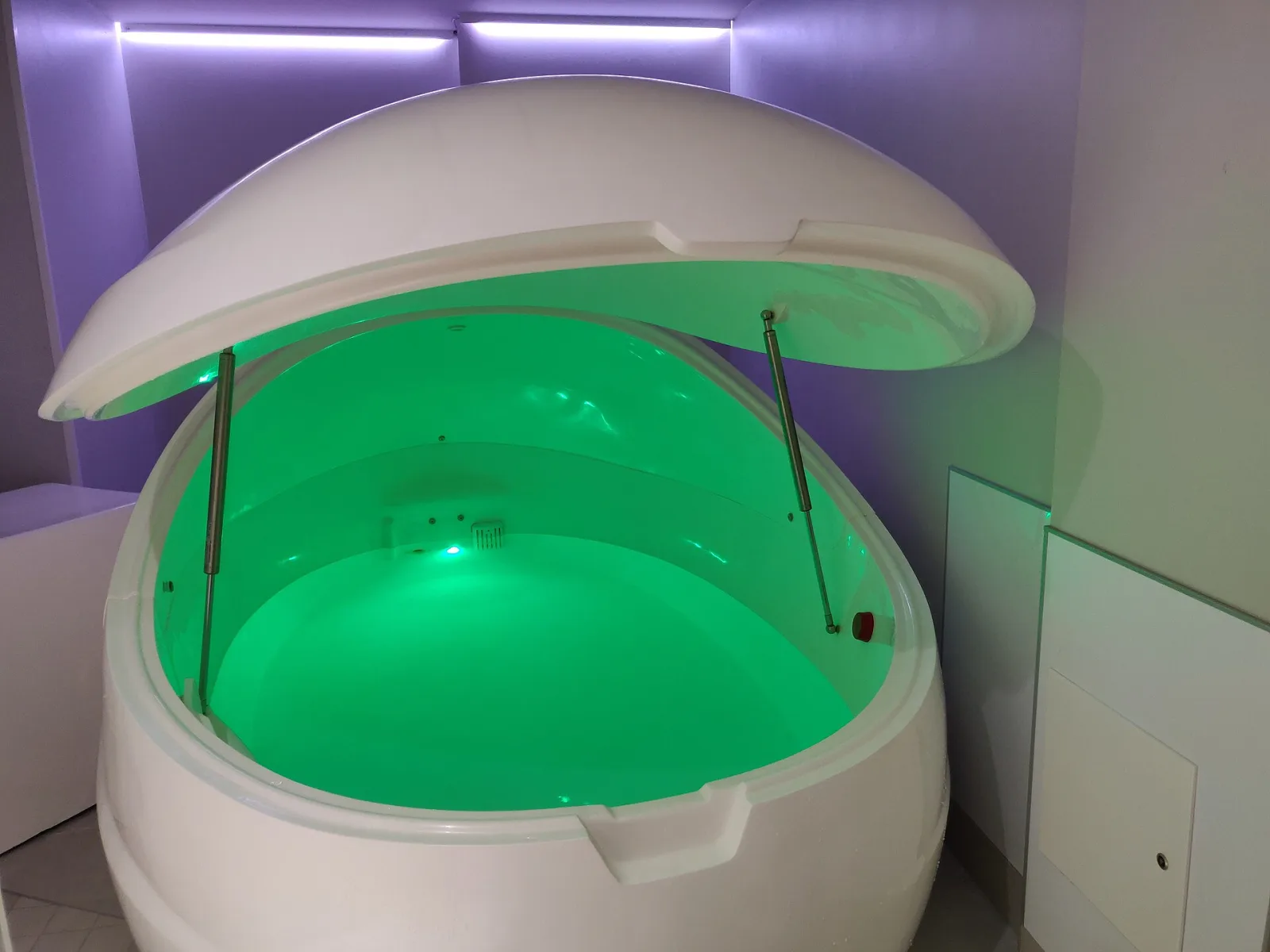
Lilly was working at the US National Institute of Mental Health in 1954 when he devised the first isolation tank: dark, soundproof and filled with warm water. He and a colleague were the first subjects. The early tank looked nothing like today’s rooms. It was upright, likened to a large upright coffin, and the subject hung vertically with a full-face breathing mask (Aeon, 2015). Lilly described the first results in a 1956 paper and later wrote a whole book on tank technique, The Deep Self (1977).
Lilly’s later life is the part films borrow. From the early 1960s he took LSD while in the tank and wrote about it in books published in 1968 and 1972. This was historical self-experimentation by a scientist, and it has nothing to do with a modern float session. We do not recommend combining floating with any drug or alcohol: the one well-known death in a float tank, in 2018, was ruled accidental drowning with ketamine intoxication. Float sober, always. If you want the wider context on these substances, read what psychedelics are, and what the law and research say.
One more myth to clear up: the float tank was not a CIA invention. MKUltra did secretly fund sensory-deprivation research in the same Cold War years, but Lilly’s tank sat in a public health institute, and there is no documented evidence that it was part of MKUltra. Lilly himself said in his memoirs that intelligence agencies approached him and that he refused classified work; that is his own account, not independently confirmed.
Richard Feynman, the curious physicist
Nobel-winning physicist Richard Feynman floated in Lilly’s tanks and wrote about the experience in his memoir Surely You’re Joking, Mr. Feynman! For a scientist famous for testing everything himself, it was simply another experiment in how the mind works. If you like that side of floating, read about the Ganzfeld effect, drug-free visual experiences.
Sport and podcasts: Curry, the Patriots and Joe Rogan
In 2015 ESPN filmed Golden State Warriors players Stephen Curry and Harrison Barnes floating for recovery at Reboot Float Spa in San Francisco. Reports differ on how often they floated, so we will not guess. In American football, Sports Illustrated reported in 2019 that the New England Patriots reportedly used float tanks from about 2014, with teammate Julian Edelman described as a regular user. More on the athletic side in how athletes use floating for recovery.
Podcaster and UFC commentator Joe Rogan owns a tank and has talked about floating on his show for years. When American float centre owners were asked what drove the 2010s revival, they named Rogan, athletes, social media and nicer spa design (AP), not a TV show.
Claims we could not verify
- Tom Brady personally owning a home tank: only reported second-hand.
- Carl Lewis visualising his 1988 long jump in a tank: no primary source found.
- Wayne Rooney floating about ten hours a week: repeated by the press with “reportedly”, never confirmed.
- John Lennon floating in the late 1970s: disputed, so we leave it out.
- Stranger Things causing a float boom: no search or booking data shows it.
We list these because you will see them on other websites. If we cannot trace a claim to a solid source, we would rather tell you than repeat it.
Why the 1980s boom faded and the 2010s revival came
The first wave was fast. After the Perrys’ tanks and the first Beverly Hills centre, local centres opened across the US; the Float Tank Association formed in 1981. Then interest sank for two decades. Peter Suedfeld, the psychologist who helped coin the term REST, blamed operators’ business naivety and too few repeat customers; other commentators point to fears around AIDS in the mid-1980s (Aeon, 2015). Shared water and a scary film reputation were a hard combination.
The second wave came from different places: podcasts, athletes, Instagram-friendly rooms and a growing pile of research. Float Tank Solutions, an industry consultancy, counted 56 US centres in 2014 and 170 existing plus 247 planned in 2016 (vendor data). In other words, the revival was well under way before Stranger Things premiered in July 2016. The show made “Like Eleven’s tank?” the first question many new floaters ask, but it did not start the trend.
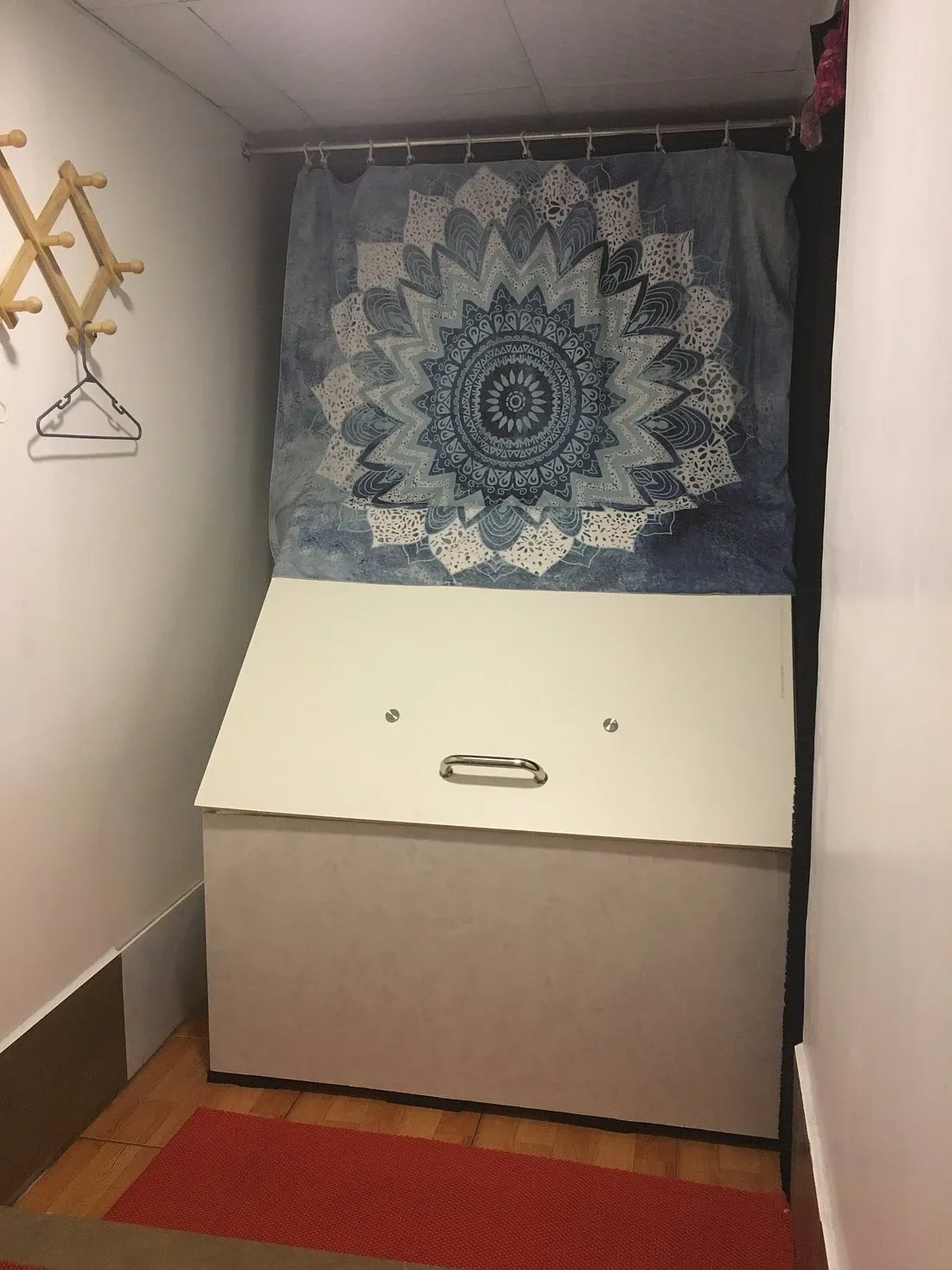
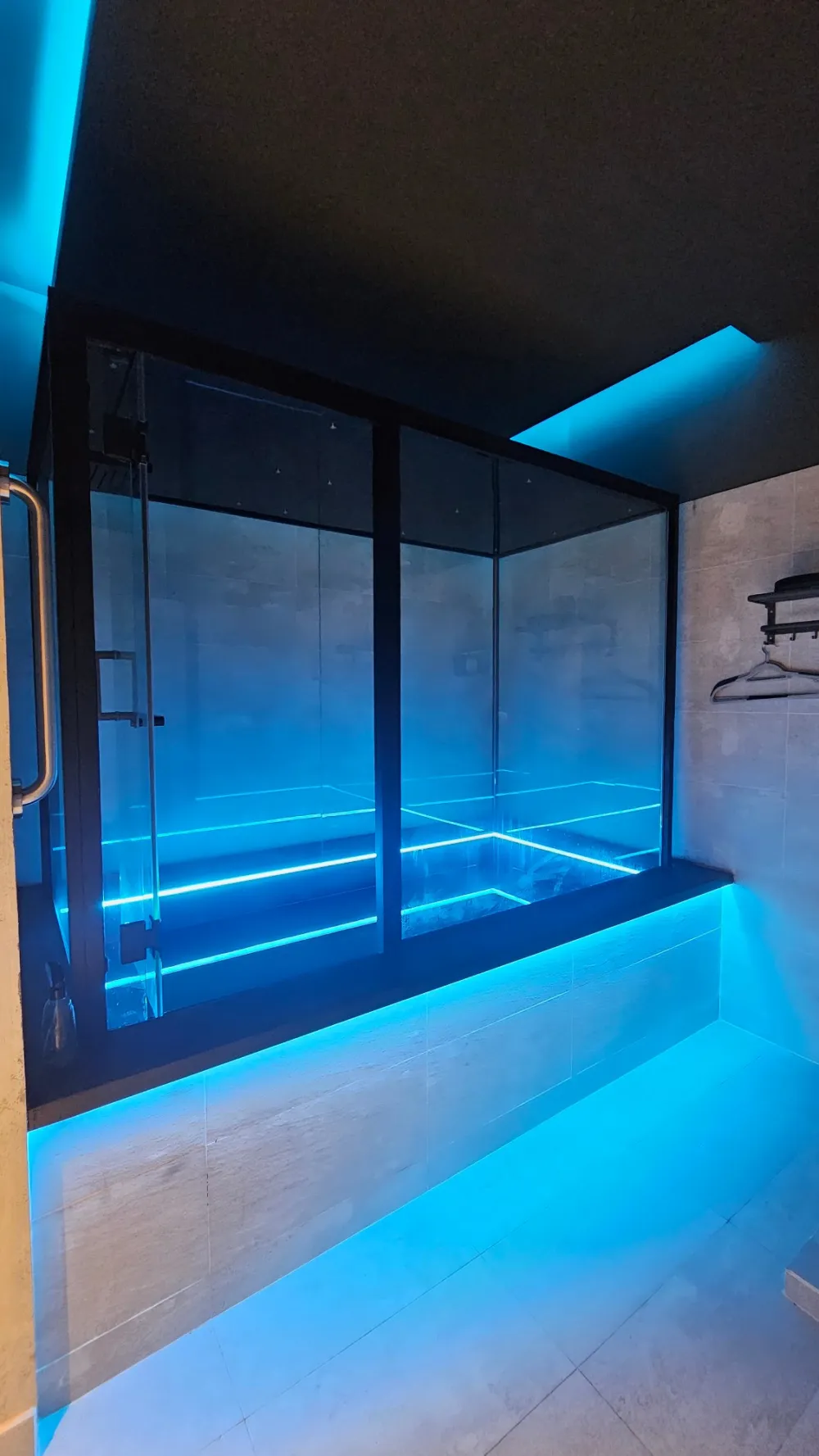
Design changed too. Closed pods gave way to cabins and open rooms that feel less like a lab. Compare the options in types of float tanks: Samadhi tank, pod, cabin and float room. Float Vietnam lived that change: our own story runs from a self-built Samadhi-style tank in Hanoi (2017) to an enclosed cabin in Saigon (2019) to open pools behind glass at Ōmni Space (2025), told in our three generations of float tanks.
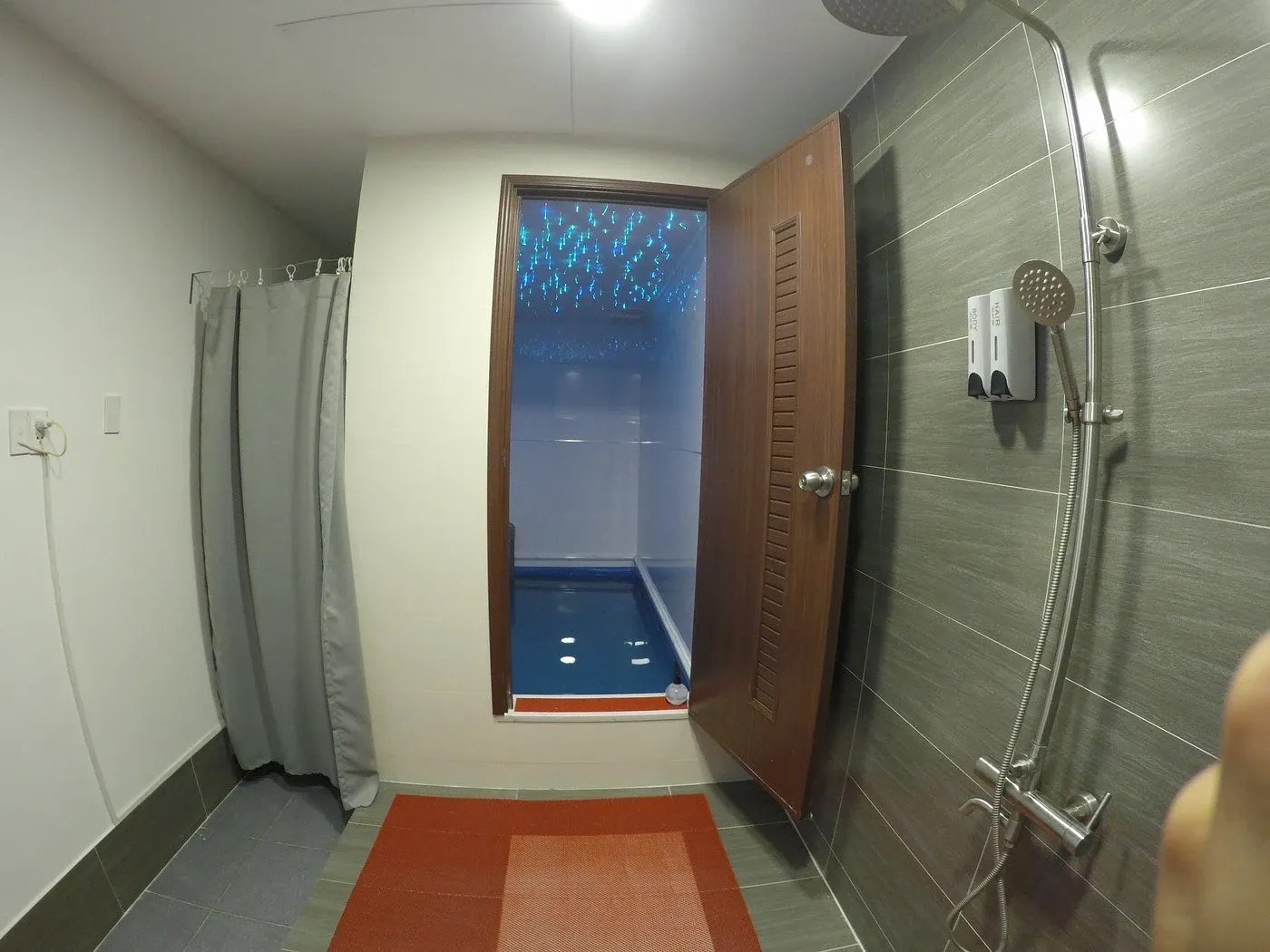
What the research actually says
Outside the cinema, floating is an active research field with clear effects. A 2005 meta-analysis by van Dierendonck and Te Nijenhuis pooled the early trials and found a large effect on stress-related measures (around d = 1.02), with the honest caveat that the trials were small. A 2016 pilot randomised trial (Jonsson & Kjellgren) showed promise for generalised anxiety disorder. At the Laureate Institute in Oklahoma, Feinstein and colleagues (2018) floated 50 anxious participants: anxiety dropped after a single session, there were no serious adverse events, and hallucinations were rare, vague and usually pleasant. Read the details in the Laureate Institute float research.
| Claim | Evidence rating | Notes |
|---|---|---|
| Floating eases stress and anxiety in the short term | Strong | Consistent trials; van Dierendonck 2005, Feinstein 2018 |
| Floating brings deep relaxation and altered body awareness | Promising | Kjellgren 2004; Feinstein 2018 (interoception) |
| Floating gives telepathy or lets you enter other minds | No good evidence | Pure fiction |
| Floating causes drug-like trips | No good evidence | Mild, rare imagery at most; similar to the Ganzfeld effect (Wackermann 2008) |
| Floating combined with drugs or alcohol | Harmful | Never do it; float sober |
Floating is a complement to care, not a replacement for it. The full evidence review, with every study, is in our float therapy whitepaper. If anxiety is overwhelming right now, please talk to a doctor; in Vietnam you can call Ngày Mai on 096 306 1414, or 115 in an emergency.
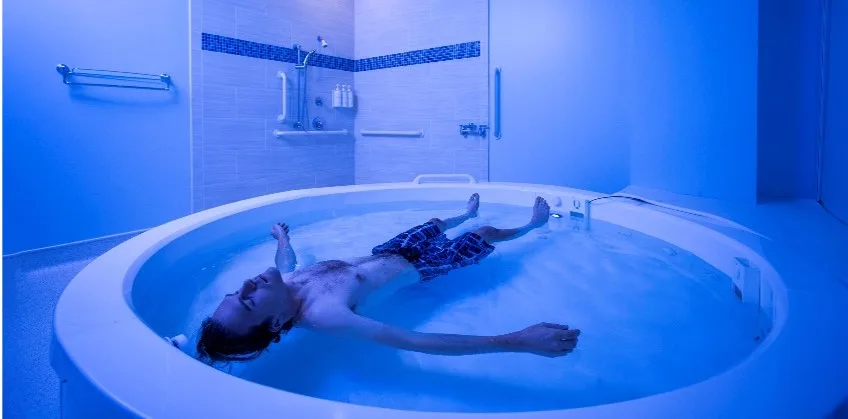
How it feels in reality at Ōmni Space
Forget the helmet, the cables and the lab coats. A float at Ōmni Space in Thao Dien starts with a short guide and a rinse shower, about 15 minutes before your float. You float without clothes or in swimwear, with the earplugs we give every guest and a Halo neck pillow if you want one. Nothing is attached to you, and nobody is watching.
- An open pool, not a closed tank. Each pool is 1.2 m by 2.4 m with about 25 cm of water and 500 kg of Epsom salt, so your body lies on the surface by itself. We chose open pools behind glass to reduce claustrophobia. In the Ōmni team’s view after three generations of tanks, a well soundproofed, lightproof open room suits most people better than a pod because it has far more air.
- You control the light. You can adjust the lights yourself, keep a soft glow on, or switch to full darkness when you feel ready.
- Real quiet. The glass doors are soundproof and block all light.
- Clean water. The pump filters the water for 15 minutes after every float and runs automatically every two hours, around the clock, with UV, hydrogen peroxide and ozone working together.
- Health questions first. Every guest fills in a health questionnaire before a visit.
Afterwards there is about 15 minutes to shower and come back slowly while the pump cleans the water. Most first-timers describe something far less dramatic than Eleven’s journeys: a heavy, warm stillness, a mind that slows down, and sometimes a nap. If closed spaces worry you, read floating with claustrophobia first. You can see what Ōmni offers on the services page.

Key sources
- Feinstein et al. 2018, PLOS ONE
- van Dierendonck & Te Nijenhuis 2005, Psychology & Health
- Jonsson & Kjellgren 2016, BMC Complementary and Alternative Medicine
- Suedfeld & Borrie 1999, Psychology & Health
- Kjellgren et al. 2004, Social Behavior and Personality
- Feinstein et al. 2018, Biological Psychiatry: CNNI
- Wackermann et al. 2008, Cortex
- Aeon (M. M. Owen), 2015
- Wikipedia: Isolation tank
- AFI Catalog: Altered States (1980)
- Wikipedia: Make Room for Lisa
- ESPN, 2015 (Curry & Barnes)
- Sports Illustrated, 2019
- Rolling Stone, 2016
Note: This page is for general information. Float therapy supports wellbeing but does not replace diagnosis or treatment by a doctor. If you have a medical condition, ask your doctor before floating.
Try it at Ōmni Space. Float Vietnam’s float rooms are at 16C Quoc Huong, Thao Dien, Ho Chi Minh City (Saigon), open daily 9:00–21:00. Book a float or read the float therapy FAQ.
Frequently asked questions
Is the float tank in Stranger Things real?
Float tanks are real, but the show’s version is fiction. Real tanks hold warm water with dissolved Epsom salt, you float without a suit or helmet, and there is no evidence of telepathy or travel to other worlds.
Was the float tank invented by the CIA?
No. John C. Lilly devised it in 1954 at the National Institute of Mental Health, a public health institute. The CIA funded some sensory-deprivation research in that era, but there is no documented evidence that Lilly’s tank was part of MKUltra.
Which famous people have floated?
Well-documented examples include physicist Richard Feynman, basketball players Stephen Curry and Harrison Barnes (ESPN, 2015) and podcaster Joe Rogan. Many other celebrity stories online are unverified.
Will I hallucinate in a float tank like in the films?
Very unlikely. In research, perceptual changes are mild, rare and usually pleasant, such as soft colours or dream-like images near sleep. Floating never involves drugs, and you should always float sober.
Do I need to wear a suit or helmet?
No. You float without clothes or in swimwear, usually with earplugs. Nothing is attached to you, you control the light, and you can get out whenever you like.