Updated: 12 October 2026 · Compiled by Float Vietnam
Key takeaways
- Ganzfeld (German for “whole field”) is what happens when your eyes see a perfectly even, featureless field of light and your ears hear steady noise. After a few minutes the brain “switches off” the image, then generates colours, shapes and sometimes whole scenes.
- Wolfgang Metzger described it in 1930, and it is highly reliable in the lab; it is safe and almost free, but there is no evidence of health benefits.
- Ganzfeld makes stimulation uniform; float therapy reduces stimulation across many senses at once and has research on easing anxiety. The two experiences complement each other.
Quick answer: The Ganzfeld effect is the brain creating images when the eyes see a perfectly even field of light (usually ping-pong ball halves under a red lamp) and the ears hear white noise. Within 20–30 minutes, many people see the field fade to grey or black, then colours, patterns, faces or landscapes appear. It is a normal function of a predictive brain, not a sign of illness, and it is safe for most people.
What is the Ganzfeld?
“Ganzfeld” means “whole field”: the entire visual field is covered by one uniform light, with no edges or details for the eye to hold on to. Unlike total darkness, the Ganzfeld still has light; it simply carries no information. Gestalt psychologist Wolfgang Metzger ran the first systematic Ganzfeld experiments in Frankfurt in 1930 and found that a uniform field makes perception gradually fade.
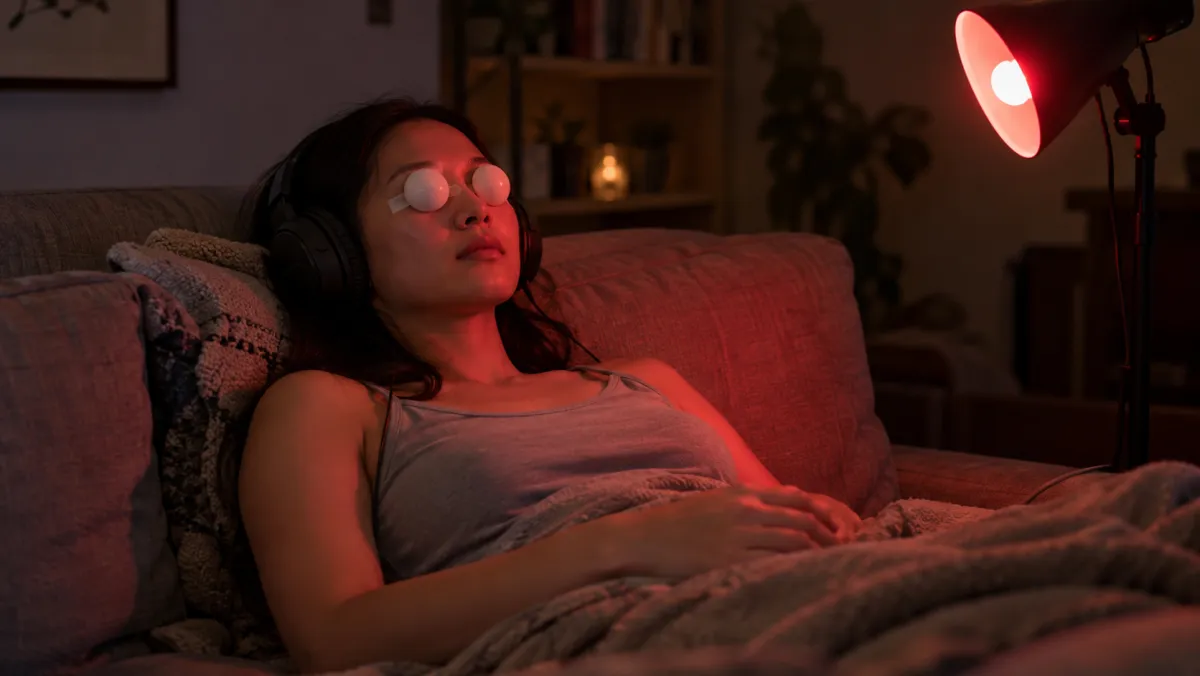
What you will experience, stage by stage
The most recent review (Pistolas et al., 2025, Open Mind) describes typical stages:
- Fade-out: after a few minutes colour and brightness disappear, and the field turns grey or misty white.
- Black-out: the field darkens, sometimes pulsing like fog.
- Simple images: dots, patches of colour, geometric patterns.
- Complex images: faces, landscapes, dream-like scenes; in studies each one lasted about 19 seconds on average.
- Distorted time: about 37% of participants felt a 25-minute session was shorter; about 10% felt slightly off-balance when standing up.
Not everyone sees images, especially the first time, and some people fall asleep. Research on a similar flicker effect (Königsmark 2021; Reeder 2022, with 6,664 people) found that people with vivid mental imagery tend to see clearer images than people with aphantasia.
Why does the brain “paint” images?
The brain constantly predicts the outside world and checks those predictions against signals from the eyes. When there is nothing to check against (an even field of light), it amplifies its own noise and predictions, so perception becomes partly self-generated. In 2008, Jiří Wackermann and colleagues called the Ganzfeld state “hypnagoid”: a blend of waking and sleep onset, with more alpha activity than real sleep. A 2020 study found reduced coupling between the thalamus (the senses’ relay station) and the cortex during Ganzfeld. This is normal brain function, not a sign of mental illness.
Curious about the border between waking and sleep? Read theta waves and float therapy.
Ganzfeld and “telepathy”: a long-running debate
From the 1970s, parapsychologist Charles Honorton used the Ganzfeld to test extrasensory perception: a person in the Ganzfeld tried to “receive” an image a sender was viewing in another room. In 1994, Bem and Honorton reported a hit rate of about 32% where chance is 25%. In 1999, Milton and Wiseman pooled 30 later studies and found no effect; later analyses (such as Storm et al., 2010) reported a small effect again, and the methodological debate continues. In short: parapsychologists report a small effect, and most mainstream scientists consider it unproven. The value of the Ganzfeld for you is perceptual, not psychic.
Ganzflicker and the Dreamachine: faster, but take care
Instead of even light, Ganzflicker uses a red–black flickering screen for about 10 minutes; Brion Gysin’s Dreamachine (1961) uses light flashing through closed eyelids. Images usually come faster and are more vivid and geometric than in the Ganzfeld. But flicker can trigger seizures in photosensitive people (about 1 in 4,000 people aged 5–24 have light-triggered seizures), so anyone with a personal or family history of epilepsy should not try it. The static Ganzfeld carries no such risk.
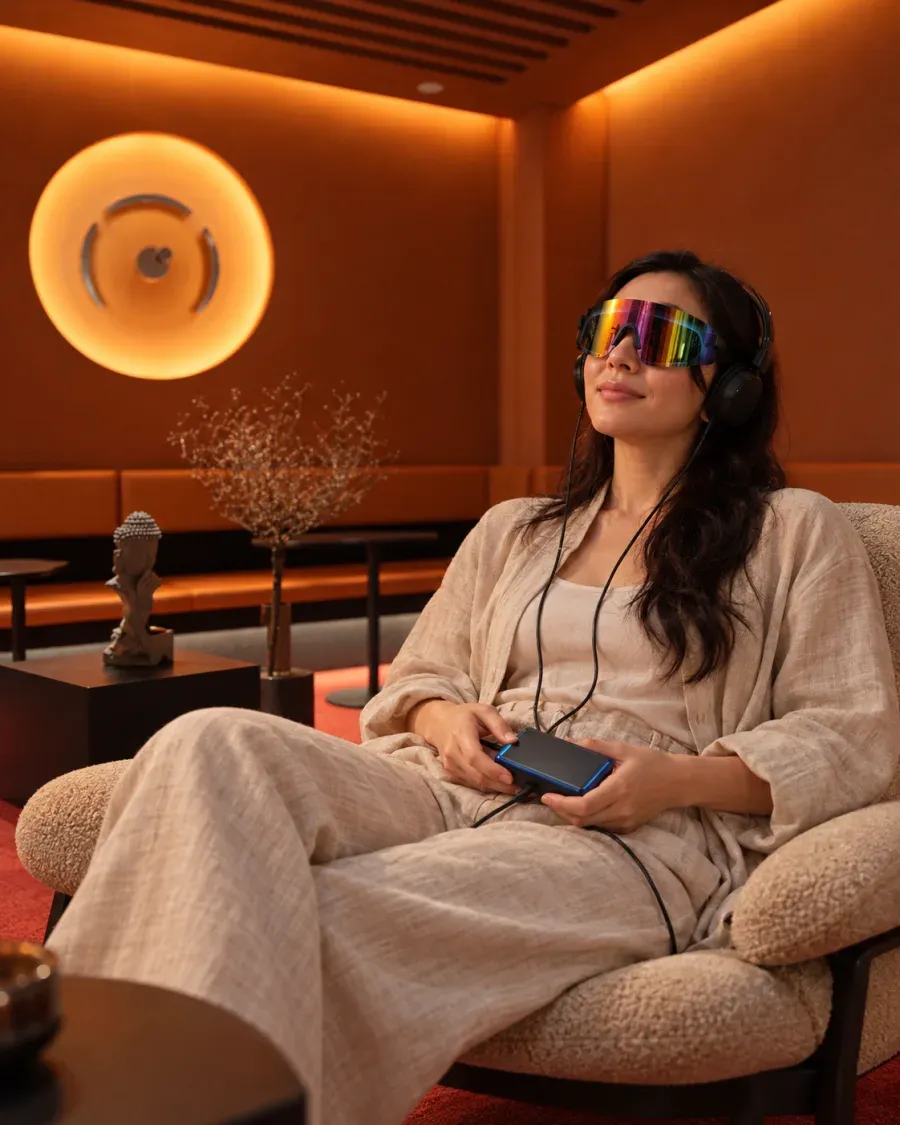
How to try the Ganzfeld safely at home
- Cut a white ping-pong ball in half and smooth the edges.
- Lie or recline comfortably, place one half over each eye (held with gentle tape or elastic) and keep your eyes open behind them.
- Shine a steady, non-flickering lamp (a red or warm bulb) toward your face from about one metre. You can check an LED for flicker with your phone camera.
- Wear headphones playing white, pink or brown noise at a low, comfortable volume.
- Relax for 20–30 minutes. If you feel uncomfortable, just remove the cups and it ends.
- Afterwards, sit for a minute before standing, and note down what you saw.
Skip it if you currently have psychotic symptoms or are prone to hallucinations, or have had recent eye surgery or an eye infection.
Ganzfeld vs float therapy
| Ganzfeld | Float therapy | |
|---|---|---|
| Principle | Uniform stimulation (even light, steady noise) | Reduced stimulation (darkness, silence, near-weightlessness, skin-temperature water) |
| Senses involved | Vision and hearing | Vision, hearing, touch, gravity, temperature |
| Onset | 5–20 minutes | Relaxation within minutes; deeper states later in a 60–90 minute session |
| Typical experience | Fade-out, black-out, then images | Deep relaxation, fading body boundaries, distorted time; images possible but less consistent |
| Best evidence | Perception | Short-term relief of anxiety and stress |
| Health benefits | No good evidence | Strong for relaxation and anxiety relief (consistent trials, very high user satisfaction) |
| Cost | Almost free | Needs a float centre |
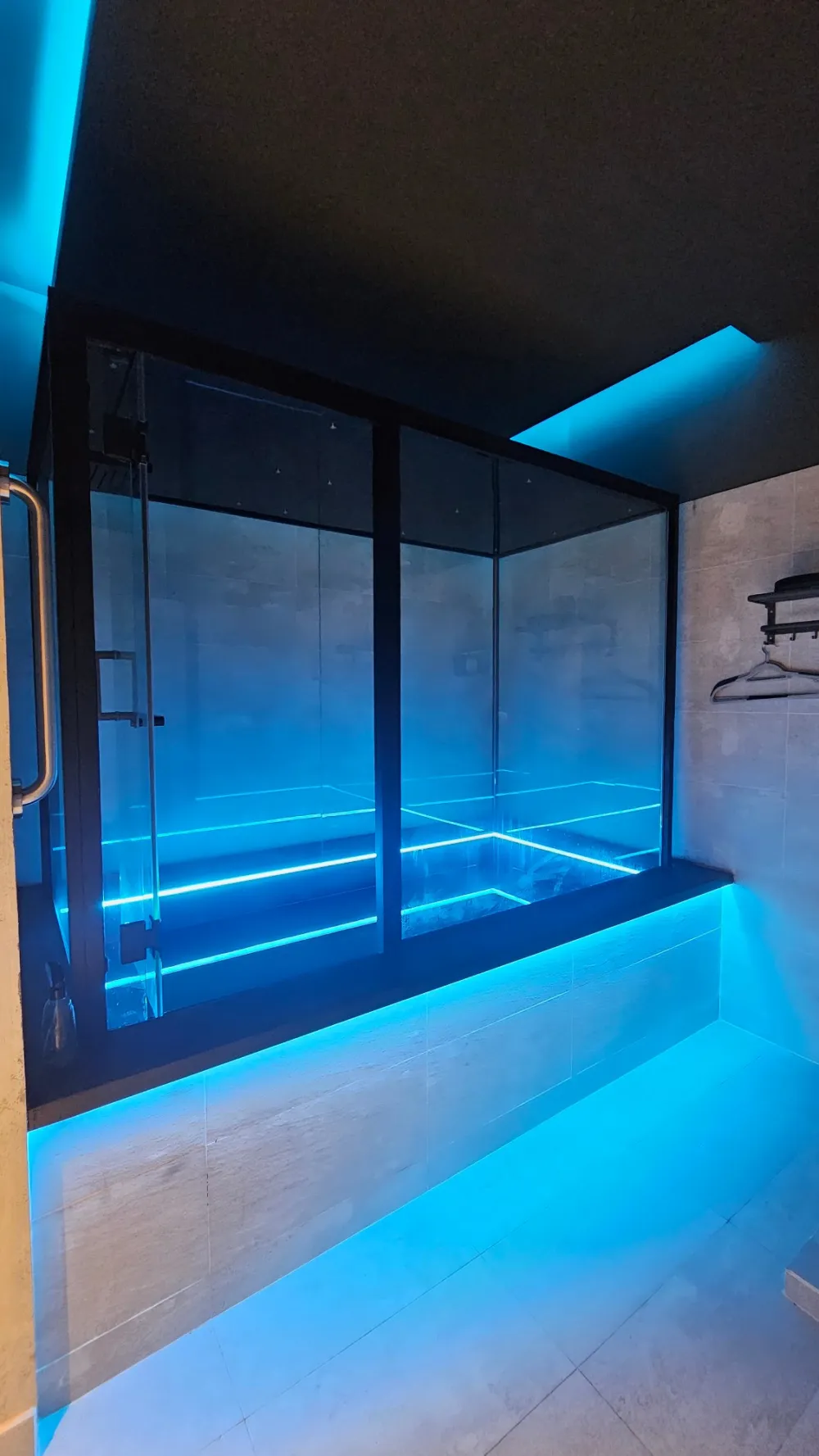
What they share: when the senses get less information, internal signals take up more space, and both can bring you close to the edge of sleep. What differs: floating brings the whole body into the experience. A 2024 study (Hruby et al.) found that the fading of body boundaries while floating partly explained the drop in anxiety. If a home Ganzfeld made you curious, floating is a deeper, full-body version of sensory reduction.

Read more: drug-free mind hacking: 11 ways and what floating feels like, minute by minute.
Key sources
- Pistolas et al. 2025, Open Mind
- Wackermann et al. 2008, Cortex
- Schmidt & Prein 2019, PsyCh Journal
- Bem & Honorton 1994, Psychological Bulletin
- Milton & Wiseman 1999, Psychological Bulletin
- Storm et al. 2010, Psychological Bulletin
- Königsmark et al. 2021, Cortex
- Reeder 2022, Collabra: Psychology
- Hruby et al. 2024, Scientific Reports
Note: This page is for general information. Float therapy supports wellbeing but does not replace diagnosis or treatment by a doctor. If you have a medical condition, ask your doctor before floating.
Try it at Ōmni Space. Float Vietnam’s float rooms are at 16C Quoc Huong, Thao Dien, Ho Chi Minh City (Saigon), open daily 9:00–21:00. Book a float or read the float therapy FAQ.
Frequently asked questions
Is the Ganzfeld effect safe?
A static Ganzfeld (even, non-flickering light) is safe for most people; a 2025 review reported no harmful effects. You may feel slightly off-balance when standing up. To stop, just remove the cups.
How long until I see images, and why do some people see nothing?
Fading usually happens in the first few minutes, and images may appear after 10–20 minutes. Many people see nothing the first time, and people with weak mental imagery tend to see less. That is completely normal.
Does the Ganzfeld prove telepathy?
No. Some parapsychologists report a small effect, but results depend on which studies are included and have not been consistently replicated; most scientists consider it unproven.
How is the Ganzfeld different from Ganzflicker?
The Ganzfeld uses even light; Ganzflicker uses flickering light, which brings faster, more vivid images but can trigger seizures in photosensitive people. Anyone with a history of epilepsy should not try Ganzflicker.
Are Ganzfeld hallucinations a sign of mental illness?
No. They are normal brain function when outside information is missing. People with current psychotic symptoms should still avoid it to prevent confusion.