Updated: 12 October 2026 · Compiled by Float Vietnam
Key takeaways
- Drug-free “mind hacking” means changing your state of consciousness with your own body and senses: float therapy, Ganzfeld, flicker, meditation, breathwork, lucid dreaming, hypnagogia, flow, drumming, fasting and darkness retreats.
- They share one principle: when the senses get less information, or very uniform or rhythmic information, the brain leans more on its own predictions and internal signals, and experience changes.
- Evidence and risk vary widely: meditation and floating are fairly well studied and safe; Wim Hof breathing in water, nights without sleep or multi-day darkness retreats are high-risk.
Quick answer: You can alter consciousness without substances by reducing input (floating, darkness), making it uniform (Ganzfeld) or rhythmic (flicker, drumming), training the mind (meditation, flow), training the breath, or working with the edge of sleep (lucid dreaming, hypnagogia). Of these, meditation has the strongest evidence for anxiety and depression; floating is a young but active research field with clear short-term effects on anxiety and a strong safety record.
Why can the brain shift states without drugs?
Scientists now see the brain as a prediction machine: it constantly guesses what the world looks like and uses the senses to correct those guesses. When outside signals drop (darkness, silence, weightlessness) or become uniform and repetitive (an even field of light, white noise, flicker), the predictions and internal noise take up more space. The result can be a sense of the body’s edges dissolving, time changing and images appearing on their own, much like the border between waking and sleep.
Science calls these “altered states of consciousness”. “Mind hacking” and “soul hacking” are everyday names; this guide keeps them for familiarity but judges each method by real research.
A short history of sensory isolation
In the early 1950s, Donald Hebb’s lab at McGill University had students lie in small cubicles with frosted goggles, gloves and a steady hum; many could not stand more than 2–3 days and began to hallucinate (Bexton, Heron and Scott, 1954). In 1954 John C. Lilly built the first water isolation tank at the US National Institute of Mental Health. In the 1970s Peter Suedfeld proposed the name REST (Restricted Environmental Stimulation Technique) to replace the loaded term “sensory deprivation”, and in 1972 Lilly and Glenn Perry launched the first commercial float tanks. Today’s float room is the most comfortable, safe and standardised version of that idea. Read what is sensory deprivation.
11 ways to alter consciousness, and what the science says
1. Float therapy (Floatation-REST): strong evidence
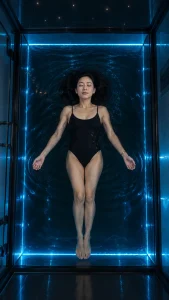
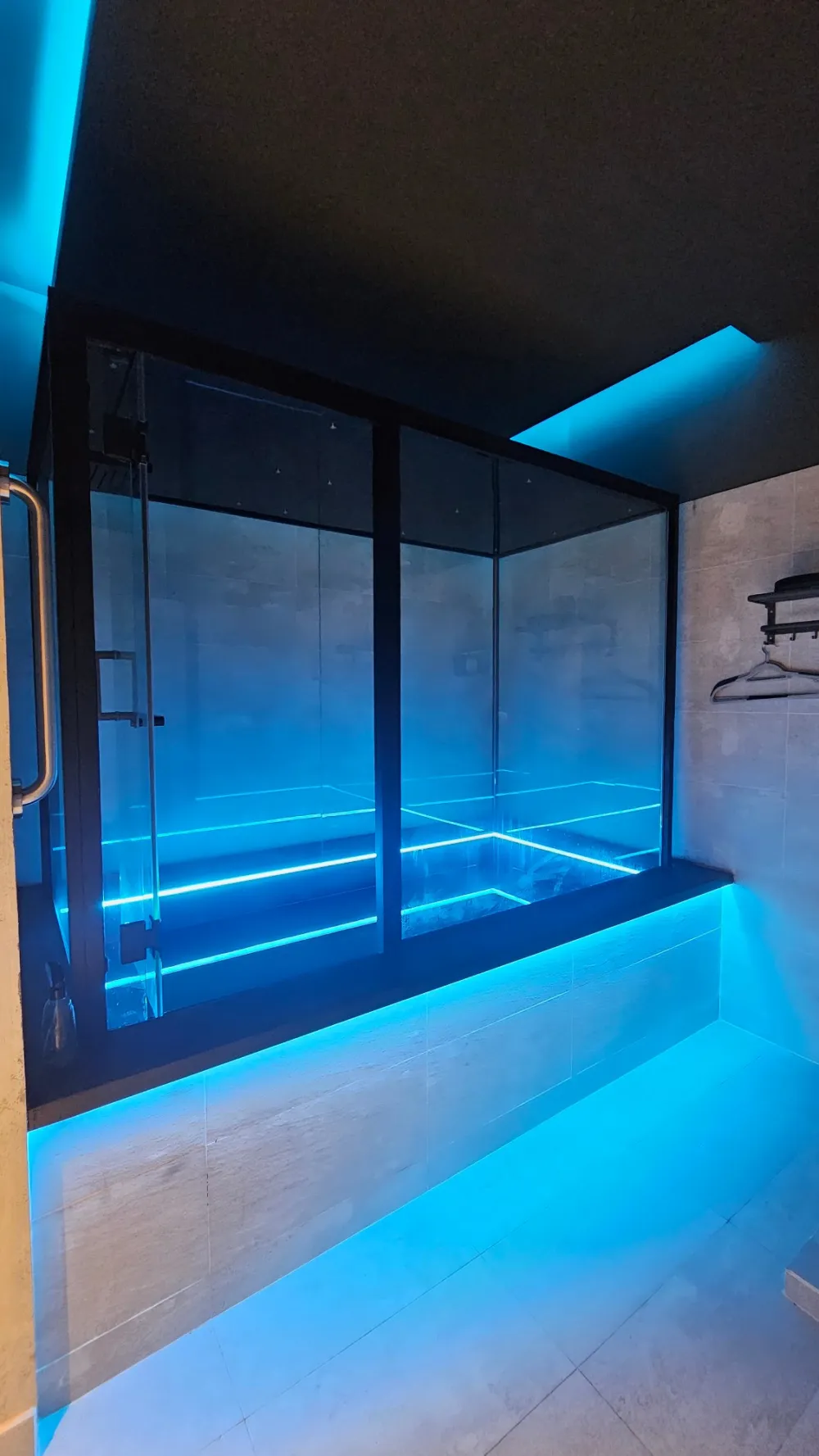
You lie in about 25 cm of skin-temperature Epsom salt water in darkness and silence: light, sound, gravity, temperature contrast and touch all drop at once. A 2024 study (Hruby et al.) found that, compared with lying on a waterbed in the dark, floating produced a stronger altered state: body boundaries faded and time felt distorted, and that fading of body boundaries partly explained the drop in anxiety. Trials at the Laureate Institute (US) and Karlstad University (Sweden) point the same way: clear drops in anxiety and stress; 85–89% of participants completed a 6-session programme (Garland 2024), and in a survey of regular floaters 92% felt relaxed and 77% less stressed (Hilpert 2025). It is the safest method on this list, as long as you never float drunk or on drugs. See the Laureate studies and Swedish research.
2. Ganzfeld: reliable, mild hallucinations
Put two ping-pong ball halves over your eyes, shine a steady red light and listen to white noise: after a few minutes your visual field “switches off”, then many people see colours, shapes or scenes appear. The effect is very reliable in the lab, but there is no evidence of health benefits. Details and how to try it safely at home: what is the Ganzfeld effect.
3. Flicker: Ganzflicker, the Dreamachine and light-and-sound devices
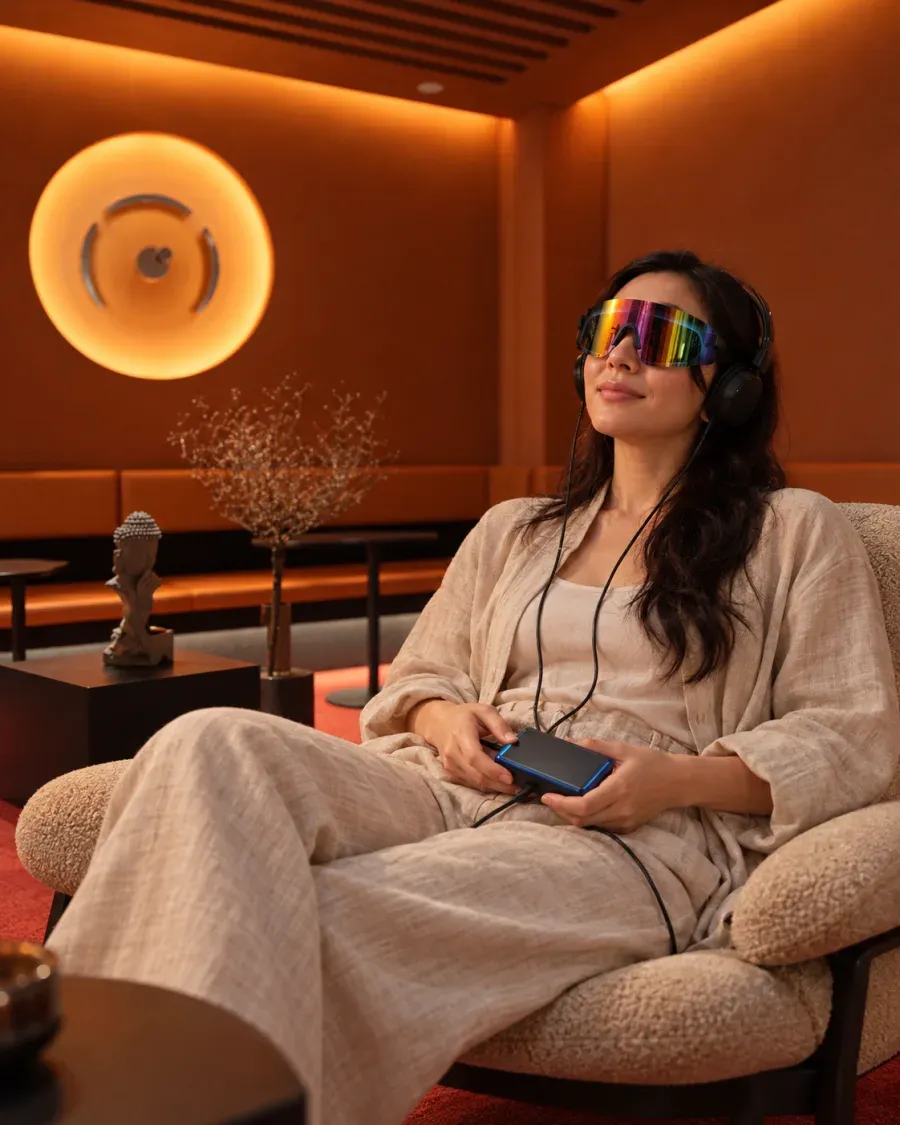
Light flashing about 8–13 times per second through closed eyelids can produce vivid geometric patterns within minutes. Artist Brion Gysin built the Dreamachine in 1961; in 2021 researcher Reshanne Reeder published Ganzflicker, an on-screen version. Important: flicker can trigger seizures in photosensitive people, so anyone with a history of epilepsy should not try it. More on audio-visual entrainment (Ōmni Space).
4. Meditation: the strongest evidence
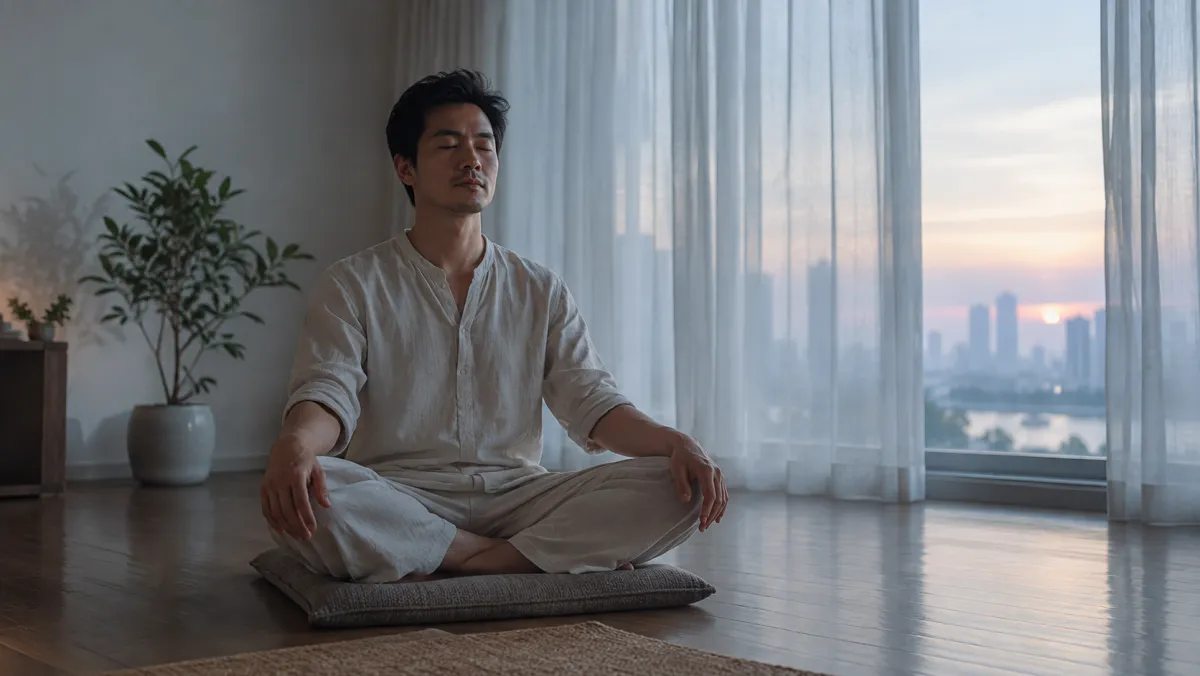
A review of 47 trials (Goyal 2014, JAMA Internal Medicine) found moderate evidence that mindfulness programmes ease anxiety, depression and pain. At the deep end, absorption states (jhānas) are being scanned by Matthew Sacchet’s group at Harvard, so far mostly in a few highly experienced meditators. Vietnam has a rich meditation heritage, from the Trúc Lâm Zen school to Thích Nhất Hạnh’s Plum Village, which emphasises gentle mindfulness. Intensive multi-day retreats occasionally bring anxiety or depersonalisation, so choose ones that screen participants and offer support. See float therapy vs meditation apps.
5. Breathwork: slow is gentle, fast needs care
A 2023 meta-analysis (Fincham et al.) found controlled breathwork modestly reduced stress, anxiety and depression. The Wim Hof Method (fast breathing, breath holds, cold) has a 2014 trial showing practitioners could raise their adrenaline at will; Stanislav Grof’s holotropic breathwork uses prolonged fast breathing for intense experiences. The biggest danger of fast breathing and breath holds is fainting without warning, and people have drowned practising in or near water. Never do fast breathing or breath holds in a float tank, bath or pool.
6. Lucid dreaming: real, hard to train
In 1981 Stephen LaBerge (Stanford) proved that dreamers can know they are dreaming, by giving pre-agreed eye-movement signals during REM sleep. No induction technique yet works reliably. See lucid dreaming with a float tank.
7. Hypnagogia: the edge of sleep
The drowsy moment as you fall asleep can bring unexpected images and ideas. A 2021 study (Lacaux et al., Science Advances) found that spending at least 15 seconds in this light sleep stage tripled the chance of spotting a hidden rule in a maths task; the benefit vanished in deeper sleep. See hypnagogia in a float tank.
8. Flow
Psychologist Mihaly Csikszentmihalyi described flow as being fully absorbed in a task matched to your skill, losing track of time and self. One hypothesis says the frontal cortex quietens during flow, but brain studies conflict. Flow comes from work, sport and music, no device needed.
9. Drumming and rhythm
In 1962 Andrew Neher suggested steady drumming could “drive” brainwaves in rituals; the idea was criticised as poorly controlled. A 2016 study (Hove et al.) of 15 shamanic practitioners found connectivity between some brain regions changed during trance. The evidence is early. See also floating sound bath vs float therapy.
10. Fasting and sleep deprivation: high risk
Medically supervised fasting is sometimes linked with alertness and elevated mood, but data are thin and there are risks for people with diabetes or a history of eating disorders. Sleep deprivation is clearer, in the wrong direction: a 2018 review (Waters et al.) found complex hallucinations after 48–90 hours awake and psychosis-like symptoms after 72 hours. Do not treat staying awake as a hack.
11. Darkness retreats: no good evidence yet
An advanced practice in Tibetan Bön and Buddhist traditions, usually for long-term practitioners with a teacher. Some centres market “Darkness Technology”, claiming days of darkness make the pineal gland release DMT; there is no human evidence for this. No controlled study has been published, and days in the dark can disrupt the body clock and trigger anxiety. Floating offers darkness and silence for 60–90 minutes, and you can leave at any time.
Quick comparison
| Method | Evidence | Risk | Notes |
|---|---|---|---|
| Meditation (mindfulness) | Strong (moderate effects) | Low; intensive retreats need support | Free, needs practice |
| Float therapy | Strong | Very low with screening | Needs a float centre; 60–90 min |
| Slow controlled breathing | Promising | Low | Easy at home |
| Ganzfeld | Strong for perception; none for health | Very low | Almost free |
| Hypnagogia | Promising (creativity) | Low | One strong study |
| Lucid dreaming | Real; training is early | Low | Do not fragment sleep nightly |
| Flicker | Strong for visuals; early for benefits | Seizures in photosensitive people | Avoid with any seizure history |
| Fast breathing (Wim Hof, holotropic) | Early | Fainting, drowning | Never in water |
| Drumming, trance | Early | Low | Depends on setting and culture |
| Long fasts, sleep deprivation | Early / harmful | High | Only with medical supervision |
| Multi-day darkness retreats | No good evidence | High | Only with an experienced guide |
Who should avoid what?
- Fast breathing and breath holds: never in water or while driving; avoid with epilepsy, heart disease, high blood pressure or pregnancy.
- Flicker: avoid with any personal or family history of seizures, or migraine with aura.
- Intensive meditation or retreats: people with a history of psychosis, bipolar disorder or severe trauma should talk to a professional first.
- Long fasts: avoid with diabetes, pregnancy or a history of eating disorders.
- All methods: do not combine with alcohol or drugs, including in a float tank.
See also is float therapy safe and Float Vietnam’s view in psychedelic use is not spiritual practice.
Where to start: a safe ladder
If you are curious about altered states, start low: a few minutes of slow breathing each day → a home Ganzfeld session → a 90-minute float → a guided meditation retreat. Each step teaches you more about your mind without gambling with your health. For the wider context, read biohacking: history and evidence and what are psychedelics.
Key sources
- Hruby et al. 2024, Scientific Reports
- Feinstein et al. 2018, PLOS ONE
- Garland et al. 2024, PLOS ONE
- Hilpert & Ster 2025, medRxiv (survey preprint)
- Kjellgren & Westman 2014, BMC Complement Altern Med
- Pistolas et al. 2025, Open Mind
- Wackermann et al. 2008, Cortex
- Königsmark et al. 2021, Cortex
- Kox et al. 2014, PNAS
- Fincham et al. 2023, Scientific Reports
- Goyal et al. 2014, JAMA Intern Med
- LaBerge et al. 1981, Percept Mot Skills
- Lacaux et al. 2021, Science Advances
- Waters et al. 2018, Frontiers in Psychiatry
- Hove et al. 2016, Cerebral Cortex
Go deeper on each topic: is dopamine detox real, what is a darkness retreat and what is a flow state.
Note: This page is for general information. Float therapy supports wellbeing but does not replace diagnosis or treatment by a doctor. If you have a medical condition, ask your doctor before floating.
Try it at Ōmni Space. Float Vietnam’s float rooms are at 16C Quoc Huong, Thao Dien, Ho Chi Minh City (Saigon), open daily 9:00–21:00. Book a float or read the float therapy FAQ.
Frequently asked questions
Can you get “high” without drugs?
You can experience altered states without substances, for example while floating, in a Ganzfeld or in deep meditation: body boundaries fading, time changing, images appearing. They are usually milder than psychedelics, and you stay aware and in control.
What is the safest method to try first?
Slow controlled breathing, a home Ganzfeld and float therapy are low-risk options. Meditation has the strongest evidence for mental health.
Can I do Wim Hof breathing in a float tank?
No. Fast breathing and breath holds can make you faint without warning; in water that can lead to drowning. Never practise them in a float tank, bath or pool.
Does floating put the brain into theta?
A few small studies suggest floating can bring the brain close to the drowsy edge of sleep, but this has not been measured well; it is a hypothesis, not an established effect.
Do darkness retreats trigger DMT release?
There is no human evidence. The claim that darkness makes the pineal gland release DMT is marketing, not research.