Updated: 12 October 2026 · Compiled by Float Vietnam
Key takeaways
- Flow is complete absorption in a task that is hard but doable: time distorts, the inner critic goes quiet, and action feels almost automatic. Psychologist Mihaly Csikszentmihalyi named it in 1975.
- Flow is moderately linked to well-being (2026 meta-analysis, r = .36) and performance (2021 meta-analysis, r = .31), but cause and effect are unproven. The neuroscience is early and the findings conflict.
- Flow takes energy. People who feel well recovered in the morning experience more flow at work (Debus 2014). Floating is one way to rest deeply before focused work, not a switch that turns flow on.
Quick answer: A flow state is total absorption in an activity whose challenge matches your skill: the goal is clear, you get instant feedback, attention narrows onto the task, self-consciousness fades and time feels different. To get there, pick one concrete goal, choose a task slightly beyond your comfort level, remove interruptions, and rest well, because recovered people get into flow more easily.
What is a flow state?
A developer in Saigon sits down to chase a stubborn bug. When she looks up it is dark outside and the ice in her coffee melted hours ago. A calligrapher writing Tết greetings may describe something similar: the hand follows the brush, the mind goes quiet, and the question “is this good?” never comes up. That is flow: complete absorption in a task that is challenging but doable, so that action feels smooth and almost automatic.
In everyday English it is being “in the zone”, “in the groove” or “locked in”. The name itself came from people interviewed in the 1970s, who described the feeling as being carried along by a current.
It helps to say what flow is not. It is not relaxation or passive pleasure: watching TV is low challenge and low skill, which researchers file under “apathy”. It is not hypnosis, and it is not a mystical state. Flow is active: effortful, yet it feels effortless.

Mihaly Csikszentmihalyi, the man who named flow
Mihaly Csikszentmihalyi (roughly “MEE-high CHEEK-sent-me-high-ee”) was born on 29 September 1934 in Fiume, now Rijeka in Croatia, the son of a Hungarian diplomat. The Second World War killed one of his older half-brothers in the 1944 Siege of Budapest; the other was taken to Soviet labour camps in Siberia. He later said that watching adults lose their footing in the war made him ask what makes life worth living.
In 1949, after the communist takeover of Hungary, his father resigned rather than serve the regime and the family lost its citizenship; Mihaly left school to help support them. In Switzerland in the early 1950s he heard Carl Jung lecture on UFO sightings as psychological projection, and was drawn to psychology. He moved to the United States at 22, worked nights while studying, and earned his BA (1959) and PhD (1965) at the University of Chicago with a dissertation on creativity in artists.
His 1975 book Beyond Boredom and Anxiety, built on interviews with rock climbers, chess players, dancers, composers and surgeons, gave the first full description of flow. Flow: The Psychology of Optimal Experience (1990) became an international bestseller, and around the turn of the millennium he co-founded positive psychology with Martin Seligman. He died on 20 October 2021 in Claremont, California, aged 87.
Worth remembering: his question was never “how do we perform better?” Flow was his answer to a question about happiness. The productivity framing came later, from business and popular writers.
The 9 components of flow
In Flow (1990) Csikszentmihalyi listed nine components. Later work splits them into three conditions that make flow likely and six characteristics of the experience itself.
Three conditions
- Challenge–skill balance: the task stretches you, but you can meet it.
- Clear goals: you know what to do next.
- Immediate feedback: you know how well you are doing as you go.
Six characteristics
- Merging of action and awareness: doing without thinking about doing.
- Total concentration on the task at hand.
- Sense of control: more precisely, no worry about losing control.
- Loss of self-consciousness: the inner critic goes quiet.
- Transformation of time: hours feel like minutes, or a moment stretches.
- Autotelic experience: the activity is rewarding in itself (Greek auto, “self”, and telos, “goal”).
A meta-analysis of 28 studies (Fong et al. 2015) confirmed challenge–skill balance, clear goals and sense of control as the most robust conditions. And a myth-buster: flow proneness is largely unrelated to intelligence (Ullén 2012). You don’t need to be a genius to flow.
Experience sampling and the “paradox of work”
How do you measure a state that disappears when you ask about it? In 1977 Csikszentmihalyi, Larson and Prescott gave participants a pager that beeped at random, about eight times a day for a week. At each beep they noted what they were doing, how challenging it was, how skilled they felt and their mood. This Experience Sampling Method (ESM) was one of the first ways to study everyday experience in real time, and today’s mood-tracking apps descend from it.
Its most surprising finding came from a 1989 study of about 100 workers (Csikszentmihalyi & LeFevre): flow-like moments happened more often at work than in leisure. Yet at work people still wished they were somewhere else, while their free time was often passive (TV) and left them listless. Sound familiar?
The challenge–skill map: flow, boredom and anxiety
The first model (1975) had three channels: challenge above skill gives anxiety, below skill gives boredom, balance gives flow. In 1988 Italian researchers Massimini and Carli refined it: balance at a low level (easy task, low skill) is not flow but apathy. Flow needs both challenge and skill above your own average. Their eight-channel map:
| Channel | Challenge | Skill |
|---|---|---|
| Arousal | High | Medium |
| Flow | High | High |
| Control | Medium | High |
| Relaxation | Low | High |
| Boredom | Low | Medium |
| Apathy | Low | Low |
| Worry | Medium | Low |
| Anxiety | High | Low |
Notice “relaxation”: it is its own healthy channel, not a failure to flow. Rest has a legitimate place on the map.
The balance idea has critics. Løvoll and Vittersø (2014) found some balanced states felt dull, and Engeser and Rheinberg (2008) showed the balance–flow link depends on a person’s achievement motive and how much the activity matters to them. Experiments with self-adjusting difficulty, such as a Tetris-style task (Keller & Bless 2008), still support the core idea. A 2011 study (Keller et al.) found that when difficulty fit skill, heart-rate variability fell and cortisol rose: flow is activation, not relaxation.
Cousins of flow: peak experience, the zone and wu wei
Maslow’s peak experiences. Abraham Maslow (1962, 1964) described rare, intense moments of joy and unity. Privette (1983) separated three ideas: peak experience is intense joy, peak performance is superior functioning, and flow is intrinsic enjoyment that can be quite mild. Flow is far more ordinary; it can happen while you cook dinner.
The athlete’s “zone”. Susan Jackson (1995) interviewed elite athletes. What helped them into flow: preparation, confidence, optimal arousal and focus. What broke it: poor conditions, distractions and self-doubt. With Csikszentmihalyi she wrote Flow in Sports (1999), and her Flow State Scale (Jackson & Marsh 1996) is still widely used.

Wu wei and Cook Ding. Taoism speaks of wu wei (無為), “effortless action”: moving with the situation instead of forcing it. In the Zhuangzi, Cook Ding carves an ox so skilfully that his knife never dulls, because the blade follows the natural joints. Vietnamese students know the tale as “Bào Đinh giải ngưu”. Edward Slingerland’s Trying Not to Try (2014) links wu wei to modern cognitive science, including the paradox that you cannot force spontaneity. Zen has mushin (“no-mind”) in martial arts and archery.
To be fair to the evidence: these are parallels in experience, not proof that ancient sages were describing the same brain state scientists measure today.
Kotler, Wheal and “flow hacking”: what holds up
Journalist Steven Kotler brought flow to a mass audience with The Rise of Superman (2014, on action-sports athletes), Stealing Fire (2017, with Jamie Wheal) and The Art of Impossible (2021). Kotler and Wheal co-founded the Flow Genome Project, and Kotler later ran the Flow Research Collective, a company selling flow training. Stealing Fire describes an “altered states economy” worth trillions of dollars a year, but the figure lumps together alcohol, caffeine, pharmaceuticals, games and music, so it is rhetoric rather than a market estimate.
Three claims deserve a closer look:
- “500% more productive”. This traces to a 2013 McKinsey Quarterly piece in which executives were asked how much more productive they were at their peak than on average; the most common answer was about five times. That is a self-report from an exercise, not a controlled study. And even taken at face value, five times as productive is +400%, not +500%.
- The “neurochemical cocktail”. Kotler describes flow as a simultaneous release of norepinephrine, dopamine, anandamide, serotonin and endorphins. No human study has measured that five-chemical cascade during flow. Kotler’s own 2022 peer-reviewed paper with academic researchers (Kotler, Mannino, Kelso & Huskey) frames roles for dopamine, noradrenaline and endocannabinoids as a framework for future testable hypotheses: a proposal, not proof.
- Products that “switch on” flow. Courses, binaural beats, supplements and wearables that promise on-demand flow have no randomised trial evidence behind them. You can make flow more likely by arranging conditions; you cannot flip it on.
For the wider picture, read drug-free mind hacking: 11 ways and biohacking in Saigon.
What happens in the brain? Competing findings
This is where popular books overreach. The neuroscience of flow is young, samples are small and the results don’t line up neatly.
- Transient hypofrontality (Dietrich 2004): the automatic skill system takes over while the effortful prefrontal system quietens. It is a theory paper with no new data, yet it became the favourite pop explanation (“your prefrontal cortex switches off”), which oversimplifies it.
- Flow in the scanner (Ulrich et al. 2014, 27 people): when mental-arithmetic difficulty was matched to skill, the left inferior frontal gyrus and putamen became more active, while the medial prefrontal cortex (MPFC, linked to self-referential thought) and the amygdala became less active. The team replicated this in 2016.
- Contradicting results (Yoshida et al. 2014, 20 gamers): lateral prefrontal areas became more active during flow, the opposite of a simple “frontal shutdown”.
- Synchronisation theory (Weber et al. 2009; Huskey et al. 2018): flow is the synchronising of attention-control and reward networks when challenge meets skill, an energy-efficient state that feels effortless.
- Dopamine (de Manzano et al. 2013, 25 people): people with a stronger tendency to flow had more dopamine D2 receptors in the striatum (r = .41). That is a trait and receptor availability, not dopamine released during flow, and it has not been replicated.
A 2022 systematic review (Alameda et al.) pooled 25 studies with 471 participants. Attention, executive and reward systems all seem involved, but how they behave during flow is inconsistent across studies, and the authors called the evidence “sparse and inconclusive”. The best current reconciliation: self-focused regions may quieten while task-control regions keep working hard. So be wary of confident claims such as “flow releases five feel-good chemicals”.
Is flow good for you?
Well-being. The largest meta-analysis so far (Sweeny et al. 2026, Emotion) covers 77 papers and 85 independent studies: flow is moderately strongly linked to well-being (r = .36). The link is stronger for meaning and growth (eudaimonic well-being) than for momentary pleasure, and stronger for life satisfaction than for mood.
Performance. Harris et al.’s 2021 meta-analysis of 22 studies in sport and gaming found a medium-sized link (r = .31). But the authors stress the data cannot settle the causal direction: performing well may produce flow as much as flow produces good performance.
At work. A 2023 meta-analysis (Liu et al.) of 113 samples and 60,110 people found that job features, personal traits, proactive behaviour and leadership all relate to flow, so you can design for flow rather than wait for it. It also noted short-term side effects such as fatigue.
The dark side of flow
Flow itself is morally neutral. Csikszentmihalyi warned that flow activities can become addictive and that a gambler can be in flow. Anthropologist Natasha Dow Schüll (2012) described the “machine zone” of problem slot players, who play not to win but to stay in a trance-like absorption where time, money and self disappear. Unlike healthy flow, this zone erases the self rather than building skill. In 129 high-frequency slot players, “dark flow” was linked both to enjoyment and to problem gambling and depression (Dixon et al. 2019), perhaps because it offers escape from low mood.
In gaming, a pilot study of 110 players (Hull et al. 2013) found that of the nine flow components, only time transformation predicted gaming-addiction scores, and designer Jenova Chen (2007) wrote openly about tuning difficulty to keep players in the flow channel. A similar mechanism has been proposed for infinite-scroll feeds, but that evidence is mostly preprints.
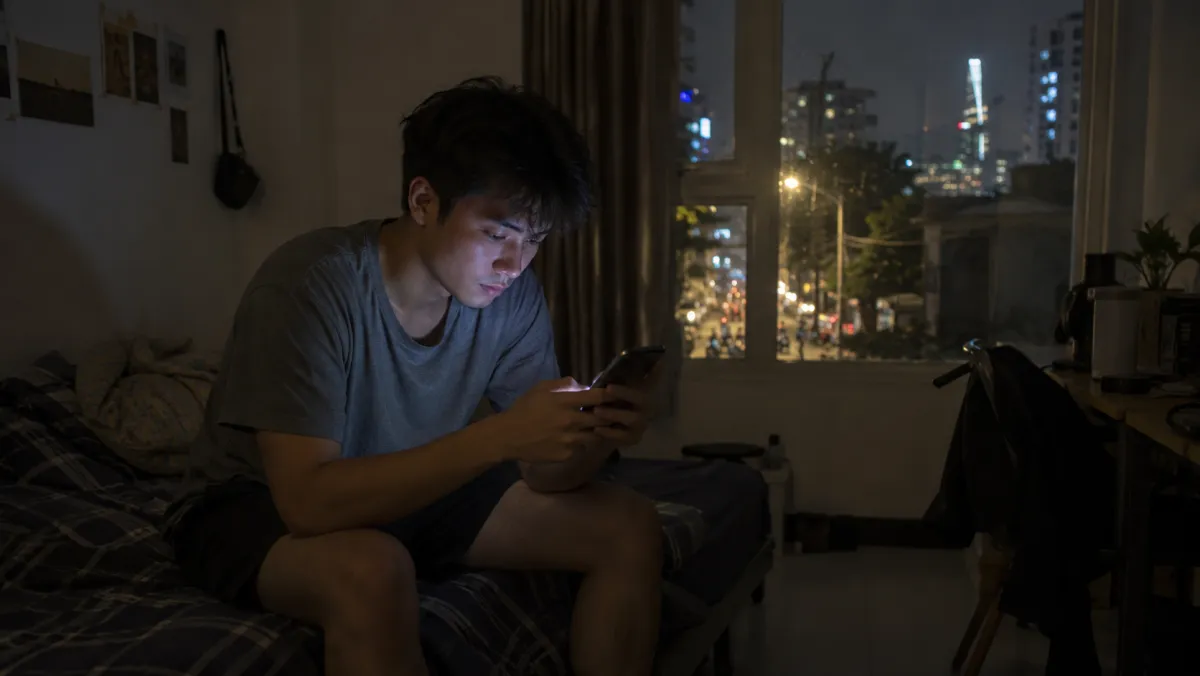
A simple test: healthy flow leaves you energised and a little more skilled. Escape flow leaves you drained, asking where three hours went. If you notice you are using games, gambling or your phone to escape a low mood that won’t lift, talk to a professional; in Vietnam the Ngày Mai helpline is 096 306 1414, and 115 for emergencies.
How to get into flow: what the evidence supports
| Lever | Evidence | In practice |
|---|---|---|
| Clear goals | Strong | Pick one concrete outcome per session (“write 500 words”, “fix bug #12”), not “work on the project” |
| Immediate feedback | Strong | Choose tasks with visible progress: tests passing, word count, a metronome, sets and reps |
| Challenge slightly above skill | Promising | Bored? Add a constraint or time limit. Anxious? Break the task down or learn a sub-skill |
| Remove interruptions | Promising | Phone in another room, notifications off, block 60–90 minutes |
| Autonomy | Promising | Choose how you work; reshape your own tasks |
| Rest and sleep | Promising | See the next section |
| Music, binaural beats, supplements, “flow trigger” products | No good evidence | Personal preference; no product reliably switches flow on |
The cost of a ping. The viral “23 minutes to refocus” is a rounded figure. Gloria Mark’s field study (Mark, Gonzalez & Harris 2005) found that when a task was interrupted, people took about 25 minutes on average to return to it, usually after working on about two other tasks in between. The study did not measure how long it takes to regain deep focus, but it shows how costly interruptions are. In 2008 Mark’s team found that interrupted people compensate by working faster, at the price of more stress and frustration.
Attention residue. Sophie Leroy (2009) showed that when you switch tasks, part of your attention stays stuck on the previous one, especially if it was unfinished. Cal Newport builds on this in Deep Work (2016) and explicitly credits Csikszentmihalyi; remember it is a popular book drawing on research, not a study itself.
Examples by field. Music: practise a passage just above your level with a metronome; in 21 pianists, flow came with deeper breathing and activity in the smiling muscles (de Manzano 2010), a sign of positive, effortful attention. Coding: protect meeting-free blocks and mute Slack. Sport: running, climbing, surfing. Everyday life: cooking, gardening, calligraphy, sewing, fixing a motorbike. Csikszentmihalyi always stressed that flow is democratic.
Rest: the other half of flow
Flow is an active, high-energy state. Rest is not its opposite; it is the fuel and the incubator.
Recovery predicts flow. Debus, Sonnentag and colleagues (2014) followed 121 software professionals over five workdays, measuring flow three times a day. On days when people felt more recovered in the morning, they experienced more flow at work. Well-recovered people showed a U-shaped flow curve across the day; poorly recovered people declined steadily. Another study (Demerouti et al. 2012) found that without evening detachment from work, high-flow days can leave people exhausted.
Sonnentag and Fritz (2007) identified four recovery experiences: psychological detachment, relaxation, mastery (learning something new) and control over free time. For short pauses, a micro-break meta-analysis (Albulescu et al. 2022) found more vigour and less fatigue but no clear overall performance gain; recovering from very depleting tasks may need breaks longer than ten minutes.
Focus and mind-wandering alternate. The default mode network (DMN) is a set of brain regions active when we are not focused on the outside world (Raichle 2001). It runs in opposition to attention networks (Fox 2005), so the brain naturally swings between looking out and looking in. The review “Rest is not idleness” (Immordino-Yang 2012) links these rest periods to memory consolidation, self-reflection and meaning-making. If flow is the focus pole, rest is the reflection pole. Read more about the default mode network.
Why ideas arrive in the shower. Sio and Ormerod’s 2009 meta-analysis confirmed a real incubation effect: setting a problem aside helps, especially for creative problems and after thorough preparation, and a low-demand activity during the break works better than a demanding one. Baird et al. (2012) found an undemanding task that let the mind wander improved creative solutions more than a demanding task, rest or no break. The rhythm: work hard and deep, step away into something easy, come back.
Where float therapy fits
First, plainly: no study has tested whether floating leads to more flow afterwards. Floating doesn’t switch flow on, doesn’t trigger any “flow chemicals”, and won’t make you several times more productive.
What the research does show is that float therapy reduces short-term stress and anxiety and lifts mood, with consistent trials (Kjellgren 2014; Feinstein 2018); in Garland et al.’s 2024 trial, 85–89% of participants completed their sessions. A 2025 survey (Hilpert & Ster, a medRxiv preprint) found 92% of floaters felt relaxed and 77% less stressed. Because light, sound, gravity and touch are all sharply reduced, floating is a structured way to get exactly the two recovery experiences Sonnentag describes, detachment and relaxation, the things that precede high-flow days (Debus 2014). A couple of old creativity studies after floating (Suedfeld 1987; Forgays 1992) were encouraging but small and dated, so treat them as early.
| Claim | Evidence |
|---|---|
| Floating aids relaxation and eases short-term stress and anxiety | Strong |
| Well-recovered people experience more flow at work | Promising |
| Floating boosts creativity | Early |
| Floating improves sleep | Early |
| Floating directly puts you into flow | No good evidence |
Think of a float as clearing the desk before a big project, not as a shortcut. One idea: book a session the afternoon or evening before a deep-work day, then get a full night’s sleep. Floating is a complement, never a replacement for sleep, exercise or professional help if you are burned out.
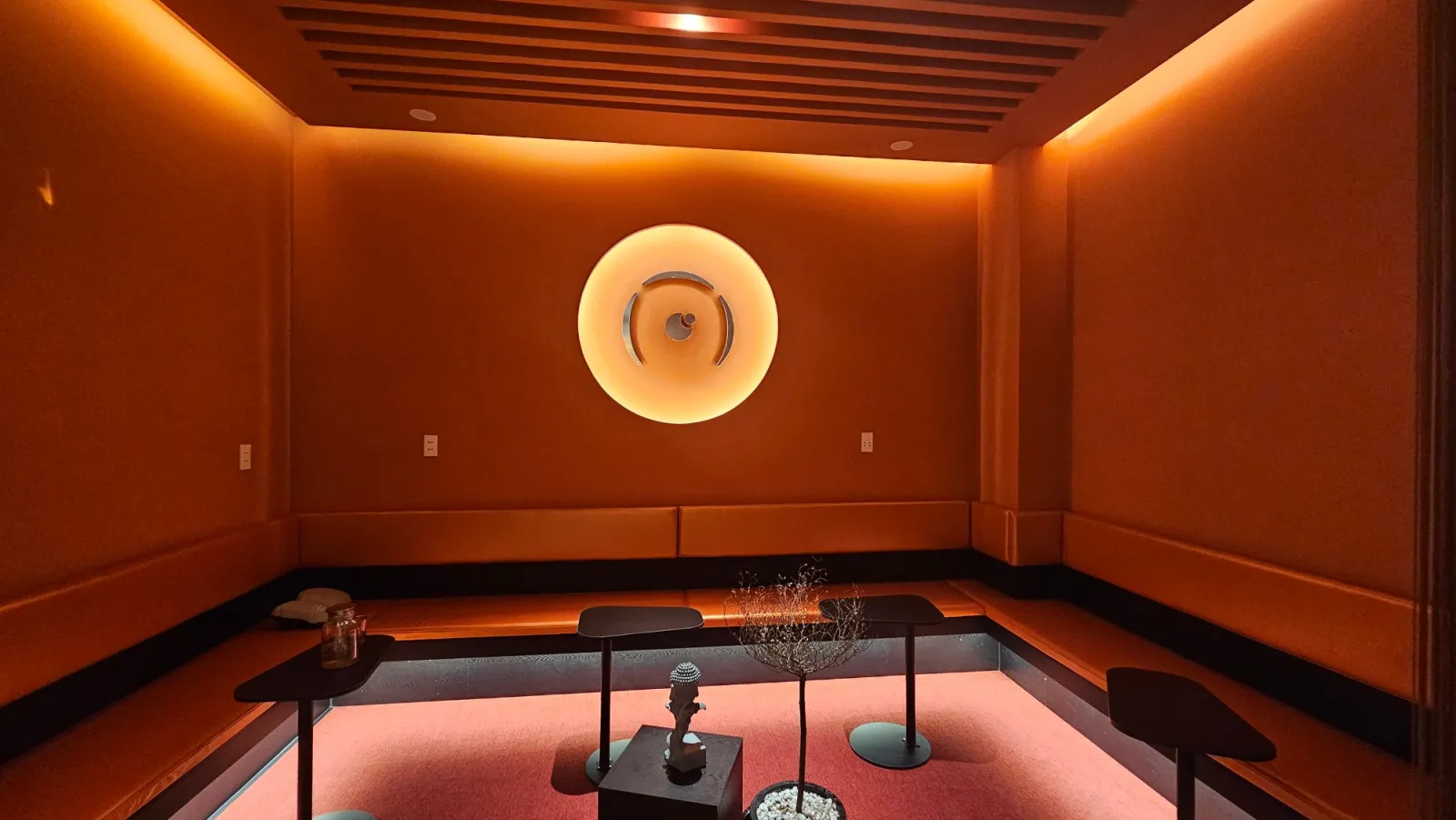
More: floating for employee wellness, floating for creativity, learning and memory, the Laureate Institute float research and our float therapy whitepaper.
Flow in Vietnam’s work and study culture
Vietnam’s 2019 Labour Code allows a normal working week of up to 48 hours. Many offices work Saturday mornings, overtime is common, and open-plan desks, Zalo work groups and late-night messages from the boss keep attention fragmented. Gloria Mark’s findings feel very close to home here.
- Office workers and managers: block two meeting-free 90-minute slots a week, phone face down or out of the room, and truly switch off in the evening.
- Creatives and founders: give the morning to the hardest task and push email and meetings to the afternoon.
- Students in exam season: with heavy extra-class schedules, try 60–90-minute study blocks with the phone in another room, and sleep before exams instead of pulling all-nighters.
- Athletes: the zone comes from preparation and recovery; see floating for athletic performance.
- Remote workers and expats in Thao Dien: when home and office blur, an end-of-day shutdown ritual matters even more.
If your mind is often overloaded, read true silence for the over-stimulated mind. And if your team wants a real pause before a heavy week, see the services at Ōmni Space.
Key sources
- Sweeny et al. 2026, Emotion (flow and well-being meta-analysis)
- Harris et al. 2021, Int Rev Sport Exerc Psychol (flow and performance meta-analysis)
- Fong et al. 2015, J Positive Psychology
- Csikszentmihalyi & LeFevre 1989, JPSP
- Massimini & Carli 1988, Optimal Experience
- Dietrich 2004, Consciousness and Cognition
- Ulrich et al. 2014, NeuroImage
- Alameda et al. 2022, Cortex
- Kotler et al. 2022, Neurosci Biobehav Rev
- Schüll 2012, Addiction by Design
- Mark et al. 2005, CHI 2005
- Debus et al. 2014, Journal of Applied Psychology
- Sio & Ormerod 2009, Psychological Bulletin
- Feinstein et al. 2018, PLoS ONE
Note: This page is for general information. Float therapy supports wellbeing but does not replace diagnosis or treatment by a doctor. If you have a medical condition, ask your doctor before floating.
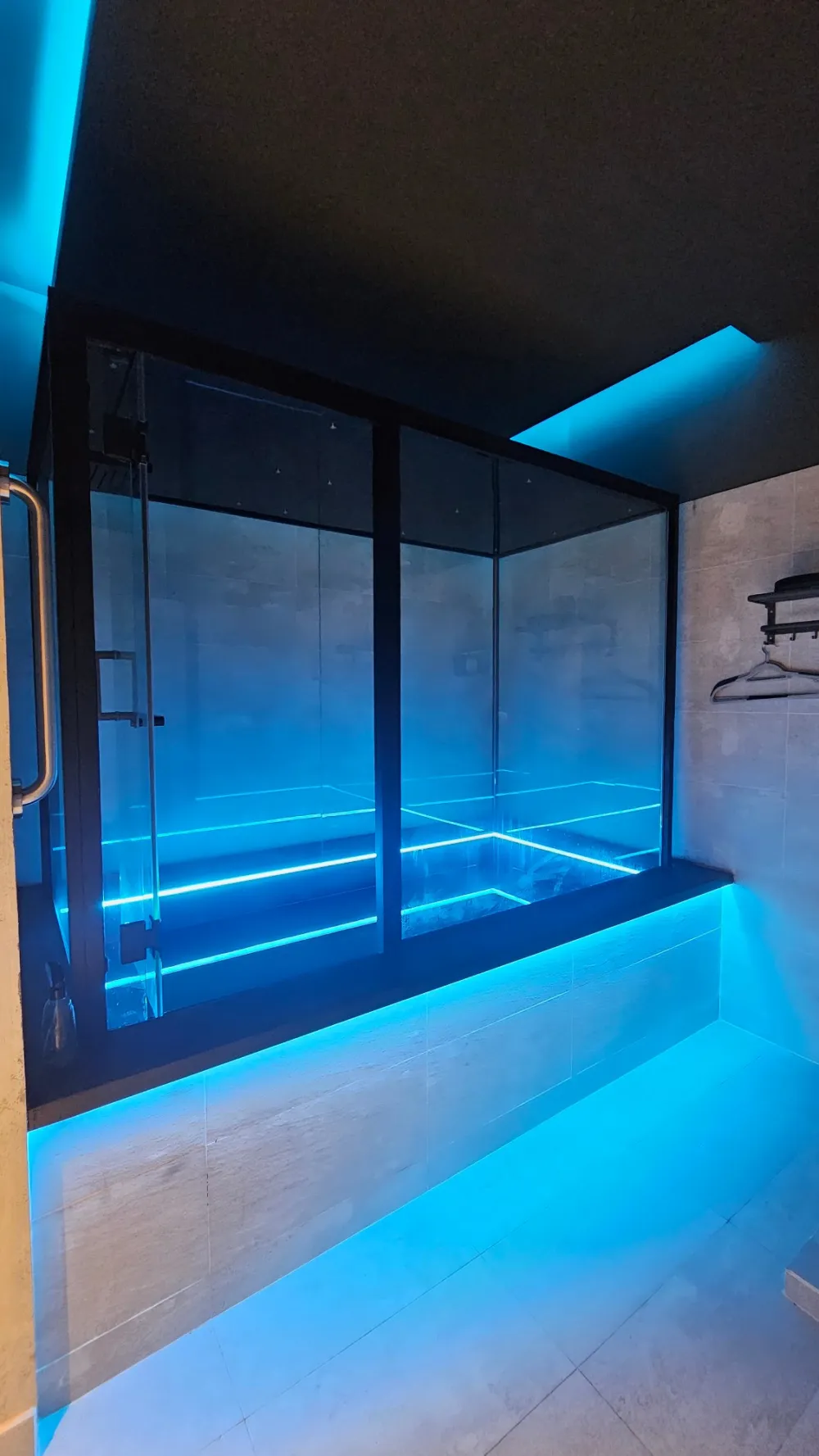
Try it at Ōmni Space. Float Vietnam’s float rooms are at 16C Quoc Huong, Thao Dien, Ho Chi Minh City (Saigon), open daily 9:00–21:00. Book a float or read the float therapy FAQ.
Frequently asked questions
Is flow the same as meditation or relaxation?
Not quite. Flow is active absorption in a challenging task; studies show heart rate and stress hormones can actually rise. Relaxation, including floating, is recovery. The two complement each other: people who feel recovered report more flow at work.
Can anyone get into flow?
Yes. Flow proneness is largely unrelated to intelligence. It depends more on clear goals, feedback and a well-matched challenge. Some people with an “autotelic personality” flow more easily, but the conditions can be learned and designed.
How long does it take to refocus after an interruption?
The viral “23 minutes” is a rounded figure. Gloria Mark’s 2005 field study found people took about 25 minutes on average to return to an interrupted task, usually after switching to other tasks first. It isn’t a measure of regaining deep focus, but it shows interruptions are costly.
Does flow have a dark side?
Yes. Slot machines, games and endless feeds can produce “dark flow” or the “machine zone”: total absorption that builds no skill and leaves you drained. Researchers have linked it to problem gambling and depression. Healthy flow grows a skill and energises you.
Can floating help me get into flow?
No study has directly tested that. What research shows is that well-recovered people experience more flow at work, and that float therapy reduces short-term stress and anxiety. A float before a deep-work day is a deep-rest option, not a flow switch.