Updated: 11 Oct 2026 · By Float Vietnam
Key takeaways
- Sensory deprivation means deliberately reducing what your senses take in, such as light, sound, touch and the pull of gravity. Researchers now prefer the term REST (Restricted Environmental Stimulation).
- “Total” sensory deprivation is not possible: you still feel your heartbeat, breathing, body temperature and your own thoughts.
- Voluntary, short and controlled sessions such as float therapy are very different from forced isolation; you choose to start and you can stop at any moment.
Quick answer: Sensory deprivation is the deliberate reduction of input to the senses, such as light, sound, touch and the feeling of gravity, usually for a short, set time. Scientists today call it REST, or Restricted Environmental Stimulation. The most common modern form is float therapy, where you lie on dense salt water in a dark, quiet room.
What does sensory deprivation mean?
In plain terms, sensory deprivation means cutting down the information that reaches your senses. Normally your brain is flooded with signals: light and movement, background noise, the pressure of a chair against your back, clothes on your skin, the constant work of holding your body up against gravity. In a sensory deprivation setting, most of those signals are reduced at the same time. The room is dark, sound is dampened, the air and water are close to skin temperature, and in a float pool the body is held up by buoyancy so the muscles that normally keep you upright can switch off. The word “deprivation” sounds dramatic, but the idea is closer to a deep pause than to taking something away. The aim is not to remove all sensation but the usual stream of change, so the brain has far less to process. For the equipment side, see our guide to sensory deprivation tanks.
| Term | What it means | Example |
|---|---|---|
| Sensory deprivation | Older umbrella term for strongly reducing input to the senses | 1950s laboratory isolation studies |
| REST (Restricted Environmental Stimulation) | Modern research term for planned, limited reduction of stimulation | Chamber REST, flotation REST |
| Chamber REST | Lying on a bed in a dark, quiet room, usually for many hours | Early REST research |
| Flotation REST | Floating on dense Epsom salt water in a dark, quiet space, usually 60–90 minutes | Float therapy in a float room or pod |
| Sensory reduction | Turning stimulation down rather than off | Earplugs, an eye mask, a quiet room |
| Meditation | Training attention, with or without a quiet setting | Breath-focused sitting practice |
Why do scientists call it REST instead?
The term “sensory deprivation” grew out of mid-20th-century laboratory work, and over time it picked up negative associations with isolation, stress and even interrogation. Psychologists Peter Suedfeld and Roderick Borrie, two of the best-known researchers in the field, proposed a new name: REST, short for Restricted Environmental Stimulation Technique (or Therapy, in clinical settings). On his University of British Columbia research page, Suedfeld explains that the old phrase was both ominous and inaccurate, because people in these settings are never truly deprived of all sensation. REST describes what really happens: stimulation from the environment is restricted, for a limited time, by choice. Researchers then split REST into two main forms. Chamber REST means lying on a bed in a dark, soundproof room. Flotation REST means floating on very salty water in a dark, quiet tank or pool. Today, when you read “floatation-REST” in a study, it is the same thing people call float therapy. Read more about the many names of floatation therapy.
Where did sensory deprivation research begin?
Laboratory research on sensory deprivation began in the early 1950s at McGill University in Montreal, in the group of psychologist Donald Hebb. In the best-known study, published by Bexton, Heron and Scott in 1954, paid male students lay on a bed in a sound-dampened cubicle wearing translucent goggles and cardboard cuffs over their hands and forearms, for up to several days. The aim was not darkness but monotony, which is why the paper was titled “decreased variation in the sensory environment”. Participants reported vivid imagery, trouble concentrating and a loss of sense of time, effects that faded after they came out. That work took place during the Cold War, when there was public anxiety about “brainwashing”, and it shaped the frightening image the term still carries. At almost the same time, in 1954, neuroscientist John C. Lilly took a different route at the US National Institute of Mental Health: he used water to float the body, asking what the mind does when outside stimulation is reduced.
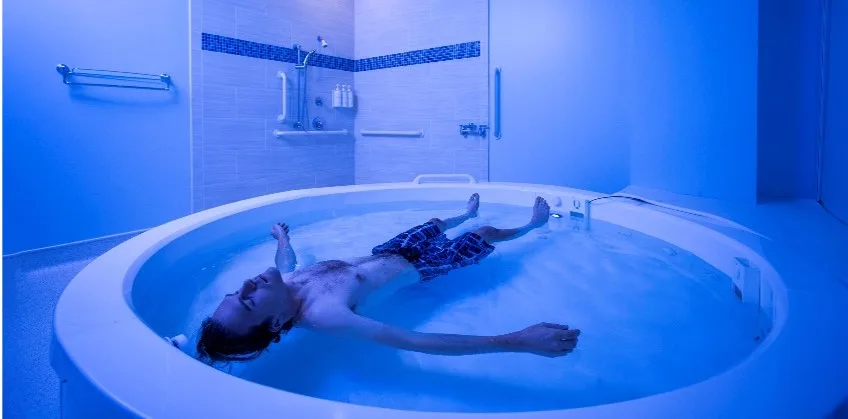
Lilly’s approach became the ancestor of the modern float tank. In the 1970s, Glenn Perry, who had attended one of Lilly’s workshops, designed affordable tanks for the public. Open float pools, like the one used in research at the Laureate Institute for Brain Research, are now common; see types of float tanks.
Is total sensory deprivation possible?
No. Total sensory deprivation, meaning zero input from every sense, is not something a living, conscious person can experience. Even in the darkest, quietest float room, your body keeps sending information to your brain. You can feel your heartbeat and the rise and fall of your breath. You sense temperature, even when the water and air are close to skin temperature. Your inner ear still detects small movements of your head, and you remain aware of where your arms and legs are. And of course your mind keeps producing thoughts, memories and images. That is why researchers moved away from the word “total” and toward “restricted” stimulation. What a sensory deprivation chamber or float tank does is reduce outside input as far as is practical, so these quieter inner signals become easier to notice. If you are curious what that feels like in practice, read what sensory deprivation feels like, minute by minute.
What does reduced stimulation do to the brain?
Research suggests that when outside input drops, the brain shifts how it allocates attention, but effects vary from person to person and many studies are small. Three findings are worth knowing. First, perception: in a 2009 study by Mason and Brady, published in the Journal of Nervous and Mental Disease, a brief period of complete isolation from sound and light in an anechoic chamber led to more unusual perceptual experiences, and people already prone to hallucination-like experiences reported more of them. Second, body awareness: Feinstein and colleagues reported in 2018 that a 90-minute float increased awareness of heartbeat and breathing, known as interoception, in people with high anxiety sensitivity, alongside lower anxiety and muscle tension. Third, brain networks: an fMRI study by Al Zoubi and colleagues in 2021 found reduced connectivity between the default mode network, which is active during mind-wandering, and body-sensing areas after floating, although a comparison session in a reclining chair showed a similar pattern. More on this in why silence is good for your brain.
Is sensory deprivation the same as torture or solitary confinement?
No, and the difference matters. The harm associated with sensory deprivation in prisons and interrogations comes from conditions that are forced, prolonged, unpredictable and often combined with other stressors such as fear, sleep loss or physical discomfort. The person has no control, does not know when it will end and cannot leave. Voluntary floatation is close to the opposite on every point. You choose to book it, you know it lasts a set time, usually 60 to 90 minutes, the water is comfortable and warm, and you can sit up, switch on the light or step out of the pool at any moment. Research groups that run float studies also screen participants and monitor safety, and recent trials have reported no serious adverse events. Control is a large part of why floating feels restful instead of threatening. If small or enclosed spaces worry you, open float rooms help, and you can leave the light on at first; see floating with claustrophobia.
How is sensory deprivation different from meditation?
Sensory deprivation and meditation overlap, but they are not the same thing. Sensory deprivation, or REST, changes your environment: it removes light, sound, pressure and much of the effort of holding your body up. Meditation changes what you do with your attention: you might focus on the breath, a word or bodily sensations, and you can do it on a busy train or a quiet cushion. Sensory reduction sits in between, using everyday tools like earplugs, an eye mask or a quiet room to turn stimulation down without the full float setup. Many floaters find the combination works well, because the float environment removes distractions that make meditation hard for beginners, while a simple meditation technique gives a restless mind something gentle to do. To explore this further, read floatation therapy and meditation.
How can you try sensory deprivation safely?
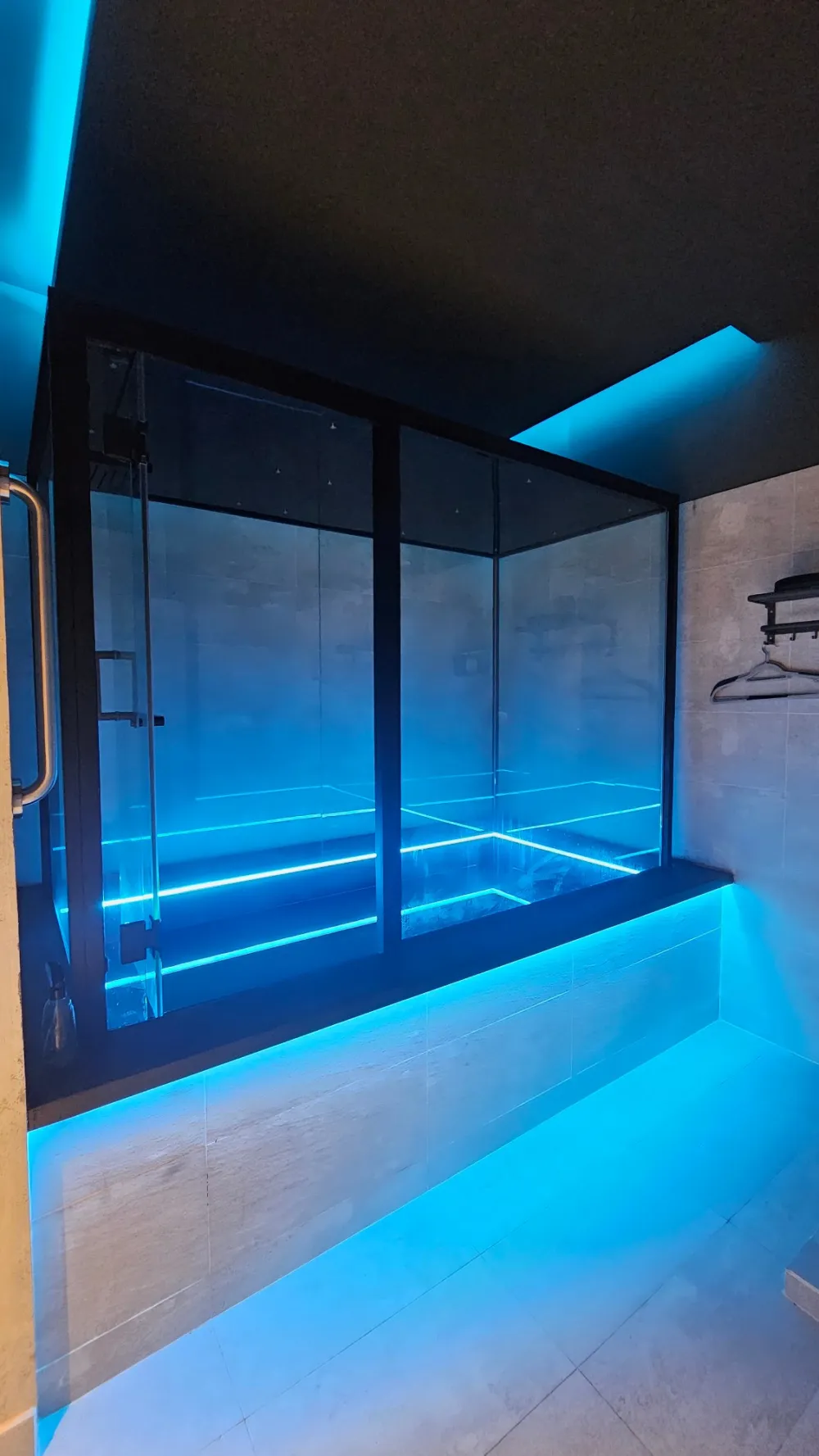
For most healthy adults, the safest and most accessible form of sensory deprivation today is a session in a professional float centre. A float room holds about 25 cm of water with around 500 kg of dissolved Epsom salt, so you float effortlessly on your back. The water is kept close to skin temperature, about 34–35 °C, and the room is dark and quiet. Float Vietnam recommends 90 minutes for a first session, because the first part is usually spent settling in. Before you book, check the list of people who should not float or should ask a doctor first, such as anyone with uncontrolled epilepsy, open wounds or certain heart and kidney conditions. On the day, eat lightly, skip shaving, use the earplugs provided and remember that you can open the door, turn on the light or end the session whenever you like. If you have a history of psychosis or severe anxiety, talk to your doctor first. For step-by-step details, see what to expect at your first float.
Note: This page is for general information. Float therapy supports wellbeing but does not replace diagnosis or treatment by a doctor. If you have a medical condition, ask your doctor before floating.
Try it at Ōmni Space. Float Vietnam’s float rooms are at 16C Quoc Huong, Thao Dien, Ho Chi Minh City (Saigon), open daily 9:00–21:00. Book a float or read the float therapy FAQ.
Frequently asked questions
What is the simple definition of sensory deprivation?
Sensory deprivation is the deliberate reduction of input to the senses, such as light, sound and touch, for a limited time. Researchers now usually call it REST, short for Restricted Environmental Stimulation.
What is a sensory deprivation chamber?
It is a space designed to reduce outside stimulation, either a dark, soundproof room with a bed (chamber REST) or a float tank or float room with dense salt water (flotation REST). Modern float centres use the second type.
Is sensory deprivation dangerous?
Short, voluntary sessions in a well-run float centre are low-risk for most healthy adults. Forced, prolonged isolation is harmful, but it is a completely different situation because the person has no control and cannot leave.
Can sensory deprivation cause hallucinations?
Some people notice unusual images, sounds or a distorted sense of time in very low-stimulation settings, and a 2009 study found this more often in people already prone to such experiences. Most floaters simply report deep relaxation.
How long does a sensory deprivation therapy session last?
Float sessions usually last 60 to 90 minutes. Float Vietnam recommends 90 minutes for beginners so there is time to settle in and relax fully.