Updated: 11 Oct 2026 · By Float Vietnam
Key takeaways
- A first float takes about two hours in total: check-in and orientation, a shower, 90 minutes in the pool, then a shower and rest.
- You float alone in a private room with its own shower, behind a soundproof, light-blocking glass door, and you control the lights.
- Treat the first float as an introduction; many people relax more deeply by the second or third.
Quick answer: At your first float therapy session you check in, complete a health questionnaire, get a brief orientation, then shower in your private room. You put in earplugs, step into about 25 cm of warm Epsom salt water, rest your head on a Halo pillow and float for 60–90 minutes. Afterwards you shower, dry off and relax in the lounge.
What happens at a first float therapy session, step by step?
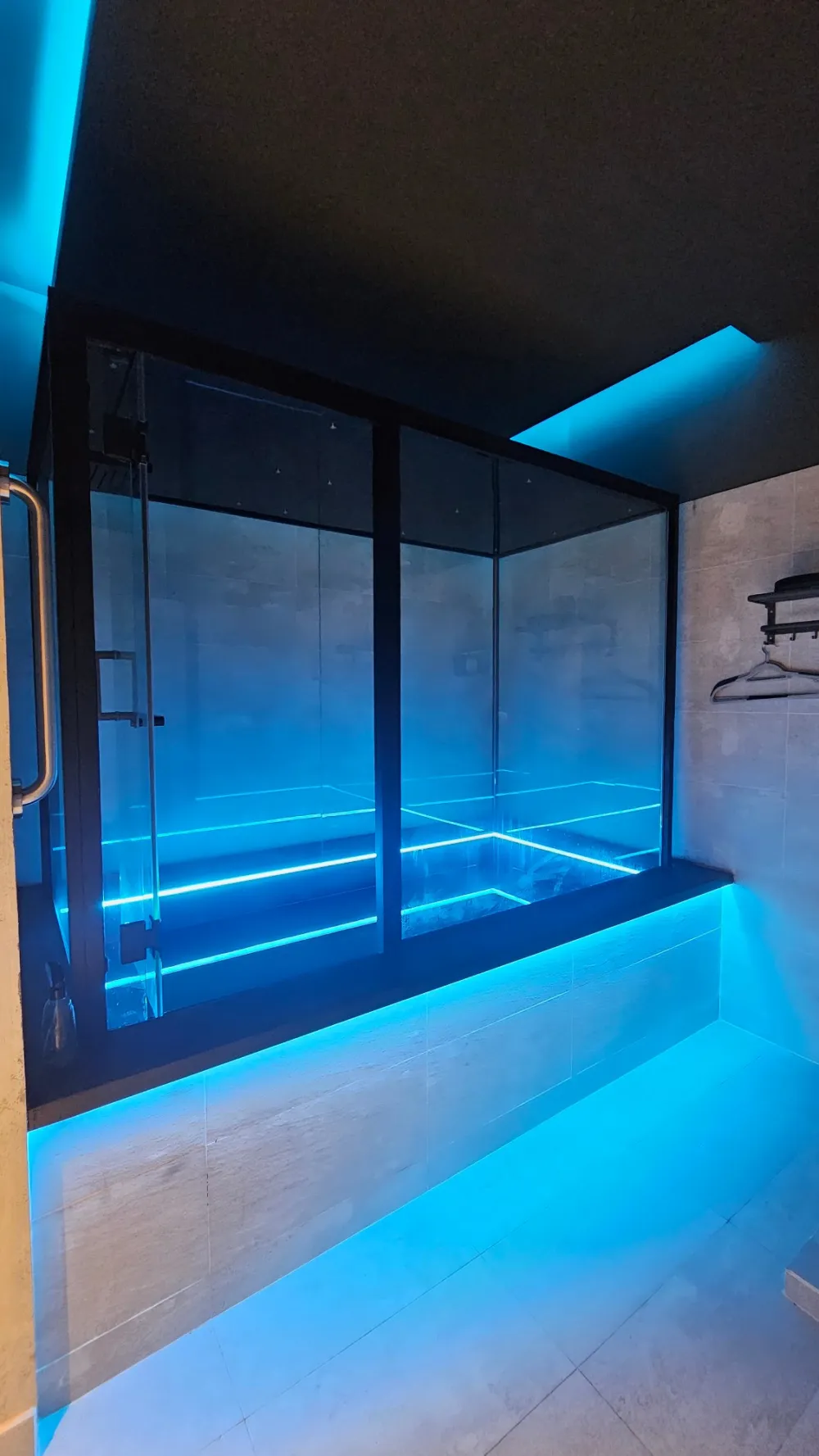
If it is your first time in a float tank, the visit follows a simple, calm routine. At Ōmni Space in Thao Dien, Ho Chi Minh City, you book online, receive a short health questionnaire by email, and complete it again when you arrive. A team member gives you a short orientation and shows you to your private room with its own shower. The pool is open, behind a soundproof glass door that blocks all light, so it feels like a quiet room, not a closed pod. You shower, put in earplugs, step into about 25 cm of water with around 500 kg of Epsom salt dissolved in it, and float at skin temperature (about 34–35 °C). When the session ends, you shower again, dry your hair and rest in the lounge. The table below gives the full sequence with one practical tip for each step.
| Step | What happens | Tip |
|---|---|---|
| 1. Booking | Choose 60, 90 or 120 minutes, single or couple room | Pick 90 minutes first time |
| 2. Check-in | Health questionnaire (emailed, repeated on site) | Arrive 10–15 minutes early |
| 3. Orientation | A walk-through of room, lights and pool | Ask anything |
| 4. Shower | Wash off oils, make-up and hair products | Skip the conditioner before floating |
| 5. Earplugs and pillow | Earplugs keep salt out; the Halo pillow supports the neck | Dry your ears first |
| 6. Into the pool | Step in, lie back, adjust the lights | Start with the light on if unsure |
| 7. The float | Settling in, then deep relaxation or drifting | Keep wet hands off your face |
| 8. Ending | Sit up slowly, shower, dry hair, rest in the lounge | Wait before checking your phone |
How do you book and prepare for your first float?
Booking takes a few minutes online: you choose a time, a room and a session length. The single room has a rectangular pool for one person; the couple room has a square pool for two. For a first float, Float Vietnam recommends 90 minutes, because the first part of any session is spent settling in. A single 90-minute float costs 2,000,000 VND, and the intro package of three 90-minute floats is 3,000,000 VND, valid for three months; see the full pricing. After booking, you receive a health questionnaire by email. Fill it in honestly, and if you have a medical condition or are pregnant, check with your doctor before you come. On the day, skip coffee, eat lightly an hour before and avoid shaving, since salt stings small nicks. Our guide on what to wear to float therapy covers the rest.
What happens when you arrive and check in?
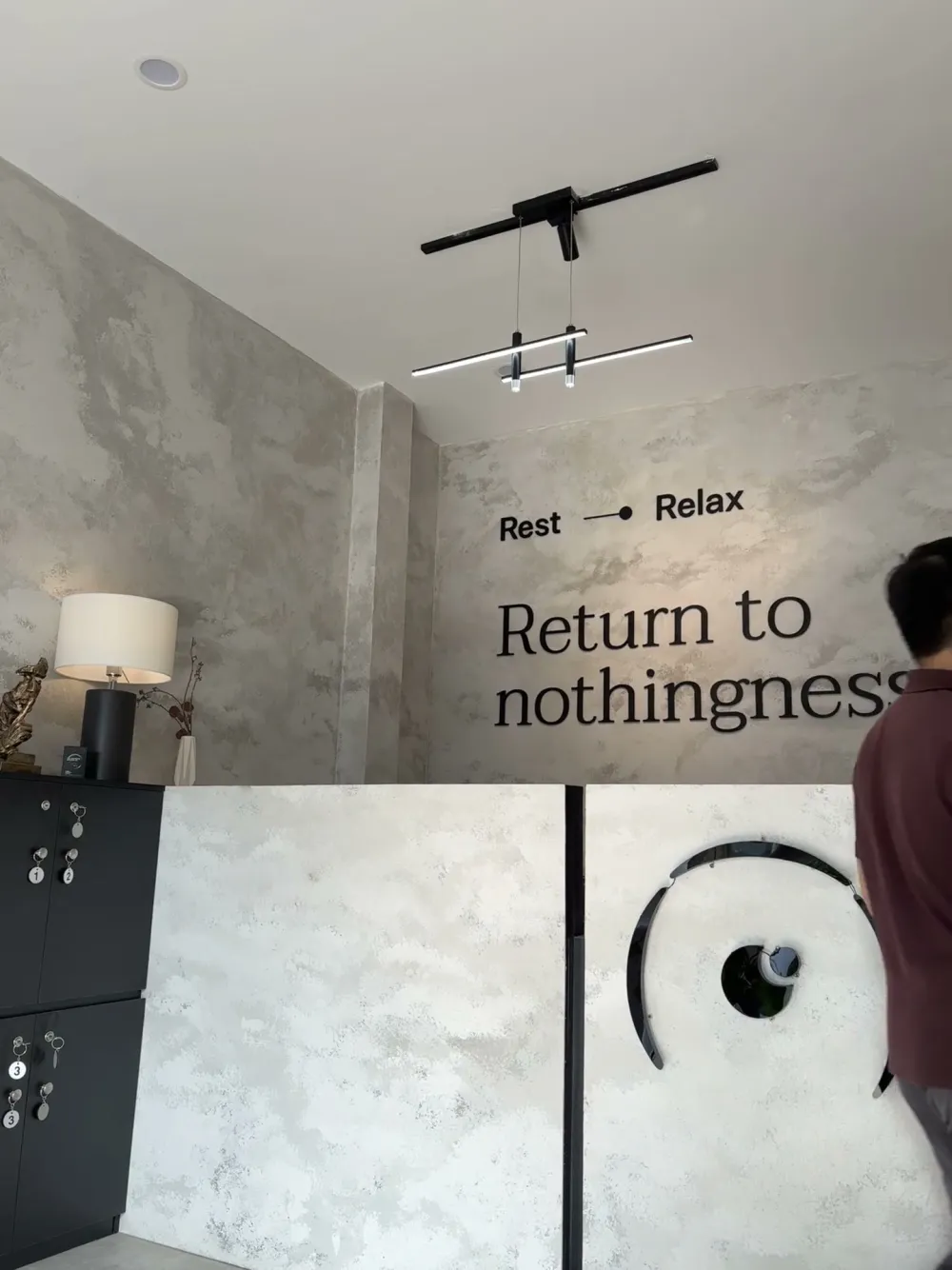
Ōmni Space is at 16C Quoc Huong in Thao Dien, open daily from 9:00 to 21:00, a short Grab ride or walk from Thao Dien Metro station. Arrive 10–15 minutes early so nothing feels rushed. At reception the team confirms your booking and asks you to go through the health questionnaire again on site. This routine check covers things like open wounds, recent tattoos, epilepsy and pregnancy. Next comes a short orientation. A staff member walks you through your private room, explains how the shower and lights work, shows you the earplugs and the Halo neck pillow, and tells you what to do if salt water gets in your eyes. It is the best moment to mention any nerves; our article on float therapy and claustrophobia explains why open pools tend to feel spacious.
Why do you shower, use earplugs and a Halo pillow before floating?
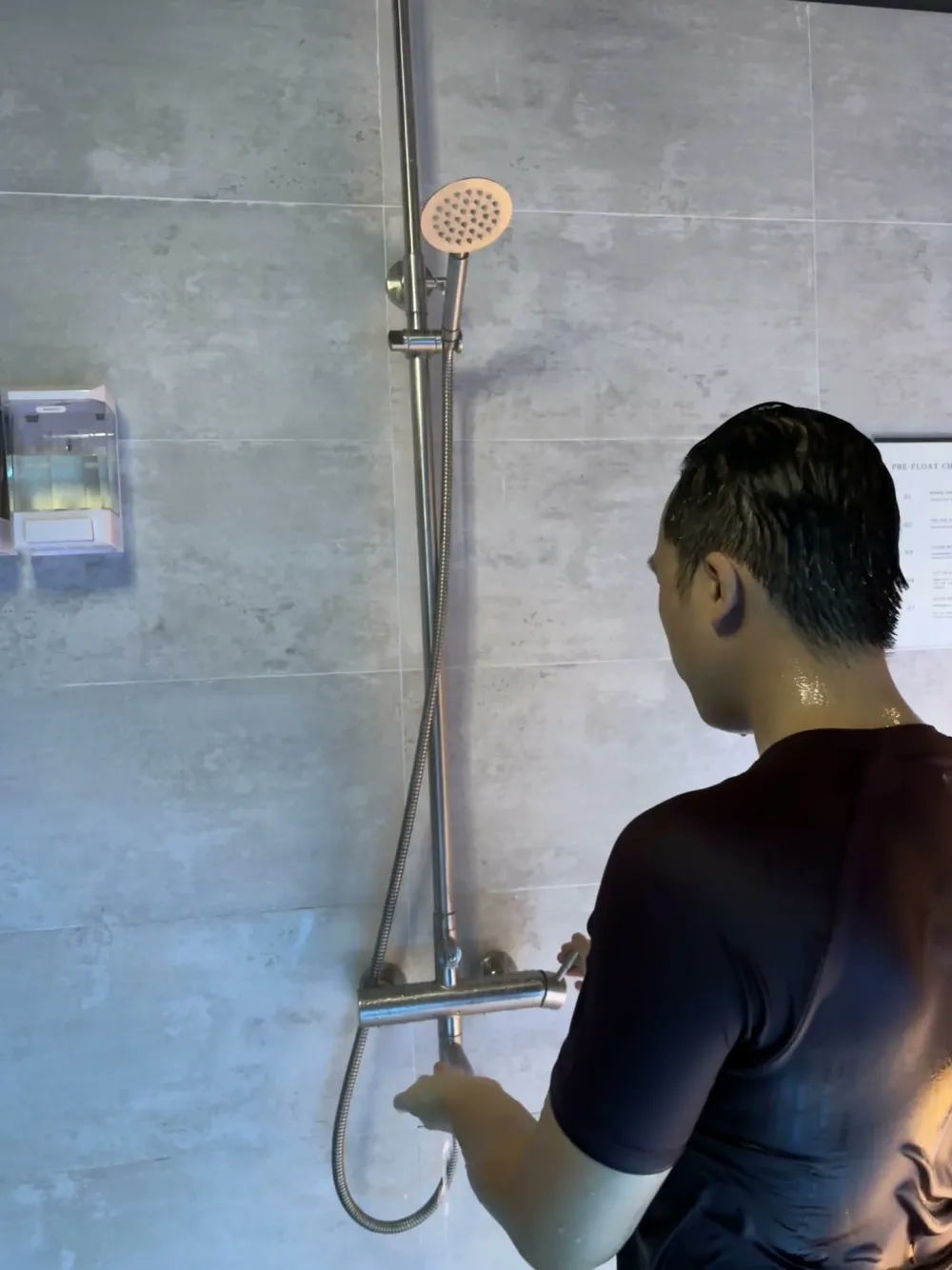
Every guest showers before entering the pool. Washing off sunscreen, make-up, body oils and hair products keeps the water clean and helps the salt solution stay clear. Each room has a private shower and towels are provided. Skip conditioner and heavy creams, which leave a film on the water. Once you have showered, dry your ears and put in the earplugs. They are less about blocking sound, since the room is already soundproof, and more about keeping very salty water out of your ear canals, which can feel uncomfortable afterwards. Then pick up the Halo neck pillow. This soft, floating ring sits under the back of your head and lets the neck release instead of holding the head up, which is the most common source of tension for first-time floaters.

How do you get into the pool and set the lights?
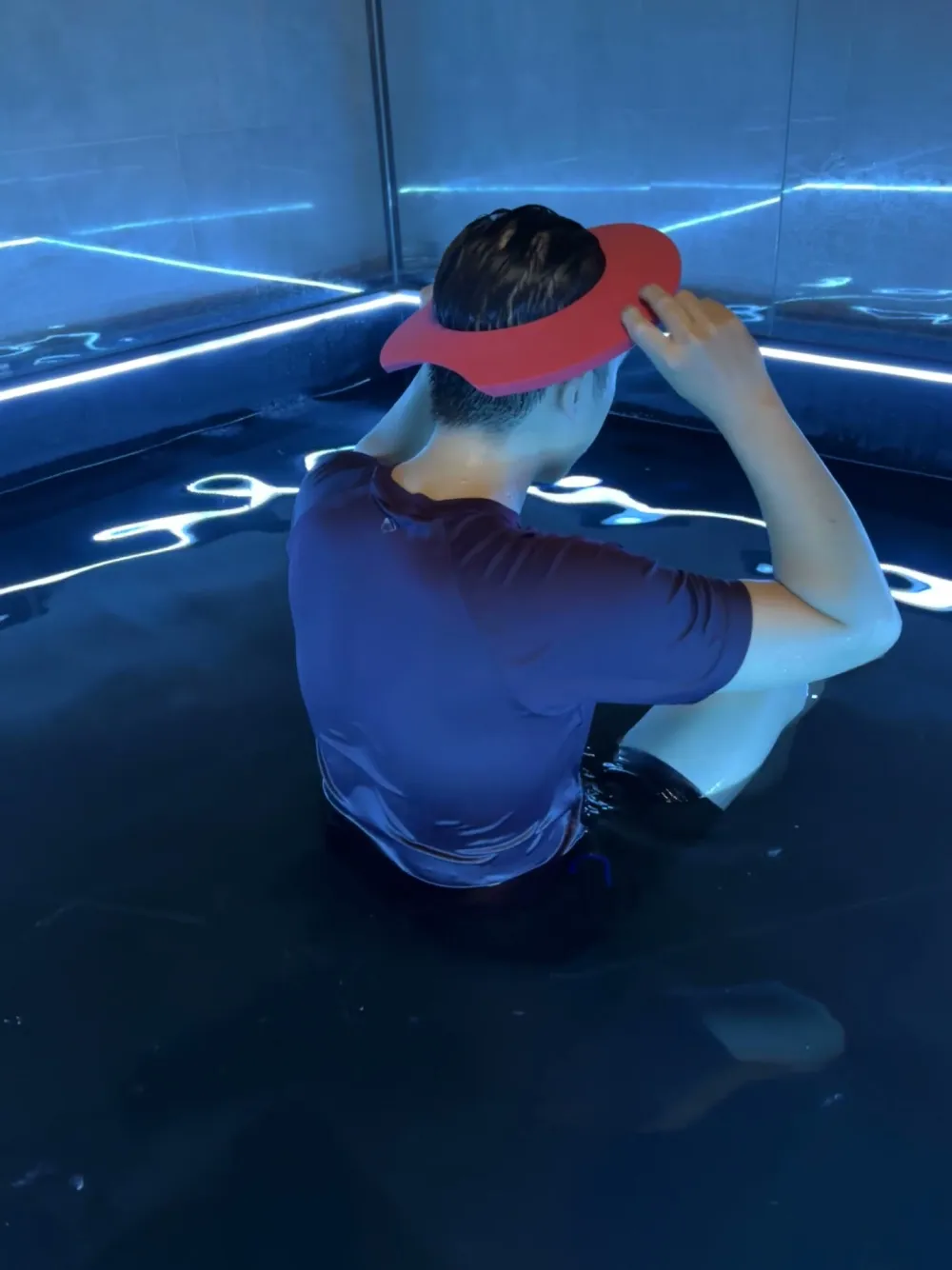
Stepping into the pool is easy: the water is only about 25 cm deep, and you simply sit down and lie back. The salt makes the water dense, so the moment you lean back your body rises to the surface, with your face and chest above the water and your ears just below it. Rest your arms by your sides or above your head. The glass door closes behind you, blocking light and outside sound, but the pool itself is open, so you can sit up or step out whenever you like. You control the lighting. Many first-timers start with a soft light on, then switch it off once they feel settled, and that is perfectly fine. If you drift and touch the side, a gentle push takes you back to the middle.
What does the float itself feel like the first time?
Most first sessions follow a similar arc. The first ten minutes are often busy: the mind runs through to-do lists, the neck may stay a little tense, and you may wonder whether you are doing it right. You are. Counting your breaths or noticing where the water meets your skin helps the noise fade. After that, many people feel their weight disappear and lose track of time, and some drift into a dreamy state between waking and sleep. Others rest quietly or fall asleep, which is safe because the dense water keeps you afloat. If you feel an itch, try to leave it alone; wet, salty fingers near your eyes sting. There is no right experience to aim for, and seeing visuals is not the goal. For a minute-by-minute picture, read what a sensory deprivation tank feels like.
What happens when your session ends?
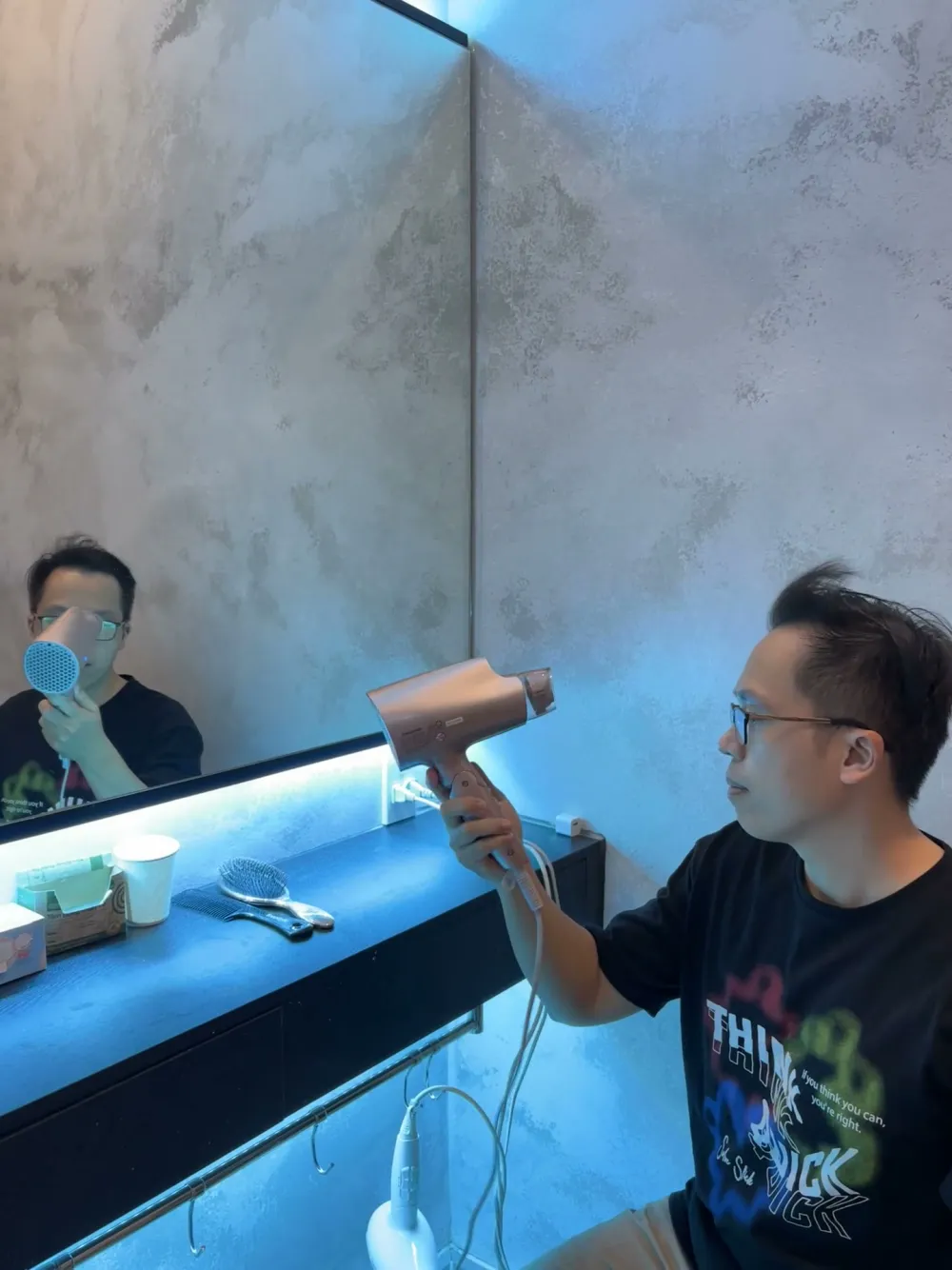
When your time is up, take it slowly. Lie still for a moment, then tilt your head back and sweep the water back over your hair before you sit up, so salt does not run into your eyes. Stand up carefully: your body has been weightless for an hour or more, and some people feel a little light-headed at first. Step out and shower in your private bathroom, washing the salt from your hair, ears and skin. Take out the earplugs and rinse your ears with fresh water. Then dry off and use the hair-dryer and vanity area to get ready. Before heading back into the city, sit in the lounge with a glass of water for a few quiet minutes, ideally before you check your phone, and let the calm settle.

What should you expect after your first float, and how often should you float?
After a first float, many people describe a light, unhurried feeling that lasts into the evening, and some notice they fall asleep more easily that night. Others feel mostly curious, because so much of the first session went into getting used to the water. Both are normal, so try not to judge floating on one visit alone. By the second or third session, body and mind know what to expect, and many people relax faster and stay longer in the deep part of the float. Float Vietnam suggests floating two to three times a month for the first two to three months, then once or twice a month to maintain the habit. Drink some water afterwards and keep the evening gentle. For more on building a routine, read how often you should float.
Try it at Ōmni Space. Float Vietnam’s float rooms are at 16C Quoc Huong, Thao Dien, Ho Chi Minh City (Saigon), open daily 9:00–21:00. Book a float or read the float therapy FAQ.
Frequently asked questions
How long is a first float therapy session?
Float Vietnam recommends 90 minutes, since the first 10–20 minutes are spent settling in. With check-in and showers, plan about two hours in total.
Do I need to bring anything to my first float?
Not much. Towels, earplugs, a private shower and a hair dryer are provided; most people float without clothing, or in a swimsuit.
What if I feel nervous or want to get out early?
The pool is open behind a glass door, the water is about 25 cm deep and you control the lights, so you can step out any time. Tell staff about nerves at orientation.
Can I float if I have just shaved or have a fresh tattoo?
Avoid shaving or waxing on the day, as salt stings small cuts. A new tattoo should be fully healed; note it on the health questionnaire.