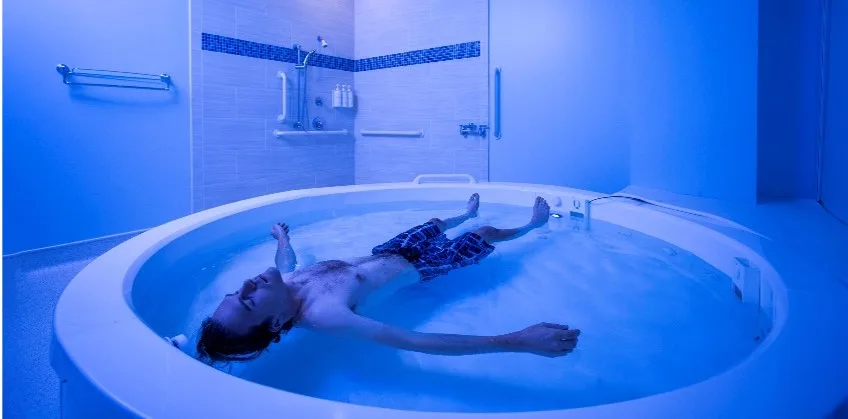
Updated: 11 Oct 2026 · By Float Vietnam
Key takeaways
- Most “strange” images, sounds and body sensations in a float tank are hypnagogic: they happen on the border between waking and sleep.
- With almost no light, sound or touch to anchor it, the brain fills the gap with its own material, and a float lets you linger in this state while still half-aware.
- These experiences are common, brief and harmless. Not everyone has them, and a float without them is just as restful.
Quick answer: Hypnagogia is the drowsy state between waking and sleep, when the brain can produce brief images, sounds or body sensations. A float tank removes light, sound, touch and temperature cues, so many floaters linger in this state while still half-aware. The experiences are common, short-lived and harmless, and you can always open your eyes.
What is hypnagogia?
Hypnagogia is the transition from wakefulness into sleep. Every night you pass through it, usually in a few minutes, as the body relaxes, brain rhythms slow down and theta waves become more common, marking the lightest stage of sleep. During this short window the brain can produce fleeting sensory experiences called hypnagogic hallucinations: a flash of colour, a face, a snatch of music, the feeling of falling. The mirror-image state on waking up is called hypnopompic. These experiences are far more common than most people realise. In a 1996 telephone survey of 4,972 people in the United Kingdom, Ohayon and colleagues found that 37% reported hypnagogic hallucinations and 12.5% reported hypnopompic ones. At home, most of us drift straight through this stage into sleep and remember little or nothing. In a float tank, the same state can stretch out, which is why it becomes noticeable.
How is hypnagogic imagery different from dreaming?
Hypnagogic imagery and dreams are related but not the same thing. A typical dream has a storyline: places, characters and events, with you inside the action, and you rarely know you are dreaming. Hypnagogic images are usually short, fragmented and disconnected. A geometric pattern appears and dissolves, a stranger’s face flashes by, a sentence is spoken in someone else’s voice, then it is gone. You tend to feel more like an observer than a participant, and part of you still knows you are lying in the water. That half-awareness is the key difference. If you keep relaxing, the fragments can begin to link up into dream-like scenes, and you may slip into light sleep. Some floaters also report moments where they realise they are dreaming, which is the territory of lucid dreaming. For techniques and research on that, read lucid dreaming in a float tank.
What do people experience in a float tank?
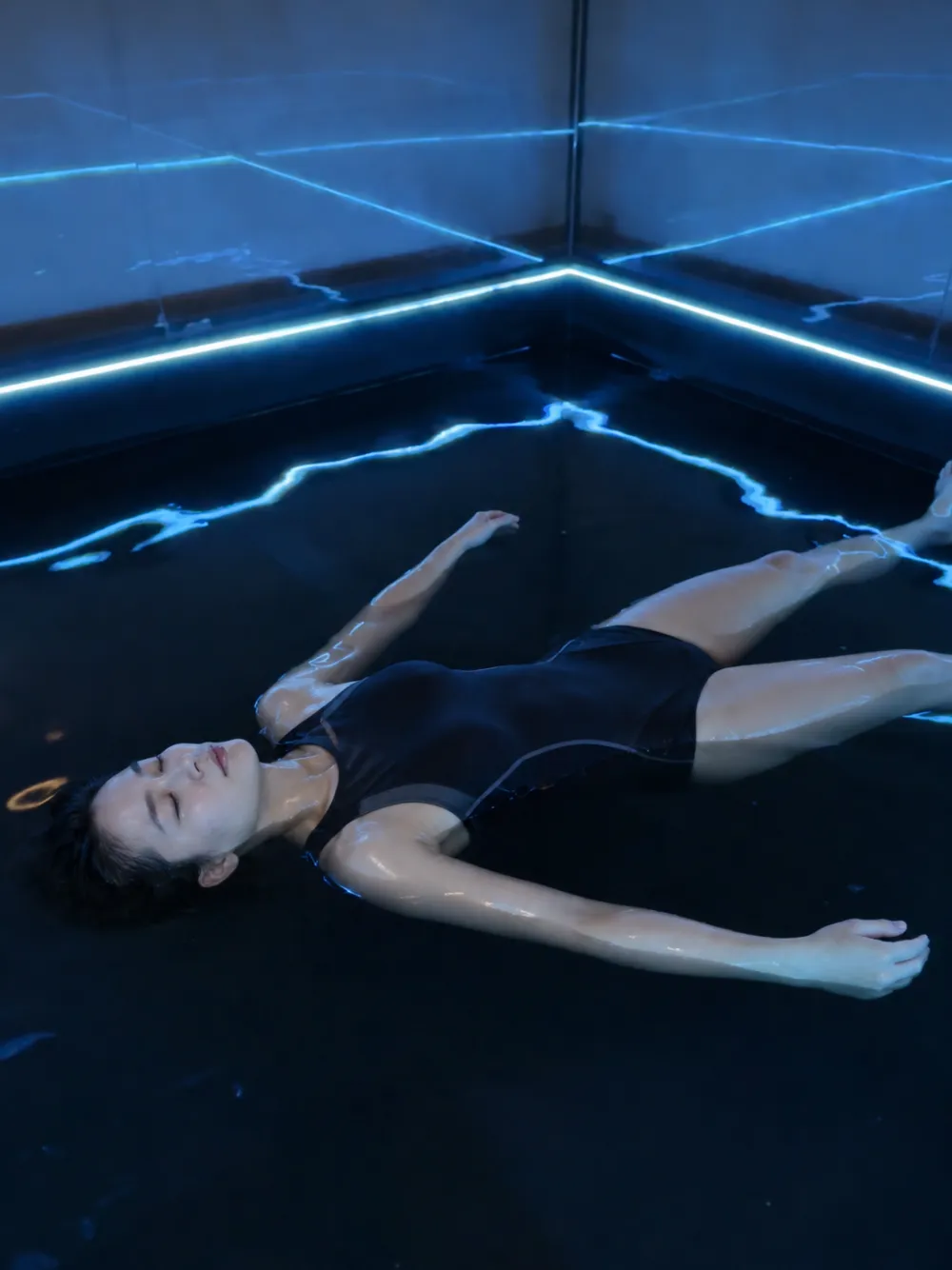
Hypnagogic experiences in a float tank vary a great deal from person to person and from float to float. Some people notice nothing unusual in dozens of sessions; others have vivid moments on their first float. The experiences usually fall into a few familiar groups. They tend to appear after the first 20 to 40 minutes, once the body has fully let go, and they often fade as soon as you pay close attention to them. None of them means something is wrong. They are the ordinary products of a relaxed brain with very little to process, and most floaters describe them as interesting rather than frightening. Personality, tiredness, caffeine and how long you float all seem to play a part, so the same person can have a vivid float one week and a completely quiet one the next.
- Visual: points of light, colours, swirling or geometric patterns, sometimes a clear scene or face that appears and vanishes.
- Sound: hearing your own thoughts as a voice, music playing in your head, or your name being called.
- Body: spinning, falling, growing larger or smaller, or losing track of where your hands and feet are; a sudden twitch (hypnic jerk) can pull you back.
- Time: 90 minutes can feel like 20, or the other way round.
For the wider sensations of floating, see what sensory deprivation feels like.
Why does the brain generate these experiences?
The brain is constantly predicting the world from the signals it receives. When input from the eyes, ears and skin drops close to zero, as it does in a dark, quiet float room with water at skin temperature, the brain does not go blank. It keeps generating activity and fills the gap with its own material: memories, associations and fragments of recent experience. Research supports this. In a 2009 study in the Journal of Nervous and Mental Disease, Mason and Brady placed healthy volunteers in a dark, soundproof room, not a float tank, for a brief period. Both groups reported more unusual perceptual experiences than normal, and people already prone to hallucinations reported the most. A classic 2000 study in Science by Stickgold and colleagues showed what feeds this imagery: after hours of playing Tetris, many people saw falling blocks as they drifted off, including amnesic patients who could not remember playing. Hypnagogic images draw on whatever your brain has recently processed.
Separately, a 2021 study by Lacaux and colleagues in Science Advances found that people who spent at least 15 seconds in the earliest stage of sleep were nearly three times as likely to spot a hidden rule in a puzzle (83% versus 30%), an effect that vanished in deeper sleep. Float tanks were not tested, but it suggests why many floaters describe this border state as a source of fresh ideas; see floating for creativity.
How can you invite or avoid hypnagogic experiences?
Whether you hope for hypnagogic imagery or would rather avoid it, you have more control than you might think. To invite it, give yourself time: a 90-minute float leaves room to pass through the restless first phase and settle. Turn the lights off, let your neck rest on the pillow, breathe slowly, and let go of the body piece by piece. The most important rule is not to chase anything. Trying hard to see images keeps the mind alert and busy; curiosity without expectation works better. Afterwards, a few notes in the lounge can help you remember what came up. To avoid it, do the opposite of drifting. Keep a soft light on, open your eyes now and then, move your fingers in the water, or count your breaths to stay anchored. At Ōmni Space guests adjust the lights themselves, and a shorter 60-minute float suits people who prefer to stay fully alert.

Are float tank hallucinations safe?
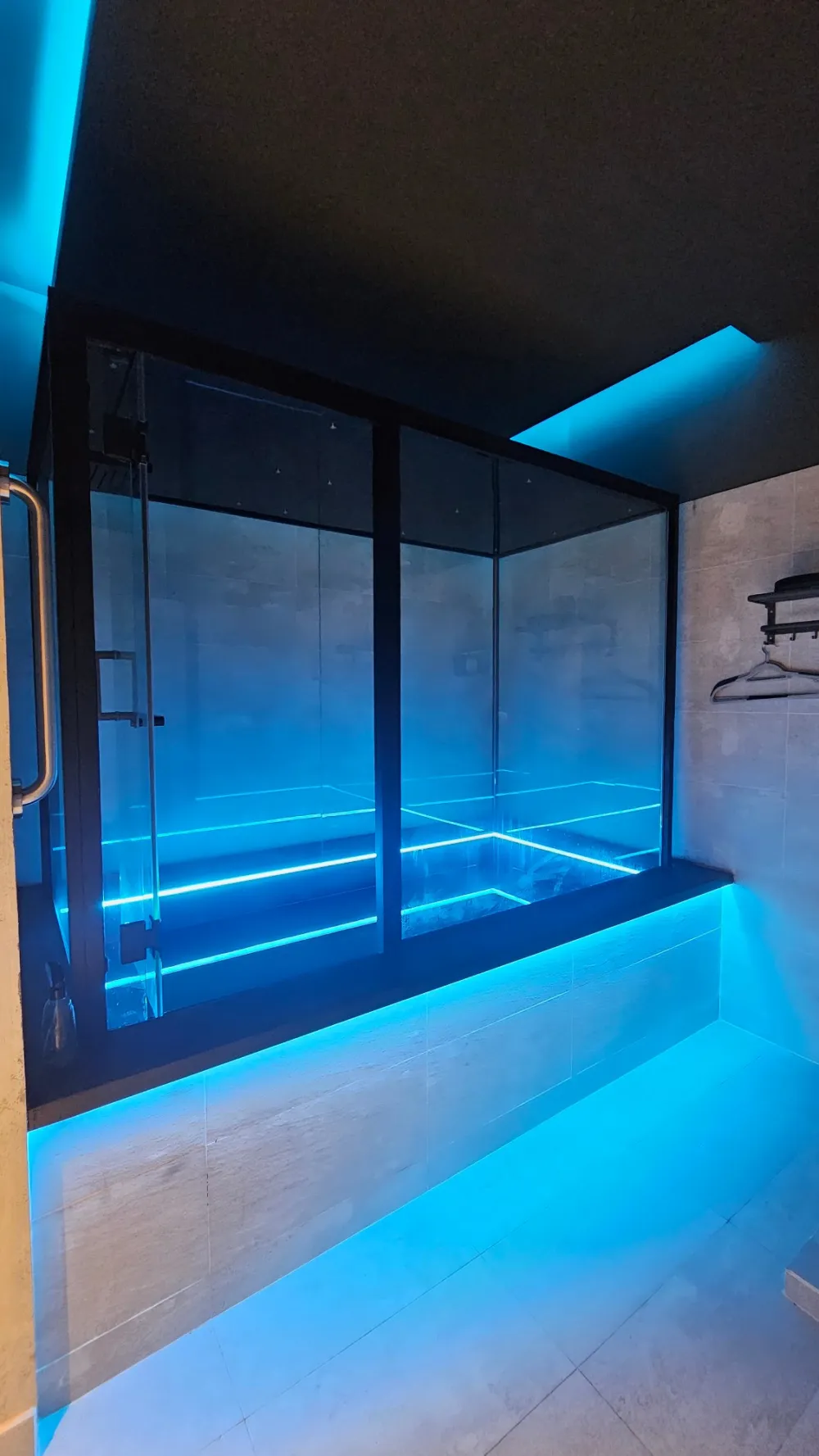
For healthy people, hypnagogic experiences in a float tank are a normal part of deep relaxation, not a warning sign. They are brief, they come from your own brain rather than any substance, and they stop as soon as you open your eyes, move or sit up slowly. Clinical research on floating is reassuring: in a 2024 randomised trial, Garland and colleagues found that six floats were well tolerated by 75 adults with anxiety or depression, with no serious adverse events, and positive experiences were more common than negative ones. At Ōmni Space you float in an open pool with a Halo neck pillow, about 25 cm of dense salt water, and glass doors you can open at any time. One sensible caution follows from the research above: if you have a history of psychosis, or hear or see things outside of sleep, talk to your doctor before floating. If you fall asleep instead, that is fine too; see sleeping in a float tank.
Some floaters describe deeper, meaningful experiences; we look at those in spiritual experiences in a float tank.
Try it at Ōmni Space. Float Vietnam’s float rooms are at 16C Quoc Huong, Thao Dien, Ho Chi Minh City (Saigon), open daily 9:00–21:00. Book a float or read the float therapy FAQ.
Frequently asked questions
Can you hallucinate in a float tank?
Some people see, hear or feel brief unusual things as they drift towards sleep. These hypnagogic experiences are a normal, harmless part of deep relaxation, and many floaters never have them.
What is a hypnagogic state?
It is the transition between waking and sleep, when brain rhythms slow and short images, sounds or body sensations can appear. A float tank lets you stay in it longer while partly aware.
Are hypnagogic experiences in a float tank like taking drugs?
No. They are brief, mild and come from your own relaxed brain. They fade as soon as you open your eyes or move, and you stay in control throughout.
What should I do if an image in the float tank feels uncomfortable?
Open your eyes, move your fingers, turn on the light or sit up slowly. Hypnagogic images usually disappear within seconds once you shift your attention.