Updated: 11 October 2026 · Compiled by Float Vietnam
Key takeaways
- Meditation apps help you build a daily practice anywhere at low cost; float therapy creates an environment with almost no stimulation, so body and mind settle deeply with no skill required.
- Meta-analyses show meditation apps reduce stress by a small to moderate amount; the biggest problem is sticking with them: only about 4% of users still open an app after 30 days.
- For many people the sensible approach is both: an app for 10 minutes a day to keep the rhythm, and a float 1–3 times a month for deep rest.
Quick answer: Float therapy and meditation apps do not replace each other. Apps such as Headspace, Calm or Insight Timer are good for training attention every day, cheaply and conveniently, but you have to sit still and keep going on your own. Float therapy puts you in a dark, quiet room, floating on warm salt water, so the body relaxes deeply without any meditation skill. Busy people who struggle to sit still often find floating easier to “drop into”; anyone building a long-term habit needs the app too.
How are floating and meditation apps different?
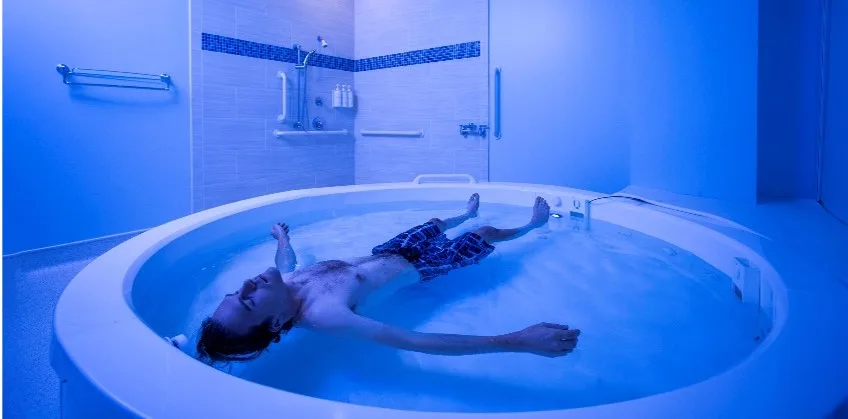
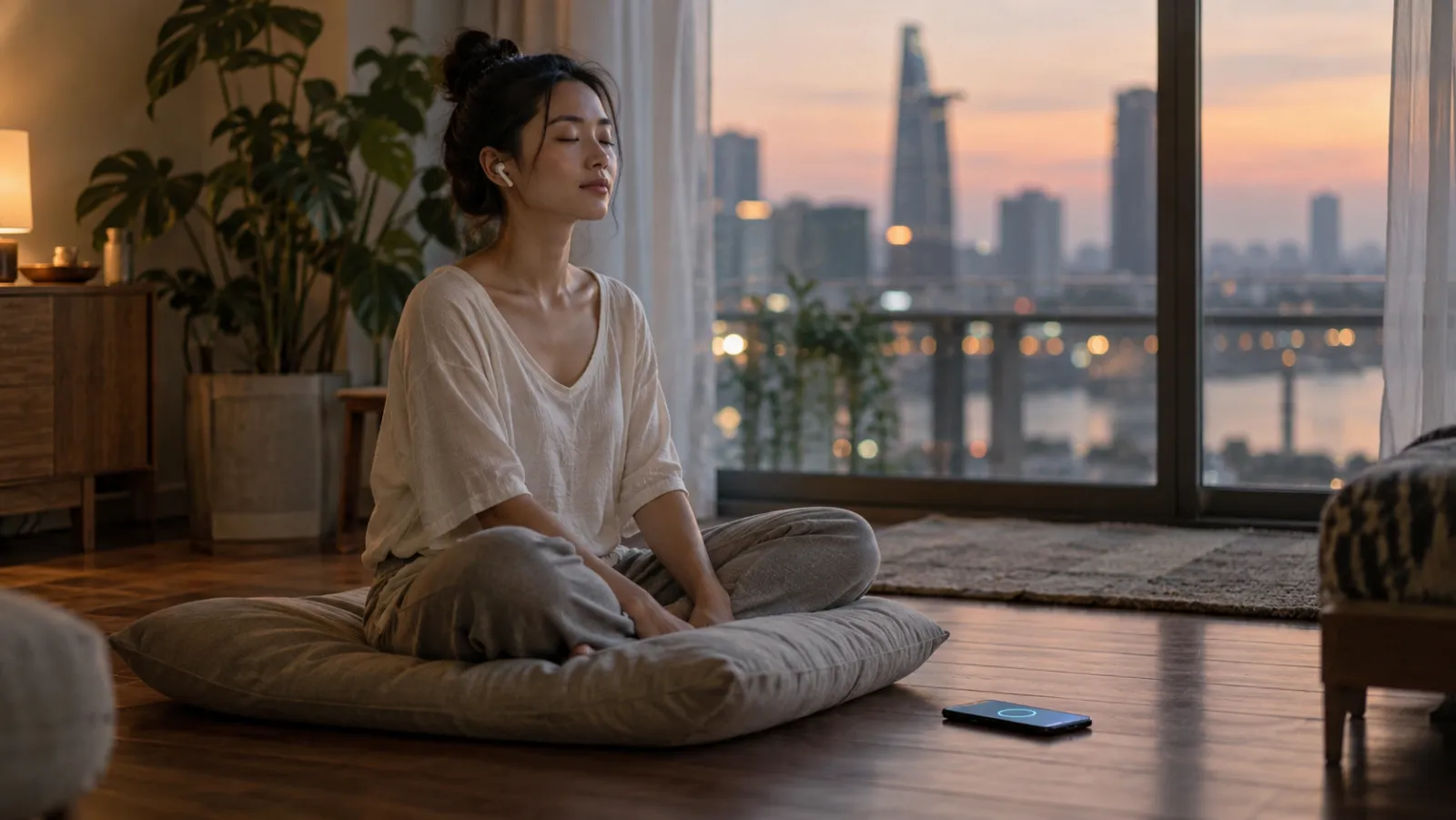
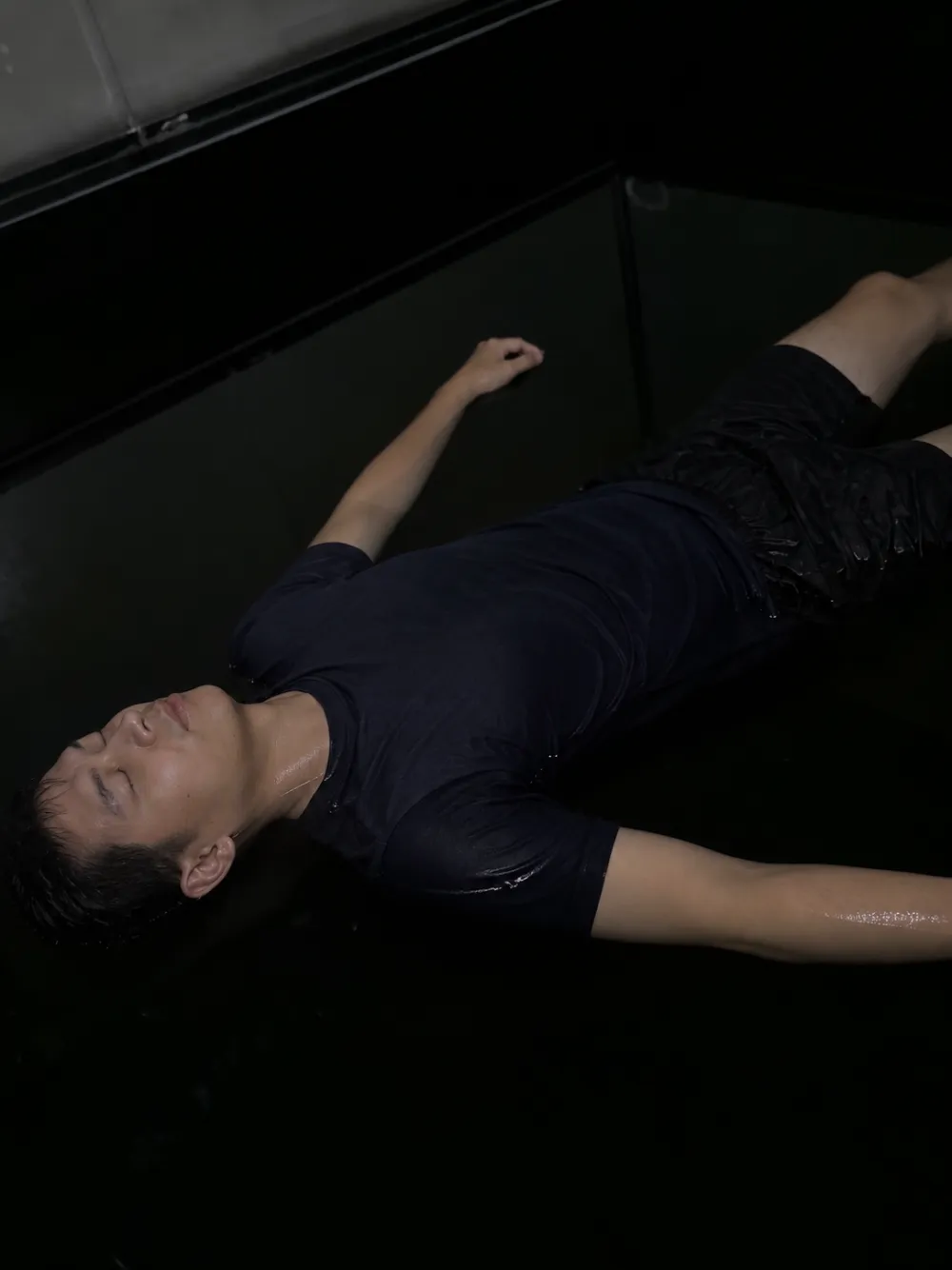
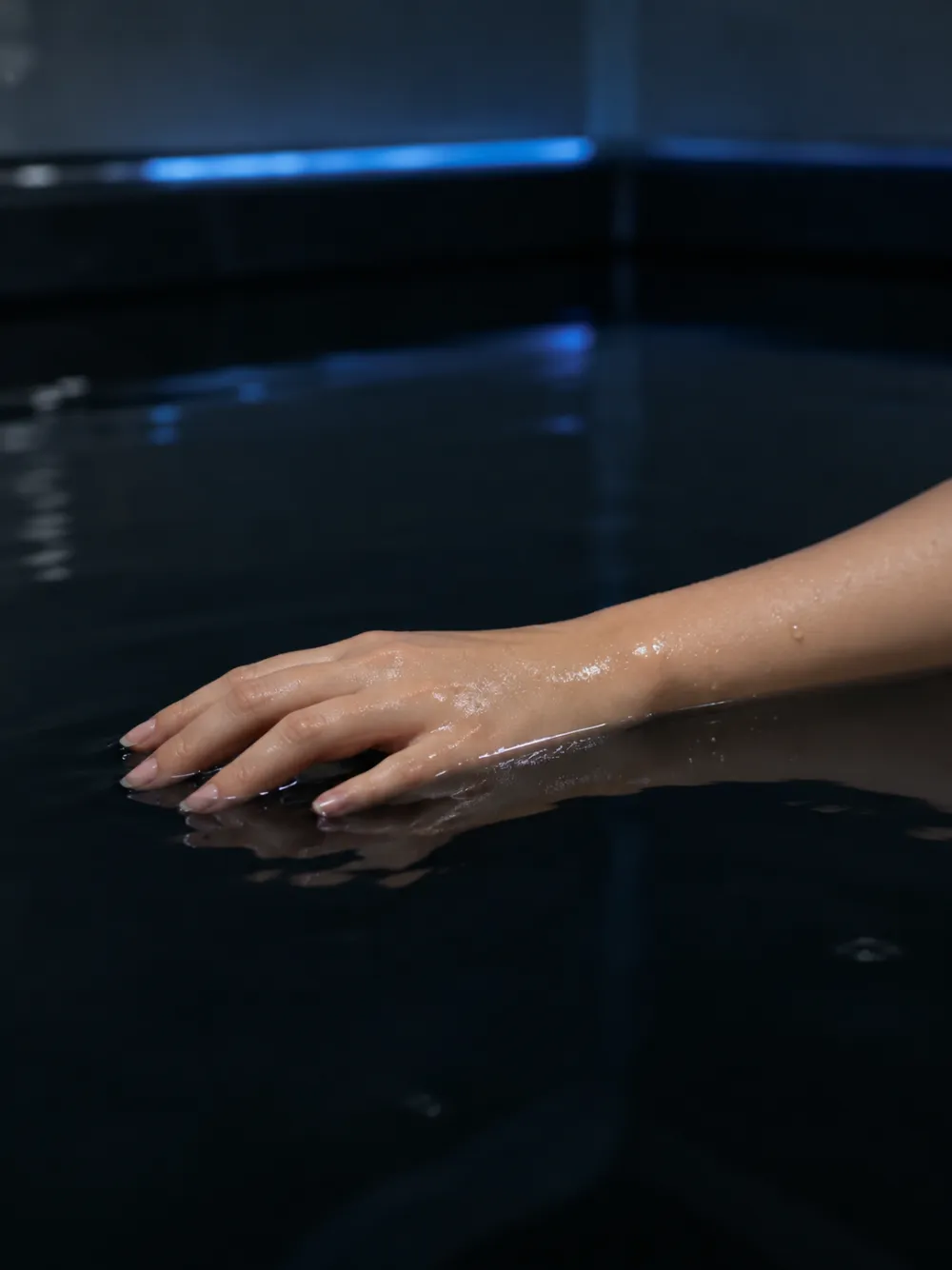
App-based meditation means sitting or lying at home with headphones, following a guiding voice for 5–20 minutes: breath awareness, a body scan, counting breaths or winding down before sleep. Most of the work is yours: holding attention and bringing the mind back each time it wanders, amid traffic, messages and housework. Float therapy works the other way round: instead of training yourself to ignore stimulation, the environment removes most of it. You float on about 25 cm of water saturated with about 500 kg of Epsom salt, kept near skin temperature, in a dark, soundproofed room, usually for 60–90 minutes. There is no posture to hold and no sound or light to distract you, so many people feel their mind settle far more deeply on a first float than when meditating at home. The table below compares the two at a glance.
| Float therapy | Meditation app | |
|---|---|---|
| Where | A float room at a centre | Anywhere with a phone and headphones |
| Each session | 60–90 minutes | Usually 5–20 minutes |
| Skill needed? | No, the environment does most of the work | Yes, attention is trained gradually |
| Sensible frequency | 1–3 times a month | Daily |
| Cost | Per session or package | Many apps have a free tier; paid plans are monthly or yearly |
| Strongest evidence | Short-term stress and anxiety | Stress and anxiety, small to moderate effects |
Do meditation apps work? What the research says
Yes, but more modestly than the marketing suggests. A meta-analysis by Gál and colleagues (2021) pooled 34 randomised trials with 7,566 users of mindfulness meditation apps: stress fell by a moderate amount (g = 0.46), and anxiety and depression by small amounts (g = 0.28 and 0.33). The authors noted the small number of studies and uncertain risk of bias. A larger 2024 meta-analysis (Linardon et al.) of 69 trials of mental health apps in general found a small effect on stress (g = 0.27), which weakened further (g = 0.10) after adjusting for small-study bias. For individual apps, a trial by Huberty and colleagues (2019) asked 88 highly stressed college students to use Calm for at least 10 minutes a day for 8 weeks: stress fell compared with a wait-list group, and the effect held at week 12. A Headspace trial (Economides et al., 2018) also found less stress and irritability after a short introductory programme, although the authors were employed by Headspace.
If you are new to meditation, what is meditation and how to start is a good first read.
The biggest problem with meditation apps: sticking with them
The benefits in trials come from people using apps regularly, and in real life very few do. A study by Baumel and colleagues (2019) tracked real usage data for 93 popular mental health apps: on average only about 4% of users opened an app on any given day, and after 30 days only about 3.3% were still coming back; for meditation apps the figure was about 4.7%. The good news is that people who keep using meditation apps use them for a fair while, about 21 minutes a day on average. In other words, apps are not short of good sessions; what is usually missing is time, a quiet space and the motivation to sit down. That is also why many people turn to floating: a fixed appointment in the diary, the phone left outside, and nothing to do but lie still.
What can floating do that an app struggles to?
Floating’s strength is turning down almost every sensory channel at once: light, sound, gravity and temperature differences. The body has no posture to hold, so back and neck muscles release; the brain receives little outside input, so attention drifts easily to the breath and heartbeat. On the evidence, a 2005 meta-analysis of 27 studies (449 participants) found positive effects on stress and wellbeing, and a trial by Kjellgren and Westman (2014) in 65 healthy adults found lower stress and anxiety and better self-rated sleep after 12 floats. In 50 people with anxiety disorders, a single 60-minute float was followed by a very large drop in momentary anxiety (Feinstein et al., 2018). Many long-term meditators also use the tank to go deeper, because the drowsy state between waking and sleep comes more easily. Read more in float tank meditation and the Laureate Institute studies.
Which should you choose, or should you combine them?
For most busy city people the answer is to combine them, each with its own job:
- A meditation app for 5–10 minutes a day to keep the rhythm: in the morning before email, or before bed.
- A float 1–3 times a month for deep rest, especially in your most stressful weeks. Beginners do best with 2–3 floats a month for the first 2–3 months.
- Take app exercises into the tank: breath counting and a body scan are easy to do while floating; see 3 meditation exercises to try in the float tank.
- If you struggle to sit still or have given up on apps before: start with a float to learn what “settling” feels like, then use the app to find that feeling again at home.
At Ōmni Space in Saigon you can try a Muse 2 brainwave headband before and after your float to see how your mind changes; it is a fun experience, not a medical test. To work out how often to float, take the 4-question float frequency quiz.
Things to keep in mind
Both meditation apps and floating support mental wellbeing; neither replaces psychological or medical treatment. Some people feel more anxious or recall difficult memories when sitting quietly with themselves; if that happens, stop and talk to a professional. For floating, do not float with open wounds, uncontrolled epilepsy or after alcohol; if you are in psychological treatment or pregnant, ask your doctor first. Read more in is float therapy safe.
Note: This page is for general information. Float therapy supports wellbeing but does not replace diagnosis or treatment by a doctor. If you have a medical condition, ask your doctor before floating.
Try it at Ōmni Space. Float Vietnam’s float rooms are at 16C Quoc Huong, Thao Dien, Ho Chi Minh City (Saigon), open daily 9:00–21:00. Book a float or read the float therapy FAQ.
Frequently asked questions
Can floating replace a meditation app?
Not entirely. Floating gives deep rest in each session, while an app helps you build a daily habit. Many people use an app daily and float 1–3 times a month.
Do meditation apps really reduce stress?
Yes, by a small to moderate amount: a meta-analysis of 34 trials found a clear reduction in stress. The effect depends heavily on using the app regularly.
Can I float if I have never meditated?
Yes. Floating needs no meditation skill; you just lie back and let the dark, quiet environment do most of the work. Beginners should choose a 90-minute float.