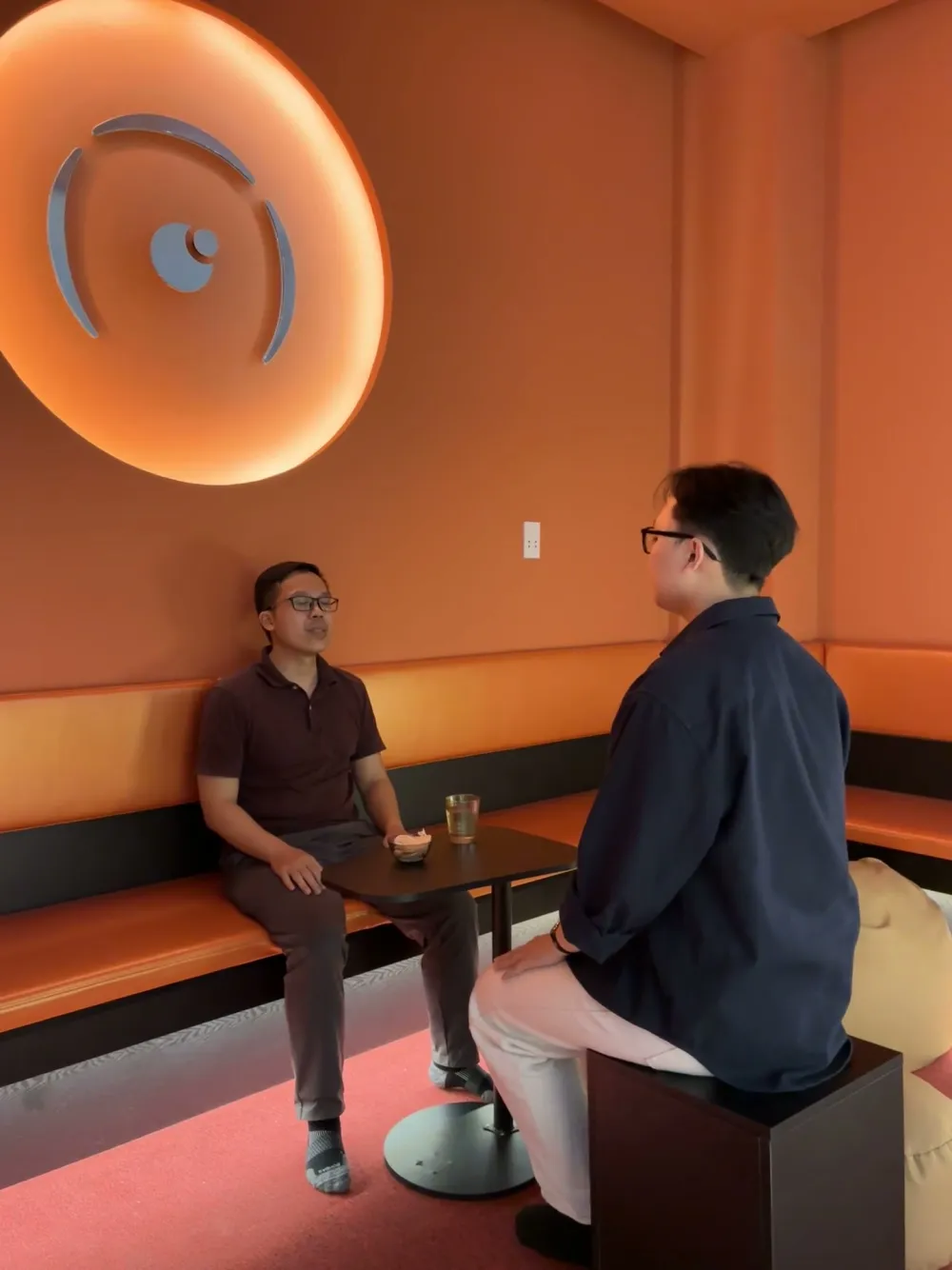
Updated: 11 Oct 2026 · By Float Vietnam
Key takeaways
- Meditation is a set of practices that train attention and awareness, for example resting attention on the breath or noticing thoughts without following them.
- A 2014 meta-analysis in JAMA Internal Medicine found moderate evidence that mindfulness meditation programmes improve anxiety, depression and pain, with small to moderate effects.
- To start, sit comfortably for 5–10 minutes a day, use the breath as an anchor and gently come back each time your mind wanders. Floating can make the setting easier.
Quick answer: Meditation is the practice of deliberately training your attention and awareness, for example by resting on the breath, observing thoughts or cultivating kindness. Research links regular practice with small to moderate improvements in anxiety, depression and pain. To start, sit comfortably for 5–10 minutes a day and gently return to your breath whenever your mind wanders.
What is meditation, in plain terms?
Meditation is a way of training the mind, much as exercise trains the body. Instead of letting attention jump from one thought, sound or worry to the next, you choose where to place it and notice what happens. Sometimes that means focusing on one thing, such as the feeling of breathing. Sometimes it means simply watching whatever arises, thoughts, emotions and body sensations, without getting pulled along. Neuroscientists Antoine Lutz, Richard Davidson and colleagues describe meditation as a family of practices for regulating attention and emotion, rather than a single technique. The roots are ancient and found in many traditions, including Buddhist, Hindu, Christian and secular ones, but you do not need any belief system to practise. A useful way to picture it: your mind is like a phone running dozens of apps in the background. Meditation does not delete the apps; it helps you see which ones are running, so you can close some and give your full attention to the one that matters.
What are the main types of meditation?
There are hundreds of named techniques, but most fall into a few broad styles. In a widely cited 2008 paper in Trends in Cognitive Sciences, Lutz and colleagues described the two most studied: focused attention meditation, where you keep attention on a chosen object such as the breath, and open monitoring meditation, where you notice whatever arises from moment to moment without reacting to it. Many teachers start beginners with focused attention, because it gives the mind something concrete to return to, then add open monitoring later. Loving-kindness meditation takes a different route: you silently repeat warm wishes for yourself and others. A 2011 review by Hofmann, Grossman and Hinton in Clinical Psychology Review linked it with more positive and less negative emotion. The body scan, a core exercise in mindfulness-based stress reduction (MBSR), moves attention slowly through the body, part by part.
| Type | How it works | Good for |
|---|---|---|
| Focused attention | Keep attention on one object, usually the breath; return when the mind wanders | Beginners, building concentration |
| Open monitoring (mindfulness) | Notice thoughts, feelings and sensations as they come and go, without following them | Seeing mental habits, reacting less |
| Loving-kindness | Silently repeat kind wishes for yourself, people you love, strangers and difficult people | Warmth, self-criticism, relationships |
| Body scan | Move attention slowly from feet to head, noticing sensations without changing them | Body tension, winding down at night |
| Mantra | Repeat a word or short phrase, aloud or silently, as the anchor | People who find the breath hard to follow |
What does research show about meditation?
The best-known summary is a 2014 systematic review and meta-analysis by Goyal and colleagues at Johns Hopkins, published in JAMA Internal Medicine. It pooled 47 randomised trials with 3,515 participants, choosing only studies that compared meditation with an active control, so that simple attention or expectation could not explain the results. Mindfulness meditation programmes showed moderate evidence of improving anxiety, depression and pain, and low evidence of improving stress and mental health-related quality of life. The effects were small to moderate. The review found low or insufficient evidence for effects on attention, mood, sleep, weight or substance use, and no evidence that meditation was better than active options such as medication, exercise or other behavioural therapies. In short: meditation is a reasonable, low-cost habit that can help, not a replacement for professional care. Our floatation therapy and meditation guide looks at how the two connect.
Meditation is usually low-risk, but it is not risk-free. The US National Center for Complementary and Integrative Health (NCCIH) notes that a 2020 review of 83 studies estimated that about 8% of participants had a negative experience, most often increased anxiety or low mood, a rate similar to that seen with psychological therapies. If you have a history of trauma, psychosis or severe depression, practise with a qualified teacher or alongside your therapist.
How do you start meditating?
Starting is simpler than most people think, and there is no right way to look while doing it. Pick a regular time, such as after waking up or before dinner, when you are unlikely to be interrupted, and set a timer so you are not checking the clock. Sit on a chair with both feet on the floor, or on a cushion, with your back upright but not stiff and your hands resting in your lap. Close your eyes or let your gaze rest on the floor. Begin with five to ten minutes; consistency matters far more than length, and ten minutes every day does more than an hour once a month. Use the breath as your anchor: feel the air at the nostrils or the rise and fall of the belly. Within seconds your mind will wander. That is not failure. Noticing that you have drifted and gently coming back is the exercise itself, repeated many times.
- Choose a fixed time and a quiet spot, and silence your phone.
- Sit upright and relaxed, on a chair or a cushion.
- Set a timer for 5–10 minutes.
- Rest attention on the breath; if it helps, count breaths from one to ten, then start again.
- When you notice a thought has carried you away, label it “thinking” and return to the breath without judging yourself.
- Finish with three slower breaths and notice how you feel.
What are the most common obstacles for beginners?
Almost everyone who starts meditating meets the same handful of problems, and knowing them in advance makes them easier to accept. The first is a restless mind: thoughts arrive constantly, and beginners often conclude that they are bad at meditation. In fact, a busy mind is the material you are working with. The second is physical discomfort, such as an aching back, numb legs or an itch that demands attention; adjusting your posture or sitting on a chair is perfectly acceptable. The third is sleepiness, especially after meals or late at night, which is why many people practise in the morning with their eyes slightly open. The fourth is time, which seems to stretch when you sit still, so a timer is useful. The fifth is impatience: benefits build gradually over weeks of regular practice, not after one session. Finally, many people simply forget, so linking practice to an existing habit, like morning coffee, helps it stick.
If what comes up during practice feels overwhelming rather than merely boring or uncomfortable, stop, open your eyes and ground yourself in the room, then talk to a teacher or health professional.
How can floating support a meditation practice?
A float room removes several of the obstacles that make meditation hard for beginners. Inside, it is dark and quiet, the water is close to skin temperature and the dense Epsom salt solution carries your weight, so there is no aching back, no numb legs and no posture to hold. With so little coming in from outside, the main things left to notice are the breath, the heartbeat and your own thoughts, which is exactly what most meditation asks you to observe. Time cues disappear too, so the urge to check the clock fades. Many floaters describe drifting into a calm, half-awake state, often linked to slower brain rhythms; read more in our guide to brainwaves. Floating will not do the practice for you, and it can make some people sleepy, but as a setting it can make the first steps easier. Our earlier article on the float tank as a fast track for meditation explores this idea.

To try it, use the same steps as above: settle for the first ten minutes, then rest attention on the breath and return each time you drift. At Ōmni Space, the single room has an open pool behind soundproof, light-blocking glass doors, a Halo pillow to support the neck and lights you can adjust yourself. For guided ideas, see these three meditation exercises to try in the float tank.
Note: This page is for general information. Float therapy supports wellbeing but does not replace diagnosis or treatment by a doctor. If you have a medical condition, ask your doctor before floating.
Try it at Ōmni Space. Float Vietnam’s float rooms are at 16C Quoc Huong, Thao Dien, Ho Chi Minh City (Saigon), open daily 9:00–21:00. Book a float or read the float therapy FAQ.
Frequently asked questions
What is meditation in simple words?
Meditation is training your attention. You choose something to focus on, such as the breath, notice when your mind wanders, and gently come back, again and again.
How long should a beginner meditate?
Five to ten minutes a day is a good start. Regular short sessions do more than occasional long ones, and you can extend the time once the habit feels natural.
Does research show meditation helps anxiety?
A 2014 JAMA Internal Medicine meta-analysis of 47 trials found moderate evidence that mindfulness programmes reduce anxiety, with small to moderate effects. It complements, but does not replace, professional care.
Can you meditate in a float tank?
Yes. The dark, quiet, weightless setting removes many common distractions, such as noise and an aching posture. Use the breath as your anchor and allow ten minutes to settle first.