Updated: 11 Oct 2026 · By Float Vietnam
Key takeaways
- Float therapy began as a research tool: John C. Lilly built the first isolation tank at the US NIMH in 1954.
- Glenn Perry’s 1970s horizontal Epsom tank brought floating to the public. It boomed around 1980, faded in the mid-1980s, and survived in research as REST.
- A 2010s revival brought bigger tanks, open pools and modern clinical studies. Float Vietnam brought floating to Vietnam in 2017.
Quick answer: Float therapy began in 1954, when neuroscientist John C. Lilly built an isolation tank at the US National Institute of Mental Health to study the brain without outside input. In the 1970s it became a horizontal Epsom-salt tank, boomed and faded in the 1980s, was renamed REST by researchers, and revived worldwide in the 2010s.
What are the key dates in the history of float tanks?
The history of float therapy spans about seventy years and falls into five eras. It started in a government laboratory in the 1950s, when scientists wanted to know what the brain does when almost all outside stimulation is removed. In the 1970s a home-built horizontal tank filled with dense Epsom-salt water took floating out of the lab and into the first commercial centres. Around 1980 floating became fashionable, helped by a Hollywood film and sports teams, before a sharp decline in the mid-1980s. Through the quiet years that followed, university researchers in Canada, Sweden and elsewhere kept studying it under a new, more neutral name: REST. Since the 2010s floating has returned as part of the wider wellness and mindfulness movement, with roomier tanks, open float pools and better-designed clinical trials. The table below summarises the milestones that are well documented, and the sections after it tell the story of the people behind them.
| Year | Milestone |
|---|---|
| 1954 | John C. Lilly builds the first isolation tank at the NIMH, Maryland, USA |
| 1972 | Glenn Perry attends a Lilly workshop and begins designing affordable horizontal “Samadhi” tanks |
| 1970s | First commercial float centres open in California (sources give 1975 or 1979) |
| 1980 | The film Altered States puts isolation tanks on cinema screens |
| Mid-1980s | Decline; researchers Peter Suedfeld and Roderick Borrie promote the term REST |
| Late 1990s–2018 | Karlstad University, Sweden, runs a long float research programme |
| 2017 | Float Vietnam opens Float Hanoi, bringing floating to Vietnam |
| 2018 | Laureate Institute (Tulsa) publishes a widely cited anxiety study in an open float pool |
Who invented the float tank, and why?
The float tank was invented in 1954 by John C. Lilly, a physician and neuroscientist working at the National Institute of Mental Health in Bethesda, Maryland. Scientists of the time were debating a simple question: if you take away nearly all input from the senses, does the brain shut down like a machine with no power, or does it keep generating activity of its own? Lilly used a sealed, soundproof water tank that had been built during the Second World War for Navy research on divers. His first set-up looked nothing like a modern float room. Volunteers hung upright in the water with their heads covered by a rubber breathing mask. What Lilly observed was that the mind did not switch off at all. It produced thoughts, images and vivid inner experiences. He worked with colleagues including the psychiatrist Jay Shurley, and he first reported his observations at a psychiatry meeting in 1956.
At McGill University in Canada, Bexton, Heron and Scott (1954) studied volunteers kept for long periods in a monotonous, dry cubicle, work that gave “sensory deprivation” its uneasy reputation. See what sensory deprivation really means.
How did floating move from the lab to the public in the 1970s?
The turning point came in 1972, when a computer programmer named Glenn Perry attended one of Lilly’s floating workshops in California. Over the following year Perry designed the first inexpensive tanks that people could use at home and sold them as “Samadhi” tanks, named after a Sanskrit word for deep meditative absorption. Two changes made floating far more comfortable and safer. First, the floater lay horizontally on their back instead of hanging upright. Second, the water was loaded with so much Epsom salt (magnesium sulfate) that anyone would float effortlessly with the face clear of the water, so no mask was needed. Perry ran the Samadhi Tank Company with his wife and partner, Lee Perry. They also helped open some of the first commercial float centres in California; Samadhi gives 1975 as the date, while a 2015 Aeon essay says 1979 in Beverly Hills.
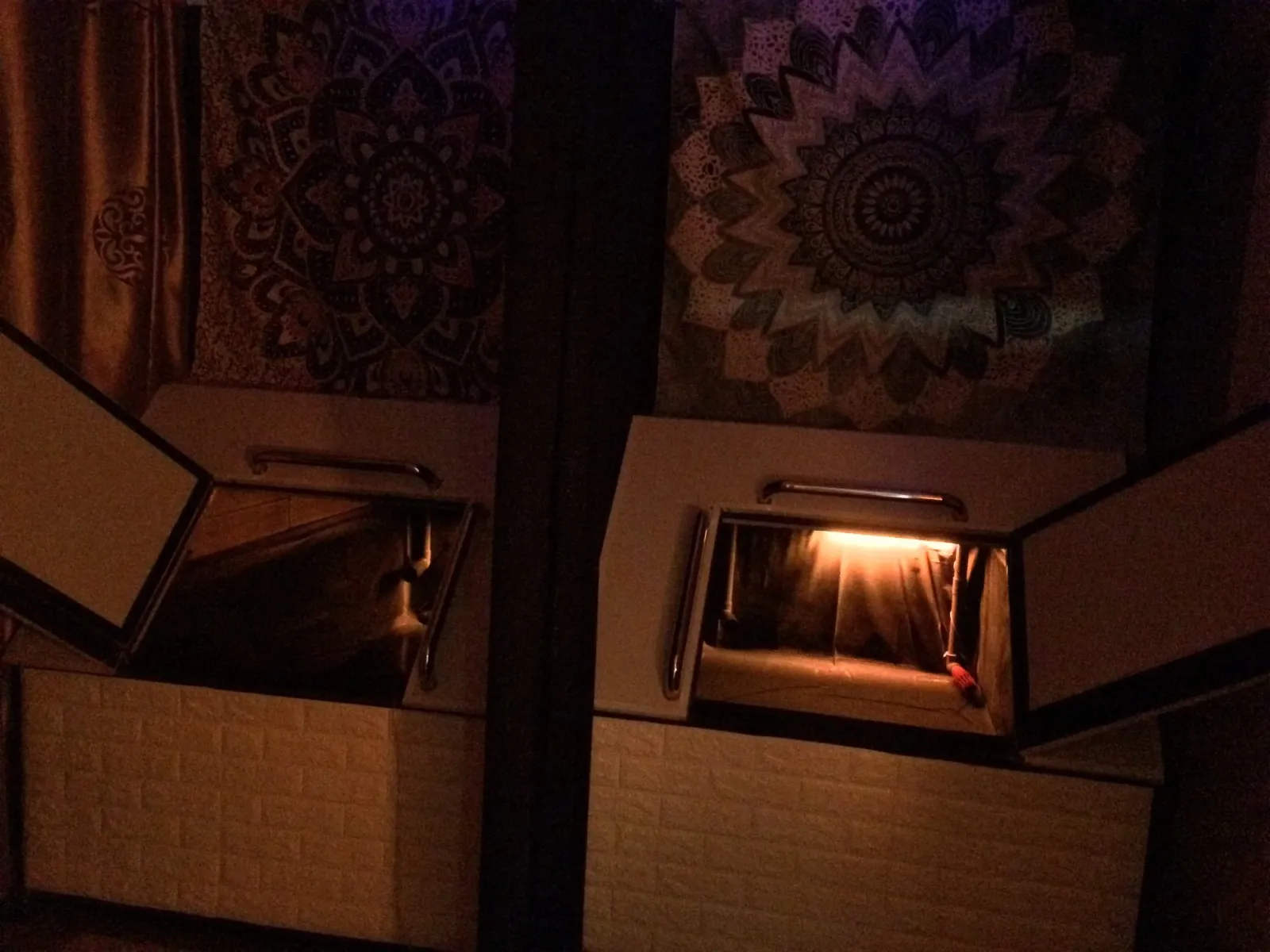
The classic Samadhi home tank measures about 4 × 8 feet (roughly 1.2 × 2.4 m). Designs compared: types of float tanks.
What happened during the 1980s boom and bust?
By the start of the 1980s, floating had reached popular culture. The 1980 film Altered States, whose scientist character was loosely inspired by Lilly’s isolation work, showed a dramatic and very fictional version of a tank, and public curiosity grew. Professional sports teams in Philadelphia, including the Eagles and the Phillies, installed tanks for their players around the same time. Then, within a few years, the boom collapsed. Popular histories usually blame the AIDS panic of the mid-1980s, when misplaced fears about sharing bodies of water drove customers away. The researcher Peter Suedfeld adds two less dramatic reasons: inexperienced operators and too few repeat customers. A lull of more than twenty years followed.
Who kept float research alive, and what does REST mean?
While commercial floating faded, research carried on quietly. Two psychologists, Peter Suedfeld at the University of British Columbia and Roderick Borrie, argued that “sensory deprivation” was an ominous and inaccurate label for what was often a pleasant, voluntary rest. They promoted the term REST, for Restricted Environmental Stimulation Technique (later also Therapy), with two main forms: chamber-REST in a dark, quiet room and flotation-REST in a tank. Suedfeld’s group studied REST as a support for quitting smoking and for creative thinking. In Sweden, Karlstad University’s Human Performance Laboratory ran float studies from the late 1990s until 2018, producing doctoral theses by Anette Kjellgren, Sven-Åke Bood and Kristoffer Jonsson on stress, muscle pain and anxiety. In 2005, van Dierendonck and te Nijenhuis pooled 27 studies in a meta-analysis and reported positive effects on stress-related measures. Europe also built its own float scene, with walk-in cabins appearing in the UK in the early 1990s.
Today “floatation-REST” is the scientific name for float therapy; our guide to REST and floatation therapy explains the terms.
Why did floating come back in the 2010s?
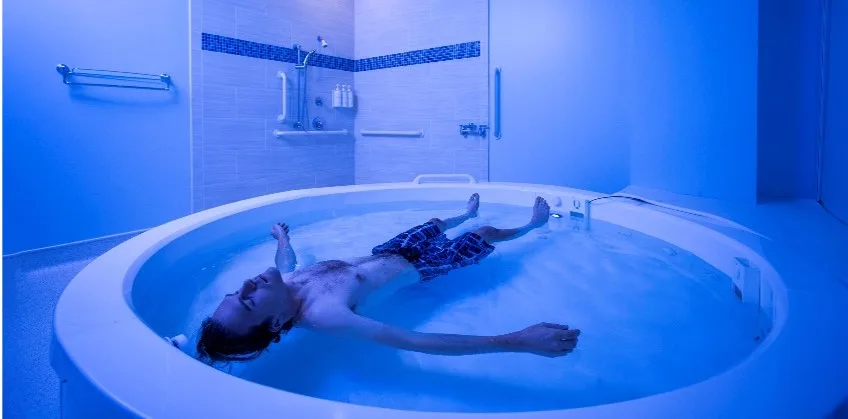
Floating returned in the 2010s for several reasons at once. Interest in meditation, mindfulness and mental wellbeing grew quickly, and floating offered a way to rest that needed no special skill. Equipment changed too: researchers at the Laureate Institute for Brain Research note that many people had found early tanks too confining, and they credit the revival partly to more spacious tanks and pools. The first moulded “pod” appeared in 2009, walk-in cabins spread, and some centres built open float pools in soundproof rooms. In 2012 the Float On centre in Portland, Oregon, started an annual float conference, and the podcaster Joe Rogan talked about floating to a huge audience. Research became more rigorous too. In 2018 Justin Feinstein’s team in Tulsa published an anxiety study using an open circular pool, and a 2025 systematic review by Lashgari and colleagues collected 63 studies, most of them small (summarised in our whitepaper).
How did float therapy arrive in Vietnam?
Float therapy reached Vietnam in 2017, when Float Vietnam opened Float Hanoi and introduced “Thiền Nổi”, the Vietnamese name we use for floating. With no local supplier, the team built its own Samadhi-style enclosed tanks, following the classic 1970s design. The next step was Float Saigon, which used a self-built enclosed cabin modelled on the Ocean Float Room, a walk-in design with full standing height. Each generation taught us something about comfort, cleaning and how guests feel in an enclosed space. Today Float Vietnam’s float rooms are at Ōmni Space in Thao Dien, Ho Chi Minh City: open pools, the single pool about 1.2 × 2.4 m, behind soundproof, light-blocking glass doors. Each holds about 25 cm of water with roughly 500 kg of Epsom salt at 34–35 °C. Guests control the lights and can use a Halo neck pillow. Float Hanoi is temporarily closed. The full story is in Float Vietnam’s three generations of float tanks.
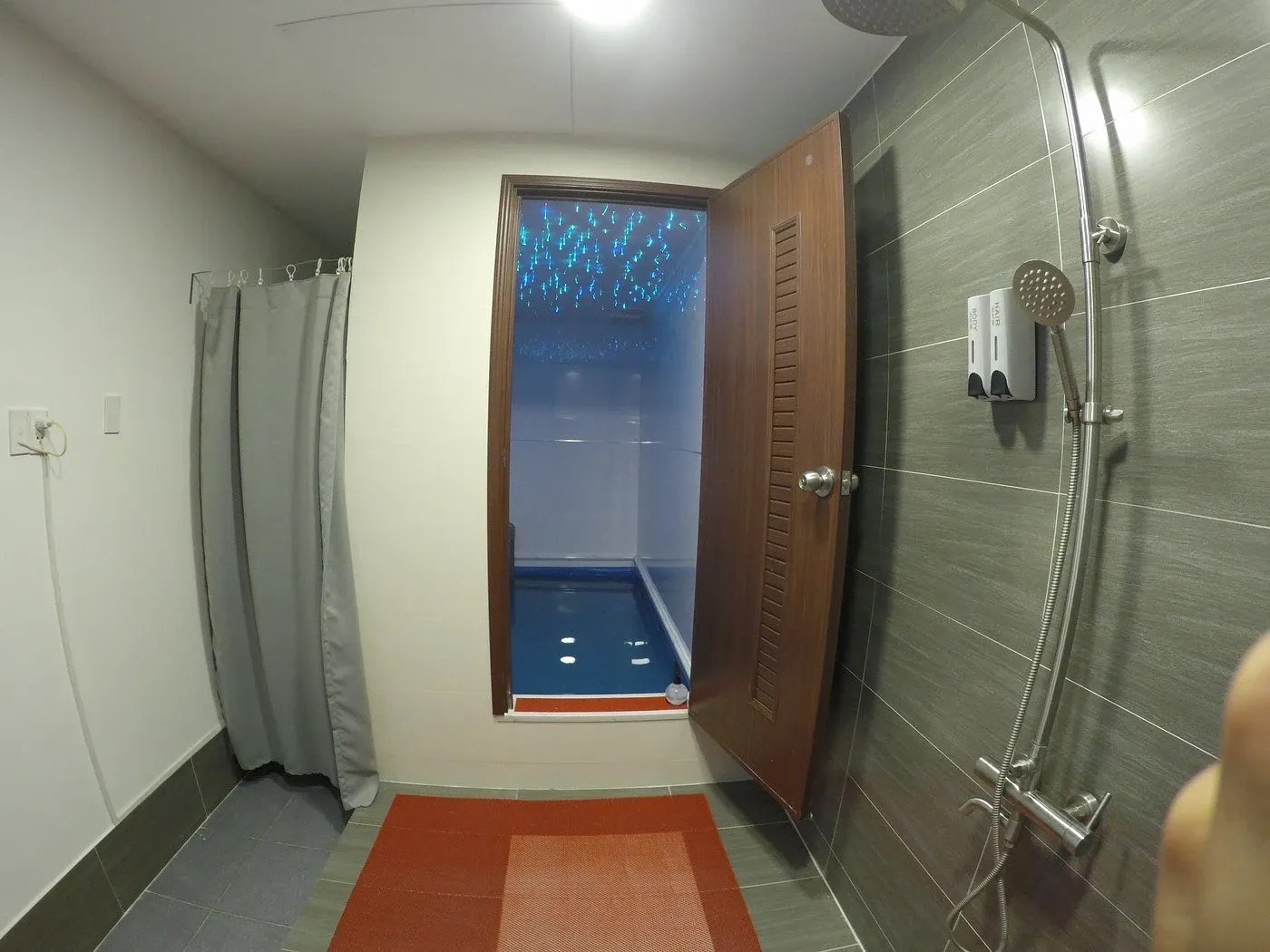
Try it at Ōmni Space. Float Vietnam’s float rooms are at 16C Quoc Huong, Thao Dien, Ho Chi Minh City (Saigon), open daily 9:00–21:00. Book a float or read the float therapy FAQ.
Frequently asked questions
Who invented the float tank?
John C. Lilly built the first isolation tank in 1954 at the US National Institute of Mental Health. Glenn Perry developed the horizontal Epsom-salt tank in the 1970s.
Why did float tanks decline in the 1980s?
Popular histories point to the mid-1980s AIDS panic, when people worried about sharing water. The researcher Peter Suedfeld also blamed inexperienced operators and too few repeat customers.
What does REST stand for in float therapy?
REST means Restricted Environmental Stimulation Technique, later also called Therapy. Floatation-REST is the scientific name for floating in a float tank or float room.
When did float therapy come to Vietnam?
Float Vietnam opened Float Hanoi in 2017. Today you can float at Ōmni Space, 16C Quoc Huong, Thao Dien, Ho Chi Minh City, open daily 9:00–21:00.