Updated: 10 Oct 2026 · By Float Vietnam
Key takeaways
- Most people with claustrophobia can float comfortably, especially in an open float room rather than a closed pod.
- At Ōmni Space the float rooms are private rooms with a large raised pool inside a glass enclosure, not a closed pod, and you can get out at any time.
- Start with 60 minutes, keep the lights on at first, use slow breathing and tell the staff beforehand to make your first float easier.
Quick answer: Yes. Most people who fear small spaces can still float, especially in an open float room rather than a closed pod. At Ōmni Space, the float pool is a large raised pool inside a glass enclosure in a private room. You can always sit up and step out, so you can start slowly and go at your own pace.
Why does float therapy worry people with claustrophobia?
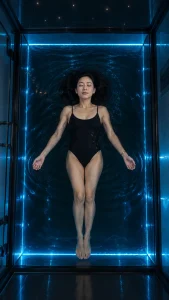
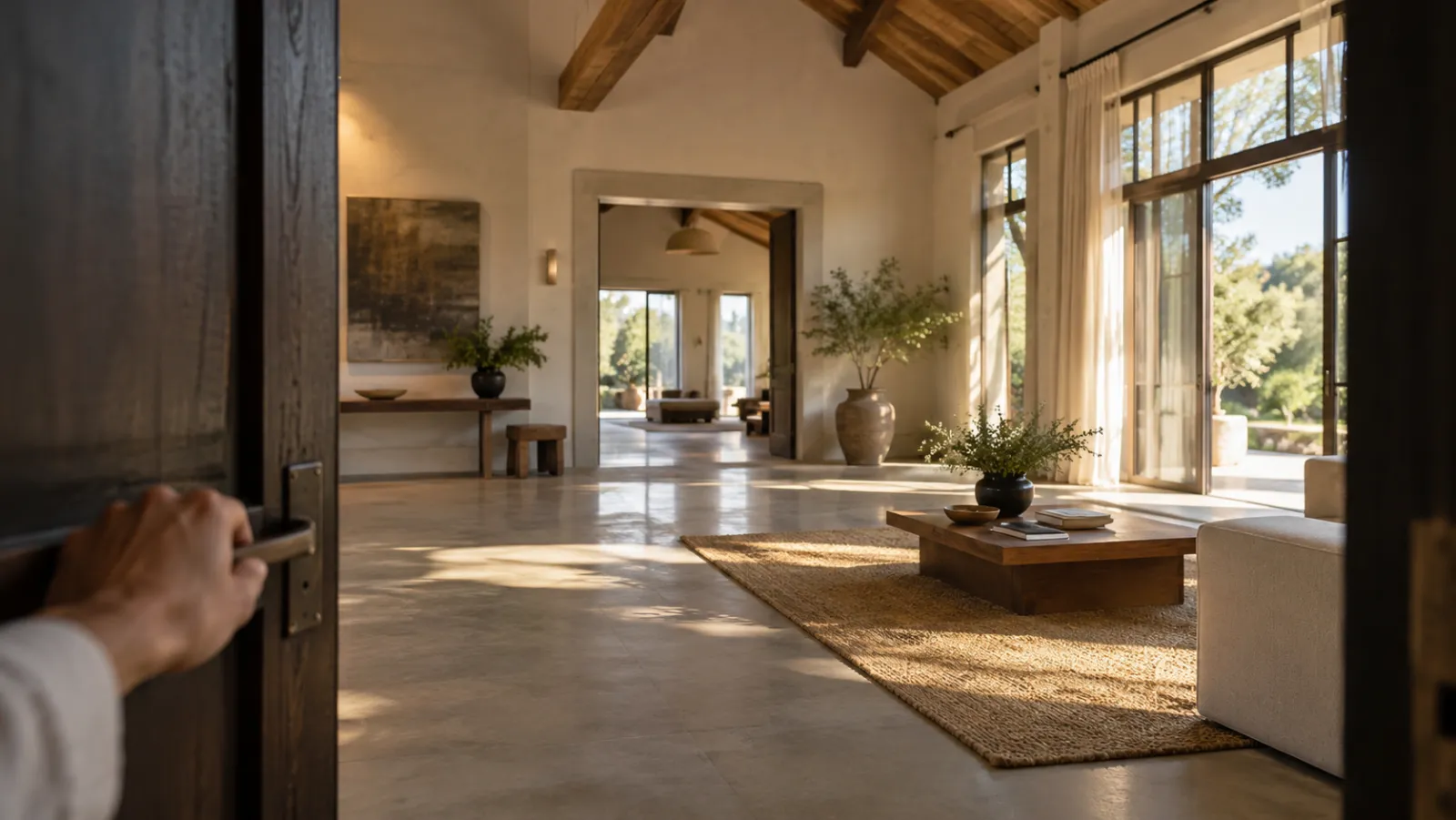
When people hear “sensory deprivation tank”, many picture a sealed, pitch-black capsule with a lid closing just above their face. For someone with claustrophobia, that image alone can set the heart racing. In reality, the uneasy feeling usually comes from three things: a small space pressing close to the body, the sense that you cannot get out quickly, and a loss of control in the dark. The good news is that modern floating does not have to look like that. Many centres, including Ōmni Space, use open float rooms: you lie in shallow water about 25 cm deep, inside a private room with enough space to stand up and move around. There is no lid, and you decide when to start and when to stop. Knowing what the space really looks like before you arrive is the first step to easing the worry. For the basics, read what float therapy is.
How is an open float room different from a float pod?
A float pod is the design most people know from films: an enclosed capsule with a lid that closes over you, a low ceiling and very little space around the body. An open float room works differently. The pool sits inside a room with a normal ceiling high above you, and you can sit up or step out without opening anything. At Ōmni Space, each float room is a private room with a large raised pool inside a glass enclosure and its own shower. The single room has a rectangular pool for one person; the couple room has a square pool for two, which can help if you would feel calmer floating next to a partner or friend. In open float rooms you can usually leave the door open and keep the lights on if you prefer, then try darkness gradually once you feel settled. For many claustrophobic people, this difference alone makes floating possible.
| Float pod | Open float room | |
|---|---|---|
| Space above you | Lid closes, low ceiling close to your body | Room ceiling high above, no lid |
| Getting out | Push the lid open first | Sit up and step out at any time |
| Lighting | Usually fully dark | You can usually keep the lights on |
| How it feels with claustrophobia | Can feel confining | More open and easier to adjust to |
| Floating with someone | Usually one person | Couple room available (at Ōmni Space) |
How can you make your first float easier if you fear small spaces?
The key is to start gently and stay in control. Tell the staff beforehand that small spaces make you nervous, so they can walk you through the room and answer every question before you get in. Float Vietnam usually recommends 90 minutes for beginners, but if you feel anxious, a 60-minute session is a softer start; once you feel at ease you can move up to 90 minutes. At first, keep the lights on and float near the edge of the pool, resting a hand lightly against the side so you have a reference point. When you feel comfortable, switch the lights off for a few minutes and back on again. Remember that you can sit up and get out at any time, and doing so is not a failure. Many people need two or three sessions before they fully let go. See also our guide to float tank tips from a meditator.
- Tell the staff before your float.
- Book 60 minutes for your first session.
- Keep the lights on and float near the edge.
- Try darkness a little at a time.
- Get out whenever you want to.
Which breathing techniques help you stay calm in the pool?
Slow breathing is the simplest tool for calming your nervous system when anxiety shows up. Two techniques work well in a float pool: 4-7-8 breathing and box breathing. For 4-7-8 breathing, inhale through your nose for a count of 4, hold for 7, then breathe out slowly through your mouth for 8; repeat about four rounds. For box breathing, inhale for 4, hold for 4, exhale for 4 and hold for 4, like tracing the four sides of a square. Pick the one that feels most natural and practise it a few times at home before your visit. In the pool, rest your attention on the feeling of the water holding you up and on the long out-breath: when you breathe out for longer than you breathe in, the body tends to settle. If anxiety keeps rising, sit up, turn on the light, take a few breaths and lie back down when you are ready. You might also like 3 meditation exercises to try in the float tank.
Can float therapy help with anxiety?
Some research suggests floating may reduce anxiety in the short term. A notable study by Feinstein and colleagues (2018, PLOS ONE) involved 50 people with anxiety and stress-related disorders: after a single float of about one hour, participants reported a marked drop in state anxiety and better mood. That is encouraging, but the study was small and measured short-term effects. Float therapy is therefore best seen as a complement to care, not a replacement for therapy or medical treatment. If your fear of small spaces is severe, has caused panic attacks, or you are being treated for an anxiety disorder, talk to your doctor or therapist before you float. For many others, getting through a little nervousness in a safe space that they control turns out to be a memorable part of the experience. Read more about how people with anxiety find relief in float tanks, or see float therapy in Saigon for location and prices.
Note: This page is for general information. Float therapy supports wellbeing but does not replace diagnosis or treatment by a doctor. If you have a medical condition, ask your doctor before floating.
Try it at Ōmni Space. Float Vietnam’s float rooms are at 16C Quoc Huong, Thao Dien, Ho Chi Minh City (Saigon), open daily 9:00–21:00. Book a float or read the float therapy FAQ.
Frequently asked questions
Is a float room the same as a closed float pod?
Not necessarily. At Ōmni Space the float rooms are private rooms with a large raised pool inside a glass enclosure, with no lid like a pod.
Can I keep the light on while floating?
In open float rooms you can usually keep the lights on if you prefer. Ask the staff to show you how the room works before your float.
What if I panic during my float?
Sit up, take a few slow breaths and step out if you need to. The water is only about 25 cm deep and you can stop at any time.
Should my first float be 60 or 90 minutes?
Beginners are usually advised to book 90 minutes, but if small spaces make you nervous, 60 minutes is a gentler start. A 60-minute single float at Ōmni Space is 1,500,000 VND.
Can float therapy help with anxiety?
Small studies such as Feinstein et al. (2018) report lower anxiety after a single float. It is a complementary practice and does not replace professional mental health care.