Updated: 11 Oct 2026 · By Float Vietnam
Key takeaways
- One float session works on three layers at once: the body (weightless support for muscles and joints), the nervous system (a strong shift towards rest) and the mind (an easy, drifting meditative state).
- The nervous-system layer has the best evidence: controlled studies report lower stress, anxiety and blood pressure. The muscle and meditation layers rest on smaller studies and floaters’ reports.
- Athletes use floating for recovery. Morgan et al. (2013) and Driller & Argus (2016) report less perceived pain or soreness and better mood, but no gain in strength.
Quick answer: Float tank therapy is lying on about 25 cm of skin-temperature water holding roughly 500 kg of Epsom salt, in a dark, quiet room. It acts on three layers at once: weightless rest for muscles and joints, a calmer nervous system, and an easy meditative state. Evidence is strongest for stress and anxiety relief.
What is float tank therapy?
Float tank therapy is the everyday name for what researchers call floatation-REST, short for Restricted Environmental Stimulation Technique. You lie on your back in shallow water so dense with dissolved Epsom salt (magnesium sulfate) that you float without any effort, with your face comfortably above the surface. The water and air are kept close to skin temperature, about 34–35 °C, so after a few minutes it becomes hard to tell where your body ends and the water begins. Light and sound are turned down as far as possible. The method grew out of John C. Lilly’s isolation tank, built in 1954 at the US National Institute of Mental Health, and the shallow Epsom-salt version spread from the 1970s. Today a typical session lasts 60–90 minutes. What makes floating different from a nap or a bath is that it reduces gravity, light, sound and touch all at the same time, which is why one session can work on several levels.

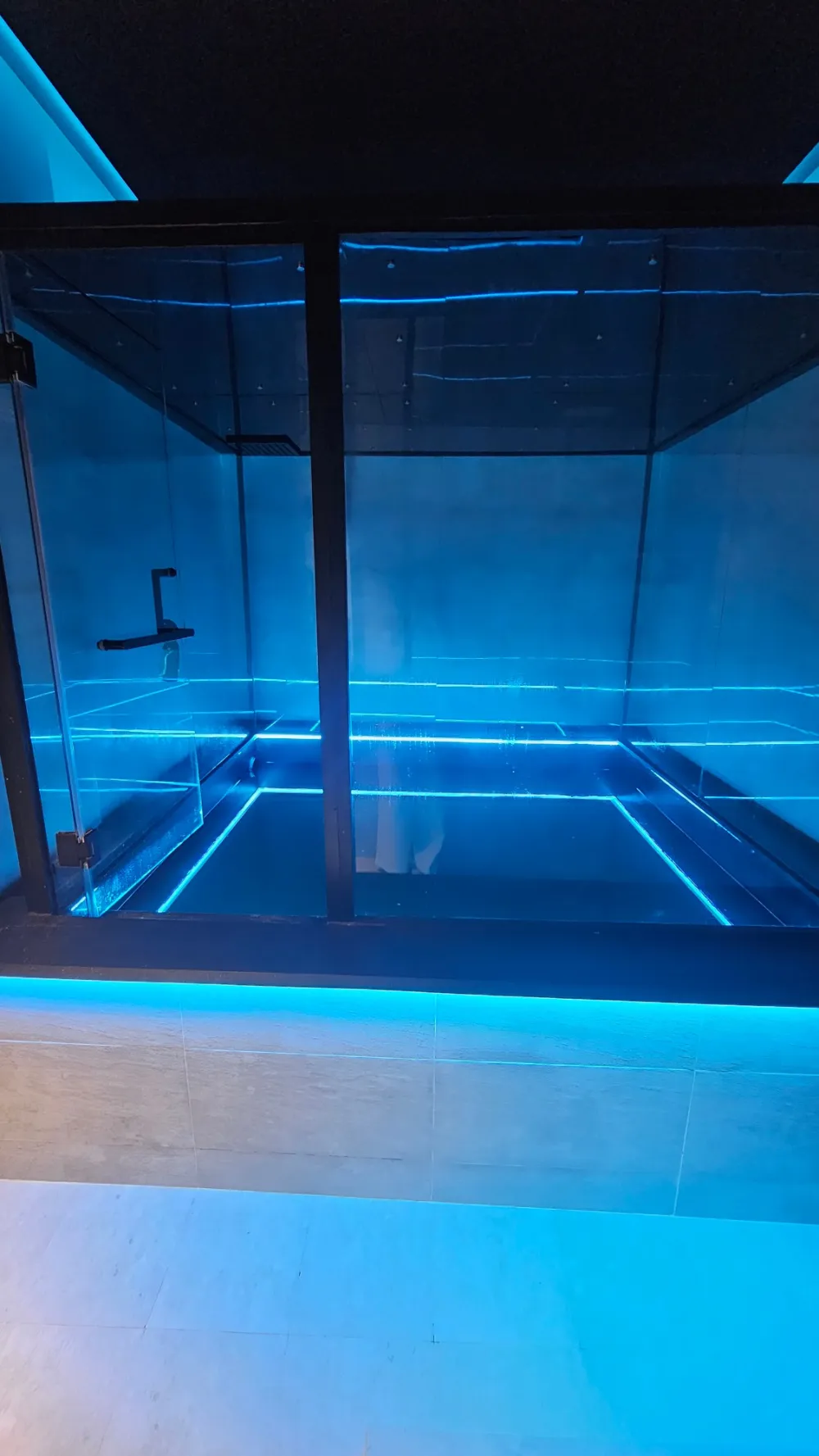
At Ōmni Space, Float Vietnam’s home in Saigon, the float rooms are open pools rather than closed pods: the single room’s pool is about 1.2 × 2.4 m, set behind soundproof, light-blocking glass doors, and you control the lights yourself. Water is filtered through about 5.6 full turnovers after every float.
Layer 1: what happens to your body when you float?
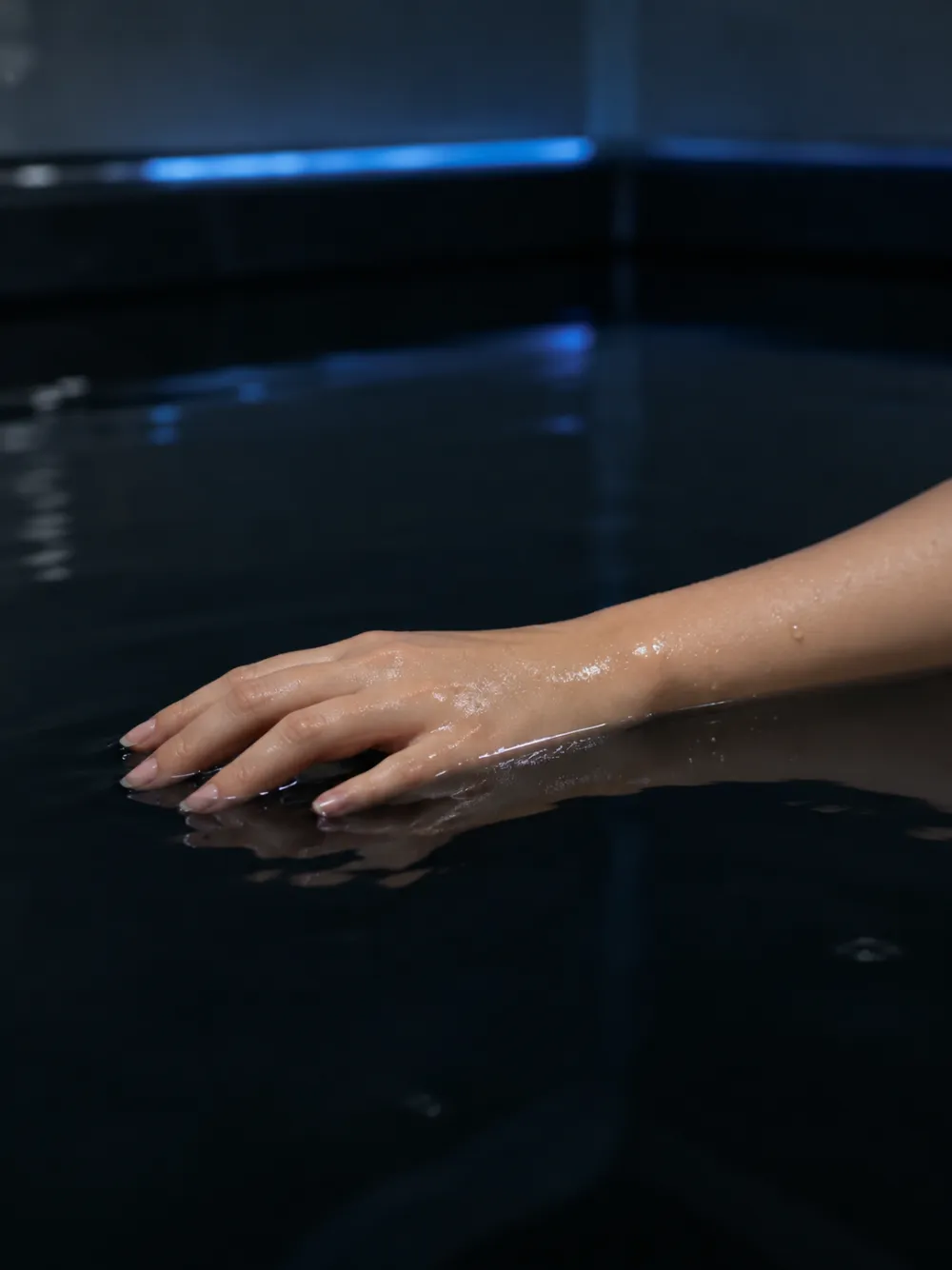
The first layer is physical. On land, dozens of muscles work all day just to keep you upright and balanced, even when you sit still. In a float pool, buoyancy takes over that job. The pressure of a mattress or chair against your back, hips and heels disappears, and the spine is supported evenly along its length. Many floaters notice tension they did not know they were holding: a clenched jaw, raised shoulders, tight lower back. Over the first 10 to 20 minutes these areas often soften on their own. A neck pillow, such as the Halo pillow we provide at Ōmni Space, helps people who find it hard to let the head rest back. The warm water may also make it easier to relax tight muscles. The research here is smaller: two Swedish trials, Kjellgren et al. (2001) and Bood et al. (2005), reported less stress-related muscle pain after a series of floats. Evidence label: promising, small studies.
If back or neck tension is your main reason to float, read float therapy for back pain for what the studies did and did not find.
Layer 2: why does floating calm the nervous system?
The second layer is the autonomic nervous system, the automatic control system that shifts between “fight or flight” (sympathetic) and “rest and digest” (parasympathetic) modes. Busy days, screens and noise keep many of us leaning towards alert mode. In a float room, the main triggers for alertness, such as light, sound, temperature changes and the need to balance, are all reduced together, and the body tends to move towards rest. This is the best-researched layer. A 2005 meta-analysis by van Dierendonck and te Nijenhuis pooled 27 studies and found positive effects on physiology, such as lower cortisol and blood pressure, and on well-being. In a 2022 crossover study in Frontiers in Neuroscience, Flux and colleagues found that a 90-minute float lowered blood pressure and breathing rate more than watching a calming nature film. Evidence label: the strongest of the three, though studies are still modest in size.
For the stress side in more depth, see how floating reduces stress.
Layer 3: is floating a shortcut to meditation?
The third layer is mental. Many people who struggle to sit still and meditate find that floating does part of the work for them. With no posture to hold and very little reaching the senses, attention tends to turn inward: first to a busy stream of thoughts, then, often, to slower breathing and longer gaps between thoughts. Floaters frequently describe a drifting, dream-like state between waking and sleep, which is sometimes linked to theta brainwaves. It is fair to say that this link is suggested by older EEG work and floaters’ reports rather than settled by modern research, so we describe it as an experience, not a fixed brain state. You do not need any meditation experience. Simple practices, such as counting breaths or slowly scanning the body from toes to head, can help you settle. Evidence label: early, largely based on self-report. Read more about theta waves and float therapy.
Why do athletes use float tanks for recovery?
Hard training creates the stimulus for fitness, but adaptation happens during rest, which is why athletes look for recovery tools that are easy to repeat. Floating combines weightless support, warm water and deep relaxation in one session, and it is drug-free. Two studies are most often cited. In a randomised crossover trial in the Journal of Strength and Conditioning Research, Morgan, Salacinski and Stults-Kolehmainen (2013) had 24 people do hard eccentric exercise and then either float or sit quietly for an hour. Floating led to lower blood lactate and lower perceived pain, but strength and muscle soreness did not differ from sitting. In 2016, Driller and Argus followed 60 elite athletes who floated for about 45 minutes after training; mood scores improved on 15 of 16 measures and perceived soreness dropped. That study had no control group, so it shows a change, not cause and effect. Evidence label: encouraging for how athletes feel, unclear for performance.
More detail on training and recovery is on floating for athletic performance.
How do you get the most from a 3-in-1 float?
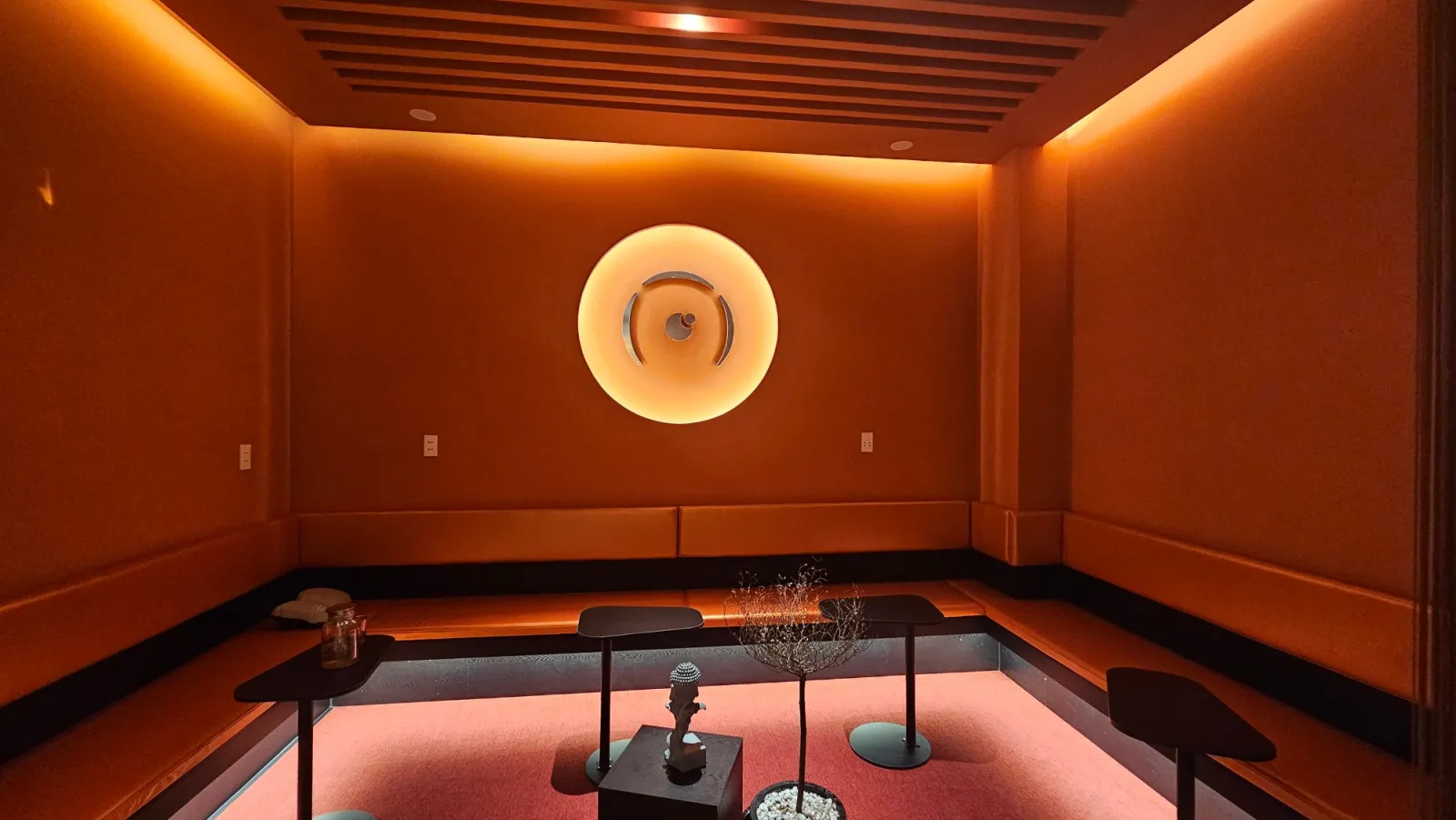
The three layers tend to arrive in order: the body lets go first, the nervous system follows, and the meditative state usually comes last, if at all. That is why we recommend 90 minutes for a first session rather than 60. Avoid caffeine for a few hours beforehand, eat lightly, and do not shave or wax on the day, since salt stings fresh cuts. Use the earplugs, shower before you enter, and try a few minutes with your arms overhead and a few by your sides to find the most comfortable position. Do not chase a particular experience; trying hard to relax is one of the few things that gets in the way. Afterwards, sit in the lounge for 10 to 15 minutes with water or tea before heading back into traffic. Most people find the effects deepen over several sessions: a common rhythm is 2–3 floats a month for 2–3 months, then 1–2 a month. For the full picture of reported benefits, see the benefits of floatation therapy.
Note: This page is for general information. Float therapy supports wellbeing but does not replace diagnosis or treatment by a doctor. If you have a medical condition, ask your doctor before floating.
Try it at Ōmni Space. Float Vietnam’s float rooms are at 16C Quoc Huong, Thao Dien, Ho Chi Minh City (Saigon), open daily 9:00–21:00. Book a float or read the float therapy FAQ.
Frequently asked questions
What is float tank therapy?
Float tank therapy, or floatation-REST, means lying on shallow, skin-temperature water saturated with Epsom salt in a dark, quiet room. You float effortlessly while light, sound, touch and gravity are reduced at once.
What are the three benefits of a float session?
Floating offers weightless rest for muscles and joints, a shift of the nervous system towards rest, and easy access to a calm, meditative state. The calming effect on stress and anxiety has the strongest research support.
Does floating help athletes recover?
Small studies report lower perceived pain or soreness and better mood after floating (Morgan et al. 2013; Driller and Argus 2016). They did not find improvements in strength, so floating is best seen as a recovery aid.
Do I need meditation experience to float?
No. Floating removes the need to hold a posture and reduces outside distractions, so beginners often settle more easily than in seated meditation. A 90-minute first session gives the mind time to slow down.