Updated: 12 October 2026 · Compiled by Float Vietnam
Key takeaways
- “Nootropic” was coined by Corneliu Giurgea in 1972, with five strict criteria. By his own definition, most “smart drugs” on the market, including caffeine and Adderall, do not qualify.
- No substance clearly raises intelligence in healthy people. Caffeine improves alertness; prescription stimulants give small, task-specific gains and can even make thinking worse. Some “brain” products contain unapproved drugs, and some are addictive.
- The best-proven cognitive enhancer is sleep. Float therapy is not a smart drug: its evidence is for stress, anxiety and deep rest.
Health note: This article is for general information only and is not medical advice. We do not give doses, combinations or places to buy any substance. If you (or your child) take medication or supplements, or struggle with focus, memory or sleep, talk to a doctor. Don’t stop or change any medication on your own.
Quick answer: Nootropics (“smart drugs”, “brain boosters”) is an umbrella name for substances people take hoping to think better: longer focus, faster memory, more alertness. The word began as a strict scientific definition but is now mostly a marketing term. In healthy people, any effects are small and depend on the task, while the risks (insomnia, racing heart, dependence, products spiked with drugs) are real.
Exam season, coffee and the “brain booster” box
Every May and June, many Vietnamese families repeat a familiar ritual: strong coffee for late-night study, energy drinks in the school bag, and a few boxes of “brain tonic” bought on the strength of an ad. Elsewhere, students and tech workers dream of a pill like NZT-48 from the film Limitless.
The question is simple: is there a pill that makes us smarter? This article follows the word “nootropic” from its origin through its history, the research and the rules in Vietnam, to separate science from marketing. For the wider “optimise yourself” picture, read biohacking in Saigon.

What does nootropic mean? Giurgea’s original definition
Corneliu E. Giurgea (1923–1995) was a Romanian psychologist and chemist who worked for the drug company UCB in Belgium. In 1964 his team synthesised piracetam. In 1972, in a French paper, he coined “nootrope” (nootropic) for a new class of drugs, with five criteria. A nootropic should:
- improve learning and memory;
- make learned behaviour more resistant to things that disrupt it (such as electroconvulsive shock or lack of oxygen);
- protect the brain from physical or chemical injury;
- increase the efficiency of cortical and subcortical control mechanisms;
- lack the usual effects of psychoactive drugs (no sedation, no motor stimulation), with few side effects and very low toxicity.
The last criterion is the key. By Giurgea’s own definition, stimulants such as caffeine, modafinil and amphetamine are not nootropics, because they stimulate and have side effects. Sedatives such as phenibut, or tianeptine (which acts on opioid receptors), fail even more clearly. Today “nootropic” on a label just means “anything taken to think better”. It is a marketing word, not a medical category.
A short history of “smart drugs”
From Soviet labs to the Olympics
From the 1960s to the 1980s, alongside the racetam family in the West, the USSR developed its own drugs: phenibut (1960s), a GABA-like tranquilliser, and bromantane (1980s, Zakusov Institute, Moscow). At the 1996 Olympics, Russian athletes tested positive for bromantane, and it was added to the anti-doping list in 1997.
1990s California: smart drugs and smart bars
In the late 1980s and early 1990s, a “smart drugs” craze took off in California, with books such as Mind Food & Smart Pills (Ross Pelton, 1989) and Smart Drugs & Nutrients (Ward Dean and John Morgenthaler, 1990) and the cyberculture magazine Mondo 2000. Around 1992, “smart bars” at San Francisco raves served “smart drinks” of amino acids, caffeine and herbs instead of alcohol.
Limitless, Silicon Valley and Bulletproof
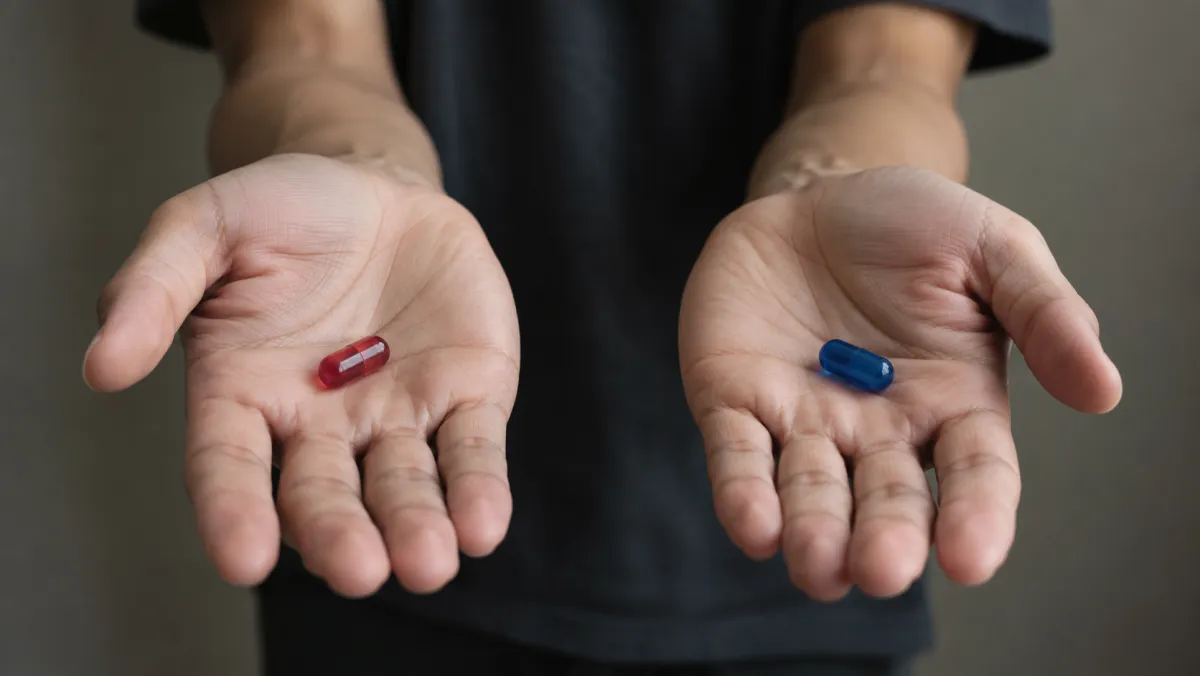
Limitless (directed by Neil Burger, starring Bradley Cooper) opened on 18 March 2011 with its fictional pill NZT-48, grossing over US$161 million on a US$27 million budget. It popularised the idea of a “real-life Limitless pill”, a phrase later used widely to market modafinil. In the 2010s, Silicon Valley “bodyhacking” and Reddit’s r/Nootropics, with hundreds of thousands of members, turned self-experimentation into a kind of “crowd-sourced experiment” (Gizmodo, 2015), though anecdotes are no substitute for controlled trials. Dave Asprey, who started the Bulletproof brand in 2009, has said publicly that he has used modafinil long term; that is his own account.
Alpha Brain and the lawsuit
Onnit (founded by Aubrey Marcus) sells Alpha Brain, promoted heavily on The Joe Rogan Experience. In April 2024, a class action (Lotz v. Onnit Labs, federal court in New York) alleged that its memory and focus claims rested on a company-funded study in which the product mostly did not beat placebo. Rogan was not a defendant. In 2025 the parties agreed to dismiss the case, with no finding of wrongdoing. The lesson is not about one brand but about a general warning sign: evidence that comes only from the seller.
What does the evidence say?
Coffee and tea: the original nootropic
Caffeine reliably improves alertness, attention and reaction time, especially when you are tired (McLellan et al., 2016). L-theanine, an amino acid in tea, combined with caffeine has moderate effects on alertness for about two hours, with most of the effect coming from the caffeine (Camfield et al., 2014, 11 trials). The downside: taken late, it ruins sleep and can cause jitters and palpitations.
Prescription stimulants used off-label
Modafinil (for narcolepsy), methylphenidate (Ritalin, Concerta) and amphetamine (Adderall) are medicines, but many students take them to “study better”. A 2001 survey of 10,904 US college students found 6.9% had used stimulants without a prescription, up to 25% at some colleges, and use was higher among students with lower grades (McCabe et al., 2005). The Global Drug Survey in 2015 and 2017 found this use rising in all 15 countries studied (Maier et al., 2018).
Do they work? For modafinil in healthy, rested people, a review of 24 studies found mixed results on simple tests and more consistent gains on complex ones, though a few studies saw worse creative thinking (Battleday & Brem, 2015). For methylphenidate and amphetamine, a meta-analysis of 48 studies (1,409 people) found only small gains in inhibitory control and short-term memory, probably inflated by publication bias (Ilieva, Hook & Farah, 2015). A 2023 Science Advances study found that on a complex problem all three drugs made people work harder but worse: more time and steps, lower-quality solutions, with some above-average performers dropping below average (Bowman et al., 2023). The risks include insomnia, appetite loss, raised heart rate and blood pressure, anxiety, misuse and counterfeit pills bought online.
Scientists still debate the ethics: in 2007 Sahakian and Morein-Zamir wrote about the “professor’s little helper” in Nature; in 2008 Greely and colleagues argued that healthy adults might use them responsibly. That is a debate, not a verdict.
Racetams, noopept and Eastern-bloc drugs
Despite being “the first nootropic”, piracetam has essentially no good trials in healthy people. In the UK it is a prescription medicine for a rare movement disorder (cortical myoclonus); in the US it has never been allowed as a supplement. Noopept was developed in Russia and has very few human trials, mostly small and unblinded.
Herbs, mushrooms and fish oil
- Bacopa monnieri: 9 trials (518 people, at least 12 weeks) showed slightly faster attention; larger trials are needed (Kongkeaw et al., 2014).
- Lion’s mane: a small trial in adults aged 50–80 with mild cognitive impairment saw better scores while taking it, which fell back after stopping (Mori et al., 2009); a pilot in healthy young adults was mostly null (Docherty et al., 2023).
- Huperzine A: from a club moss, it works like Alzheimer’s drugs; the main dose tested in 210 people with Alzheimer’s did not improve cognition (Rafii et al., 2011). No evidence in healthy people.
- Ginkgo biloba: the GEM trial followed 3,069 adults aged 75+ for about six years; ginkgo did not prevent dementia or Alzheimer’s (DeKosky et al., 2008).
- Omega-3/DHA: a Cochrane review found no cognitive benefit in healthy older adults over 6–40 months (Sydenham et al., 2012). Eating fish is still sensible nutrition.
- Creatine: may help memory slightly, mainly in older adults, with almost no effect in young people (Prokopidis et al., 2023).
Nicotine and psychedelic microdosing
Nicotine has real but small effects on attention and short-term memory (Heishman et al., 2010), which helps explain why tobacco dependence is so hard to break. Psychedelic microdosing: a self-blinding study of 191 people found the microdose and placebo groups improved equally (Szigeti et al., 2021). In Vietnam, psilocybin and LSD are Schedule IB under Decree 28/2026/ND-CP, meaning prohibited. See what are psychedelics.
Evidence at a glance
| Substance / habit | Evidence (healthy people) | Notes |
|---|---|---|
| Enough, regular sleep | Strong | Sleep loss clearly harms attention and memory (Lim & Dinges 2010) |
| Caffeine | Strong | Short-term alertness and attention; easily disrupts sleep |
| Caffeine + L-theanine | Promising | Most of the effect comes from caffeine |
| Brief daily meditation | Promising | Better attention and working memory (Basso 2019) |
| Bacopa monnieri | Promising | Small, slow effect |
| Creatine | Early | Mainly in older adults |
| Modafinil | Early | Prescription drug; mixed results |
| Methylphenidate, amphetamine | Early | Prescription drugs; small effects, thinking quality may drop; misuse risk |
| Lion’s mane, huperzine A | Early | Small trials, mostly in patients |
| Nicotine | Harmful | Small effects but addictive |
| Piracetam, racetams, noopept | No good evidence | Almost no good trials in healthy people |
| Ginkgo biloba | No good evidence | GEM trial negative |
| Omega-3 (healthy older adults) | No good evidence | Cochrane 2012 negative |
| Psychedelic microdosing | No good evidence | No better than placebo; illegal in Vietnam |
| Phenibut | Harmful | Dependence, severe withdrawal |
| Tianeptine | Harmful | Opioid-like; poisoning, overdose |
| Float therapy | Strong (stress, anxiety) | Not a cognitive enhancer |
The dark side: phenibut, tianeptine and spiked supplements
Phenibut is a Soviet-era tranquilliser that fails the nootropic test because it sedates. From 2009 to 2019, US poison centres received 1,320 calls about it, about one in eight serious, with 3 deaths (Graves et al., 2020). Withdrawal resembles alcohol or benzodiazepine withdrawal: anxiety, agitation, even psychosis.
Tianeptine is an antidepressant in some countries but acts on opioid receptors. Poison-centre calls kept rising (El Zahran et al., 2018); according to the FDA, from 4 cases in 2013 to about 350 in 2024, while sellers claimed it “can improve brain function”. US media call it “gas station heroin”.
Worse is what the label does not say. In 2019, Cohen and colleagues bought 10 “cognitive” supplements in the US and found five unapproved drugs; one product contained four, with amounts per serving up to four times a pharmaceutical dose (Cohen et al., 2021). All 10 contained noopept. Buyers cannot know what they are taking.
In Vietnam, there are online shops retailing imported “nootropic” compounds, including some that are not licensed as medicines.
Students, exam season and the brain-tonic market in Vietnam
In June 2026, the Saigon newspaper SGGP reported on a 12th-grade student in Ho Chi Minh City who took several “brain” supplements together for about two weeks before the national graduation exam. The student developed insomnia, palpitations, headache and nausea and needed emergency care; doctors linked it to products containing stimulants. The experts quoted, including Dr Le Trung Nhan (Cho Ray Hospital) and Dr Vo Hong Minh Cong (Nhan Dan Gia Dinh Hospital), stressed that there is no evidence these products make healthy students smarter; what helps is about 8 hours of sleep, short naps, regular meals and exercise.
The story repeats in the press every year: coffee and energy drinks for all-nighters, DHA milks and ginkgo “brain circulation” pills for children with promises of “higher IQ”. Memory drugs are meant for people with a medical condition, not healthy people. There is no reliable data yet on how many Vietnamese students use stimulants or nootropics to study.

If your child really struggles to focus, or has ongoing anxiety or insomnia, that is a reason to see a doctor or psychologist, not to buy another box of brain tonic. If exam pressure becomes overwhelming, the Ngay Mai mental health line is 096 306 1414; in an emergency, call 115.
What does Vietnamese law say?
- Methylphenidate (the active ingredient in Ritalin and Concerta) is a controlled psychotropic substance in Annex II of Circular 18/2026/TT-BYT (in force 16 July 2026): prescription only, under special control. In 2025 the Drug Administration of Vietnam had to issue guidance to secure supply for ADHD patients.
- Modafinil is a prescription medicine, to be used only as directed by a doctor.
- Health supplements (“thực phẩm chức năng”, legally “health protection foods”) under Decree 15/2018/ND-CP: ad content must be registered, must not make the product look like medicine, must carry the line “This food is not a medicine and does not replace medicines for treating disease”, and may not use images, names or letters of doctors, pharmacists or medical staff.
- The amended Advertising Law No. 75/2025/QH15 (in force 1 January 2026): influencers (KOLs, KOCs) must check the advertiser’s documents, must not promote products they have not used or understood, must disclose ads and are liable for false advertising.
- You can check whether a product has been registered at congkhaiyte.moh.gov.vn.

Red flags in “brain booster” marketing
- Promises of “higher IQ”, “genius focus” or a “Limitless pill”: no substance does this.
- The word “nootropic” used as if it were a medical category; it is marketing.
- Drug ingredients sold as supplements (racetams, noopept, phenibut, tianeptine): unknown amounts, no oversight.
- “Focus” products that are really sedatives or opioid-like substances.
- Prescription stimulants without a prescription, bought online: counterfeits, heart effects, insomnia, misuse.
- Combining several products: untested interactions, for example ginkgo with blood thinners, or substances with antidepressants.
- Evidence only from the seller’s own study, animal data or a catchy mechanism (“raises BDNF”).
- Doctors’ faces, “experts recommend” and patient thank-you letters in supplement ads: illegal under Decree 15/2018.
- No “This food is not a medicine…” line and no registration number.
- Using supplements instead of seeing a doctor for real problems with attention, memory, mood or sleep.
For ways to shift your state of mind without any substance, see drug-free mind hacking: 11 ways.
The best-proven brain booster: sleep
No study ranks “the best” cognitive enhancer, but the evidence for sleep is far stronger than for any pill. A meta-analysis of 70 articles (147 tests) found that even one night of sleep loss clearly harms attention, along with working memory and processing speed (Lim & Dinges, 2010). After 17–19 hours awake, performance on some tests was equal to or worse than at a 0.05% blood alcohol level (Williamson & Feyer, 2000). Chronic short sleep wears alertness down step by step, while people tend not to notice how impaired they are (Van Dongen et al., 2003). And during sleep the brain consolidates what you learned (Diekelmann & Born, 2010).
That is the irony of exam-season smart drugs: stimulants taken to study late erode the very sleep that locks learning in. Non-drug enhancers such as sleep, exercise, meditation and nutrition can rival drug enhancers (Dresler et al., 2013). Meditation has its own evidence: 13 minutes a day for 8 weeks improved attention, working memory and recognition memory (Basso et al., 2019). If you sleep badly, read float therapy and insomnia.

Where does float therapy fit?
Float therapy is not a nootropic, and certainly not a smart drug. You lie in warm Epsom salt water, in darkness and quiet, and your brain receives far less input. It works by subtracting, not by adding a substance.
Its evidence lies elsewhere: easing stress and anxiety and bringing deep relaxation, rated Strong thanks to consistent trials (Kjellgren et al., 2014; Feinstein et al., 2018). In Feinstein’s study at the Laureate Institute, a single session reduced anxiety and improved mood in 50 people with anxiety-related disorders. Adherence in trials reached 85–89% (Garland et al., 2024), and in a user survey (a preprint, not yet peer reviewed) 92% felt relaxed and 77% less stressed (Hilpert & Ster, 2025). For sleep, the evidence is still Early.
So why does floating come up in conversations about a clear mind? Because a less stressed, properly rested mind is the foundation for sleep and focus. We do not claim floating improves memory or intelligence, and it does not replace sleep or medical care. If you take medication, including SSRI antidepressants, ask your doctor first; see also is float therapy safe?. Learn about services at Ōmni Space.

The full research is summarised in our float therapy white paper.
Key sources
- Battleday & Brem 2015, European Neuropsychopharmacology
- Ilieva, Hook & Farah 2015, Journal of Cognitive Neuroscience
- Bowman et al. 2023, Science Advances
- McCabe et al. 2005, Addiction
- Camfield et al. 2014, Nutrition Reviews
- Kongkeaw et al. 2014, Journal of Ethnopharmacology
- DeKosky et al. 2008, JAMA (GEM trial)
- Sydenham et al. 2012, Cochrane Database of Systematic Reviews
- Cohen et al. 2021, Neurology: Clinical Practice
- Graves et al. 2020, MMWR
- El Zahran et al. 2018, MMWR
- Lim & Dinges 2010, Psychological Bulletin
- Feinstein et al. 2018, PLoS One
Note: This page is for general information. Float therapy supports wellbeing but does not replace diagnosis or treatment by a doctor. If you have a medical condition, ask your doctor before floating.
Try it at Ōmni Space. Float Vietnam’s float rooms are at 16C Quoc Huong, Thao Dien, Ho Chi Minh City (Saigon), open daily 9:00–21:00. Book a float or read the float therapy FAQ.
Frequently asked questions
Do nootropics really make you smarter?
No substance clearly raises intelligence in healthy people. Caffeine improves alertness; some prescription drugs give small, task-specific gains and can even lower the quality of complex problem-solving.
Are “brain tonics” safe for students before exams?
Most have no evidence of helping healthy students, and combining several can cause insomnia and palpitations, even a hospital visit, as in a case reported by SGGP in 2026. Sleep and regular meals work better; see a doctor for real attention problems.
Are modafinil, Ritalin and Adderall “smart drugs”?
They are prescription medicines for narcolepsy or ADHD. In healthy people the effects are small and task-dependent, with risks of insomnia, heart effects and misuse. In Vietnam methylphenidate is a controlled psychotropic, prescription only.
Do ginkgo and DHA help memory?
The large GEM trial (3,069 people, about six years) found ginkgo did not prevent dementia, and omega-3 supplements did not improve cognition in healthy older adults. Eating fish is still sensible nutrition.
Is float therapy a nootropic?
No. Floating is not a brain supplement. Research shows it reduces stress and anxiety and brings deep rest, which supports sleep and focus. It works by subtracting input, not adding a substance.