Updated: 11 October 2026 · Compiled by Float Vietnam
Key takeaways
- The Laureate Institute for Brain Research (Tulsa, USA) has run the most systematic modern series of float therapy studies, led by Justin Feinstein and Sahib Khalsa since 2018.
- Key findings: a large drop in anxiety right after one float, lower blood pressure and breathing rate while floating, changes in connectivity between some brain networks, and mood effects lasting about 48 hours.
- Most studies are small and measure short-term effects. Long-term benefits are not established, and floating does not replace psychological or medical treatment.
Quick answer: The Laureate Institute has published about seven float therapy studies between 2018 and 2024. A single 60-minute float was followed by a very large drop in anxiety in 50 people with anxiety disorders (Feinstein et al., 2018). Later studies found lower blood pressure during floating, stronger awareness of heartbeat and breathing, and mood effects lasting about two days. These are short-term results that need larger trials.
Who is the Laureate Institute, and why study floating?
The Laureate Institute for Brain Research (LIBR) in Tulsa, Oklahoma, is a research institute focused on mental health and the brain. It runs a float clinic dedicated to research, led by clinical psychologist Justin Feinstein and psychiatrist Sahib Khalsa. Their question was specific: when almost all outside signals are turned down, how do the body and brain of an anxious person respond? Anxiety is often tied to misreading bodily sensations, such as a racing heart or shortness of breath, which makes floating an interesting model to observe. The institute’s research pool is an open, round pool about 2.4 m across and about 28 cm deep, holding about 815 kg of Epsom salt at a specific gravity of about 1.25–1.26. That is close to the float rooms at Ōmni Space in Saigon (about 25 cm of water and about 500 kg of salt per pool).
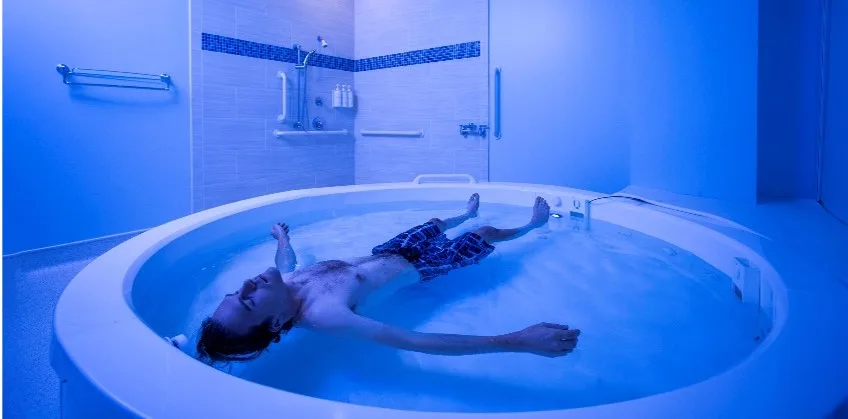
Because the same team used the same pool and standard measures, the Laureate studies compare with each other more easily than the scattered float studies that came before. This article summarises each main study in order. Full citations (DOI, PMID) are in our float therapy whitepaper.
Study 1 (2018): one float and anxiety in 50 people
The first study, published in PLOS ONE in 2018 (Feinstein et al.), asked 50 people with post-traumatic stress, generalised anxiety, panic, agoraphobia or social anxiety, most with depression as well, to float for one hour. Result: momentary anxiety dropped very sharply, with an estimated effect size (Cohen’s d) above 2, whatever the diagnosis. Participants also reported less stress, muscle tension, pain and negative emotion, and more serenity and wellbeing. On safety, 48 of 50 people completed the full hour and there were no serious adverse events; the most common side effects were mild itching and a dry mouth. The key caveat: this was an open-label study with no control group, so it shows what happened after floating but cannot prove floating caused it.
For how floating fits alongside care for anxiety, read float therapy for anxiety.
Study 2 (2018): the interoception “paradox”
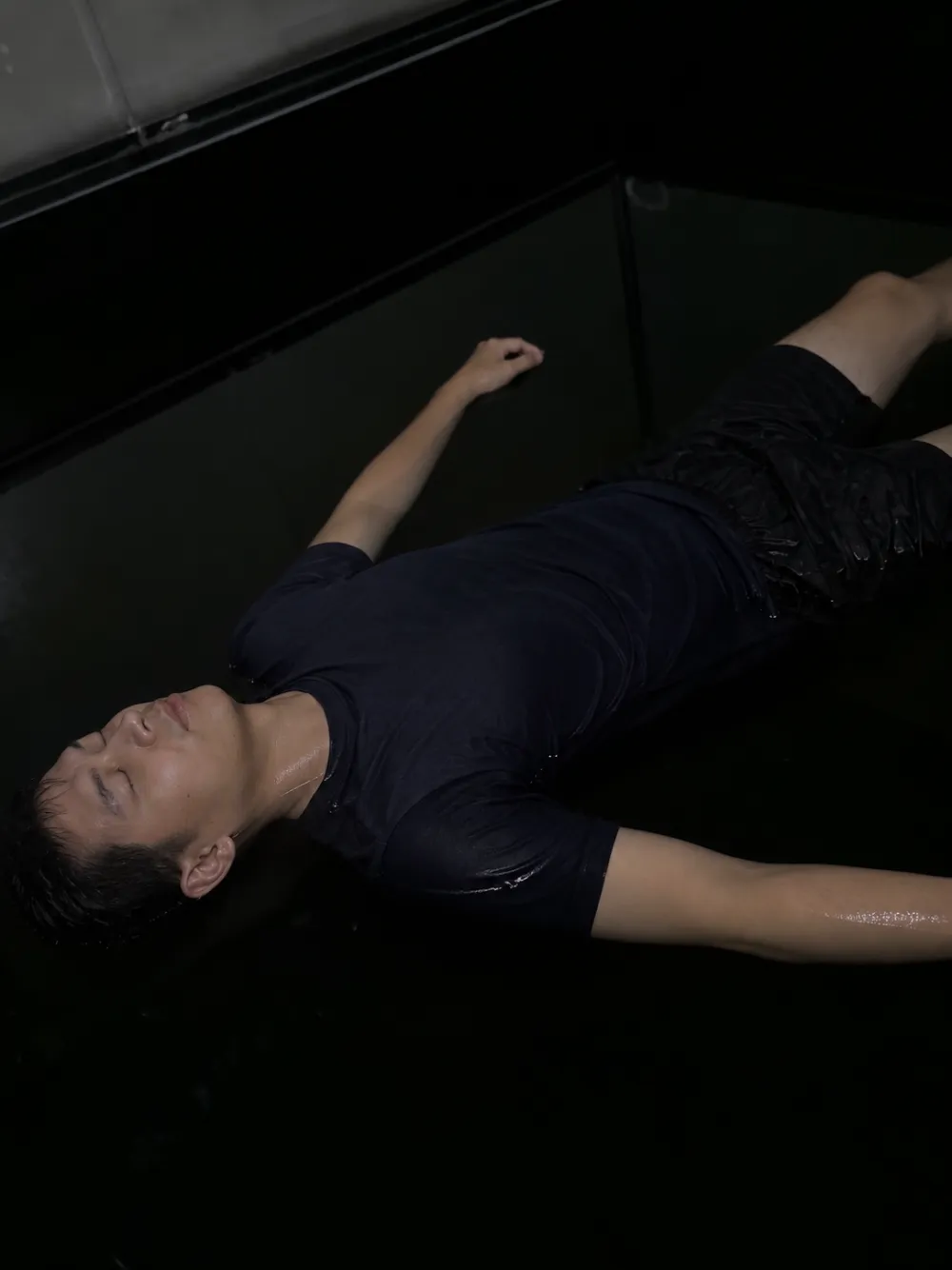
Also in 2018, the Feinstein team published a randomised crossover study in 31 people high in anxiety sensitivity, meaning people who fear the very bodily sensations that come with anxiety. Each person did both a 90-minute float and an active control condition, in random order. While floating, they became more aware of their heartbeat and breathing, yet at the same time felt less anxious, less tense and more relaxed and serene. The authors called this a “paradox”: people who fear bodily sensations grew calmer when paying attention to them, in a safe and quiet setting. Diastolic blood pressure during floating fell by more than 12 mm Hg on average.
To understand the concept, see interoception in our float therapy glossary.
Brain and heart: what changes during a float?
In 2021, the first fMRI study of floating (Al Zoubi et al., Human Brain Mapping) randomised 56 healthy adults to three 90-minute floats or three sessions resting in a zero-gravity chair. After floating, functional connectivity fell within and between the default mode network (DMN) and the somatomotor cortex, extending to the posterior insula, regions involved in our sense of self and body. Interestingly, the chair group, itself a mild form of REST, showed a similar trend, so the change may not be due to the water alone. In 2022, Flux and colleagues compared floating with watching a relaxing nature film in 37 anxious and 20 non-anxious people. While floating, systolic and diastolic blood pressure and breathing rate fell, and normalised high-frequency heart rate variability, a marker of parasympathetic activity, rose.
For more on the default mode network, read what is the default mode network. These are immediate effects, measured during or right after a float.
Repeated floats: is it safe, and how long do effects last?
Two reports from 2023 and 2024 (Garland et al.) followed 75 people with anxiety and depression through six float sessions, compared with a control group. Floating proved feasible and safe: there were no serious adverse events, and positive experiences were reported more often and more strongly than negative ones. Experience-sampling data, in which participants logged their feelings several times a day, showed that reductions in anxiety and depression and increases in serenity lasted about 48 hours after each session, and baseline anxiety was lower at later sessions. This is one of the few data points on how long the effects last, and it partly explains why float centres suggest floating regularly rather than once in a while.

Float Vietnam suggests beginners float 2–3 times a month for the first 2–3 months; this is practical experience, not a dose derived from research. See how often should you float.
Anorexia nervosa: hospital-based studies
The Laureate Institute has also tested floating in anorexia nervosa, a condition linked with high anxiety, body-image disturbance and altered interoception. An open-label trial in 2020 (Khalsa et al.) in 21 partially weight-restored outpatients found no orthostatic hypotension or adverse events, and saw immediate reductions in anxiety and body dissatisfaction. A 2023 randomised trial (Choquette et al.) in 68 female inpatients found immediate reductions in body dissatisfaction and anxiety in the group that floated alongside usual care, while the usual-care-only group did not change. These were medically supervised hospital studies; the results do not mean people with the condition should float in place of treatment.
Summary, and how to read the results
The table below brings together the main Laureate studies. What they share: short-term effects are fairly consistent (less anxiety, a relaxed body, lower blood pressure while floating), but samples are small and follow-up is short. None of the institute’s studies has shown long-term benefit or compared floating with standard psychological therapy. That is why Float Vietnam presents floating as a form of deep rest that complements professional care, not as a medical treatment.
| Study | Design, participants | Main result |
|---|---|---|
| Feinstein et al. 2018, PLOS ONE | Open-label, one 60-min float, n = 50 anxious adults | Very large drop in momentary anxiety (d > 2); safe |
| Feinstein et al. 2018, Biol Psychiatry CNNI | Randomised crossover, 90 min, n = 31 | More heart and breath awareness; less anxiety and tension; diastolic BP down > 12 mm Hg |
| Khalsa et al. 2020 | Open-label, n = 21 with anorexia nervosa | Safe; immediate drop in anxiety and body dissatisfaction |
| Al Zoubi et al. 2021 | Randomised, float vs chair, n = 56 | Lower DMN–somatomotor connectivity after floating |
| Flux et al. 2022 | Crossover vs relaxing film, n = 57 | Lower blood pressure and breathing rate; higher high-frequency HRV |
| Choquette et al. 2023 | Randomised, n = 68 inpatients | Immediate drop in anxiety (d = 1.52) and body dissatisfaction |
| Garland et al. 2023, 2024 | Randomised, 6 sessions, n = 75 | Safe and feasible; mood effects last about 48 hours |

For the wider picture, including the Swedish studies on stress and pain, read our overview of float therapy research.
Note: This page is for general information. Float therapy supports wellbeing but does not replace diagnosis or treatment by a doctor. If you have a medical condition, ask your doctor before floating.
Try it at Ōmni Space. Float Vietnam’s float rooms are at 16C Quoc Huong, Thao Dien, Ho Chi Minh City (Saigon), open daily 9:00–21:00. Book a float or read the float therapy FAQ.
Frequently asked questions
Do the Laureate studies show floating can replace anxiety treatment?
No. They found a large drop in anxiety right after floating, lasting about two days, but most studies are small and short-term. Floating should complement professional care, not replace it.
How long was a float session in the research?
Between 60 and 90 minutes, depending on the study. The 2018 study of 50 people used 60-minute floats; the crossover and fMRI studies used 90-minute floats.
Is floating safe for people with anxiety?
In the Laureate studies there were no serious adverse events; the most common side effects were mild itching and a dry mouth. If you are being treated for a mental health condition, ask your doctor before floating.