Updated: 12 October 2026 · Compiled by Float Vietnam
Key takeaways
- Esketamine (a nasal spray sold as Spravato) is approved in the US and EU for depression that has not responded to at least two antidepressants, but only in certified clinics with at least two hours of monitoring. IV ketamine for depression is still off-label.
- Psilocybin has positive Phase 3 results, but the effects are far more modest than early small studies suggested, and as of 12 October 2026 it is not approved as a depression medicine in the US or Europe.
- In Vietnam, ketamine is in List III and psilocybin in List IB (Decree 28/2026/NĐ-CP). Street ketamine has nothing to do with this research. Floating is a complementary form of self-care, never a replacement for treatment.
Important: This article summarises the state of research for general information. It is not medical advice and is not a guide to using any substance. Ketamine and psilocybin are controlled substances in Vietnam. Never start, stop, reduce or switch medication on your own; talk to a psychiatrist. If you are thinking of harming yourself, call 115 now or the Ngày Mai line on 096 306 1414.
Quick answer: Research on ketamine for depression, and on psilocybin, is one of the most closely watched new directions in psychiatry, aimed mainly at treatment-resistant depression: depression that has not lifted after at least two adequate courses of antidepressants. Esketamine, a form of ketamine, was approved in the US (2019) and EU (2019) for use only in supervised clinics. Psilocybin showed moderate positive results in two Phase 3 trials but is not approved; its developer hopes for a US launch in 2027 at the earliest, if the FDA approves it. Both carry real risks, both are tightly controlled in Vietnam, and neither is something to try on your own.
What is treatment-resistant depression, and why look for new options?
Treatment-resistant depression (TRD) is not a separate disease but a working convention: depression that has not responded to at least two antidepressant treatments of adequate dose and duration in the current episode. US and European regulators and the big trials all use this “at least two” threshold. If you are in this group, it is not your fault, and it does not mean there is no hope.
The landmark STAR*D study (Rush et al., 2006) followed 4,041 outpatients through up to four treatment steps and reported a cumulative remission rate of 67%. A 2023 reanalysis of the patient-level data (Pigott et al.) argued that, using the scale and rules in the original protocol, the figure was about 35%, roughly half. Whichever number you trust, many people need several tries to find what works, and some never get full relief from standard tablets. That gap is why ketamine and psilocybin are being studied.
For background on standard antidepressants, read what SSRIs are; for an overview of psychedelics, their history and the law, see what are psychedelics. This article focuses on depression only.
Ketamine: from anaesthetic to a big idea in depression

In 1962 chemist Calvin Stevens, consulting for Parke-Davis in Detroit, synthesised compound CI-581 while looking for a shorter-acting, less hallucinogenic alternative to PCP. In the mid-1960s Edward Domino and Guenter Corssen at the University of Michigan first gave it to humans; Domino’s wife is credited with the phrase “dissociative anaesthesia”. Ketamine became a standard field and battlefield anaesthetic, including in the Vietnam War, because it keeps breathing and blood pressure relatively stable (Li & Vlisides, 2016).
The turning point came in 2000. Berman, John Krystal and colleagues at Yale found that depression scores fell markedly within 72 hours of a ketamine infusion but not after saline. Only 7 people completed the study, so it was a signal rather than proof. In 2006 Zarate’s team at the US National Institute of Mental Health tested 18 people with TRD: improvement began within 110 minutes, and the next day 71% had responded and 29% were in remission. But only 35% kept the response for a week.
An old, cheap anaesthetic could lift depression in hours rather than weeks. That speed made ketamine the biggest new idea in antidepressant research in decades. The catch was visible from day one: the effect often faded within days.
How might ketamine work? (mostly from animal studies)
Unlike SSRIs, which act on serotonin, ketamine blocks NMDA receptors for glutamate, the brain’s main excitatory messenger. The leading hypothesis: ketamine takes the brake off inhibitory neurons, causing a brief glutamate surge that activates AMPA receptors and switches on BDNF (brain-derived neurotrophic factor) and the mTOR pathway. The result is rapid regrowth of synapses in the prefrontal cortex that chronic stress had thinned out.
Be clear about the evidence: the key mechanism studies were done in animals. Ronald Duman’s lab’s influential paper (Li et al., 2010, Science) used rats; Autry et al. (2011, Nature) used mice. In 2016 Zanos et al. found that a ketamine metabolite had antidepressant-like effects in mice without blocking NMDA, a result that is still debated. Scientists have several strong leads, but the full mechanism in humans is not settled.
Esketamine (Spravato): where it is approved, and its limits
Esketamine is one mirror-image half of the ketamine molecule, given as a nasal spray. Key milestones:
- US, 5 March 2019: FDA approval for adults with TRD, together with an oral antidepressant. It can only be given in certified settings under a Risk Evaluation and Mitigation Strategy (REMS): patients self-administer under direct observation, are monitored for at least two hours, cannot take it home, and must not drive until the next day after a restful sleep. Boxed warnings cover sedation, dissociation, abuse and misuse, and suicidal thoughts and behaviours.
- US, August 2020: a new indication for depressive symptoms in adults with acute suicidal ideation or behaviour. The label states that effectiveness in preventing suicide or reducing suicidal ideation has not been demonstrated, and that it does not replace hospitalisation when needed.
- US, 21 January 2025: approval as monotherapy, without an oral antidepressant, for adults who have not responded to at least two antidepressants. REMS rules still apply.
- European Union, 18 December 2019: authorisation for TRD in adults, together with an SSRI or SNRI.
- UK: NICE did not recommend esketamine for TRD on the NHS (appraisal TA854), citing no comparison with treatments actually used, uncertain benefit after stopping, and unreliable cost-effectiveness estimates.
The UK example shows that “approved” is not the same as “recommended and paid for”. The pivotal trial, TRANSFORM-2 (Popova et al., 2019), randomised 227 people to esketamine plus a new oral antidepressant or placebo spray plus a new oral antidepressant; the difference was 4.0 points on the MADRS depression scale at day 28. Common side effects were dissociation, nausea, vertigo, taste changes and dizziness, mostly resolving within about 1.5 hours. In SUSTAIN-1 (Daly et al., 2019), among people who had stabilised, relapse was 26.7% with continued esketamine versus 45.3% after switching to placebo. Critics noted at approval that only one short-term trial was clearly positive.
Head to head: esketamine, ketamine and ECT
Between 2021 and 2023, three large trials compared ketamine or esketamine with established treatments. ECT (electroconvulsive therapy) induces a controlled seizure under general anaesthesia; it sounds frightening but has decades of data and remains the strongest option for severe depression.
- ESCAPE-TRD (Reif et al., 2023, NEJM): 676 people in Europe, esketamine versus quetiapine (an antipsychotic used as add-on), both groups on an SSRI or SNRI. Remission at week 8 was 27.1% versus 17.6%. Patients were not blinded (only raters were), Janssen funded it, and counting drop-outs as failures favoured esketamine because quetiapine causes more side-effect drop-outs.
- ELEKT-D (Anand et al., 2023, NEJM): 403 people at five US sites, IV ketamine versus ECT. Response was 55.4% versus 41.2%, and ketamine was judged non-inferior. ECT caused more memory problems, ketamine more dissociation. Limitations: a self-rated outcome, mostly outpatients, an ECT response lower than usual, and only three weeks of acute treatment.
- KetECT, Sweden (Ekstrand et al., 2022): an important counterweight. In 186 inpatients, remission was 63% with ECT and 46% with ketamine. Persistent amnesia was more common with ECT. Relapse at 12 months was high in both groups: 70% after ketamine, 63% after ECT.
Put together: for people who are severely ill and in hospital, ECT still looks the most powerful. For outpatients without psychosis, ketamine came out about as good, with fewer memory side effects. Relapse after either is common, so both need a long-term plan with a doctor.
The US ketamine-clinic boom and FDA warnings
Generic (racemic) ketamine has never been FDA-approved for any psychiatric condition. IV infusions for depression are off-label, usually paid out of pocket, and fall outside the Spravato REMS. There is no official count of clinics; independent estimates range from several hundred to more than a thousand. During the pandemic some telehealth companies began shipping compounded oral or lozenge ketamine to people’s homes.
The FDA has issued warnings twice, on 16 February 2022 and 10 October 2023: compounded ketamine is not approved for psychiatric disorders, home use lacks monitoring, and the risks include abuse and misuse, psychiatric events, raised blood pressure, respiratory depression and bladder and urinary problems. The agency added that lacking a REMS “does not mean” compounded products are safer. The US experience shows what happens when promising science runs ahead of regulation.
The death of actor Matthew Perry (“Friends”) is a sad reminder. He died on 28 October 2023. The Los Angeles County Medical Examiner’s report (released 15 December 2023) found the cause was the acute effects of ketamine, with drowning, coronary artery disease and the effects of buprenorphine as contributing factors; the death was ruled an accident. He had been receiving ketamine infusion therapy for depression and anxiety, but the examiner said the level in his blood could not have come from his last supervised infusion about 1.5 weeks earlier. Five people were charged; on 3 December 2025 a doctor was sentenced to 30 months in prison. The lesson is the gap between supervised treatment and unsupervised supply.
What the psilocybin trials actually show
Psilocybin is the active compound in “magic mushrooms”. Its mechanism and history are covered in our psychedelics overview; here we look only at depression trials.
- Johns Hopkins (Davis et al., 2021): 27 people with depression (not TRD) were randomised and 24 completed; two psilocybin sessions with about 11 hours of supportive psychotherapy versus an 8-week waiting list. GRID-HAMD scores fell from about 23 to about 8, a very large effect. But the study was tiny, had no placebo, was not blinded, and used highly selected volunteers. At 12 months (Gukasyan et al., 2022), 75% were still responders and 58% in remission, with no control group by then.
- Imperial College London (Carhart-Harris et al., 2021, NEJM): 59 people, psilocybin versus the SSRI escitalopram for six weeks. No significant difference on the primary outcome. Secondary outcomes favoured psilocybin but were not corrected for multiple comparisons. The study is often misreported as “psilocybin beats antidepressants”.
- COMPASS Phase 2b (Goodwin et al., 2022, NEJM): 233 people with TRD, a single session at one of three dose levels (the lowest as control). The highest dose beat control by 6.6 MADRS points at week 3; the middle dose did not. Sustained response to week 12 was not significantly different. Suicidal ideation, self-harm and suicidal behaviour were reported, more often in the higher-dose groups.
- Usona Phase 2 (Raison et al., 2023, JAMA): 104 people with depression, a single session of psilocybin versus niacin (a vitamin that causes flushing, used as an “active placebo”). The difference was 12.3 MADRS points at day 43, with no serious adverse events attributed to the drug. But niacin flushing is a weak disguise.
- COMPASS Phase 3: COMP005 (258 people, US) met its primary endpoint with a 3.6-point MADRS difference at week 6 (announced 23 June 2025); its 52-week extension (9 September 2026) was neither randomised nor blinded, and most participants received a further dose. COMP006 (international) met its primary endpoint with a 3.8-point difference (February 2026); 26-week data (7 July 2026) showed 39% of the main arm had at least a 25% MADRS drop at week 6 and, on average, kept the benefit to week 26. All of these are company releases; as of 12 October 2026 no peer-reviewed Phase 3 paper had been found.

The real effect: much smaller than the headlines
The early small studies looked spectacular. The large, controlled Phase 3 trials show differences of about 3.6–3.8 MADRS points at week 6. That is still clinically meaningful for people with TRD, and close to esketamine’s 4.0 points in TRANSFORM-2, but far from what early headlines promised. Effects shrinking as trials get bigger and better controlled is normal in medicine.
Status as of 12 October 2026
- Psilocybin is not approved as a depression medicine in the US or Europe. Australia alone has a narrow authorised-prescriber pathway, open since 1 July 2023.
- At an investor conference on 24 September 2026, the COMPASS CEO said all sections of its US application except the clinical module had been submitted, with completion guided for Q4 2026 and a launch aimed at the first half of 2027, subject to FDA approval and DEA rescheduling.
- Usona’s Phase 3 trial (uAspire) completed enrolment in November 2025 but has not reported results.
- The US Executive Order of 18 April 2026 on psychedelic research does not approve any drug. And none of this changes the law in Vietnam.
Why scientists remain cautious
The drug comes with a whole programme. In trials, psilocybin is given inside a structured process: screening (excluding psychosis, bipolar disorder and high suicide risk), preparation sessions, a dosing day monitored throughout by trained facilitators, and “integration” sessions afterwards. “Set” means mindset and expectations; “setting” means the physical and social environment. Both shape the experience, and probably the outcome. Nobody has yet separated how much benefit comes from the drug, the therapy or expectation. The FDA has issued draft guidance asking sponsors to address exactly these questions. It is also why “trying it at home” is nothing like what was studied.
Blinding is hard. Most participants can tell whether they got the real drug because the effects are obvious. People who expected a lot and know they got the “real” thing may report more improvement; those who know they got placebo may feel let down. A systematic review by Muthukumaraswamy et al. (2021) found psychedelic trials rarely measured expectancy or blinding, and that effect sizes “are likely over-estimated”; Szigeti and Heifets (2024) analysed the same expectancy problem. Ketamine shares it: dissociation is easy to notice, and both ESCAPE-TRD and ELEKT-D were open-label. In 2024 the FDA rejected the MDMA application partly over these concerns.
Durability and risk. A single ketamine treatment often fades within about a week, so maintenance is needed, and long-term safety is still being studied. Controlled long-term psilocybin data are limited. Ketamine’s risks include dissociation, sedation, dizziness, nausea, raised blood pressure and heart rate, misuse and dependence; heavy, frequent recreational use can cause ulcerative cystitis that shrinks and scars the bladder irreversibly (Shahani et al., 2007). Psilocybin can cause challenging experiences (fear, anxiety, confusion), headache, nausea, raised blood pressure, the suicidality signal seen in the 2022 trial, and psychosis or mania in predisposed people.
Not every idea works. Arketamine, the other mirror-image half of ketamine, looked promising in animals, but a small pilot trial in 10 people (Leal et al., 2023) found it no better than placebo. A good idea from the lab is not guaranteed to work in people.
Comparison table: options for hard-to-treat depression
This table is for orientation only, not for choosing your own treatment. Evidence ratings use the Float Vietnam scale: Strong / Promising / Early / No good evidence / Harmful.
| Ketamine / esketamine | Psilocybin (with support) | SSRIs and standard antidepressants | ECT | TMS (transcranial magnetic stimulation) | |
|---|---|---|---|---|---|
| Speed of effect | Hours to 1 day | Days (within a week of a session) | 2–6 weeks | 1–3 weeks (a course of sessions) | 2–6 weeks with standard protocols |
| Evidence | Promising (esketamine: several Phase 3 trials and ESCAPE-TRD; IV ketamine: ELEKT-D, KetECT) | Promising (Phase 2 plus two company-reported Phase 3 trials; blinding concerns) | Strong (hundreds of trials; moderate average effect) | Strong (decades of data; most effective for severe depression) | Strong for rTMS and iTBS (e.g. THREE-D) |
| Regulatory status 2026 | Esketamine approved in US and EU; not recommended by NICE. IV ketamine not FDA-approved for depression | Not approved (US application in progress; narrow pathway in Australia) | Approved, first-line | Standard care | FDA-cleared |
| Main risks | Dissociation, sedation, raised blood pressure, misuse, dependence, bladder damage (heavy use), relapse | Challenging experiences, raised blood pressure, suicidality signal, psychosis in predisposed people | Nausea, sexual side effects, emotional blunting, symptoms on stopping | Anaesthesia risks, memory loss (usually temporary, sometimes persistent) | Headache, scalp discomfort, rare seizure |
| Setting | Certified clinic, at least 2 hours’ monitoring (esketamine) | Specialist trial setting, full day with facilitators | At home, on prescription | Hospital, general anaesthesia | Outpatient clinic, daily for several weeks |

Non-drug options still do most of the work
The newest options are not the only ones. A network meta-analysis by Cuijpers et al. (2020) found that psychotherapy (such as CBT, behavioural activation and interpersonal therapy) and medication work about equally well for acute depression, that combining them beats either alone, and that psychotherapy effects tend to last longer after treatment ends.

Movement helps too. Noetel et al. (2024, BMJ) pooled 218 trials with 14,170 people and found that walking or jogging, yoga and strength training had moderate effects compared with active controls, with more intense exercise working better, although the certainty of evidence was low. For TMS, the THREE-D trial (Blumberger et al., 2018, 414 people) found a 3-minute iTBS session non-inferior to a 37-minute rTMS session. For many people, a good therapist, regular movement and a well-chosen medication remain the strongest foundation.

If you are curious about changing your state of mind without substances, read drug-free mind hacking: 11 ways and biohacking in Saigon.
Where float therapy fits
Float therapy is an active research field with clear effects on stress and mood in early studies. For relaxation and short-term relief of stress and anxiety we rate the evidence as Strong, because trials point in the same direction (Kjellgren 2014, Feinstein 2018). In 2018 Feinstein’s team at the Laureate Institute gave 50 people with anxiety or stress-related disorders (46 of whom also had depression) a single 60-minute float: anxiety dropped sharply and mood improved straight afterwards, though there was no control group. A 2024 randomised trial (Garland et al.) in 75 anxious or depressed outpatients found six floats safe and well tolerated, with adherence of about 85–89%; it was designed to test safety and feasibility, not to prove an effect on depression.
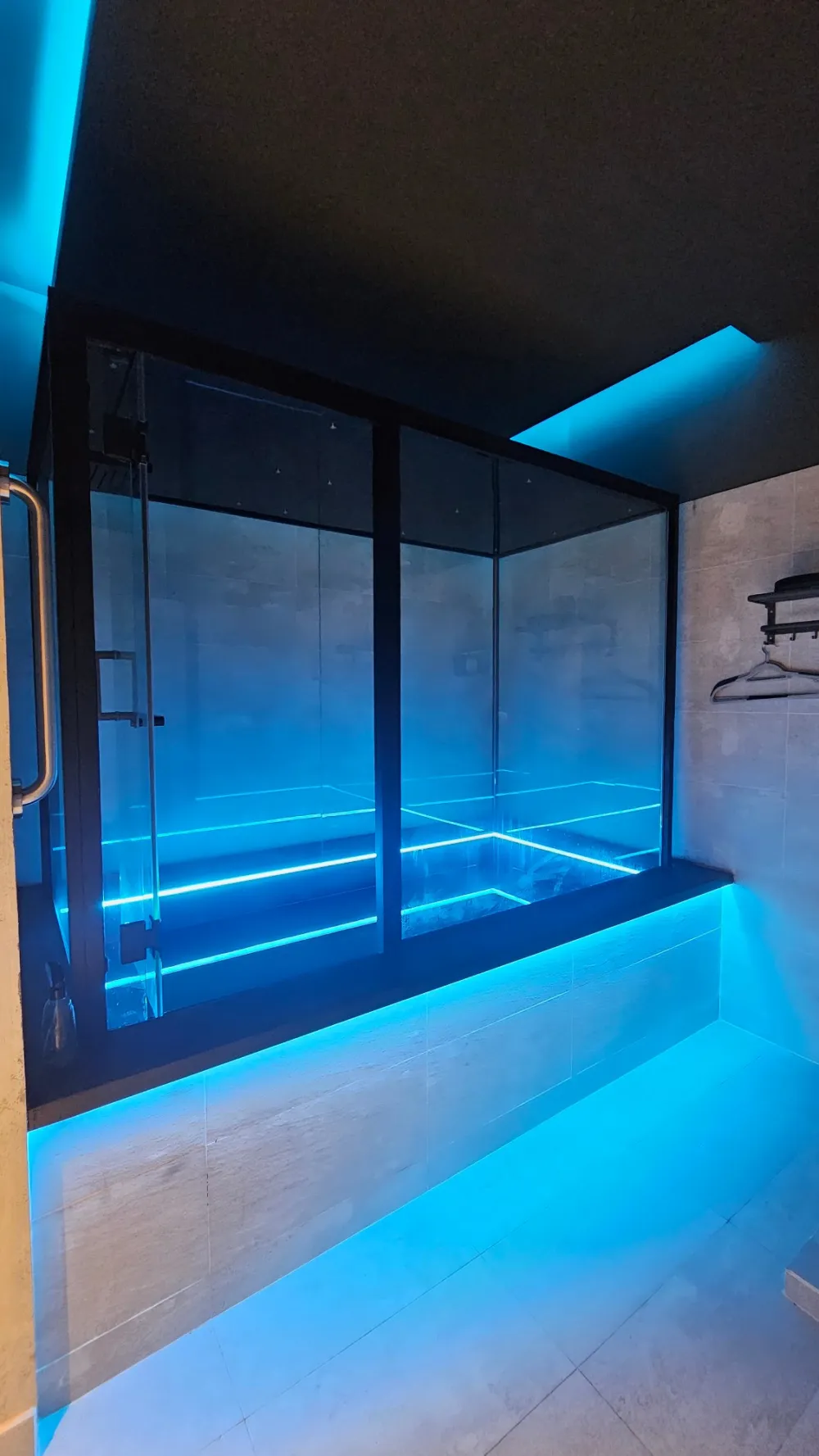
So think of floating as part of looking after yourself, alongside proper medical care. It is not a treatment for depression, not a substitute for medication or therapy, and certainly not a “natural ketamine”. People with severe depression or thoughts of self-harm should see a doctor first. If you take medication, tell your doctor and our staff. At Ōmni Space, floating under the influence of any drug is not allowed. Read more on the Laureate Institute’s float research, whether float therapy is safe and our float therapy whitepaper.
In Vietnam: the law, esketamine and street ketamine
The law. Under Decree 28/2026/NĐ-CP (in force since 19 January 2026), psilocybin is in List IB: banned, with no medical use. Ketamine is in List III: a controlled medicine for medical use only; trading or possessing it outside medical channels is illegal, and the Criminal Code (Articles 248–252) covers these offences. Full legal detail is in our psychedelics article.
Esketamine. On 10 January 2025, Official Letter 296/VPCP-KGVX conveyed Deputy Prime Minister Lê Thành Long’s instructions on controlling imports of Spravato; the Ministry of Public Security assessed esketamine as a psychotropic substance to be managed like ketamine. The same month the Ministry of Health asked the health sector to control medicines and raw materials containing esketamine to prevent diversion and misuse, stating that esketamine is a psychotropic substance. Whether esketamine can be used for treatment in Vietnam, and where, is a question for a psychiatrist.
Street ketamine (“ke”). Recreational ketamine turns up in karaoke rooms, bars and “bay lắc” party sessions, often mixed with ecstasy, alcohol and “nước vui” (drink-powder sachets). In 2026, doctors at Hanoi Medical University reported a 26-year-old woman with years of ketamine use and long-standing severe urinary symptoms, repeatedly misdiagnosed as a urinary infection; scans showed a shrunken, thick-walled bladder (Lê Ngọc Hà et al., Tạp chí Nghiên cứu Y học). The authors note that Vietnamese reports of ketamine cystitis are not yet systematic, and that young people with persistent urinary symptoms should be asked about ketamine. Other risks include accidents and falls while dissociated, choking and drowning, dangerous mixing with alcohol and stimulants, dependence, memory problems, psychosis-like states and legal trouble.
The key point: street ketamine has unknown contents and strength, is often mixed with other drugs, and is used without medical screening or monitoring. None of the research above applies to it. Self-treating depression with street ketamine is illegal and can make both depression and physical health worse.
Need help?
- Emergency: 115, or go to the nearest emergency department if someone is in immediate danger.
- Ngày Mai hotline: 096 306 1414, free emotional support for people with depression, in Vietnamese and English.
- Hospital psychiatry departments, such as the National Institute of Mental Health (Bạch Mai Hospital), Ho Chi Minh City Psychiatric Hospital or university hospitals.
Never stop or change your medication on your own. If your current treatment is not helping, tell your doctor plainly: there are always other options to discuss together.
Key sources
- Pigott et al. 2023, BMJ Open (STAR*D reanalysis)
- Berman et al. 2000, Biological Psychiatry
- Zarate et al. 2006, Archives of General Psychiatry
- Li et al. 2010, Science (rat study)
- Popova et al. 2019, American Journal of Psychiatry (TRANSFORM-2)
- Reif et al. 2023, NEJM (ESCAPE-TRD)
- Anand et al. 2023, NEJM (ELEKT-D)
- Ekstrand et al. 2022, Int J Neuropsychopharmacol (KetECT)
- Davis et al. 2021, JAMA Psychiatry
- Goodwin et al. 2022, NEJM
- Raison et al. 2023, JAMA
- Muthukumaraswamy et al. 2021, Expert Rev Clin Pharmacol
- Cuijpers et al. 2020, World Psychiatry
- Feinstein et al. 2018, PLoS One
Note: This page is for general information. Float therapy supports wellbeing but does not replace diagnosis or treatment by a doctor. If you have a medical condition, ask your doctor before floating.
Try it at Ōmni Space. Float Vietnam’s float rooms are at 16C Quoc Huong, Thao Dien, Ho Chi Minh City (Saigon), open daily 9:00–21:00. Book a float or read the float therapy FAQ.
Frequently asked questions
Is ketamine a treatment for depression?
Ketamine is an anaesthetic. A related form, esketamine nasal spray, is approved in the US and EU for depression that has not responded to at least two antidepressants, given only in certified clinics with at least two hours of monitoring. IV ketamine for depression is off-label. In Vietnam ketamine is a List III controlled substance for medical use only; possessing or trading it outside medical channels is illegal. Talk to a psychiatrist.
Is psilocybin approved for depression?
No. As of 12 October 2026, two COMPASS Phase 3 trials showed modest positive results and a US application is being filed; approval, if it comes, is expected no earlier than 2027 and only in supervised specialist settings. In Vietnam psilocybin is in List IB: fully banned, with no medical use.
If medical ketamine helps depression, is street “ke” the same?
No. Studies use pure, controlled medicine with screening and monitoring of blood pressure and breathing. Street ketamine has unknown contents, is often mixed with ecstasy, alcohol or “nước vui”, and can cause accidents, dependence and permanent bladder damage, and may make depression worse. It is also illegal.
Why are scientists still cautious when the results sound promising?
Most participants can tell whether they got the real drug, so expectations may inflate results. Large trials show much smaller effects than the early small studies. Ketamine’s effect often fades within days, and long-term psilocybin data are limited. Both carry risks, including suicidal thoughts in some trial participants.
Can floating replace medication or therapy for depression?
No. Floating is an active research field with clear short-term effects on anxiety and mood in early studies. It can be part of looking after yourself alongside medical treatment, never instead of it. If you are severely depressed or thinking of harming yourself, call 115 or the Ngày Mai line, 096 306 1414.