Updated: 10 Oct 2026 · By Float Vietnam
Key takeaways
- No published study shows that a float pod works better than an open float room; the research behind floating used both.
- Pods block light and sound with their own shell and feel cosy to some people. Open rooms offer headroom, easy entry, more air and fewer claustrophobic feelings.
- Whatever the design, check the water density, temperature, filtration, ventilation, darkness, silence and whether you control the light and door.
Quick answer: Neither is better in general. No published study shows that a float pod gives better results than a float room. A pod’s shell blocks light and sound by itself and feels like a cocoon; an open room gives headroom, easy entry and fewer claustrophobic feelings. Choose on water quality, darkness, silence, air and your own comfort.
What is the difference between a float pod and a float room?
A float pod is an enclosed shell, usually moulded fibreglass, with a lid or door that closes over you; the maker of the i-sopod says its 2009 model was the first float tank to be called a “pod”. A float room, in the sense used here, is an open pool with no lid, set inside a private room that is built to be dark, quiet and warm. Between the two sits the walk-in cabin, an enclosure tall enough to stand in. All three can meet the same definition. The North American Float Tank Standard (version 3, 2025) from the Floatation Tank Association describes a float tank as Epsom salt water with a specific gravity of 1.23–1.30, at about 33.3–35.6 °C, in a light- and sound-reduced environment, and lists room, pod and chamber as names for the same thing. So the real difference is how darkness and quiet are achieved, not whether you are floating.
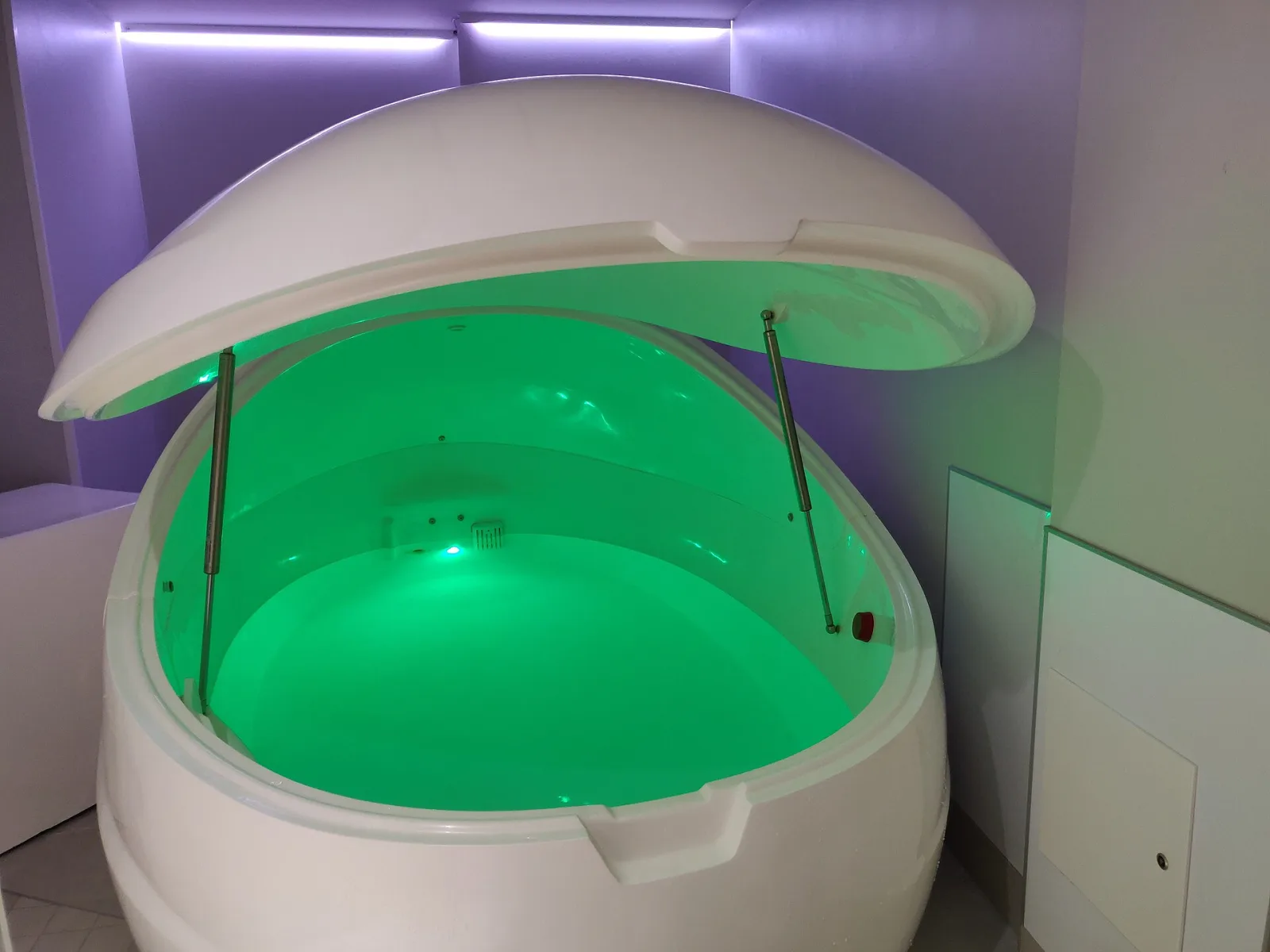
For a full overview of every design, from the classic Samadhi box to tents, see types of float tanks compared.
What are the pros and cons of a pod and a float room?
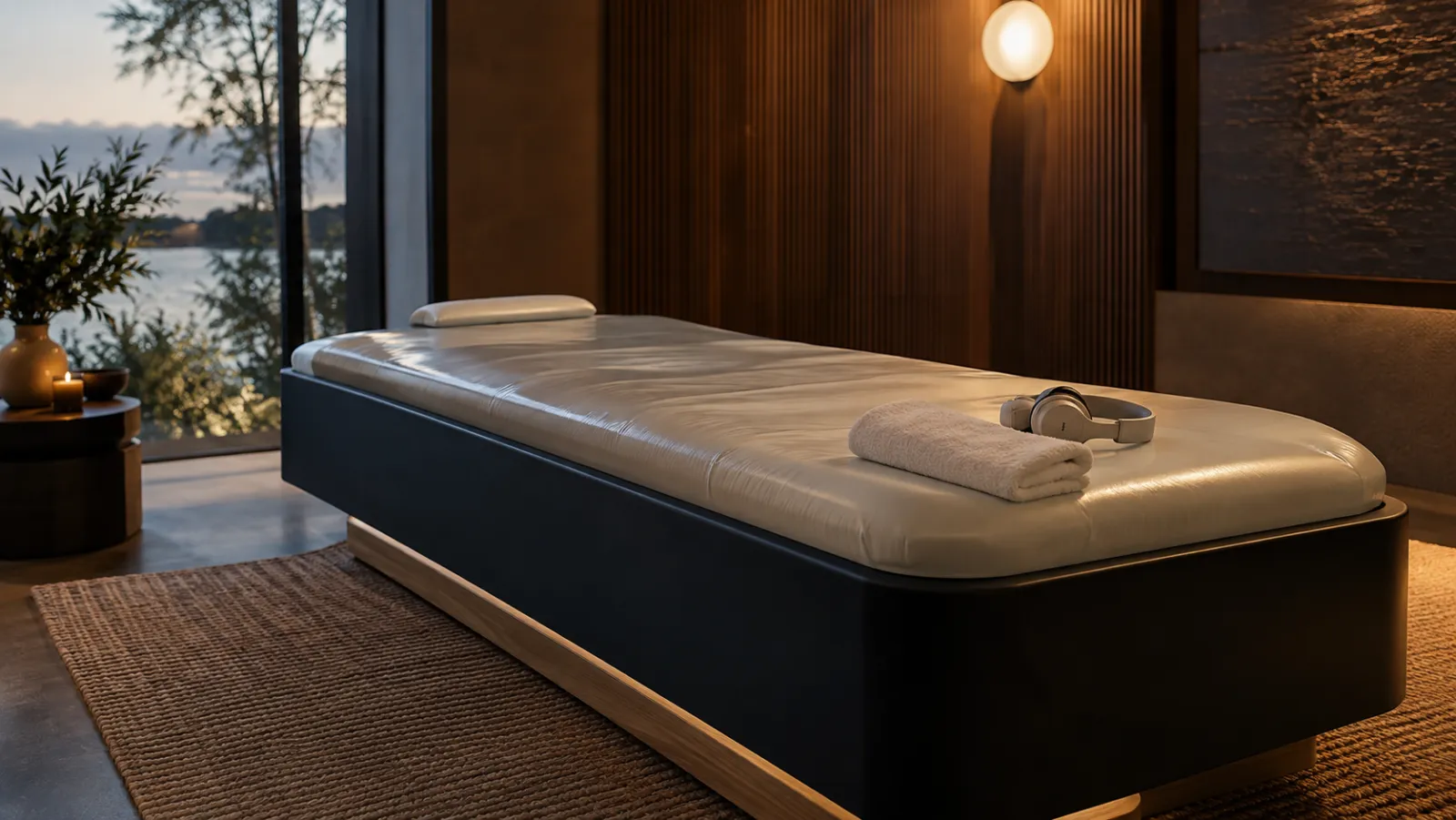
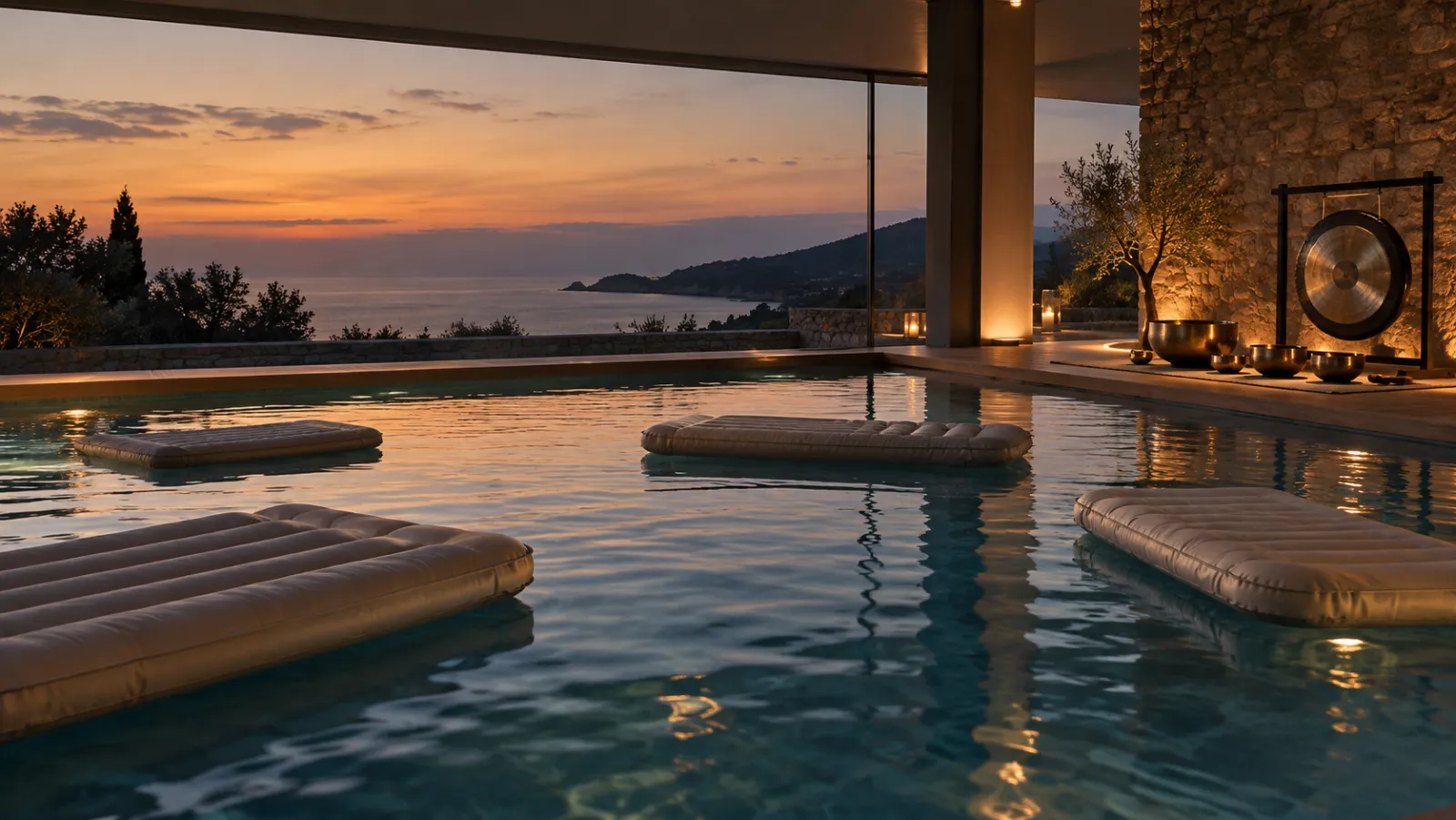
Each design solves the same problem in a different way, and each has genuine strengths. A pod shuts out light and sound with its own shell, so it can work well even in a room that is not perfectly built, and some people love the snug, cocoon-like feeling. The trade-offs are less headroom, a small pocket of air above the water and, for some floaters, the feeling of being closed in. An open float room puts the work into the building instead: the walls, door seals and ventilation have to create darkness and quiet. When that is done well, you get full headroom, easy entry and exit, a much larger volume of air and nothing closing over you. When it is done badly, light or noise can leak in. The table below sums up the differences; rows marked as general observations are not measured comparisons.
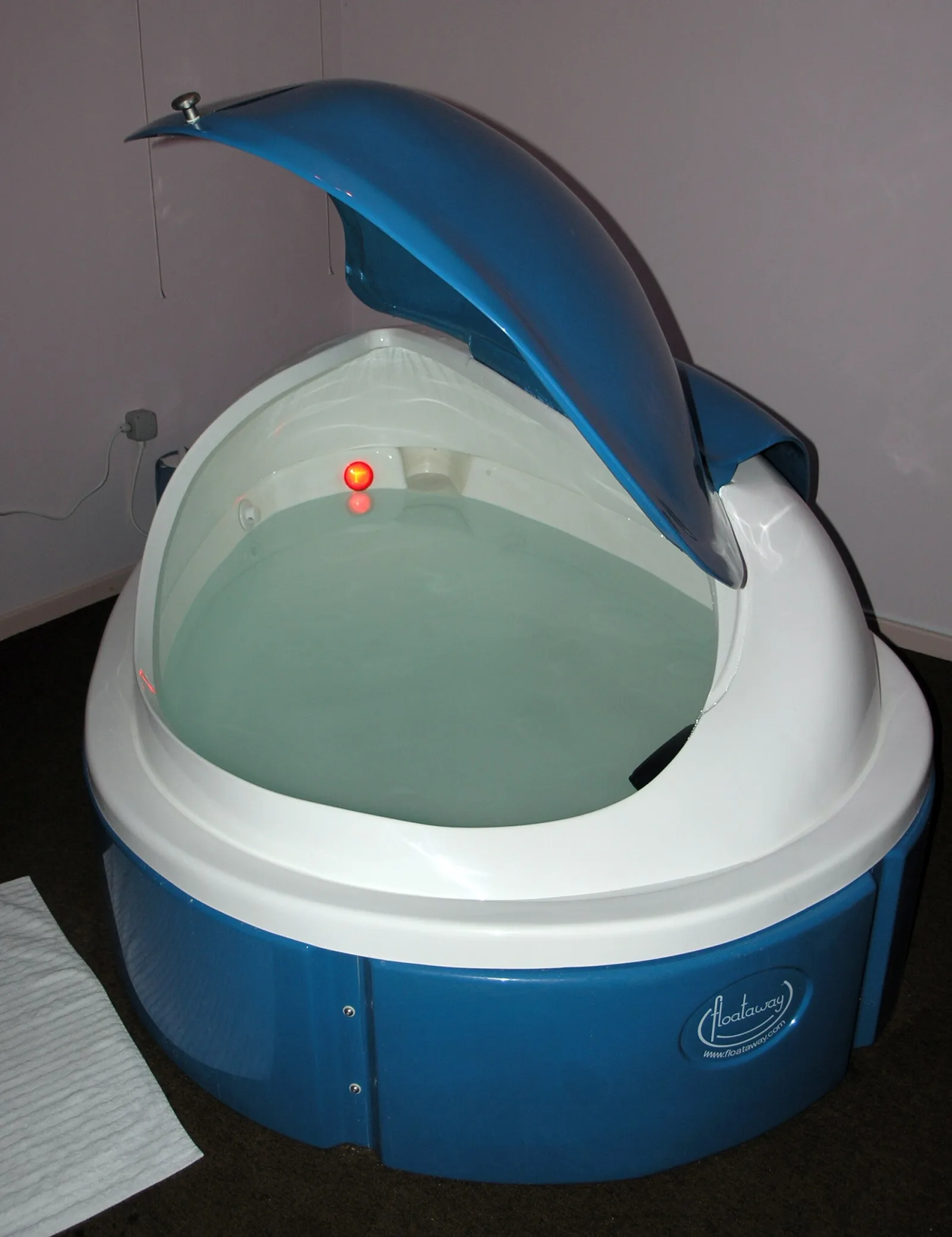
| Factor | Float pod | Open float room |
|---|---|---|
| Light and sound | Blocked by the shell itself | Blocked by the room build: walls, door seals, vibration isolation |
| Headroom | Low; you crouch to get in | Full room height |
| Claustrophobia | The enclosure is the most common trigger; lids can often be left ajar | Nothing closes over you |
| Air | Small air space; ventilation ranges from passive to mechanical | Large air volume; depends on room ventilation |
| Entry and mobility | Step over a rim and duck under the lid | Step in from standing height |
| Couples | Needs an extra-wide model | Possible with a large or square pool |
| Cleaning access | Under-lid surfaces harder to reach (general observation) | Fully open, easy to see and wipe (general observation) |
| Feeling | Cosy, enclosed cocoon | Spacious; the room disappears in the dark |
What does research say about pods vs float rooms?
No study has tested pods against open rooms head to head, so neither can claim better results. The research behind float therapy used both. In the widely cited 2018 study by Feinstein and colleagues at the Laureate Institute for Brain Research (LIBR), anxious participants floated in an open round pool in a soundproof, lightproof room; the team removed the usual enclosure specifically to reduce claustrophobia, and participants reported a large short-term drop in anxiety. In a 2024 trial by Garland and colleagues, participants chose between an open and an enclosed pool, and floating was well tolerated. A 2021 chronic pain trial by Loose and colleagues used a pod, and 13 participants asked to float with the lid open, nearly all by less than 5 cm. Swedish studies at Karlstad University used enclosed tanks. The common factor across all of them is the water and the reduced stimulation, not the shape of the shell.
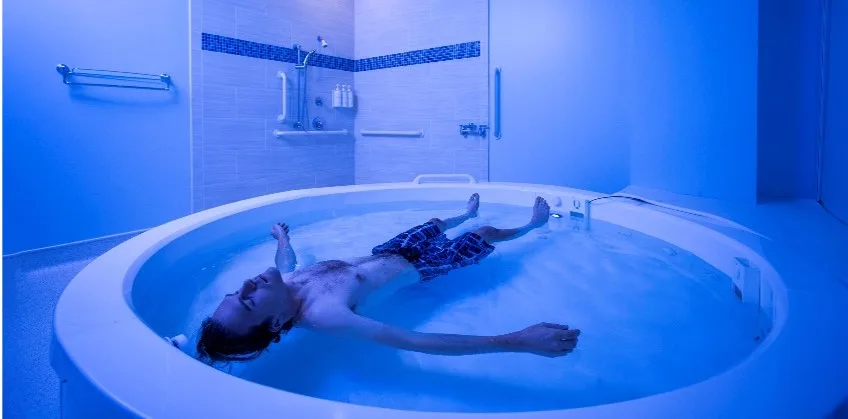
The LIBR authors also argue that enclosed tanks may heighten anxiety in some people and that many fail to ventilate the air near the water. That is their expert view rather than measured data, and float research overall is still limited. Floating can complement, but not replace, professional care for anxiety.
Who might prefer a pod, and who might prefer a float room?
The right choice depends on your body, your history with tight spaces and what helps you relax. People who feel uneasy in small spaces usually do better in an open room, or in a pod with the lid left open. Tall or larger people often appreciate full headroom and a wide pool, and anyone with stiff joints or limited mobility may find it easier to step into an open pool than to duck under a lid. Couples need a pool designed for two, such as a square or round pool, or an extra-wide unit. First-timers are often reassured when nothing closes over them, because they know they can sit up and step out at any moment. On the other hand, some people genuinely love the feeling of being wrapped in a cocoon, and for them a pod may help them let go faster. Both are valid preferences.
- Claustrophobia or anxiety about tight spaces: open float room, or a pod with the lid open.
- Tall or larger bodies: open room or a walk-in design with full headroom.
- Couples: a pool made for two.
- First-timers: whichever feels less intimidating; many choose an open room.
- Cocoon lovers: a pod, if the centre ventilates it well.
If tight spaces worry you, read our guide to float therapy and claustrophobia.
Why did Float Vietnam move from tanks and cabins to open pools?
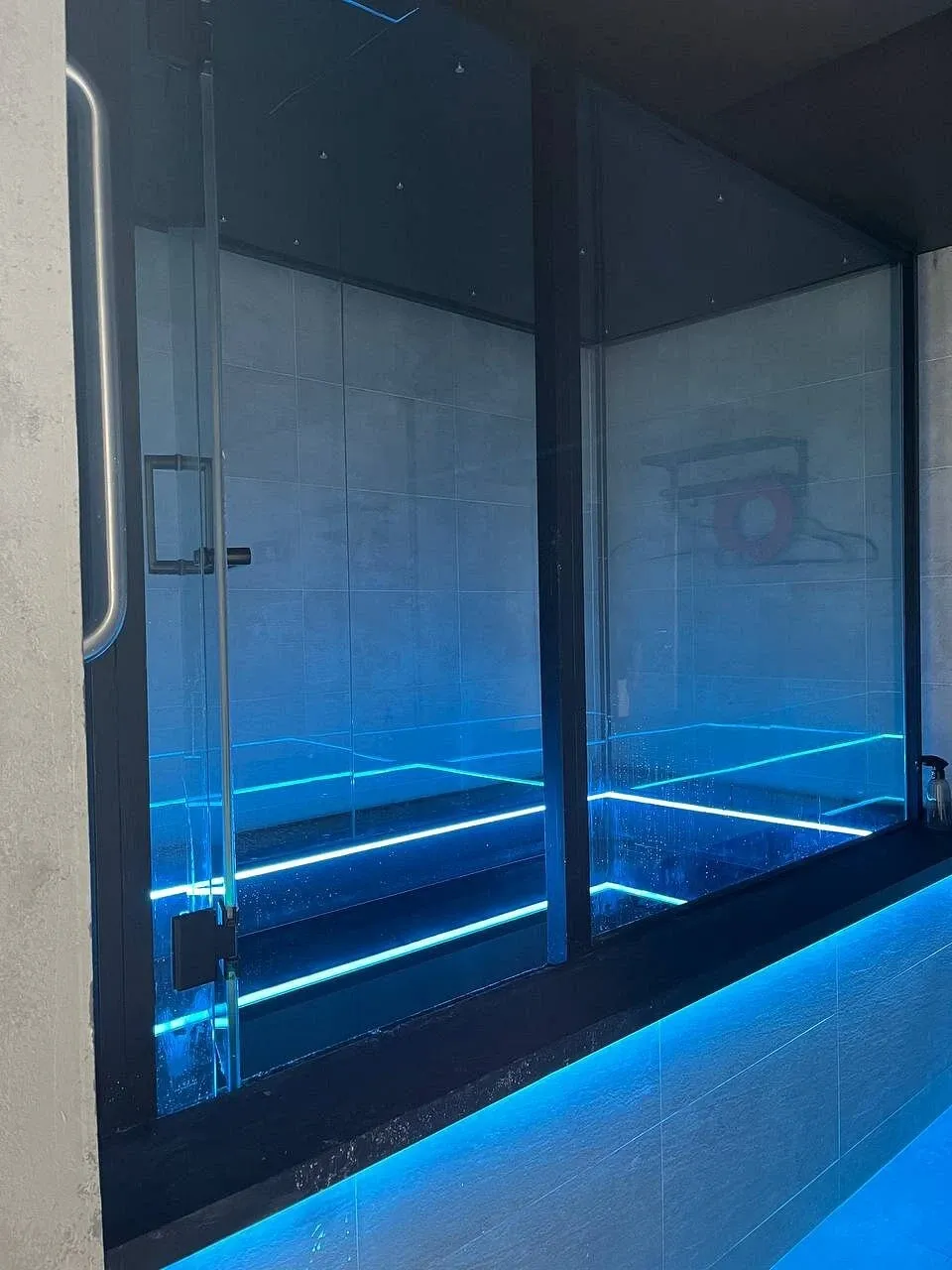
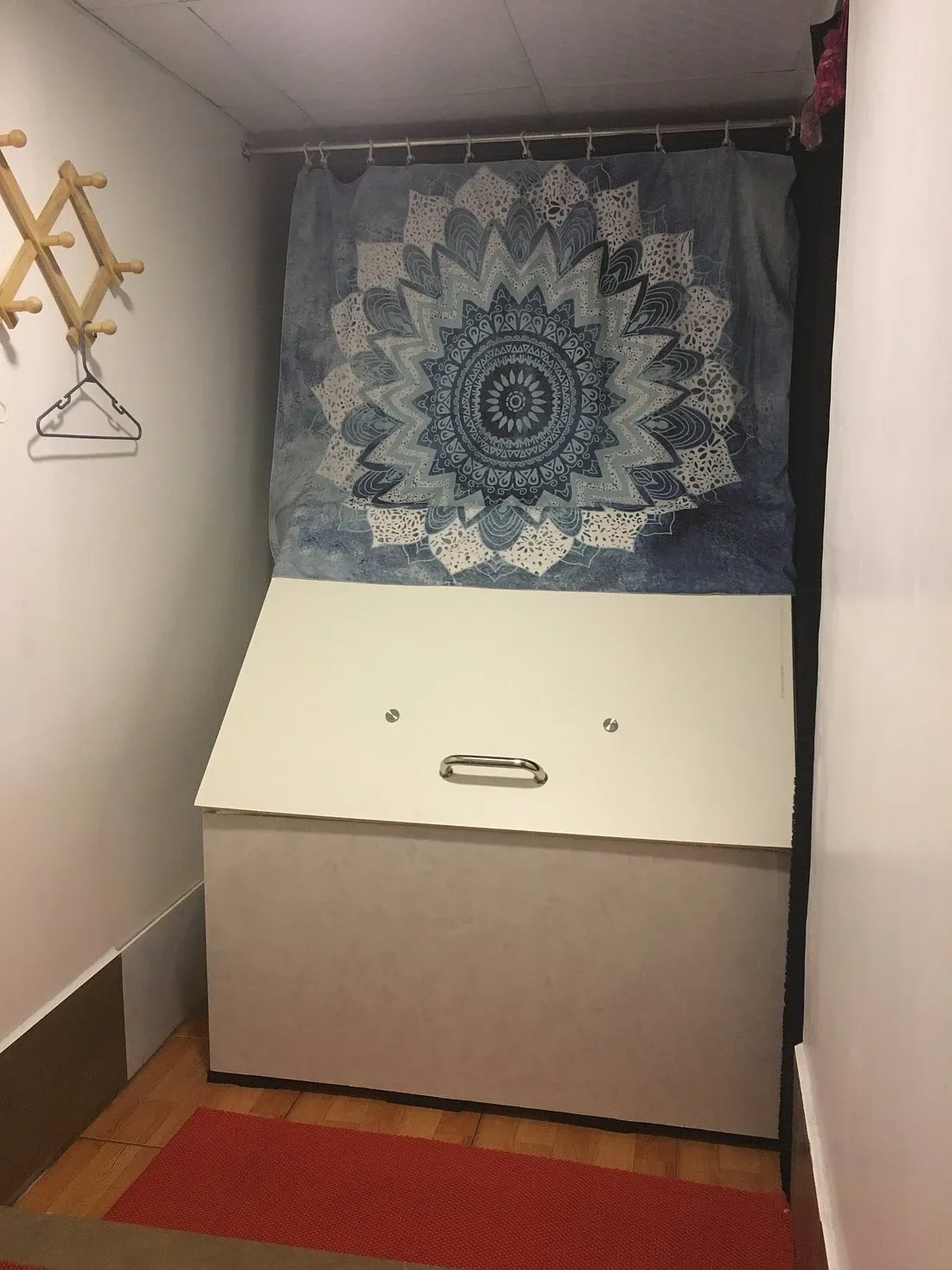
We have floated in all three kinds of enclosure ourselves. When Float Vietnam opened Float Hanoi in 2017, no float tank existed in Vietnam, so we built our own Samadhi-style tanks. For Float Saigon we built an enclosed walk-in float cabin modelled on the Ocean Float Room design. Both worked, but we kept seeing that the enclosure was what made some guests tense, so we moved to glass-enclosed open pools, specifically to reduce claustrophobic feelings. At Ōmni Space in Thảo Điền, each pool sits in a private room behind soundproof glass doors that keep out light completely when closed. The single room has a rectangular 1.2 × 2.4 m pool and the couple room a square pool, each with about 25 cm of water, about 500 kg of Epsom salt and water at about 34–35 °C, with specific gravity measured regularly. A dedicated ventilation system serves the rooms, and guests can adjust the lights.
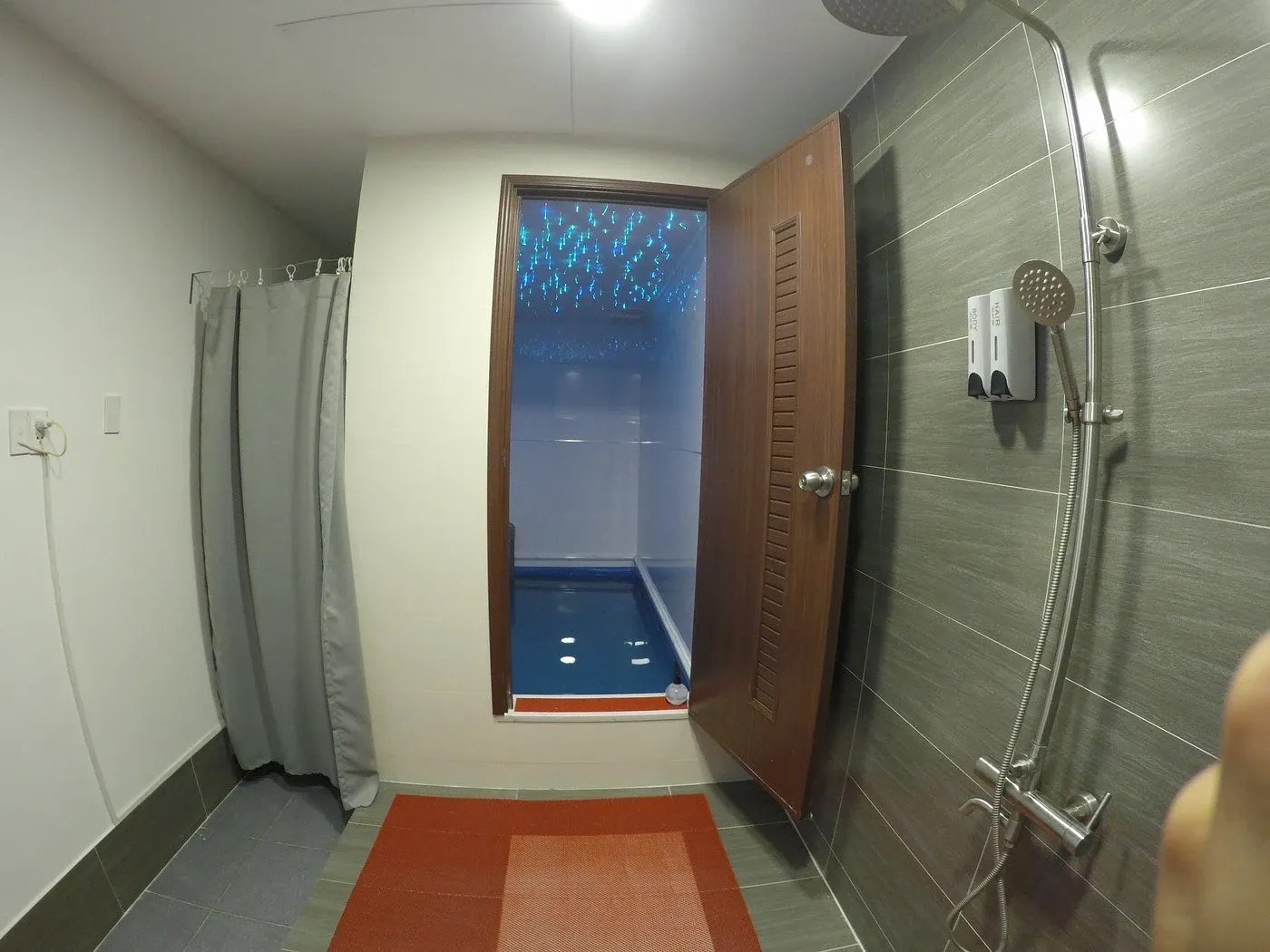
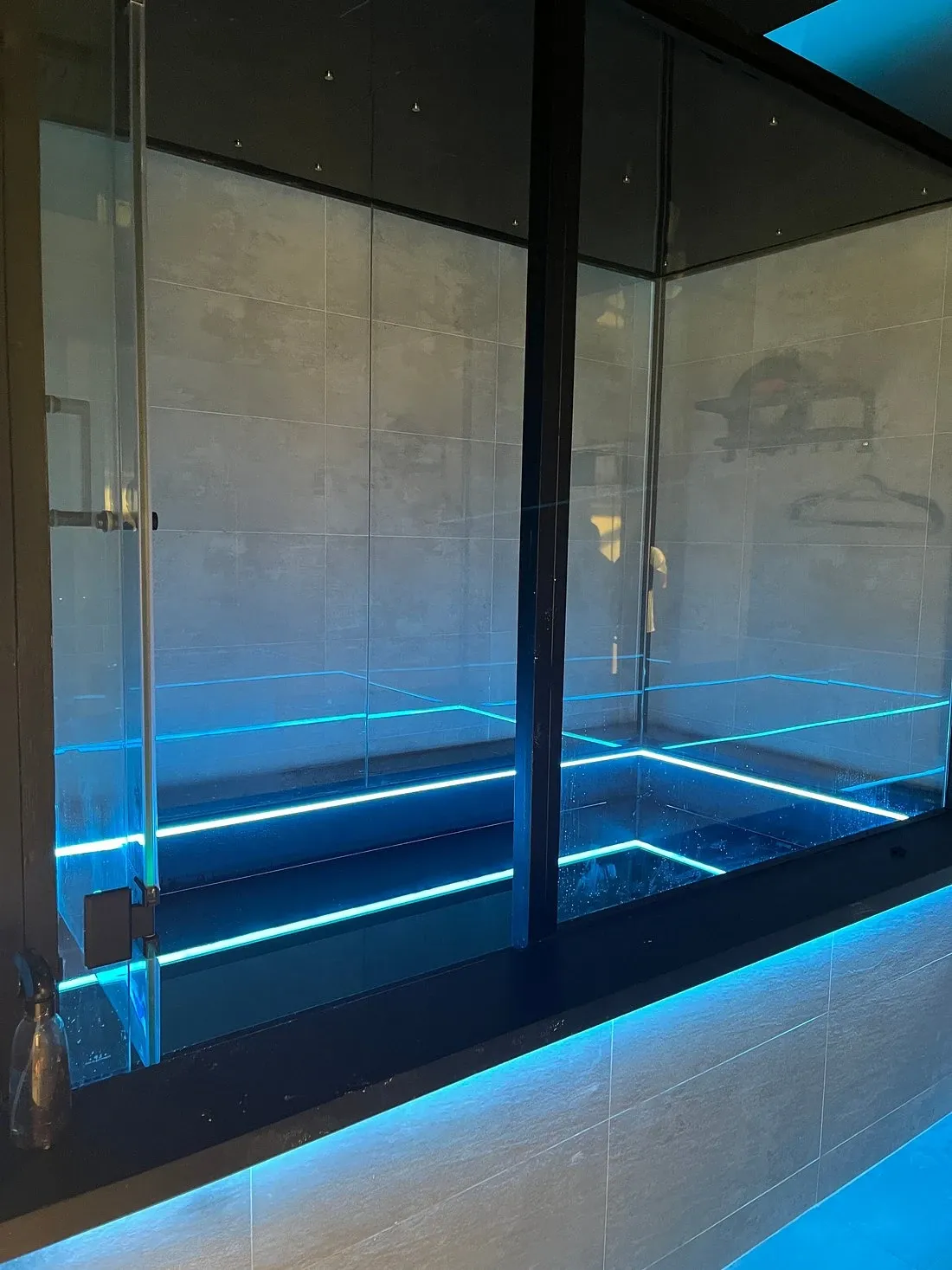
After every float, a 16.8 m³/h filter pump runs for 15 minutes, about 5.6 full turnovers against the FTA minimum of three, and sanitation combines UV, hydrogen peroxide and ozone with a spa enzyme. With the doors closed, the owner’s own sound meter reads near 0 dB, close to the meter’s lower limit; it is an informal reading, not a lab test. Read the full story of Float Vietnam’s three generations of float tanks.
What should you check at any float centre?
Whether a centre uses pods, cabins or open rooms, the same questions tell you far more than the shape of the shell. Ask for the specific gravity, which should be 1.23–1.30, and the water temperature, around 33.3–35.6 °C. Ask how many times the water passes through the filter between floaters; the FTA standard asks for at least three full turnovers. Ask which sanitation system is used; the standard names UV, ozone or both. Ask how fresh air reaches the space, whether it can go completely dark, and how quiet it is. Check that you can control the light and door yourself, and that earplugs, a neck pillow and a private shower are provided. A good centre will answer every one of these clearly. For more on safety, read is float therapy safe?.
Try it at Ōmni Space. Float Vietnam’s float rooms are at 16C Quoc Huong, Thao Dien, Ho Chi Minh City (Saigon), open daily 9:00–21:00. Book a float or read the float therapy FAQ.
Frequently asked questions
Is a float pod better than a float room?
Not in general. No published study has compared them directly, and well-known float research used open pools, enclosed tanks and pods.
Is an open float room still sensory deprivation?
Yes, if the room is built for it: dark, soundproof, warm and well ventilated. The LIBR research pool was an open pool in exactly this kind of room.
Do I have to close the lid of a float pod?
No. The FTA standard leaves door position to the floater, and some participants in a 2021 pod trial kept the lid slightly open.
Which is better for claustrophobia, a pod or a float room?
An open float room is usually easier because nothing closes over you. The LIBR team removed the enclosure from its research pool specifically to reduce claustrophobia.