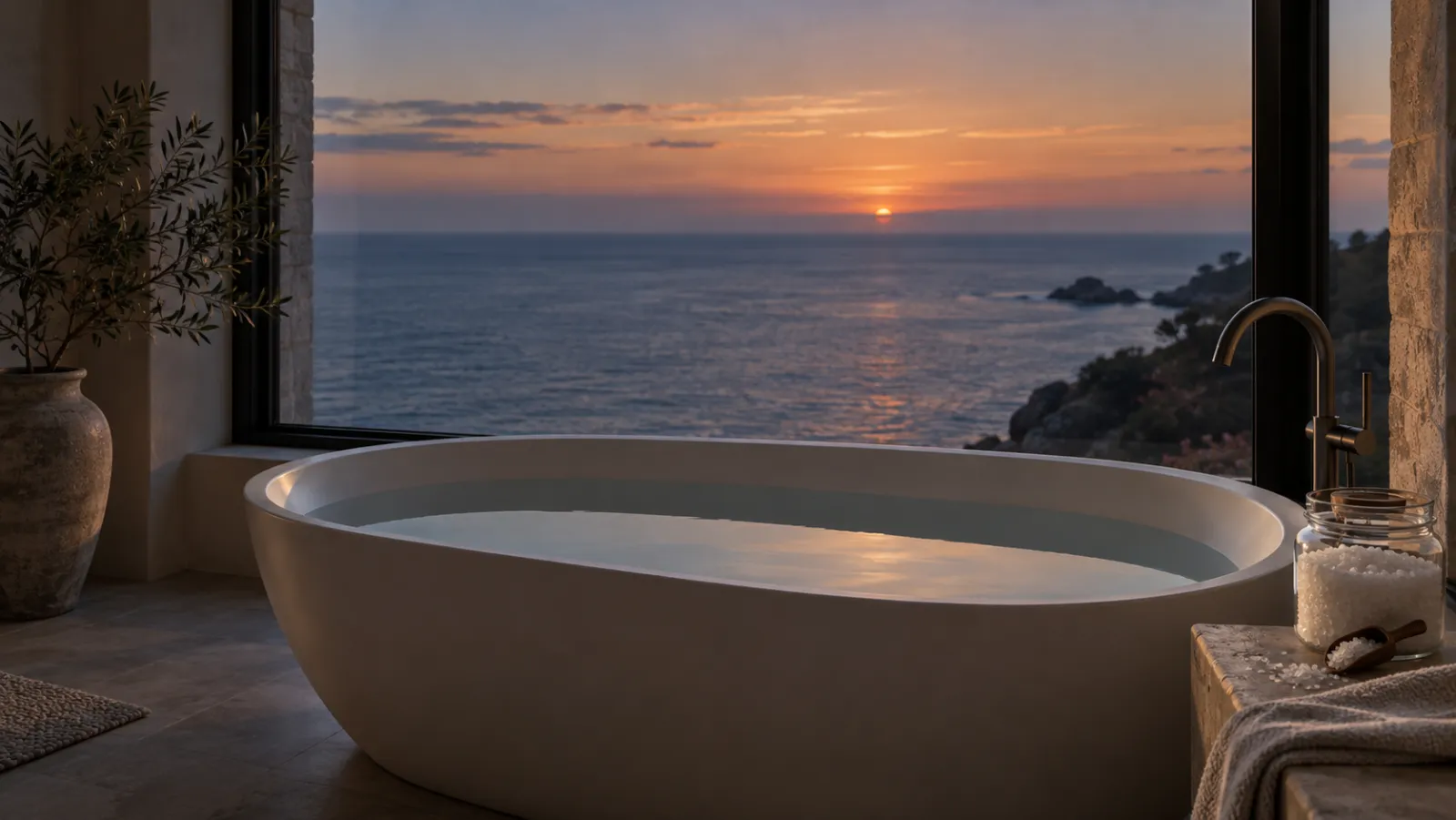
Updated: 11 Oct 2026 · By Float Vietnam
Key takeaways
- A bath, pool or ordinary sea lacks the dissolved salt to hold you up without effort. A float tank has hundreds of kilograms of Epsom salt in shallow water (specific gravity ~1.23–1.30).
- The Dead Sea is about as dense, but lacks skin-temperature water, darkness and silence, and its brine stings eyes and cuts.
- Never drift or sleep in a pool or open water. An Epsom bath is a pleasant warm soak, not a float.
Quick answer: You can lie back in a bathtub, pool or the sea, but you cannot truly float there. Ordinary water is not dense enough to hold your body up without effort, it is rarely at skin temperature, and it is never dark and silent. A float tank is designed to combine all three, safely.
Can you float in a bathtub?
Not in the way you float in a float tank. Your body is only slightly less dense than fresh water, so in a normal bath you sink to the bottom with just your face and knees out. To float fully on your back, the water needs to be much denser. Float tanks reach this by dissolving a huge amount of Epsom salt (magnesium sulfate) in shallow water. At Ōmni Space, each single-room pool measures about 1.2 × 2.4 m, holds roughly 720 litres of water about 25 cm deep, and contains around 500 kg of Epsom salt. That is close to 0.7 kg of salt for every litre of water. A typical home bathtub holds well over 100 litres, so matching that ratio would mean pouring in about 100 kg of salt, far more than the cup or two people usually add. Even then, the water would cool within minutes, and the bathroom would not be dark or quiet.
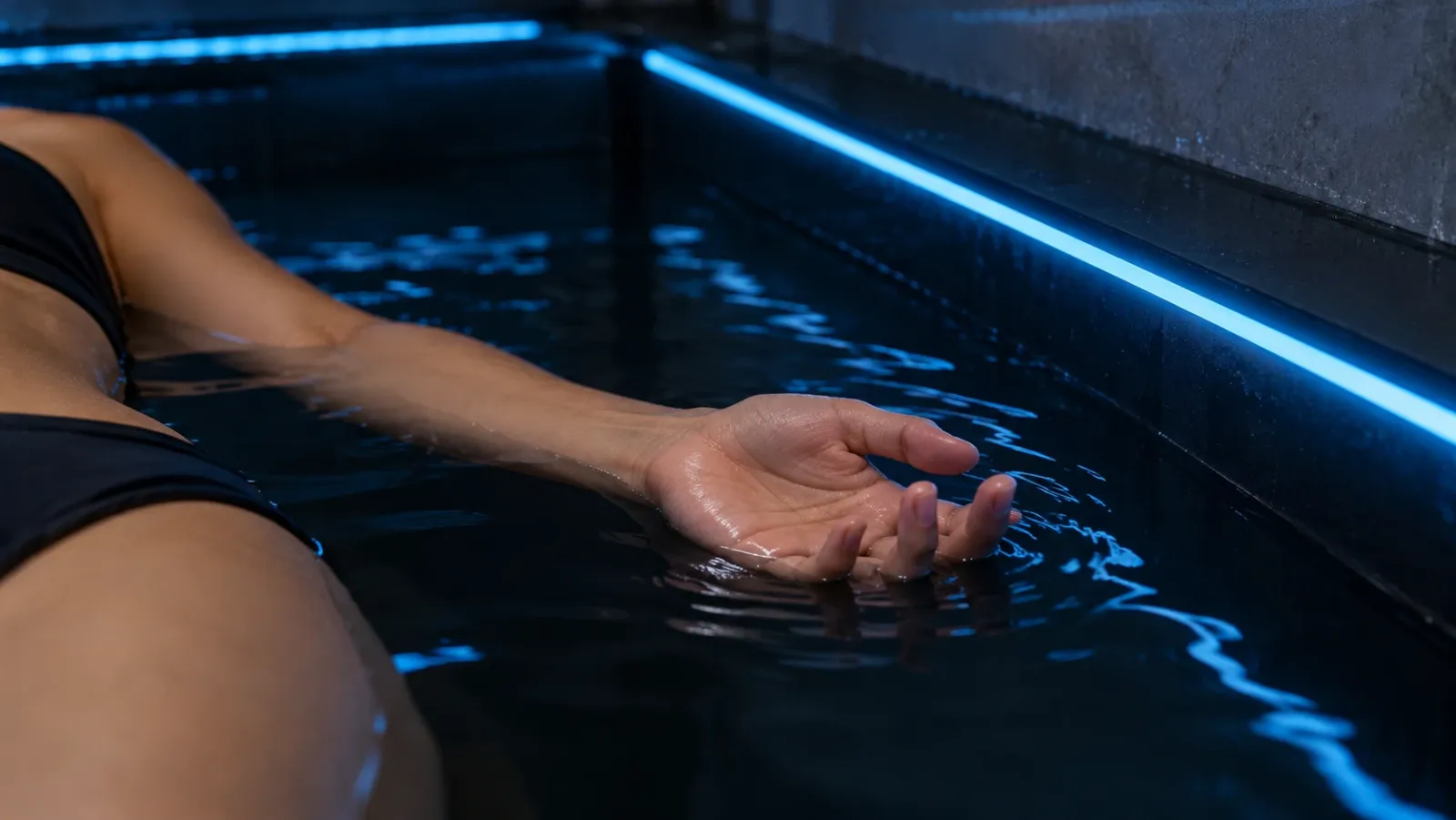
How do a bath, pool, sea, Dead Sea and float tank compare?
Buoyancy is usually described by specific gravity, the density of a liquid compared with fresh water. Fresh water, including bath and pool water, is about 1.00. Ocean water at the surface is roughly 1.02–1.03, which is why the sea feels a little more buoyant than a pool but still needs some effort to stay up. The Dead Sea is famous because its water is far saltier, with a nominal density of about 1.24, so almost anyone floats in it easily. The North American Float Tank Standard (Floatation Tank Association, 2017) describes float tank solutions at a specific gravity of 1.23–1.30, kept at about 33–36 °C in a light- and sound-reduced space. At Ōmni Space the water is held at about 34–35 °C and the specific gravity is measured regularly. The table below sets the five options side by side, including the factors that matter beyond buoyancy.
| Buoyancy (specific gravity) | Temperature | Light and sound | Hygiene | Safety | Cost and effort | |
|---|---|---|---|---|---|---|
| Bathtub + Epsom salt | ~1.00; you do not float | Starts warm, cools quickly | Household light and noise | Fresh water each time | Do not fall asleep in a bath | Low |
| Swimming pool | ~1.00 | Usually cooler than skin | Bright, noisy, other people | Chlorinated, shared | Drowning risk; never drift with eyes closed | Low |
| Sea | ~1.02–1.03 | Varies with weather and season | Sun, wind, waves | Natural water, variable | Currents and waves; never sleep | Travel required |
| Dead Sea | ~1.24 (nominal) | Varies with season | Open-air, sunny, busy beaches | Natural brine | Keep water out of eyes; avoid with cuts | International travel |
| Float tank / float room | ~1.23–1.30 (industry standard) | Held at skin temperature, ~34–35 °C | Dark and quiet; you control the light | Filtered between floats | ~25 cm deep, purpose-built | Session fee |
Is floating in the Dead Sea the same as a float tank?
On buoyancy alone, the Dead Sea and a float tank are surprisingly close: both hold you up so effortlessly that you can lie back like a cork. The experience, though, is very different. The Dead Sea is an outdoor lake. The temperature depends on the season and the weather, the sun is bright, and the shore is often busy with other visitors. Its brine is rich in salts such as magnesium and sodium chlorides, which can sting badly if they get into your eyes or touch a scratch or freshly shaved skin. Visitors are generally advised to keep their face out of the water, avoid swallowing any, float only for short periods and rinse off in fresh water afterwards. Swimming face-down is a bad idea because the buoyancy makes it hard to turn over. A float tank adds what the Dead Sea cannot: skin-temperature water, darkness, silence, privacy and a shallow, controlled pool.
Is it safe to float and relax in a pool or the sea?
You can certainly lie back and float for a moment in a pool or the sea, but you should never try to recreate a float tank session there. In deep water, if you relax completely, close your eyes or doze off, your face can slip under, and you may not notice waves, currents, boats or other swimmers. Drowning can happen quickly and quietly, even to confident swimmers. Think of open water and pools as places for swimming with full attention, ideally where a lifeguard is present, and never alone. A float tank is different by design. At Ōmni Space the water is only about 25 cm deep and dense enough to keep your face above the surface, so many people drift into a light sleep without danger. You still follow some basic rules, such as keeping salt water out of your eyes. For details, read is float therapy safe? and what happens if you fall asleep in a float tank.
Why is it so hard to have a float tank at home?
Home float tanks exist, but owning one is a much bigger project than it sounds. Start with weight. Roughly 720 litres of water plus about 500 kg of salt, as in an Ōmni single pool, comes to well over a tonne before you count the tank, spread over less than three square metres. That is roughly 400 kg per square metre, so a structural engineer should check the floor first. Next comes heat: the solution must stay at skin temperature day and night. Then sanitation. Professional centres filter and disinfect the water after every guest. At Ōmni Space a pump moving about 16.8 m³ per hour runs for 15 minutes after each float, turning the water over roughly five to six times, plus 10 minutes every two hours, combined with UV, hydrogen peroxide, ozone and a spa enzyme. Add salt management, humidity control, corrosion of fittings and soundproofing, and most people find a float centre simpler. Compare designs in types of float tanks.
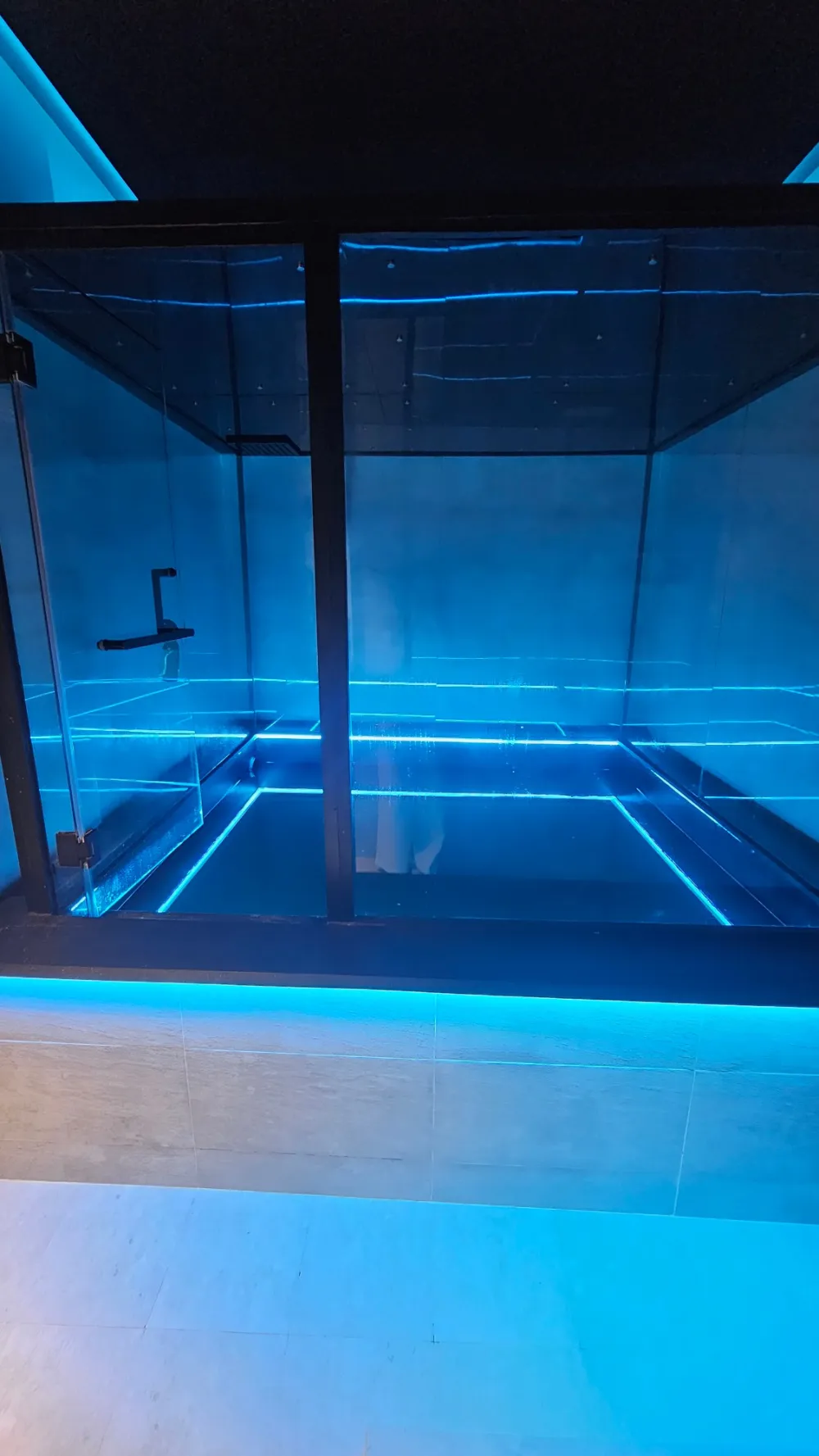
Ōmni’s open pools sit behind soundproof, light-blocking glass doors, and guests adjust the lights; see float pod vs float room.
Is an Epsom salt bath still worth it?
Yes, as long as you see it for what it is: a warm, relaxing soak, not a home version of floatation-REST. A warm bath can help you unwind at the end of the day, ease the feeling of stiff muscles and become part of a calm evening routine. Many people enjoy adding Epsom salt for the feel of the water. What the evidence does not support well is the popular idea that your body absorbs meaningful amounts of magnesium through the skin during a bath. In a 2017 review in the journal Nutrients, Uwe Gröber and colleagues concluded that claims of transdermal magnesium absorption are scientifically unsupported, and pointed out that a frequently quoted Epsom bath study was never published in a peer-reviewed journal. So enjoy the bath for the warmth and the quiet. If you want the effortless buoyancy, darkness and silence of a real float, that needs a float tank. More on Epsom salt baths.
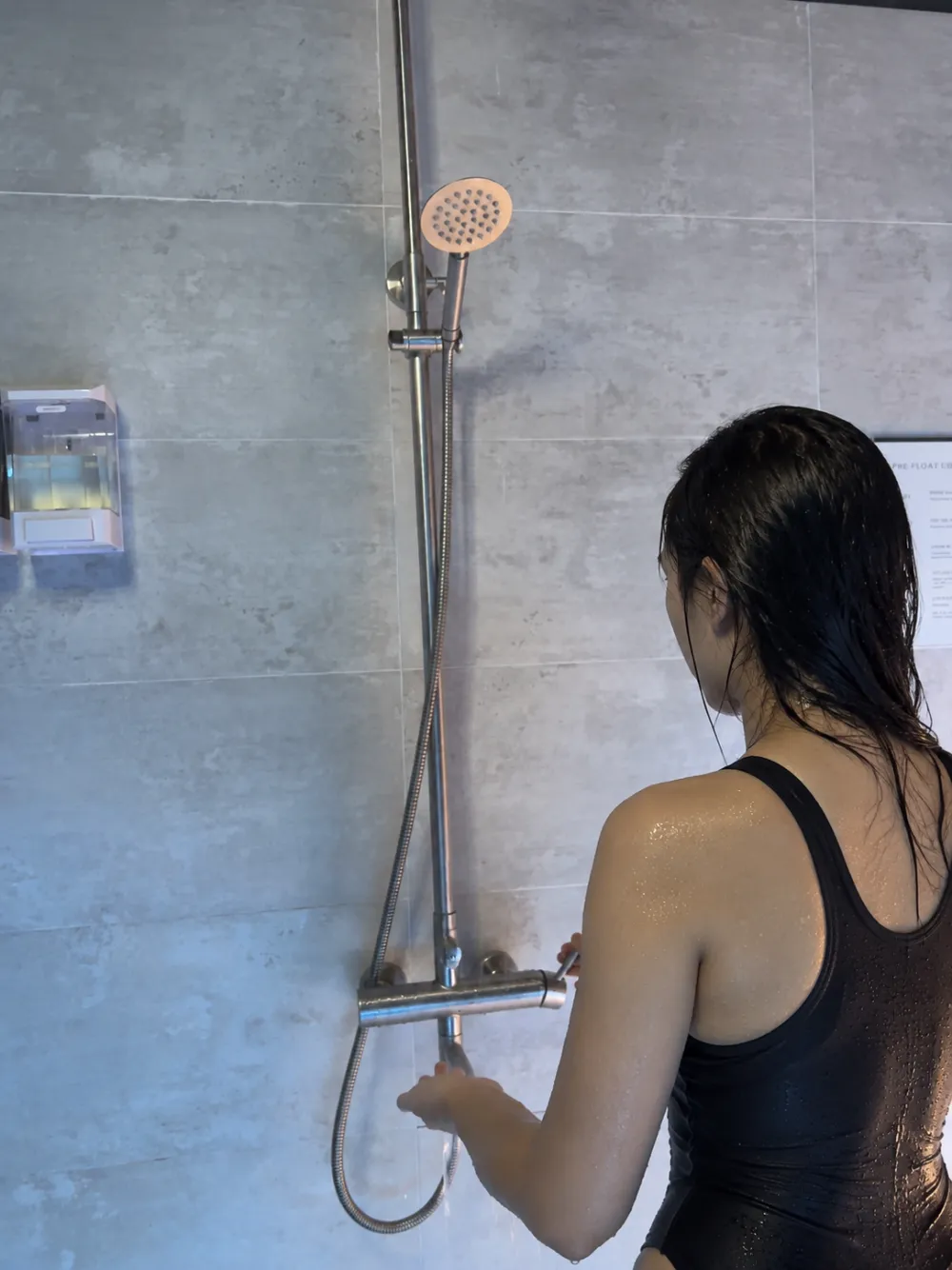
Try it at Ōmni Space. Float Vietnam’s float rooms are at 16C Quoc Huong, Thao Dien, Ho Chi Minh City (Saigon), open daily 9:00–21:00. Book a float or read the float therapy FAQ.
Frequently asked questions
Can you float in a bathtub with Epsom salt?
Not fully. A float tank uses roughly 0.7 kg of Epsom salt per litre, so a home tub would need around 100 kg. A cup or two makes a pleasant bath, but you still rest on the bottom.
What is the difference between an Epsom salt bath and a float tank?
An Epsom bath is a warm soak in lightly salted water that cools over time. A float tank holds a dense, skin-temperature Epsom solution in a dark, quiet space, so you float effortlessly and outside stimulation drops sharply.
Is the Dead Sea like a float tank?
Its density, about 1.24, is similar, so you float easily. But it is outdoors, bright and busy, its temperature varies and its brine stings eyes and cuts.
Is it safe to fall asleep while floating in a pool or the sea?
No. Never close your eyes, drift or try to sleep in a pool or open water, because your face can slip under and drowning can happen quickly. Only a purpose-built float tank with shallow, very dense water is designed for this.