Updated: 11 Oct 2026 · By Float Vietnam
Key takeaways
- The strongest reason to try float therapy is deep rest: small controlled studies report lower stress and anxiety after floating, often after a single session.
- Other reasons, such as recovery after training, creativity and better sleep, have smaller or mixed evidence, and some are simply personal experience. We label each one honestly.
- Floating suits almost anyone, including non-swimmers, but some people should wait or ask a doctor first, and it complements professional care rather than replacing it.
Quick answer: The best reasons to try float therapy are deep rest and lower stress, a rare hour without screens, easier meditation and relief from muscle tension. Recovery, creativity and sleep have weaker or mixed evidence. You do not need to swim or have any experience; you simply lie back in shallow, very salty water.
Why do people try float therapy in the first place?
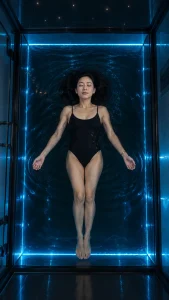
Most people come to float therapy for one simple reason: they want to switch off and find it hard to do anywhere else. A float means lying in about 25 cm of skin-temperature water (around 34–35 °C) with roughly 500 kg of Epsom salt dissolved in it, in a dark, quiet room. The salt makes the water so dense that you float without effort, so your muscles, your eyes and your ears all get a break at the same time. Researchers call this floatation-REST, short for Restricted Environmental Stimulation Therapy. People then find other reasons to return, from looser shoulders to new ideas. Not every reason has the same level of science behind it, so the table below sorts the ten most common ones by what they offer and how strong the evidence is. For an overview of the research, see our float therapy whitepaper.
| Reason | What it offers | Evidence |
|---|---|---|
| 1. Deep rest and less stress | A calmer body and mind after one session | Moderate: several small controlled trials |
| 2. A phone-free hour | Time fully offline, with no notifications | Personal experience |
| 3. Easier meditation | Fewer distractions, no aching posture | Limited: a few studies, mostly experience |
| 4. Muscle tension | Weightless support for back, neck and shoulders | Moderate for stress-related muscle pain |
| 5. Recovery after training | Less perceived soreness, better mood | Limited: small sports studies |
| 6. Sleep routine | A calm evening that may help you wind down | Mixed: mostly self-reported |
| 7. Curiosity and self-exploration | Time alone with your own thoughts | Personal experience |
| 8. Creativity | Space for new ideas to surface | Limited: small, older studies |
| 9. A shared experience | Floating side by side in a couple room | Personal experience |
| 10. Open to almost anyone | No swimming, fitness or experience needed | Practical fact |
Which reasons are about the mind: stress, screens and meditation?
The first three reasons are about giving the mind a break. Modern life rarely offers a full hour without input: phones, traffic, conversation, music and light keep the brain processing from morning to night. A float room removes almost all of that at once, which is why many people describe the first session as the quietest hour they have had in years. Of the three, stress relief has the clearest research behind it, with controlled studies measuring drops in anxiety and muscle tension after floating. The phone-free hour is not something a study needs to prove; it is simply what happens when you leave your devices in the locker. Easier meditation sits in between: a few studies point that way, but most of the support comes from what meditators themselves report. Here is what each reason offers in practice.
1. Deep rest and less stress
In a 2018 PLOS ONE study by Feinstein and colleagues, one float session led to large drops in anxiety and stress in people with anxiety-related conditions. Kjellgren and Westman (2014) found similar changes in healthy adults over a series of floats. Read more about how floating reduces stress.
2. A phone-free hour
There is no screen in the pool and nothing to check. For many people it is the first truly offline hour of their week.
3. Easier meditation
Without light, sound or an aching sitting posture, it is easier to rest attention on the breath. Jonsson and Kjellgren (2016) reported higher mindfulness scores after a float programme, though the study was small.
Which reasons are about the body: tension, recovery and sleep?
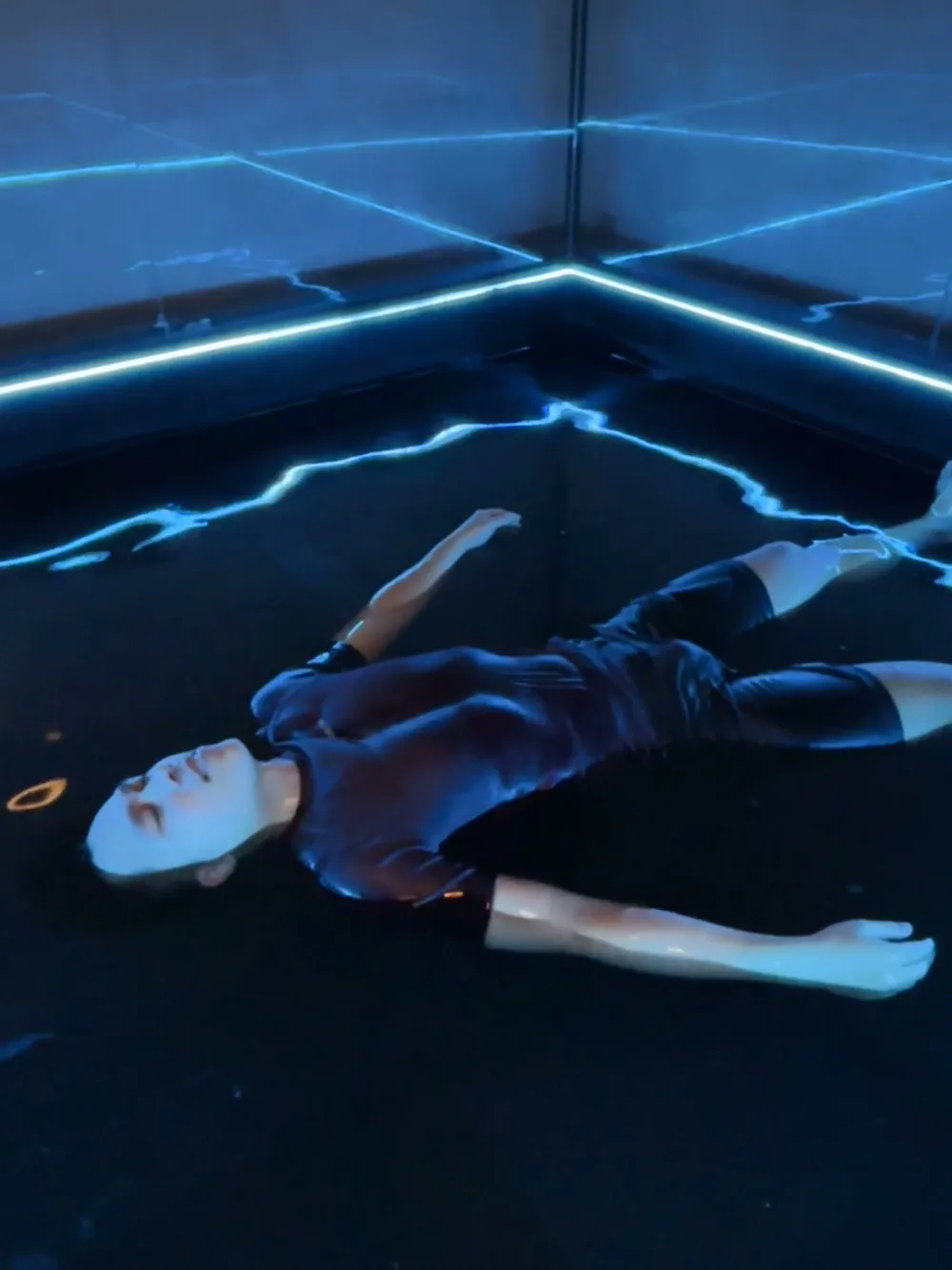
Reasons four to six are about the body, and they all start from the same physical fact: in very salty water you weigh almost nothing. The muscles that normally hold you upright, keep your head balanced and brace your lower back can finally let go, and many people feel that release in their neck and shoulders within minutes. The evidence here is uneven. Swedish studies on stress-related muscle pain are fairly consistent; studies with athletes are small but encouraging; sleep results are mixed, and a 2025 systematic review found limited effect on diagnosed sleep disorders. That does not mean floating is useless for sleep, only that it should be seen as relaxation that may help some people wind down, not as a sleep therapy. If you have a back injury or a sleep disorder, keep your doctor involved.
4. Muscle tension
Kjellgren et al. (2001) and Bood et al. (2005) reported less intense pain, lower stress and easier sleep onset in people with stress-related muscle pain after a series of floats. See float therapy for back pain.
5. Recovery after training
Driller and Argus (2016) found better mood and less perceived muscle soreness in athletes after one float, and Caldwell et al. (2022) reported a similar effect after heavy resistance exercise. Both studies were small.
6. Sleep routine
Many floaters say they sleep well the night after a session, but most of that evidence is self-reported. A late-afternoon float before a quiet evening is a sensible experiment. Read our honest guide to float therapy and sleep.
What about curiosity, creativity and floating together?
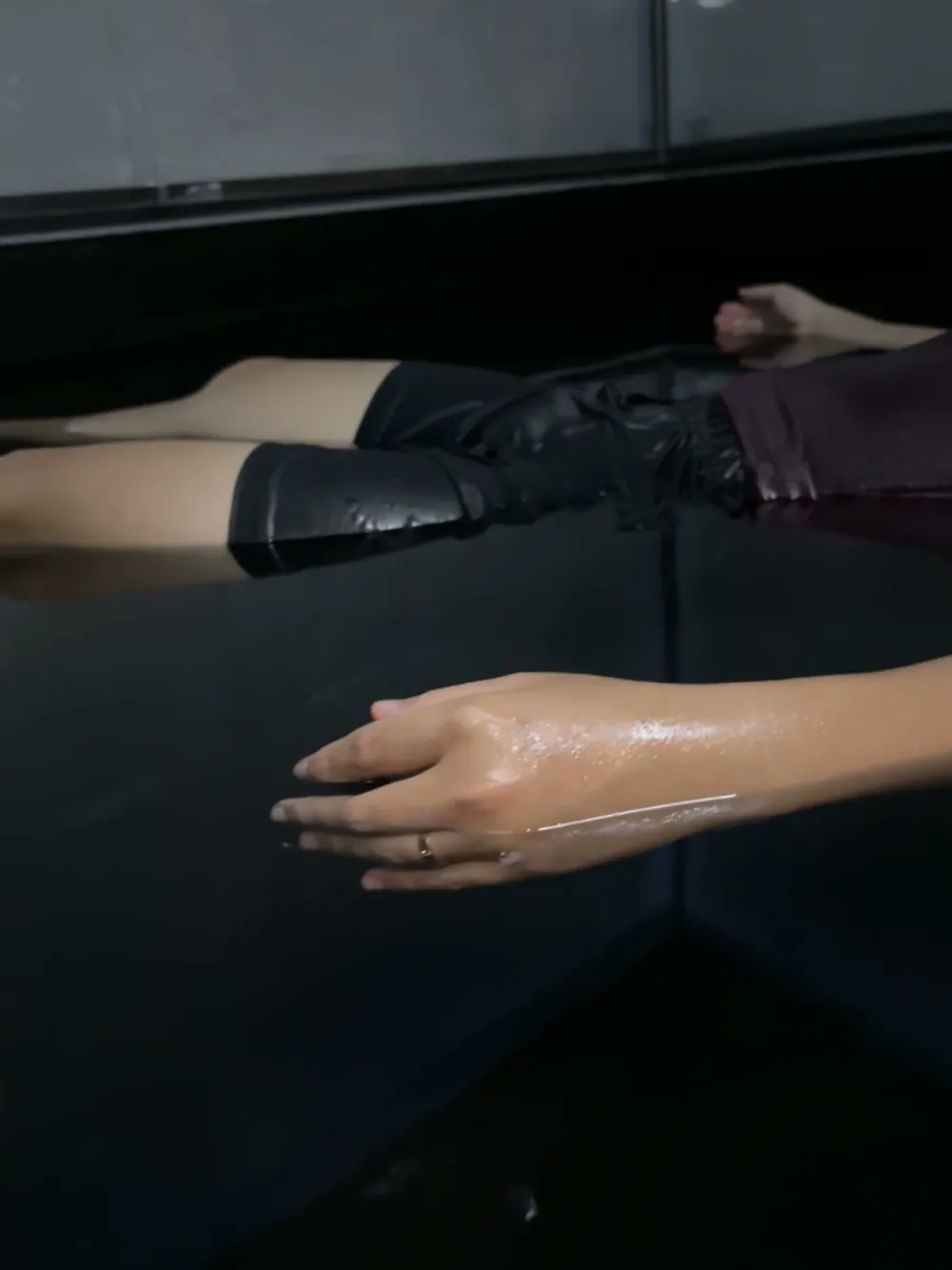
The last four reasons are less about fixing something and more about experience. Some people book a float purely out of curiosity: they have heard of sensory deprivation tanks, seen them in a documentary, and want to know what the mind does when almost nothing comes in. Others are writers, designers or founders looking for a reset when ideas run dry. Some come as a pair. And many simply like that floating asks nothing of them. You do not need to swim, be fit, know how to meditate or have any special skill, because the salt does the work of holding you up. Creativity has a small research base from the 1980s to the 2010s; the other three reasons rest on personal experience and on the practical design of the rooms. That is fine, as long as nobody pretends otherwise.
7. Curiosity and self-exploration
An hour alone with your thoughts can be surprising: some notice how busy their mind is, others drift into a dreamlike calm. Read what sensory deprivation feels like.
8. Creativity
Small studies, including Suedfeld et al. (1987), Forgays and Forgays (1992) and Vartanian and Suedfeld (2011) with jazz students, reported gains on some measures of creativity after floating, but not on all of them.
9. A shared experience
At Ōmni Space, the couple room has a square pool for two people, so partners or friends can float side by side and then talk it over in the lounge.
10. Open to almost anyone
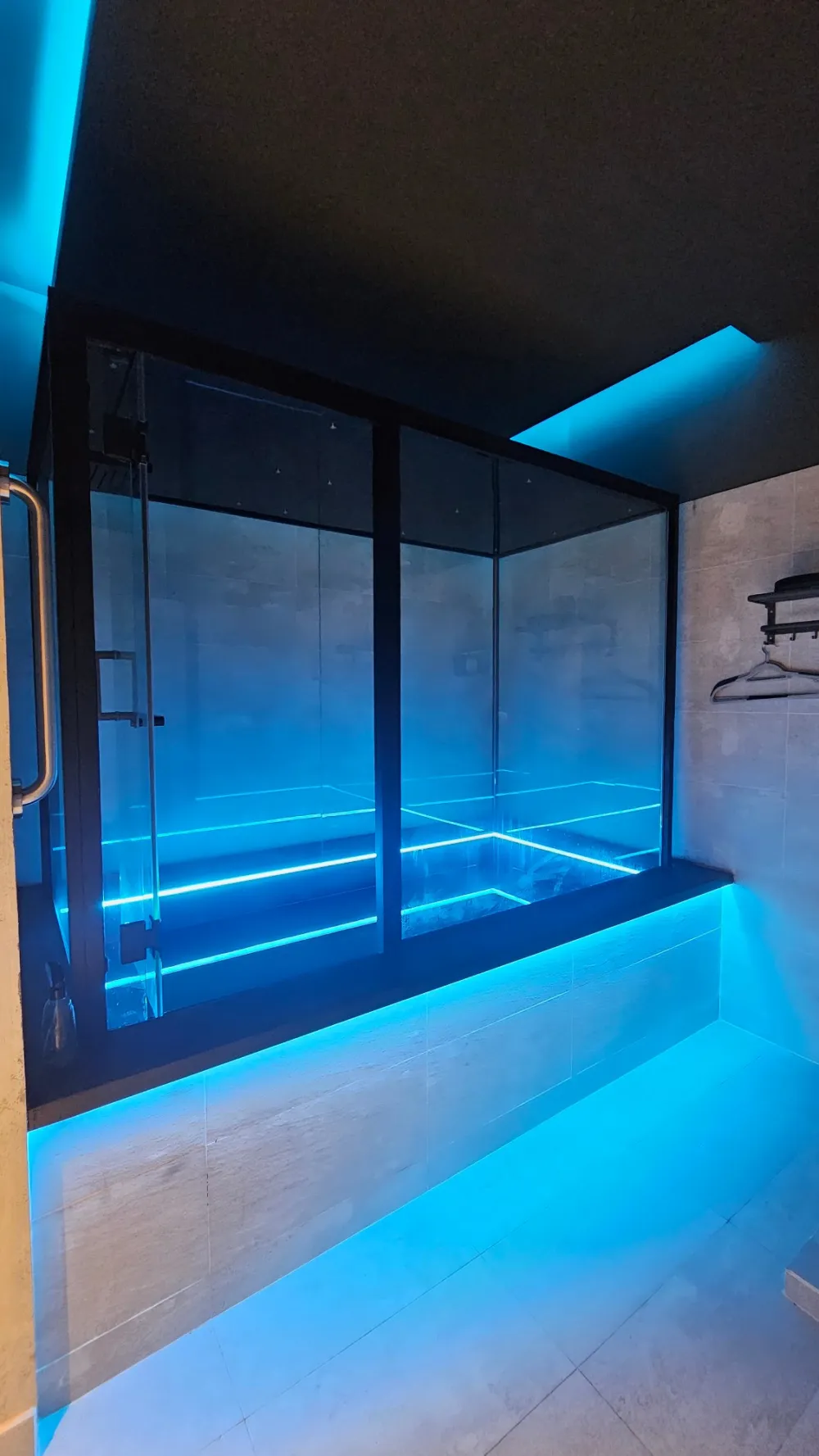
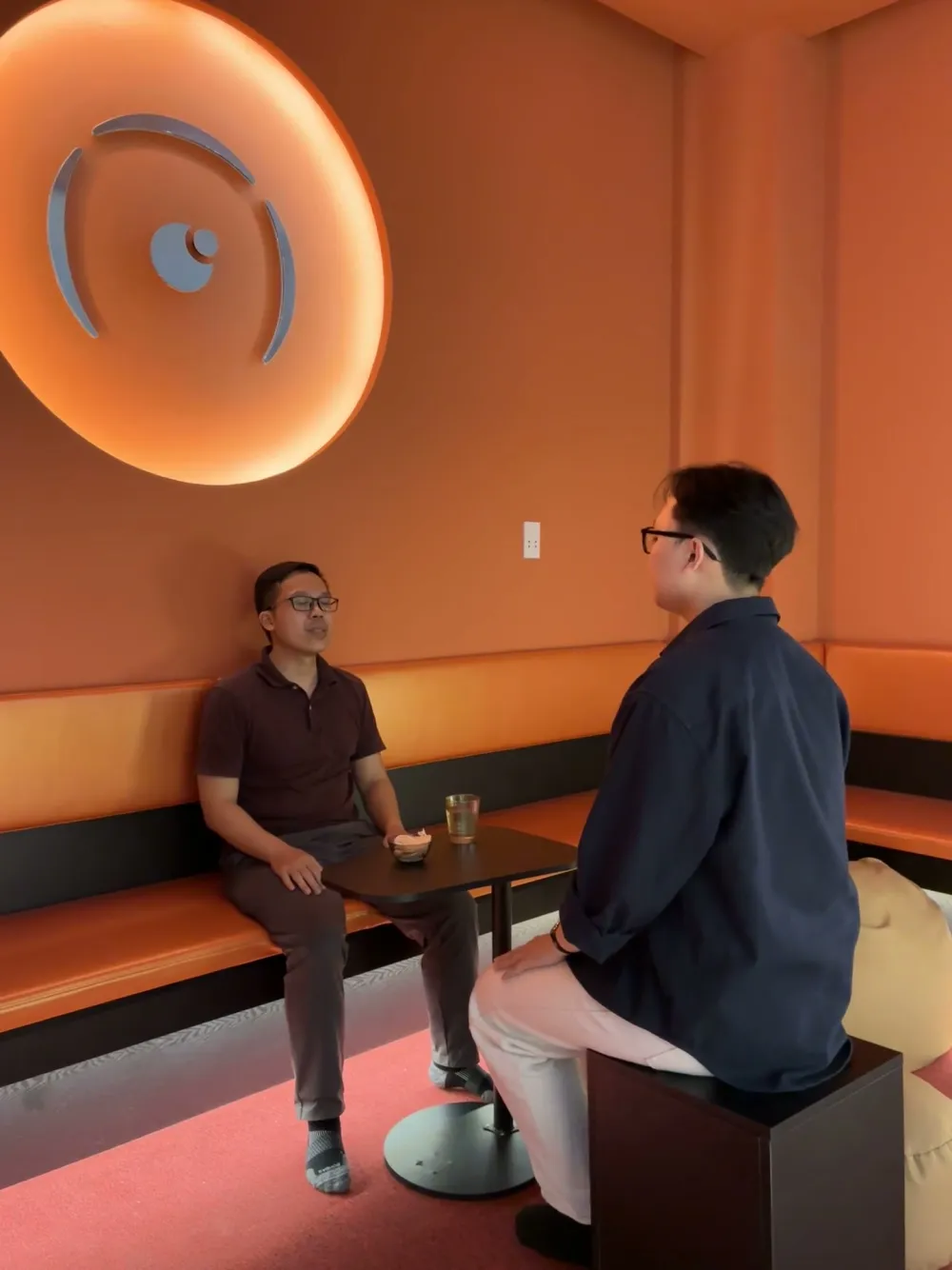
The water is only about 25 cm deep and you float face up without effort, so non-swimmers are fine. The single room has an open 1.2 × 2.4 m pool behind soundproof, light-blocking glass doors, and you control the lights, which helps people who worry about feeling closed in.
Who should not float, or should wait?
Floating is low-risk for most healthy adults, and studies so far have reported few side effects beyond mild skin irritation, but a few situations call for waiting or asking a doctor first. Postpone your float if you have open wounds, a fresh tattoo, an active skin infection or a contagious illness, and avoid shaving or waxing on the day, because salt stings broken skin. Do not float after drinking alcohol or using recreational drugs. If you have epilepsy, a serious heart, kidney or blood pressure condition, or you are pregnant, check with your doctor before booking. If you live with depression, anxiety, PTSD or another mental health condition, floating may support your wellbeing, but it complements professional care and should never replace therapy or medication. Strong claustrophobia is not always a barrier, since you can keep the lights on and the pool is open, but start with a shorter session. Our full guide explains whether float therapy is safe.
If none of these apply, try it more than once: the first session is often spent getting used to the water. Float Vietnam suggests a 90-minute first float, then two to three floats a month for two to three months if you enjoy it. At Ōmni Space, the Intro package of three 90-minute floats costs 3,000,000 VND and is valid for three months; see pricing for all options.
Note: This page is for general information. Float therapy supports wellbeing but does not replace diagnosis or treatment by a doctor. If you have a medical condition, ask your doctor before floating.
Try it at Ōmni Space. Float Vietnam’s float rooms are at 16C Quoc Huong, Thao Dien, Ho Chi Minh City (Saigon), open daily 9:00–21:00. Book a float or read the float therapy FAQ.
Frequently asked questions
What is the main reason to try float therapy?
For most people it is deep rest. Small controlled studies report lower stress and anxiety after floating, and many first-timers describe it as the quietest hour they have had in a long time.
Do I need to know how to swim to float?
No. The water is only about 25 cm deep and so salty that you float face up without effort. You can sit up or step out at any time.
Can couples float together?
Yes. At Ōmni Space the couple room has a square pool for two people, so you can float side by side in the same private room.
Who should not try float therapy?
Wait if you have open wounds, a skin infection or have been drinking. Ask a doctor first if you have epilepsy, a serious heart or kidney condition, or are pregnant.