Updated: 11 October 2026 · Compiled by Float Vietnam
Key takeaways
- This glossary explains the terms you meet when reading about float therapy, from REST, Epsom salt and specific gravity to theta waves and the default mode network.
- Each definition stands on its own and links to a deeper Float Vietnam article.
- Figures match our 2026 float therapy whitepaper: about 25 cm of water, about 500 kg of Epsom salt, water at 34–35 °C, specific gravity 1.23–1.30.
Quick answer: Float therapy (scientific name: Floatation-REST) means lying in very dense Epsom salt water at skin temperature, in a dark, quiet room. The key terms to know are REST, Epsom salt, specific gravity, the tank types (Samadhi tank, pod, cabin, float room), interoception and theta waves. The glossary below groups them into six themes.
Reading about float therapy throws a lot of jargon at you: lab terms, medical terms and words only float centre operators use. Float Vietnam has collected the most common ones, explained them in plain English and linked each to a deeper article if you want to keep reading.
Glossary sections:
- Float therapy basics
- Tank types and look-alikes
- Water, salt and tank care
- Body, brain and mind
- During and after a float
- People, places and research terms
Float therapy basics
The same experience goes by different names in the press, at float centres and in research papers. These terms help you call it by the right name.
Float therapy (floating)
Float therapy means lying on your back on about 25 cm of water saturated with Epsom salt, kept close to skin temperature, in a dark and quiet room, usually for 60–90 minutes. The water is so dense that you float without effort. In Vietnamese, Float Vietnam calls it “Thiền Nổi”. Read: what is float therapy?
Floatation-REST (flotation REST)
Floatation-REST is the scientific name for float therapy in research papers. “Floatation” refers to floating in a salt solution; “REST” refers to deliberately reducing stimulation from the environment. It is the most precise search term on PubMed. See our summary of float therapy research.
REST
REST stands for Restricted Environmental Stimulation Technique (or Therapy). Canadian psychologist Peter Suedfeld and his colleague Roderick Borrie proposed the term to replace “sensory deprivation”, which they considered both frightening and inaccurate. REST has two main forms: chamber REST and flotation REST. From sensory deprivation to REST.
Chamber REST
Chamber REST means lying on a bed in a dark, soundproofed room, sometimes for up to 24 hours. Much of Suedfeld’s smoking-cessation research used this form. Float therapy differs because you float in salt water, so touch and the feeling of gravity are reduced too, and a session lasts only about 45–90 minutes. Details in our float therapy whitepaper.
Sensory deprivation
Sensory deprivation is a state in which the senses receive very little input from outside. It is the name given to the isolation experiments of the 1950s. Float therapy does not remove all sensation; it reduces light, sound, gravity and temperature differences so the body can rest. What is sensory deprivation?
Float tank (isolation tank, sensory deprivation tank)
A float tank is the general name for any vessel used for float therapy: lidded tanks, pods, cabins and float rooms all count. It is also called an isolation tank, sensory deprivation tank or flotation tank. What they share is dense Epsom salt water at skin temperature, darkness and silence. Sensory deprivation tanks explained.
Tank types and look-alikes
Every proper float tank meets the same basic conditions: enough salt to float completely, water near skin temperature, darkness and quiet. The main differences are how enclosed it is and how roomy it feels.
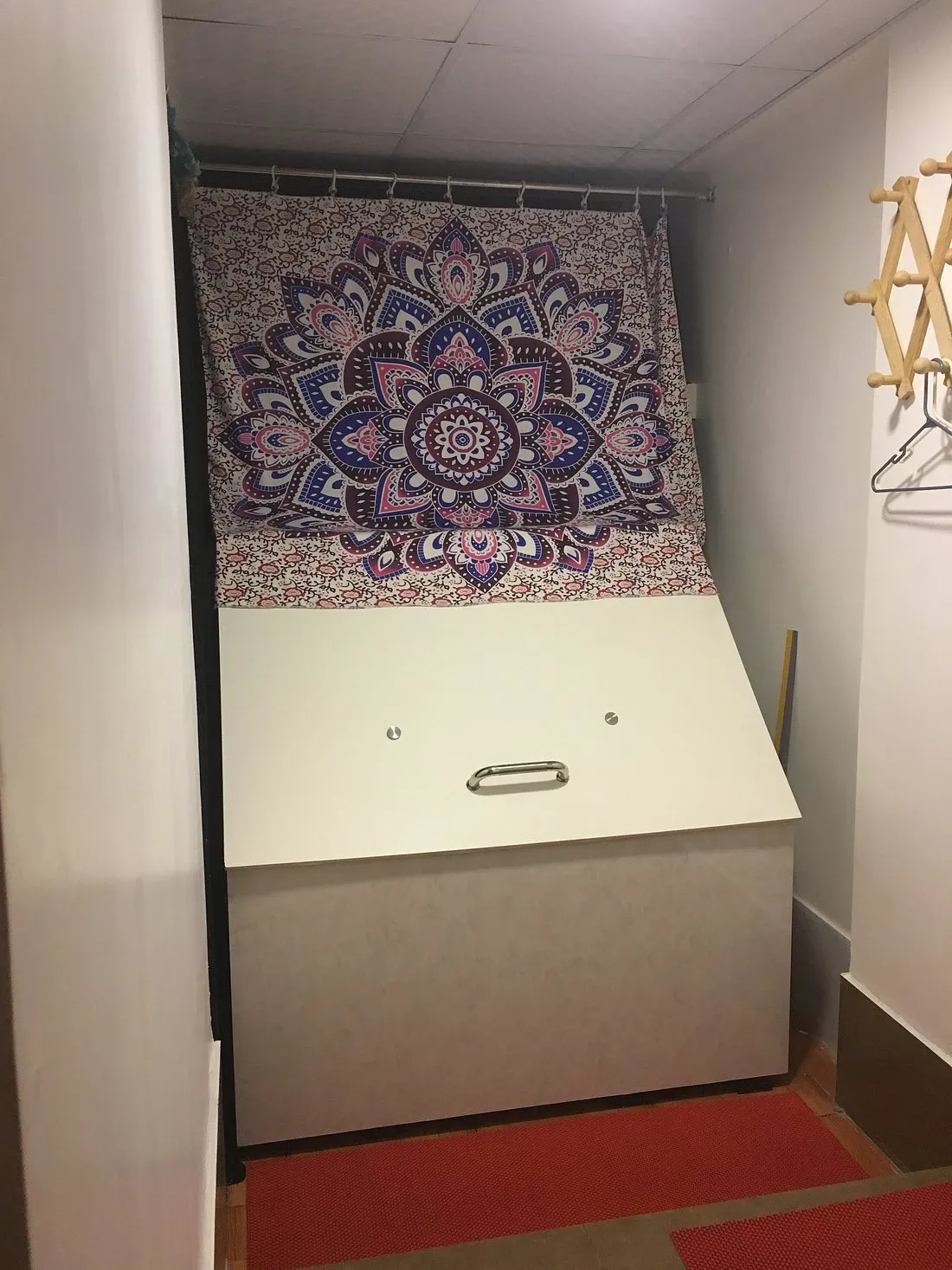
Samadhi tank (lidded horizontal tank)
A Samadhi tank is a horizontal, box-shaped tank with a lid, developed by Glenn Perry with John C. Lilly in the 1970s. It is the model for most float tanks today. In 2017, Float Hanoi built two tanks of this type itself. Compare all types of float tanks.
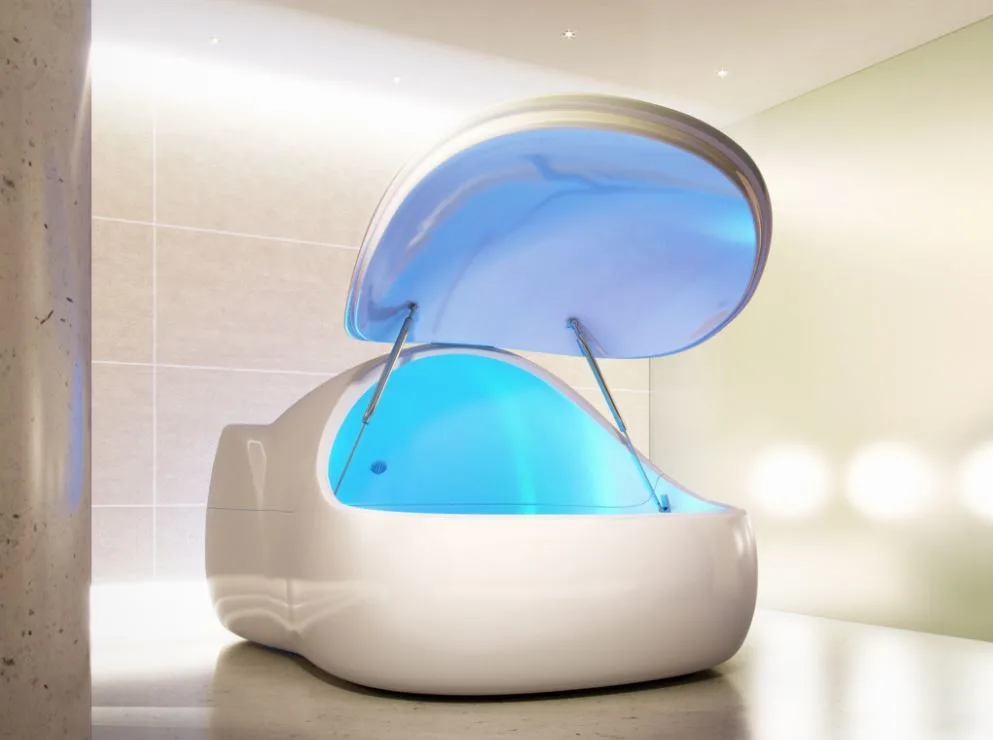
Float pod
A float pod is an egg-shaped tank made of composite material, with a lid that lifts up and down, common at float centres worldwide. Pods are compact and easy to install, but the low ceiling can feel tight for people who fear small spaces. Float pod vs float room.
Float cabin
A float cabin is an enclosed float chamber with a door and a high ceiling that you walk into like a small room. Float Saigon (2019) used a self-built cabin modelled on Ocean Float Rooms. Float Vietnam’s three generations of tanks.
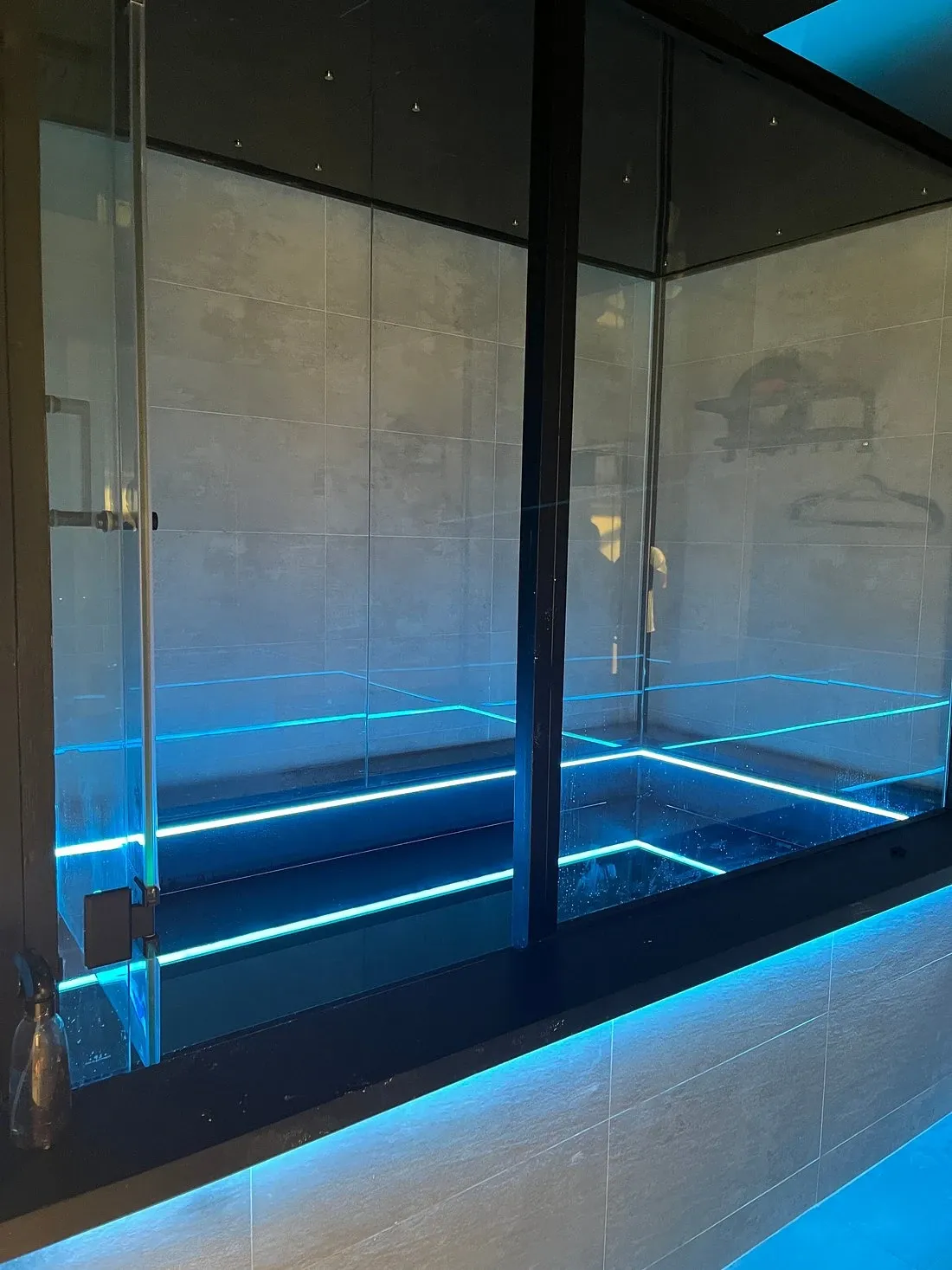
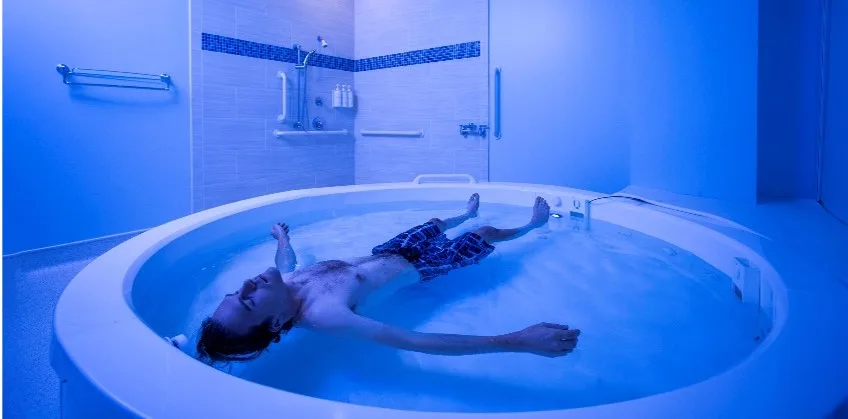
Float room (open pool)
A float room is an open pool with no lid, set inside a private room that is darkened and soundproofed. It is the most spacious format, which suits beginners and anyone uneasy about enclosed spaces. At Ōmni Space, the single pool measures 1.2 × 2.4 m and sits behind soundproof, light-blocking glass.
Dry float
Dry float is a spa session where you lie on a warm water-filled membrane and never touch salt water. The weightless feeling is somewhat similar, but there is no buoyancy from Epsom solution and usually no reduction of sensory input, so it is a different experience from float therapy. What is dry float?
Floating sound bath
A floating sound bath is a meditation session on an inflatable mat in an ordinary pool, with singing bowls or gongs. It is a relaxing sound experience, not float therapy, because the water is not salty enough to float on and the space is not dark and silent. How it compares with float therapy.
Water, salt and tank care
The questions people ask most at reception: is the water clean, what salt is it, and why do you float?
Epsom salt (magnesium sulfate)
Epsom salt is magnesium sulfate (MgSO₄·7H₂O), which is quite different from table salt. Each pool holds about 500 kg of Epsom salt dissolved in about 25 cm of water, enough to keep the whole body afloat. There is currently no good evidence that skin absorbs meaningful amounts of magnesium while soaking (Gröber et al., 2017). Epsom salt in the float tank.

Specific gravity
Specific gravity is the density of a solution compared with pure water. The North American float tank standard gives about 1.23–1.30 for float solution; at that level your head, arms and legs float without effort. Ōmni measures specific gravity regularly to keep buoyancy stable.
Skin-temperature water
Skin-temperature water is kept at about 34–35 °C, close to the temperature of the skin’s surface. After lying still for a while, it becomes hard to tell where skin ends and water begins, so the brain receives less touch input. This is one reason people describe “melting into the water”. What does floating feel like?
Turnover (filtration cycle)
One turnover means the full volume of pool water has passed through the filter once. The industry standard asks for at least 3 turnovers between guests. At Ōmni, the pump runs for 15 minutes after every float, about 5.6 turnovers, and also runs for 10 minutes every 2 hours, day and night. Is float therapy safe?
UV, ozone and H₂O₂ disinfection
Float tanks usually combine UV light, ozone or hydrogen peroxide (H₂O₂) to sanitise the water, on top of salinity so high that most microbes struggle to survive. Ōmni uses all three together, plus a spa enzyme to keep the water clean.
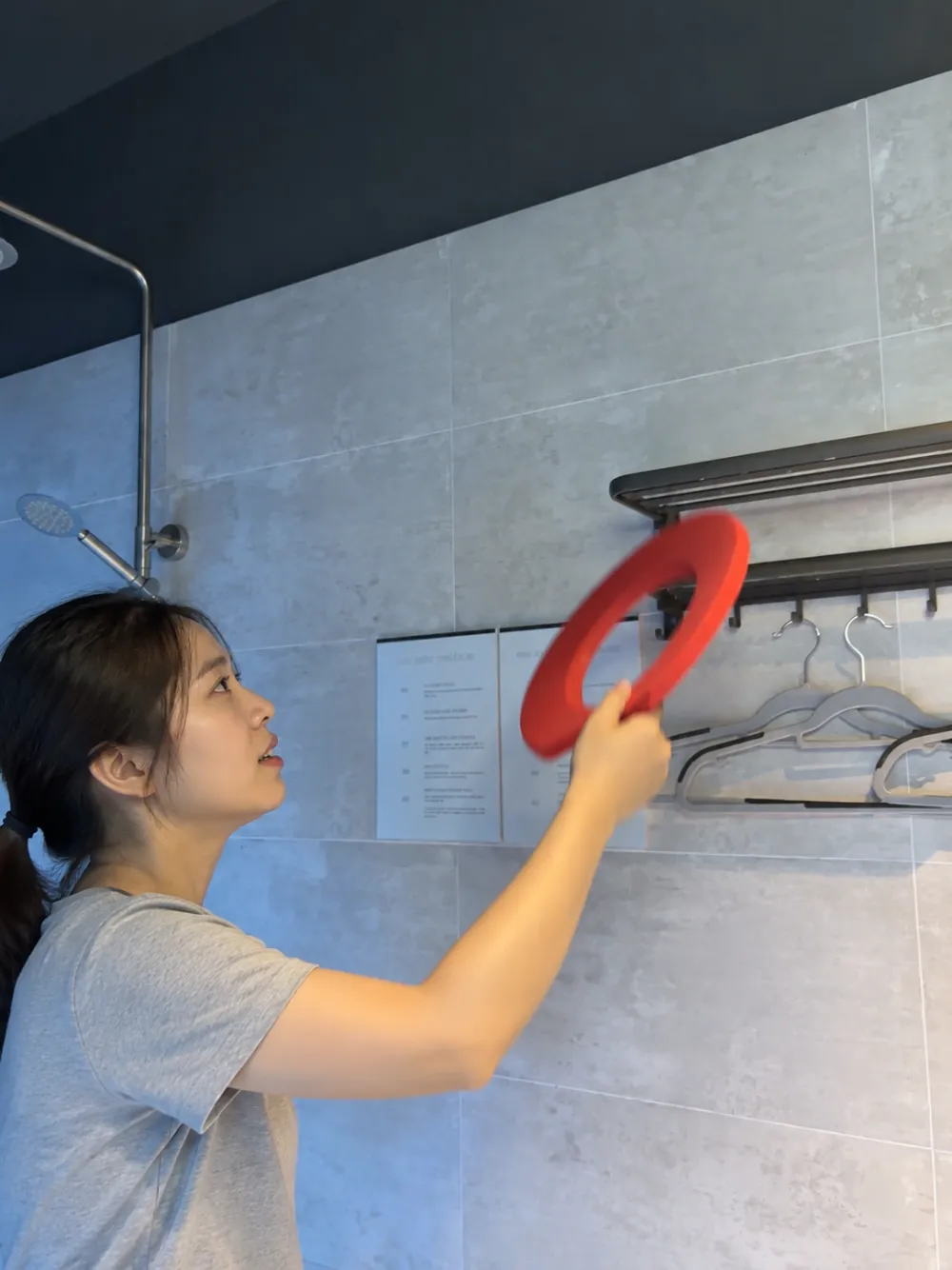
Neck pillow (Halo)
A neck pillow is a small float ring placed under the back of the neck, helping beginners relax the neck before they are used to floating. Ōmni offers a Halo pillow for guests who want one; after a few sessions many people stop using it. Your first float, step by step.
Earplugs
Earplugs keep salt water out of your ears and cut out more sound. Your ears sit below the waterline while you float, so earplugs are close to essential. Float centres usually provide them, so you do not need to bring your own. What to wear and bring to float therapy.
Body, brain and mind
These terms appear often in research on float therapy. Most studies are still small, so Float Vietnam notes the strength of evidence whenever we mention them.
Interoception
Interoception is the ability to sense signals from inside the body, such as heartbeat, breathing or stomach sensations. A 2018 study at the Laureate Institute (Feinstein et al.) found that participants paid more attention to their heartbeat and breathing while floating, as outside signals faded. Float therapy for anxiety: the research.
Exteroception
Exteroception is how we take in the outside world through sight, hearing, touch and temperature. Float therapy turns down almost all of these channels at once, so attention easily turns inward.
Parasympathetic nervous system
The parasympathetic nervous system is the “rest and digest” branch of the autonomic nervous system, the counterpart to “fight or flight”. When it dominates, heart rate and breathing slow down. Many floaters describe this feeling, and some small studies report lower blood pressure during floating. How floating reduces stress.
Heart rate variability (HRV)
Heart rate variability (HRV) is the variation between consecutive heartbeats, used as an indirect marker of autonomic balance. A 2024 study in active adults (Besson et al.) compared one hour of floating with a conventional nap and tracked this measure. Floating for athletic performance.
Brainwaves
Brainwaves are the rhythmic electrical activity of groups of neurons, measured with an electroencephalogram (EEG). They are grouped by frequency into delta, theta, alpha, beta and gamma, each linked with different states of alertness. What are brainwaves?
Theta waves
Theta waves are brainwaves in the range of about 4–8 Hz, linked with drowsiness and deep relaxation. They are often mentioned in connection with float therapy, but EEG data recorded during floating is still scarce, so this remains a hypothesis rather than a finding. Theta waves and float therapy.
Hypnagogia
Hypnagogia is the drowsy zone between waking and sleep, sometimes with vivid images or sounds. Many floaters drift through it, which explains some “strange” experiences in the tank; it is a normal state of a relaxing brain. Hypnagogia in a float tank.
Default mode network (DMN)
The default mode network is a set of brain regions active when the mind wanders or thinks about the self. A 2021 fMRI study (Al Zoubi et al.) found reduced connectivity between somatomotor regions and the default mode network after a float session. What is the default mode network?
Lucid dream
A lucid dream is a dream in which you know you are dreaming, and can sometimes steer what happens. Some lucid-dreaming practitioners use float therapy to train attention at the edge of sleep; no study has measured this directly. Lucid dreaming with a float tank.
Anxiety sensitivity
Anxiety sensitivity is how much a person fears the bodily sensations that come with anxiety, such as a racing heart or breathlessness. The 2018 Laureate Institute study chose people high in this trait to test float therapy.
During and after a float
Words guests often use when describing their first float.
Post-float glow
The post-float glow is the light, slowed-down, pleasant feeling many people report for a few hours after floating. It is a self-reported experience that has not been measured closely in research, and it varies from person to person.
Falling asleep in the tank
Falling asleep in the tank is common, especially in a first session or when you are short of sleep. Because the water is so dense, your body keeps floating and your face stays above the surface. The worst that usually happens is waking with a start or getting salt water in your eyes. What happens if you fall asleep in a float tank?
Salt sting
Salt sting is the burning feeling when salt water touches a small cut, a fresh shave or wax, or gets into your eyes. Avoid shaving or waxing just before a float; if salt reaches your eyes, dab them with a dry towel and do not rub.
People, places and research terms
These names and concepts come up again and again in float therapy literature.
John C. Lilly
John C. Lilly was an American neuroscientist. In 1954, working at the US National Institute of Mental Health (NIMH) with Jay Shurley, he built the first isolation tank to study how the brain behaves with almost no outside stimulation. The history of float therapy.
Glenn Perry
Glenn Perry worked with John C. Lilly in the 1970s to design the horizontal tank that opened the way for commercial floating. This design later became known by the name of his Samadhi company.
Peter Suedfeld
Peter Suedfeld is a Canadian psychologist at the University of British Columbia who laid the groundwork for the term REST. He and his colleagues studied REST for smoking cessation, creativity and stress from the 1970s into the 2010s.
Laureate Institute for Brain Research (LIBR)
The Laureate Institute in Tulsa, USA, runs a research float clinic led by the team of Justin Feinstein and Sahib Khalsa. It has published many studies on floating for anxiety and anorexia nervosa, and the first fMRI study of floating. Seven Laureate studies, summarised.
Randomised controlled trial (RCT)
A randomised controlled trial assigns participants at random to an intervention group or a control group, so the comparison is fair. For example, Kjellgren and Westman (2014) randomised 65 healthy adults to 12 float sessions or a wait-list.
Wait-list control
A wait-list control group receives no intervention during the study and gets it afterwards. The design is fair to participants but cannot rule out expectation effects the way a placebo group can.
Crossover design
In a crossover design, each participant goes through both conditions, for example one float and one rest session, in random order. Each person acts as their own control, so fewer participants are needed.
Meta-analysis
A meta-analysis pools data from several studies to estimate an overall effect. For float therapy, van Dierendonck and te Nijenhuis (2005) pooled 27 studies with 449 participants on stress and wellbeing. Float therapy benefits and the strength of evidence.
Note: This page is for general information. Float therapy supports wellbeing but does not replace diagnosis or treatment by a doctor. If you have a medical condition, ask your doctor before floating.
Try it at Ōmni Space. Float Vietnam’s float rooms are at 16C Quoc Huong, Thao Dien, Ho Chi Minh City (Saigon), open daily 9:00–21:00. Book a float or read the float therapy FAQ.
Frequently asked questions
Is float therapy the same as sensory deprivation?
Mostly, yes: “sensory deprivation tank” is a common name for a float tank. Researchers now prefer Floatation-REST, because floating reduces stimulation rather than removing every sensation.
What does REST stand for in float therapy?
REST stands for Restricted Environmental Stimulation Technique (or Therapy), a term proposed by psychologists Peter Suedfeld and Roderick Borrie to replace “sensory deprivation”.
What is the specific gravity of float tank water?
The North American float tank standard gives about 1.23–1.30. At Ōmni, each pool holds about 500 kg of Epsom salt and specific gravity is measured regularly.